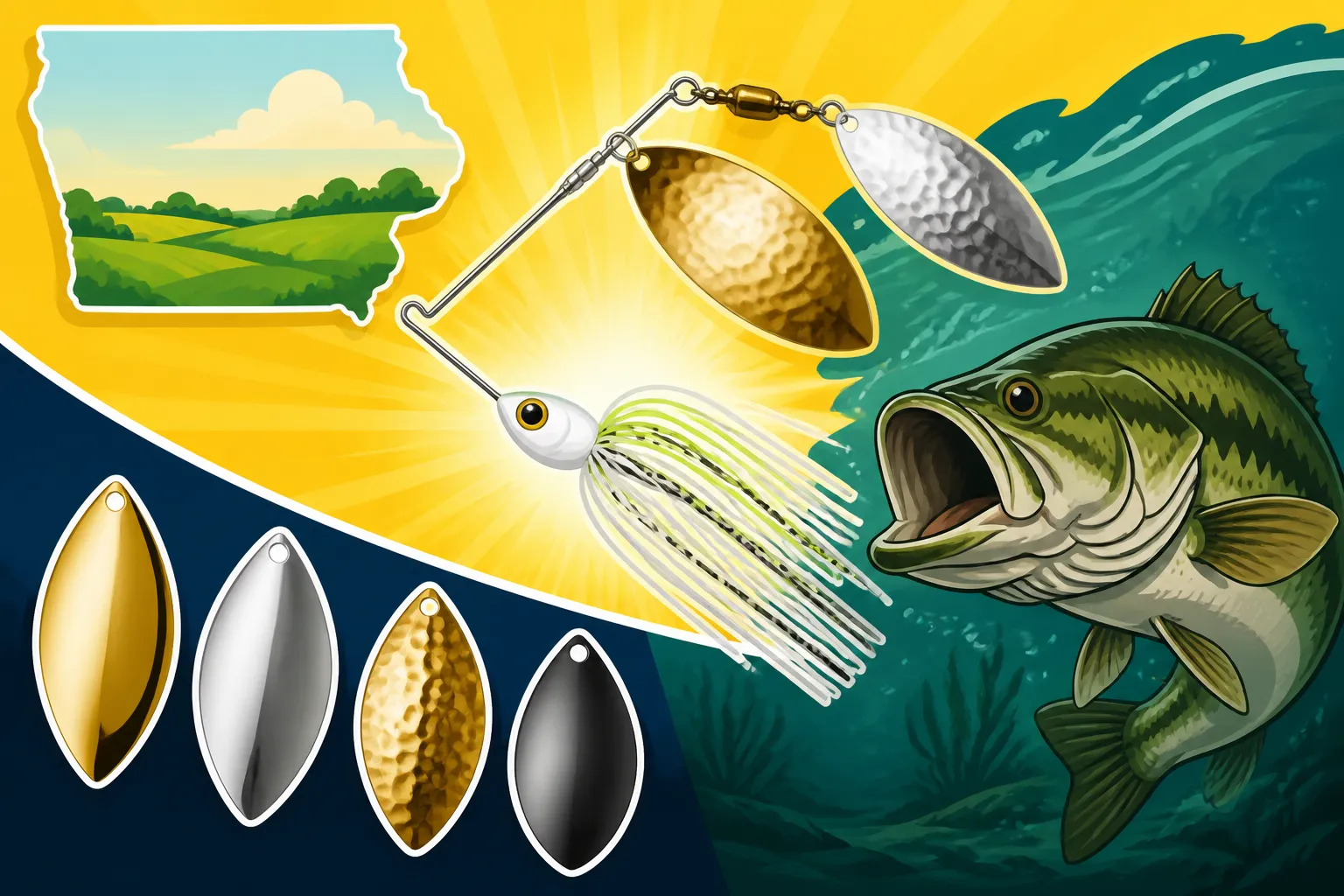
Best Spinnerbait Blade Colors for Bass
There’s nothing quite like the thrill of a bass striking a well-presented spinnerbait, but let's be honest, standing in the tackle aisle trying to pick out the "right" one can feel like a pop quiz you didn't study for. With countless blade shapes, sizes, and colors, it's easy to get overwhelmed. This guide is going to strip away the guesswork and help you understand how to choose the best spinnerbait blade colors for reeling in those feisty Iowa bass, no matter what the water or weather throws at you.
Understanding Spinnerbaits and Why Color Matters
Before we dive into the rainbow of blade options, let’s quickly touch on what makes a spinnerbait such an effective tool for bass fishing and why those shiny (or not-so-shiny) blades are so crucial to its appeal.
The Anatomy of a Spinnerbait
A spinnerbait is a marvel of simplicity and effectiveness. It's essentially an L-shaped wire frame with a weighted head and a skirt on one end, and one or more spinning blades on the other. The magic happens when you retrieve it: the blades spin, creating flash and vibration in the water, mimicking a distressed baitfish or a small school of fish. The skirt, typically made of silicone or living rubber, pulses and breathes, adding to the illusion of a tasty meal.
The blades are the real stars here, though. They're designed to catch light and displace water, sending signals to bass through both sight and their lateral line. There are generally three main blade shapes you'll encounter:
- Willowleaf: Long, thin, and sleek, these blades provide maximum flash with minimal vibration. They cut through the water efficiently, making them great for fast retrieves or when bass are feeding aggressively on slender baitfish.
- Colorado: Round and cupped, Colorado blades produce a strong thumping vibration and a slower retrieve. They create a lot of water displacement, which is excellent for murky water where bass rely more on their lateral line to detect prey.
- Indiana: A hybrid of the two, Indiana blades are oval-shaped, offering a good balance of flash and vibration. They're a versatile choice when you're not sure which way the fish are leaning.
Understanding these shapes is key, because the shape will also affect how much the color is seen or how the vibration carries.
The Science of Color in Water
Fish see the world differently than we do, especially underwater. Water acts as a filter, absorbing light and altering colors as depth increases. Red, for example, is the first color to disappear, often becoming muted browns or grays relatively close to the surface. Blues and greens penetrate deepest. Water clarity also plays a massive role. In muddy or heavily stained water, visible light penetrates very little, making flash and strong silhouettes more important than subtle color variations.
Bass, being sight predators, use color and contrast extensively, but they also rely heavily on their lateral line system to detect vibrations. This means that sometimes, a loud thumping blade might be more important than its precise hue, especially in low visibility. On the other hand, in crystal clear waters, a natural, reflective color can be the key to triggering a strike. It's a delicate balance, and knowing when to prioritize flash, vibration, or a specific shade is what separates a good day on the water from a great one. This is why having a range of colors is so important in your tackle box.
Top Spinnerbait Blade Colors for Iowa Bass Fishing
Now that we understand the basics, let’s get down to the brass tacks: which colors work best for Iowa bass? It’s not just about what looks good to us; it's about what looks enticing and believable to a bass.
Bright and Flashy for Clear Water and Sunny Days
When the sun is high, and the water is clear, bass are often looking for something that glints and flashes like a frantic baitfish. This is where your bright, reflective blades truly shine.
- Silver (Chrome/Nickel): This is arguably the most classic and effective blade color for clear water. It perfectly mimics the flash of common baitfish like shad, shiners, or alewives that bass forage on. When the sun hits a silver blade, it sends out intense, shimmering flashes that can attract bass from a distance. Think about those beautiful, clear lakes like West Okoboji Lake or some of the cleaner sections of the Mississippi River during a bright summer day. A silver willowleaf blade on a spinnerbait, retrieved steadily near weed lines or submerged timber, can be absolutely deadly. It's also a great choice for when the bass are actively chasing schools of baitfish near the surface. You can often find a fantastic selection of these at reputable outdoor retailers like Bass Pro Shops.
- Gold: Gold blades offer a different kind of flash—a warmer, more subdued glint compared to silver. They are fantastic in waters with a slight stain or when the sun is a bit lower in the sky, like during early morning or late afternoon. Gold can often be more effective than silver when imitating baitfish with a more golden hue, or when you want to avoid startling fish with an overly aggressive flash. Some anglers swear by gold blades on slightly overcast days in otherwise clear water, finding that the gentler reflection triggers more bites. If you're fishing a lake that has a bit of a natural tea stain to its water, like some of the smaller community lakes, gold can be a game-changer.
- Copper: While less common than silver or gold, copper blades have a unique, duller metallic sheen that can be highly effective in certain situations. They offer a more natural, subtle flash, making them excellent for pressured fish or in waters with a slight tint. Copper can really shine in those transitions from clear to slightly stained water, providing just enough flash without being overwhelming.
Subtle and Dark for Murky Water and Overcast Conditions
When visibility drops, either due to muddy conditions, heavy cloud cover, or deep water, flash becomes less critical, and vibration and silhouette take center stage.
- Painted Blades (Black, Dark Blue, Purple): In muddy or heavily stained water, a bass's lateral line is its primary hunting tool. Dark, painted blades, especially on a Colorado shape, create a powerful silhouette and a strong thumping vibration that bass can easily detect. A black or dark blue blade creates a stark contrast against the lighter water background, making the lure stand out. Think about fishing the Des Moines River after a heavy rain, or the backwaters of the Mississippi River with their naturally stained water. A black Colorado blade can imitate a crawfish or a dark baitfish scuttling along the bottom, providing enough vibration and visual contrast to draw a strike when other flashier options fail. Dark colors absorb light, which means they stand out as a defined shape even when there's very little light penetrating the water. How to Read Water for Structure Fishing becomes even more crucial in these conditions.
- Chartreuse/White with Painted Blades: While chartreuse and white are often associated with brighter conditions, their painted or solid versions can be incredibly effective in low-light and murky water too. A solid white or chartreuse Colorado blade provides a strong, distinct profile that bass can hone in on. In low visibility, these colors offer maximum contrast against the dark water, making the lure highly visible. Many anglers keep a spinnerbait with a chartreuse blade and a chartreuse skirt ready for stained conditions, often pairing it with a white or silver blade in a tandem setup. This combination gives you both vibration and a strong, easy-to-track visual.
The Best of Both Worlds: Chartreuse and White (Versatile Options)
If you could only pick two colors for spinnerbait blades, many seasoned Iowa anglers would point to chartreuse and white. These two colors are incredibly versatile and have earned their reputation as staples in any bass angler's tackle box.
- Chartreuse: This vibrant, almost neon green color is a true bass magnet. It has a remarkable ability to stand out in a wide range of water clarities, from moderately clear to heavily stained. In clear water, it offers a distinct, high-visibility target that fish can't ignore. In stained or murky water, it emits a glow-like quality that bass pick up on even with limited light penetration. It’s particularly effective on overcast days or when you need an attractor color to trigger a reaction strike. Many anglers will opt for a chartreuse blade paired with a chartreuse or white skirt for maximum visibility. It's also a fantastic color to try when you're exploring new waters and aren't sure about the prevalent baitfish or water conditions.
- White: Clean, crisp white is another universal winner. It’s excellent at mimicking shad, which are a primary forage base for bass in many Iowa lakes and rivers. In clear water, white blades provide a bright, clean flash that looks incredibly natural. In stained water, a solid white blade provides excellent contrast, making it a visible silhouette for bass. It's especially deadly on bright, sunny days when the light can really make the white pop, or conversely, on bright overcast days when the diffused light makes white a good all-around choice. White, especially on a Colorado blade, can create a fantastic contrast that helps bass locate your lure even when they're not relying solely on sight. You can find spinnerbaits with various white blade options easily on platforms like Amazon. For specific advice on different waterways, you might want to read up on Best Fishing Spots in Iowa.
Matching Blade Colors to Iowa Water Conditions
Understanding the theory is one thing; applying it to Iowa's diverse fishing environments is another. Iowa offers a fantastic range of fishing opportunities, from the clear waters of the Iowa Great Lakes to the often-turbid Mississippi River, each demanding a slightly different approach.
Clear Water and Sunny Skies: Maximize Flash and Reflection
When you're fishing on a bluebird day with bright sunshine and the water is clean enough to see your prop at a few feet, you want to use the blades that throw off the most light and mimic natural baitfish.
- Go-to Strategy: Reach for spinnerbaits with silver or gold willowleaf blades, or a tandem combination of the two. These highly reflective blades will flash brilliantly in the sun, drawing attention from far away. They excel in lakes like West Okoboji Lake, Spirit Lake, or Big Creek Lake, where water clarity is generally good. The goal here is to accurately imitate the flash of a fleeing minnow. Imagine bass ambushing schools of shad in the shallows – a fast-moving silver willowleaf can be irresistible.
- Presentation Tips: Try a faster retrieve to really get those blades spinning and flashing. Work them near sharp drops, along weed edges, or around submerged structure where bass might be hiding, ready to ambush. The slender profile of the willowleaf blade makes it easy to rip through weeds without snagging, which is key in many of Iowa's clearer, weedy lakes. Sometimes, a smaller blade size can also be more effective in extremely clear water, as it appears less intimidating to wary bass. Don't forget to consider the Best Time of Day to Catch Bass in Summer as light conditions change throughout the day, influencing blade choice.
Stained or Murky Water: Focus on Contrast and Vibration
Iowa has its fair share of stained and muddy waters, especially after heavy rains or in slow-moving river backwaters. In these conditions, visibility is low, and bass rely more on their other senses.
- Go-to Strategy: This is the realm of Colorado blades (or a Colorado/Indiana tandem) and dark, painted blade colors like black, dark blue, or vibrant chartreuse. The round shape of the Colorado blade pushes a lot of water, creating a strong thumping vibration that bass can feel through their lateral line even before they see the lure. Dark colors create a strong silhouette against the murky background, making the lure easier to spot up close. The Mississippi River, especially after high water, or Saylorville Reservoir during spring runoff, are prime examples of places where this strategy shines. A black or chartreuse spinnerbait with a thumping Colorado blade can imitate a crawfish scuttling on the bottom or a stout baitfish struggling in the current.
- Presentation Tips: A slower retrieve is often more effective in stained water. The slower speed allows the Colorado blade to really throb and create maximum vibration, giving bass more time to hone in on the lure. Consider bumping your spinnerbait off submerged timber or rock piles; the deflections can trigger reaction strikes. Remember, even in murky water, bass are still opportunistic. A strong vibration, combined with a clear silhouette, can be a winning combination. If you're looking for specific spots, check out Saylorville Reservoir Catfish Spots – bass often share these areas and appreciate the same murky conditions. If you need to stock up on these specialized blades, online retailers like Amazon offer a wide array of choices.
Overcast or Low Light: Experiment with Subtle Glows and Silhouettes
Cloudy days, early morning, late evening, or even deep water present a unique challenge. There's not enough direct light for flashy blades to work optimally, but the water might not be so muddy that extreme vibration is the only factor.
- Go-to Strategy: This is where white and chartreuse blades really prove their versatility. They offer a strong, easy-to-see profile without relying solely on direct sunlight for flash. A white willowleaf blade can still provide a subtle glimmer, while a chartreuse Indiana blade offers both a good profile and a moderate thumping action. Tandem combinations of silver and white, or gold and chartreuse, can also be very effective. These conditions are common on any Iowa lake during an overcast summer day or during the twilight hours. The idea is to provide enough visual appeal without overwhelming the fish.
- Presentation Tips: Experiment with different retrieve speeds. Sometimes a slow, steady retrieve is best, allowing the fish to track the lure. Other times, a stop-and-go retrieve with pauses can trigger strikes from bass that are less aggressive. Fishing near structure like fallen trees or rock formations is key, as bass will often be holding tight to cover in low-light conditions. These conditions are also great for fishing deeper weed lines or drop-offs, where sunlight penetration is naturally reduced. For tips on specific tactics, you might find useful information in Night Fishing Rules for Anglers.
Here's a quick summary of blade color recommendations for different conditions:
| Water Clarity | Light Conditions | Recommended Blade Colors | Why it Works |
|---|---|---|---|
| Clear | Sunny | Silver, Gold | Maximum flash, mimics natural baitfish, high visibility. |
| Clear | Overcast/Low Light | White, Gold, Chartreuse | Strong profile, subtle flash, good contrast. |
| Moderately Stained | Sunny | Gold, Chartreuse, Silver/Gold | Balance of flash and visibility, stands out without being too bright. |
| Moderately Stained | Overcast/Low Light | Chartreuse, White, Dark Blue | High contrast, strong silhouette, can have a "glowing" effect. |
| Heavily Stained/Muddy | Any (Sunny/Overcast) | Black, Dark Blue, Chartreuse | Maximum contrast and silhouette, often paired with Colorado for vibration. |
Ultimately, the best spinnerbait blade color for bass fishing in Iowa is often a combination of factors. Start with these guidelines, but don't be afraid to experiment. Pay attention to what the fish are telling you, and you'll be well on your way to mastering the art of the spinnerbait!
Disclaimer
This article is for general informational purposes only and does not constitute professional advice. Laws, prices and regulations vary by location and change over time. Consult a qualified professional for guidance on your specific situation.