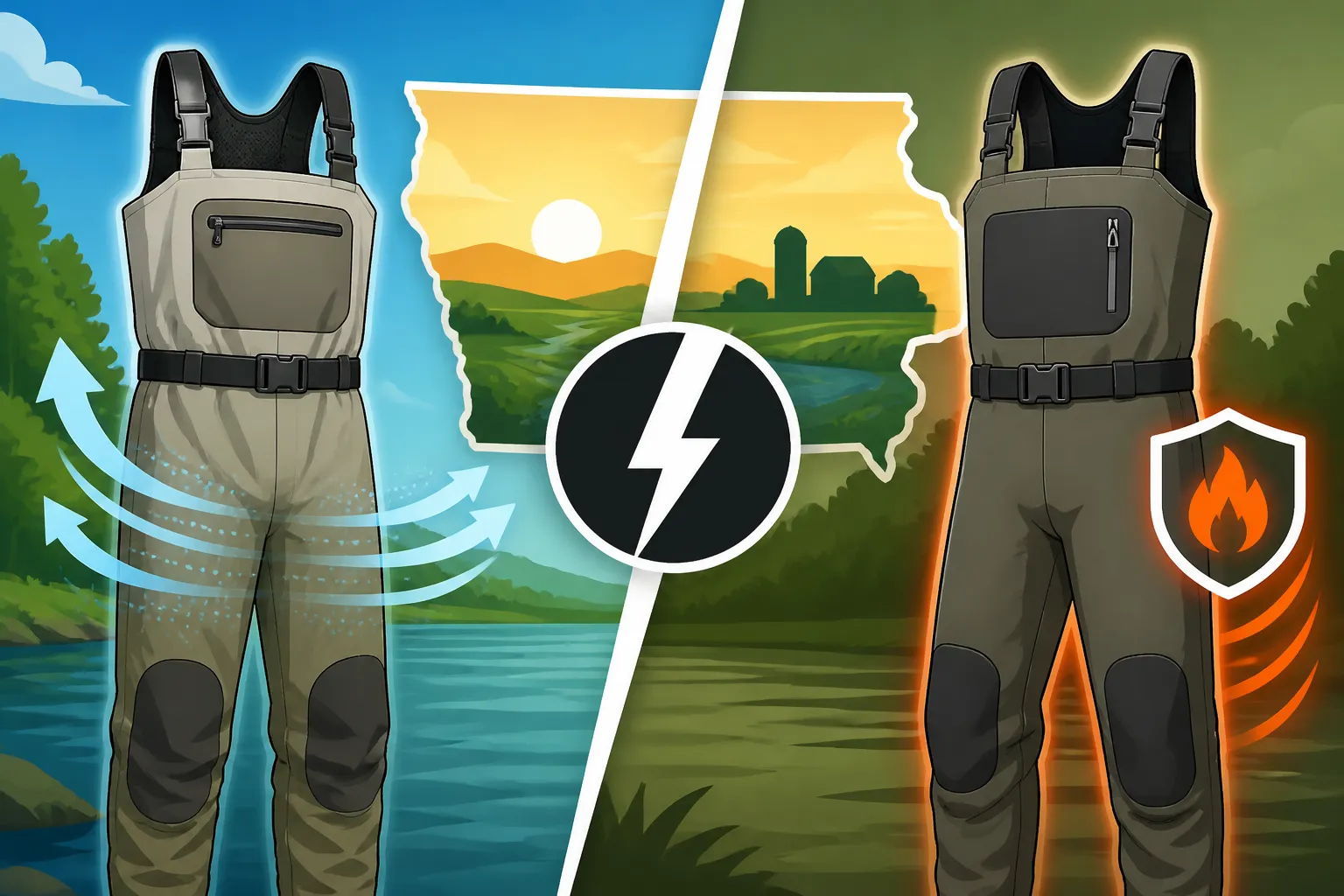
Breathable vs Neoprene Waders
Choosing the right fishing waders can feel like a guessing game, especially with Iowa's unpredictable weather. You want to stay comfortable and dry, whether you're battling frigid trout streams or wading a warm river for smallmouth bass, but the options – primarily breathable versus neoprene – can be confusing. This guide will help you understand the core differences between these two popular wader types, breaking down their pros and cons so you can make an informed decision for your next Iowa fishing adventure.
The Versatility of Breathable Waders for Iowa Anglers
Breathable waders have revolutionized the comfort level for many anglers, especially those who spend long hours on the water or hike to their favorite spots. They're designed to keep you dry from the outside elements while allowing perspiration vapor to escape from the inside. This might sound like magic, but it’s really just smart textile engineering at work.
What Makes Them 'Breathable'?
The secret lies in the multi-layered fabric, often made from synthetic materials like Gore-Tex or similar proprietary blends. These fabrics have microscopic pores that are too small for water molecules (rain, river water) to penetrate, but large enough for water vapor (sweat) to pass through. Think of it like a one-way valve for moisture. This technology prevents that clammy, sweaty feeling that traditional waterproof materials often cause. You can find a huge selection of these at retailers like Bass Pro Shops, offering various levels of breathability and durability.
The lightweight nature of breathable waders also contributes significantly to angler comfort. When you're trekking through dense brush to get to a secluded trout stream or spending a full day casting on a large river, every ounce counts. These waders tend to be much lighter than their neoprene counterparts, reducing fatigue over long periods. Moreover, the flexibility of the material allows for a much greater range of motion, which is crucial for casting, bending to release fish, or navigating uneven riverbeds. This freedom of movement can make a real difference in your overall fishing experience, making those challenging spots a little more accessible and enjoyable.
When Breathable Waders Shine in Iowa
For the typical Iowa angler, breathable waders are often the go-to choice due to their adaptability. They are absolutely fantastic for spring, summer, and fall fishing when air temperatures are mild to warm, or when you’re doing a lot of walking. Imagine a warm late spring day, fishing for Smallmouth Bass Fishing in Iowa on the Maquoketa River. You might be hiking a mile or two along the bank, wading in and out of the current. Neoprene would quickly become an oven, but breathable waders allow that body heat and sweat to dissipate, keeping you from overheating and feeling sticky.
They're also ideal for anyone who primarily fishes moving water, like Iowa's many rivers and trout streams. Trout Fishing Techniques for Iowa Streams often involve a lot of walking, wading, and staying active, making breathability a huge advantage. Layering underneath breathable waders is key to their effectiveness in varying temperatures. On cooler days, you can add fleece pants or thermal underwear; on warmer days, just a light base layer or even shorts will suffice. This versatility means one pair of breathable waders can cover a wide range of Iowa Fishing Seasons Explained, reducing the need for multiple specialized pairs. This kind of flexibility is a big win for most anglers who want to maximize their time on the water without having to constantly switch gear.
Potential Drawbacks to Consider
While breathable waders offer immense comfort, they do have some considerations. First, they generally offer less inherent insulation than neoprene. This means if you're planning on Ice Fishing in Iowa or wading in truly frigid winter waters, you’ll need to rely heavily on your layering system to stay warm. A good pair of heavy fleece or wool pants underneath is essential in cold conditions. Without proper layering, you could quickly become uncomfortably cold, even hypothermic, in extreme cold water.
Another point to consider is their durability. While modern breathable fabrics are quite tough, they can be more susceptible to punctures and tears from sharp objects like thorns, barbed wire, or jagged rocks compared to the thicker neoprene. If you're bushwhacking through dense cover regularly or frequently kneeling on rocky river bottoms, you'll need to be mindful. Repairs are usually manageable with patch kits, but prevention is always better. Despite these points, the comfort often outweighs the potential for minor repairs for many anglers, especially when purchased from reputable brands found on Amazon known for quality manufacturing.
Embracing the Warmth of Neoprene Waders
When the air gets crisp and the water drops to bone-chilling temperatures, neoprene waders step up to the plate. They are the traditional choice for cold-weather fishing for a very good reason: insulation. If your primary goal is to stay warm in freezing conditions, neoprene is your best friend.
The Insulating Power of Neoprene
Neoprene is a synthetic rubber that's packed with tiny air bubbles, which act as an incredible insulator. This is the same material used in wetsuits, and it works by trapping a thin layer of water against your skin, which your body then heats up. However, in waders, the goal is to prevent water from reaching your skin entirely, and the trapped air bubbles within the material do an excellent job of slowing heat transfer from your body to the cold water outside. The thicker the neoprene (measured in millimeters, e.g., 3mm, 5mm), the more insulation it provides.
This inherent warmth means you don't need to layer as heavily underneath neoprene waders, which can be a relief when you want less bulk. The material itself is also quite durable and puncture-resistant due to its thickness and elasticity. It can withstand a fair amount of abuse from snags and rough terrain without immediately tearing. This robustness can be a major advantage for anglers who find themselves in tougher environments, whether that's crashing through thick ice on the way to an ice fishing spot or navigating submerged logs and debris in a river.
Ideal Scenarios for Neoprene in Iowa
Neoprene waders are absolutely indispensable for cold-weather angling in Iowa. If you're planning on Winter Walleye Techniques Near Dubuque or chasing open-water walleye in late fall or early Spring Fishing in Iowa, these waders will be your best friend. Imagine standing in a freezing cold river for hours, waiting for that bite – neoprene's insulating properties are unmatched. They are designed for situations where water temperatures hover just above freezing, providing a crucial barrier against the cold that breathable waders can't match without excessive layering.
They're also a great choice for waterfowl hunters who often find themselves in icy marshes or for early season boat launch operations when the water is still biting cold. The warmth means you can focus on fishing instead of shivering. For ice anglers who transition to early or late season open water, neoprene waders offer a seamless solution to stay protected. The integrated boots often found on neoprene waders also tend to be thicker and more insulated, offering additional warmth for your feet, which is often the first place the cold seeps in. This combination of thick material and insulated boots makes for a truly cold-weather-ready setup that allows you to extend your fishing season well into the colder months.
The Downsides of Neoprene
The biggest drawback of neoprene waders, especially for the active angler, is their lack of breathability. When you exert yourself – walking, climbing, or even just standing in warmer weather – sweat will accumulate inside, leading to that uncomfortable, clammy feeling. In warmer conditions, this can quickly become unbearable, potentially leading to overheating. This makes them far less versatile than breathable waders for year-round fishing in Iowa.
They are also heavier and bulkier than breathable options, which can make long hikes or even extended periods of wading more tiring. The thick, rubbery material can restrict movement somewhat, making strenuous activities or precise casting a bit more challenging. While durable, if they do get a significant puncture, repairs can sometimes be trickier than with breathable fabrics, though patch kits are available. The material is also not as compact, meaning they take up more space when packed away or stored, which might be a consideration for those with limited gear space.
Direct Comparison: Breathable vs. Neoprene for Iowa's Waters
When it comes down to it, the choice between breathable and neoprene waders for Iowa fishing boils down to a few key factors: comfort, mobility, warmth, and versatility. It's not necessarily about one being "better" than the other, but rather which one is better suited for your specific fishing habits and the conditions you'll face.
| Feature | Breathable Waders | Neoprene Waders |
|---|---|---|
| Primary Material | Multi-layer synthetic (e.g., Gore-Tex, proprietary blends) | Synthetic rubber (neoprene) |
| Insulation | Low inherent insulation; relies on layering | High inherent insulation |
| Breathability | Excellent; allows sweat vapor to escape | Poor; traps sweat and heat |
| Weight | Lightweight | Heavy, bulky |
| Mobility | Excellent; flexible and comfortable | Moderate; can feel restrictive |
| Best Use | Mild to warm weather, active fishing, hiking | Cold water, cold weather, static fishing |
| Durability | Good; can be prone to punctures (repairable) | Excellent puncture resistance due to thickness |
| Maintenance | Regular cleaning, careful drying to prevent mildew | Less prone to mildew, but drying is still important |
Comfort and Mobility in Different Seasons
For many Iowa anglers, comfort during extended periods on the water is paramount. Breathable waders win hands down in terms of comfort and mobility for anything other than truly cold conditions. Their lightweight, flexible nature means you can move freely, whether you're rock hopping in a trout stream or casting repeatedly from a river bank. In Fall Fishing in Iowa or Spring Fishing in Iowa, when temperatures can fluctuate, the ability to layer up or down under breathable waders provides excellent adaptability.
However, if you're the type of angler who braves the very coldest days of winter, standing in icy water for hours, neoprene offers a different kind of comfort: warmth. While they might feel a bit stiff or cumbersome, the sheer insulating power allows you to stay out longer and more comfortably in conditions where breathable waders, even with heavy layering, might struggle. Consider the type of fishing you do most often. Do you hike to remote spots? Do you stand in frigid water for extended periods? Your answers will guide your choice.
Durability and Maintenance Considerations
Both types of waders require care to ensure longevity, but their inherent characteristics lead to different considerations. Breathable waders, while durable, are made of thinner fabrics that can be more easily punctured. Regular checks for pinholes, especially after a trip through dense vegetation, are a good habit. Carrying a small repair kit, often available at retailers like Bass Pro Shops or online through Amazon, is always a smart idea for quick fixes on the water. Proper drying is also crucial to prevent mildew, especially inside the neoprene booties.
Neoprene waders, due to their thickness, are generally more resistant to abrasion and punctures. They can take more of a beating from rough environments. However, if a tear does occur, patching them effectively can sometimes be a bit more challenging, though again, specialized repair kits exist. They also need to be dried thoroughly to prevent the rubber from degrading and to avoid that distinct "wet wetsuit" smell. Regardless of the type you choose, cleaning off mud and debris, and drying them completely after each use, will significantly extend their lifespan.
Making Your Choice: Matching Waders to Your Iowa Fishing Style
Ultimately, the best waders for you depend entirely on your personal fishing habits and the conditions you most frequently encounter. There’s no universal "best" wader; there's only the best wader for your specific needs.
Factors to Weigh for Year-Round Fishing
Think about when and where you fish in Iowa.
- Seasonality: Do you mostly fish in spring, summer, and fall? Or are you a dedicated winter angler? If you prioritize comfort and mobility in mild to warm conditions, breathable waders are likely your best bet. If you regularly fish in extremely cold water, particularly during late fall, winter, and early spring, the warmth of neoprene is probably non-negotiable.
- Activity Level: Do you hike miles to get to your fishing spots, or do you mostly fish from a stationary position or close to your vehicle? Active anglers who move a lot will appreciate the lighter weight and flexibility of breathable waders, which help reduce fatigue. For those who stand in one spot, especially in cold water, the warmth of neoprene can outweigh the bulk.
- Target Species/Location: Are you primarily Trout Fishing Streams in Northeast Iowa where walking is common, or are you chasing Catfish Fishing in Iowa on larger rivers from a static position? The specific demands of your chosen fishing method will influence your ideal wader choice.
- Layering Preference: Are you comfortable with layering extensively in cold weather, or do you prefer the simplicity of minimal layers with built-in insulation? Breathable waders require layering for warmth, while neoprene provides it inherently.
Many dedicated Iowa anglers actually own both types of waders, switching them out depending on the season and the specific fishing trip planned. This might seem like overkill, but it ensures maximum comfort and effectiveness no matter what Mother Nature throws your way. Consider what your "average" fishing day looks like, and choose the wader that fits that scenario most of the time. You can always rent or borrow the other type for an occasional outlier trip, or pick up a second pair down the line as your fishing passion grows.
Finding Your Perfect Pair
Once you've considered these factors, you can start looking for specific models. When shopping for breathable waders, pay attention to the denier rating of the fabric (a higher number usually means more durability) and features like reinforced knees and seat. For neoprene waders, the thickness (3mm vs. 5mm) will be your primary consideration for warmth. You'll also want to look at bootfoot versus stockingfoot options. Bootfoot waders have integrated boots, which are convenient, while stockingfoot waders require separate wading boots, offering more ankle support and the ability to customize your footwear. Best Wading Boots for Rocky Streams can be an important consideration for stockingfoot waders.
Don't forget to check reviews and try them on if possible. A good fit is essential for comfort and performance, regardless of the material. Whether you're browsing the aisles at Bass Pro Shops or comparing options online at Amazon, take your time to read product descriptions carefully. Look for features like hand-warmer pockets, internal storage, and sturdy suspenders. Investing in a quality pair of waders, breathable or neoprene, will make your Iowa fishing experiences much more enjoyable, allowing you to focus on the fish, not the cold or discomfort.
Disclaimer
This article is for general informational purposes only and does not constitute professional advice. Laws, prices and regulations vary by location and change over time. Consult a qualified professional for guidance on your specific situation.