Best Tip-Up Setup for Iowa Walleye Through Ice
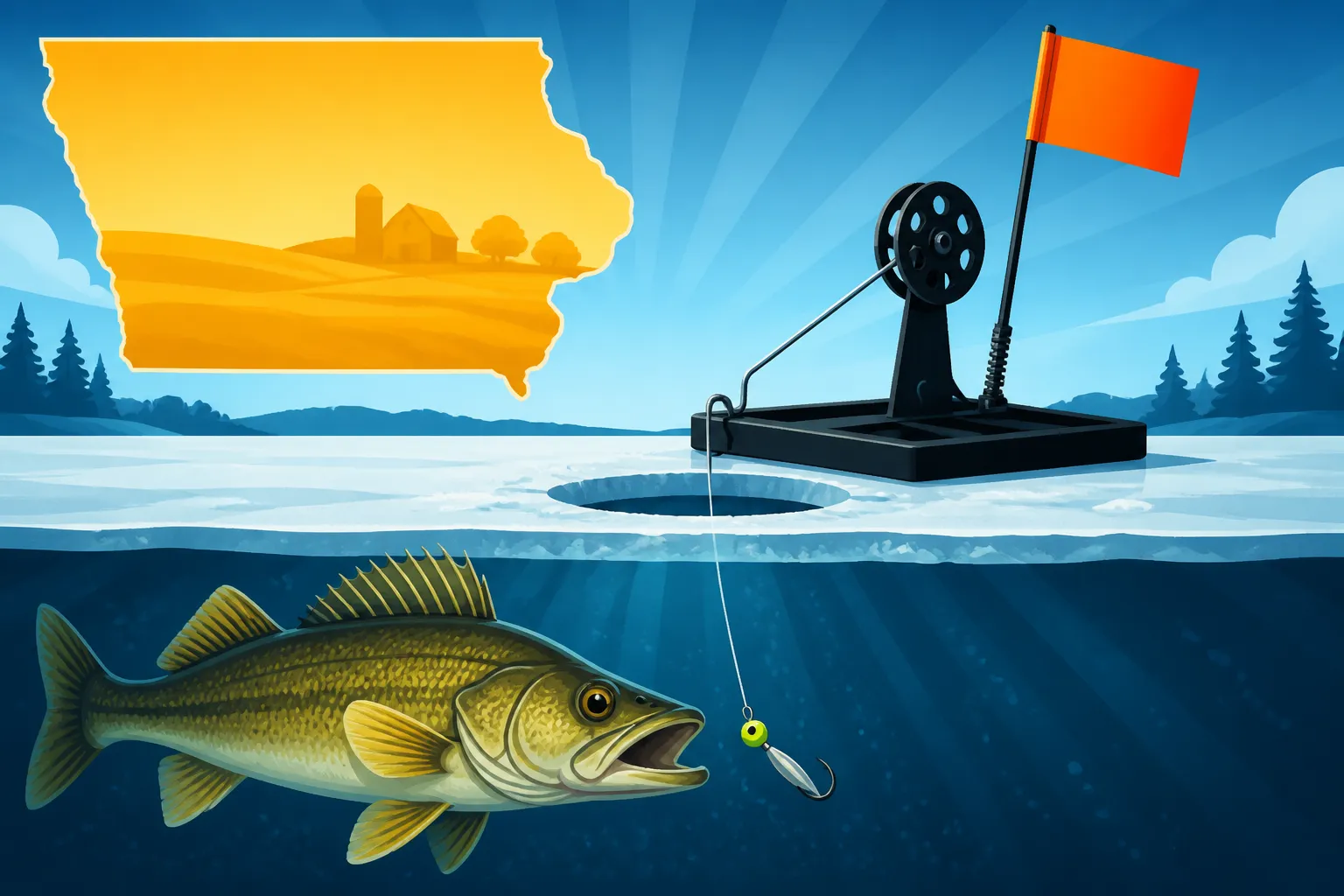
There's nothing quite like the thrill of a flag popping up on a tip-up, signaling a potential walleye bite beneath the ice on a frosty Iowa morning. But for many anglers, especially those new to the hardwater scene, setting up tip-ups effectively can feel like a guessing game. This comprehensive guide is here to demystify the process, walking you through everything you need to know to assemble the best tip-up setup for enticing those elusive Iowa walleye through the ice, ensuring your time on the frozen lake is both productive and enjoyable.
Deciphering Iowa Walleye Behavior in Winter
Before you even think about dropping a line, it's crucial to understand what makes walleye tick during the colder months in Iowa. Their behavior changes dramatically once the lakes and rivers freeze over, and knowing these patterns is your first step toward consistent success with tip-ups. You can't just throw bait anywhere and expect results; you need to think like a walleye.
Where Walleye Hold in Icy Waters
During winter, walleye tend to slow down significantly, conserving energy. They often relate to specific structures that offer both food and shelter from currents and bright light. In Iowa, this means looking for familiar haunts like main lake points, submerged humps, rock piles, and deep weed lines. These structures often hold baitfish, which are the walleye's primary food source. For instance, on large reservoirs like Rathbun Lake or Saylorville, walleye might school up in deeper main lake basins or along the edges of old creek channels. In the Iowa Great Lakes, you'll find them around deep transitions where sand meets rock or within the basins that still hold oxygen and bait.
Consider how the specific body of water you're fishing behaves under ice. Rivers, like the Mississippi, present unique challenges and opportunities. Walleye in rivers will often congregate in slower current areas, behind wing dams, in deep holes, or at the mouths of feeder creeks where baitfish might be seeking refuge. It's a different game than still water, requiring you to think about current breaks and depth contours more intensely. Understanding Walleye Identification and Habitat in Iowa can give you an even deeper dive into their preferred winter hideouts.
Understanding Their Winter Feeding Patterns
Walleye are opportunistic predators, but their metabolism slows down in cold water. This means they often feed in shorter, more intense bursts, typically around dawn and dusk, or during periods of low light and stable barometric pressure throughout the day. However, they can still be active during midday, especially if baitfish are present and conditions are favorable. They are less likely to chase down a fast-moving lure over long distances, making a subtle, stationary bait presented by a tip-up incredibly effective.
Their feeding will often be driven by the presence of baitfish, so if you can locate schools of shad, minnows, or perch, you're likely in a productive area. Walleye might "graze" through these baitfish schools, picking off easy targets. This is where the long soak time of a tip-up setup shines; it keeps your bait in the strike zone, patiently waiting for a walleye to cruise by and decide it's snack time. Don't be surprised if a flag pops up during a quiet midday lull, as a hungry walleye might just be making its rounds.
Assembling Your Perfect Walleye Tip-Up Rig
Now that we understand a bit more about the winter walleye, let's get down to the brass tacks of building a tip-up setup that screams "eat me!" to those toothy predators. Every component plays a role in success, from the frame holding your line to the hook presenting your bait.
Selecting the Right Tip-Up Frame for Iowa Conditions
The market offers a variety of tip-up styles, and each has its advantages for Iowa's diverse ice fishing environments. Your choice often comes down to personal preference, portability, and how much you want to combat freeze-up.
-
Traditional Wood or Plastic Cross-Style Tip-Ups: These are the classic "V" or "X" shaped frames. They are generally affordable and effective. Brands like Frabill or Beaver Dam make popular models. The downside can be that the hole is exposed to the elements, leading to quicker freeze-over in sub-zero temperatures, which can hinder the flag from tripping. Many anglers solve this by piling snow around the hole or using an old bucket. You can find a good selection of these foundational models at Bass Pro Shops or even on Amazon.
-
Thermal Tip-Ups: These models, like those from HT Enterprises, are designed with a larger base that covers the entire ice hole, helping to insulate it and prevent it from freezing solid. This is a huge advantage on those brutally cold Iowa days when you don't want to constantly be chipping ice out of your hole. They also tend to be more stable on windy days.
-
Wind Tip-Ups: While less common for walleye, some anglers experiment with wind-activated tip-ups in very specific situations, though the sensitivity needs careful adjustment. For passive walleye fishing, the traditional or thermal styles are usually preferred.
Here's a quick comparison of common tip-up types:
| Tip-Up Type | Pros | Cons | Best For |
|---|---|---|---|
| Traditional Cross-Style | Affordable, widely available, simple to use. | Hole can freeze over quickly, less stable in high winds. | Moderate cold, less windy days, budget-conscious anglers. |
| Thermal Tip-Up | Prevents hole freeze-up, very stable, protects line. | More expensive, can be bulkier to transport. | Extreme cold, windy conditions, long fishing sessions. |
| Jaw Jacker/Automatic | Sets the hook automatically, good for light bites. | Requires more setup, can spook fish if not set correctly. | Very light bites, targeting specific species (less common for walleye tip-ups). |
Choosing the Ideal Line Setup for Sensitivity and Strength
Your line setup is critical for both detecting a bite and successfully landing a walleye, especially when it's just a dead stick presentation. You'll typically want a main line and a leader.
-
Main Line: For your tip-up spool, a heavy, durable line is key. Dacron is a traditional choice, often in 20-30 pound test, because it handles well in cold temperatures, resists abrasion, and has low memory. You want something that won't coil up when you pull it out of the water. Another popular option is heavy-duty braided line, which offers superior strength-to-diameter ratio and doesn't hold memory. For a comprehensive look at line choices, you might find insights in Best Line Weight for River Walleye, which applies some principles to still-water situations as well.
-
Leader Material: This is where finesse comes into play. Walleye can be line-shy, especially in clear ice-covered waters. A fluorocarbon leader is almost invisible underwater and provides excellent abrasion resistance against a walleye's sharp gill plates. A 6-10 pound test fluorocarbon leader, about 2-3 feet long, is a good starting point. Connect your main line to your leader with a small barrel swivel. This also helps prevent line twist, which can be a real headache.
-
Line Color: While perhaps less critical for walleye under ice, some anglers prefer dark-colored main lines for better visibility against the snow, making it easier to see how much line you've got out or if it's snagged. However, the nearly invisible fluorocarbon leader is doing the most work near the bait.
Hooking Up for Success: Selecting the Best Hooks
The right hook will secure your bait naturally and provide a solid hookset when that flag flies. For walleye on tip-ups, live bait hooks are usually the go-to.
-
Aberdeen Hooks: These thin-wire hooks are popular for their ability to straighten out under heavy pressure, allowing you to retrieve your snagged line without losing the entire rig. They are great for minnows, allowing them to swim more freely. Sizes #4 to #8 are generally appropriate for walleye, depending on the size of your bait.
-
Treble Hooks: Some anglers prefer a small treble hook, often a size #10 or #12, especially when using larger minnows. A treble hook offers more hooking points, increasing your chances of connecting with a light-biting walleye. Just be mindful of how you hook your minnow to allow for natural movement.
-
Circle Hooks: While gaining popularity in open water, circle hooks are less common for tip-ups because they require the fish to swim away to set properly, which can be less reliable in a static tip-up scenario. Stick with Aberdeen or small treble hooks for consistent results. Remember, the goal is to present your live bait in the most natural, enticing way possible.
The Art of Baiting for Winter Walleye
Live bait is the undisputed king for walleye tip-ups in Iowa. The natural movement and scent of a lively minnow are often irresistible to a lethargic walleye.
-
Minnow Selection: Shiners, fatheads, and smaller sucker minnows are excellent choices. Shiners are particularly lively and shiny, making them highly visible. Fatheads are hardier and can withstand cold better. Sucker minnows are often larger and appeal to bigger walleye. Always choose lively, healthy minnows. You can often find these at local bait shops or larger retailers like Bass Pro Shops.
-
Hooking Your Minnow: The key is to hook the minnow in a way that allows it to swim naturally and stay alive for as long as possible.
- Through the Dorsal Fin: Hooking just behind the dorsal fin, being careful not to hit the spine, allows the minnow to swim horizontally and appears natural. This is a very common method for tip-ups.
- Through the Lips: For a more vertical presentation or if you want the minnow to dive, hooking it through both lips from the bottom up is effective. This can also prevent the hook from being swallowed too deeply.
- Through the Tail: Some anglers prefer to hook through the tail (just above the lateral line) to make the minnow flutter enticingly. However, this can sometimes lead to short strikes where the walleye grabs the minnow but misses the hook.
-
Bait Presentation: Use enough weight (split shot or small egg sinker) to get your minnow down to the desired depth, but not so much that it restricts its movement too much. You want the minnow to be able to wiggle and swim, attracting attention. Periodically, you might want to give your line a gentle tug to stir up the bait and simulate a struggling minnow, sometimes triggering a strike.
Masterful Rigging Techniques for Iowa Tip-Up Success
Having the right gear is only half the battle; knowing how to rig and deploy it makes all the difference. These techniques will help you maximize your chances of a flag flying high.
Precision Depth Setting: Finding the Walleye's Zone
Setting your bait at the correct depth is perhaps the most critical aspect of tip-up fishing for walleye. They are often bottom-oriented in winter, but sometimes suspend slightly.
-
Using a Depth Finder/Flasher: If you have one, use a portable Vexilar or Humminbird flasher to determine the exact depth of the water and locate any structure or baitfish. Drop a weighted clip down your line until it hits bottom, then reel up a few inches to a foot. This places your bait just above the bottom, making it easily visible to walleye cruising along. How to Read a Fish Finder for Walleye can help you interpret those icy signals.
-
Plumbing the Depth Manually: If you don't have electronics, attach a depth-finding clip (a simple lead weight that clips onto your hook) and drop it until you feel bottom. Mark your line with a bobber stop or by crimping a small split shot at the water line, then reel up your desired distance (e.g., 6-12 inches) to set your bait off the bottom.
-
Experimentation: Don't be afraid to set different tip-ups at varying depths. Some might be right on the bottom, others a foot off, and some even higher if you're seeing suspended baitfish. Walleye are sometimes suspended just below schools of bait or above significant structure.
Dialing In Your Trip Sensitivity
The trip mechanism on your tip-up is what releases the flag when a fish bites. It needs to be sensitive enough to detect light bites but not so sensitive that it's constantly going off with false alarms from baitfish or wind.
-
Adjustable Mechanisms: Many modern tip-ups feature adjustable tension settings. Start with a medium setting. If you're getting lots of flags but no fish, it might be too sensitive – the baitfish might be tripping it. If you're seeing bent rods or pulled line when you check your bait but no flags, it's too stiff.
-
Balancing Act: For walleye, who can sometimes be very subtle biters in cold water, you want a setting that allows them to take the bait without feeling too much resistance. A fish should be able to pull a few inches of line before the flag pops. This gives them confidence to commit to the bite.
-
Wind Considerations: On windy days, you might need to slightly increase the tension to prevent false flags from the line fluttering in the wind. However, be cautious not to make it too stiff. Sometimes, orienting the tip-up with the wind can help.
Strategic Tip-Up Placement Across the Ice
Using multiple tip-ups (within Iowa's legal limits) allows you to cover more water and test different depths and structures simultaneously. This is where strategic placement comes into play.
-
Fan Pattern: A common strategy is to spread your tip-ups out in a fan pattern from your main fishing hole. This allows you to cover a wider area, hitting different depth contours or areas around a piece of structure. For example, if you're fishing a point, you might place one in shallow water, one on the break, and one in deeper water.
-
Along a Break: Walleye frequently patrol sharp breaklines. Line your tip-ups up along a defined contour, such as a drop-off from 10 feet to 20 feet, with each tip-up at a slightly different depth along that break.
-
Proximity to Known Hotspots: If you know there's a submerged hump or a rock pile, place tip-ups directly on top, around the edges, and slightly off the structure to see where the walleye are holding. Remember, walleye can often be right on top of structure or just off to the side, waiting to ambush. Keep an eye on your flasher in your main hole for clues about where fish are moving.
Essential Tips and Safety for Iowa Walleye Tip-Up Anglers
Ice fishing, especially with tip-ups, requires more than just knowing how to rig your gear. Safety, electronics, and understanding regulations are paramount for a successful and responsible outing.
Enhancing Your Tip-Up Game with Electronics
Even though tip-ups are a passive fishing method, electronics can drastically improve your success rate. They act as your eyes beneath the ice, helping you confirm your spots and understand fish behavior.
-
Flashers and Sonars: While jigging with a flasher is standard, you can also use one to scan potential tip-up locations before setting up. Drill a hole, drop your transducer, and look for signs of walleye or baitfish. If you see activity, that's a prime spot for a tip-up. Once a tip-up is set, you can occasionally check the hole with your flasher to see if fish are cruising through the area or if your bait is still active. This helps you decide when to move or adjust your depth. Learning How to Read a Depth Finder for Structure is a game-changer.
-
GPS and Mapping: Modern GPS units and mapping apps (many available on your phone or tablet) are invaluable for navigating frozen lakes, especially if snow covers familiar landmarks. They help you pinpoint underwater structure like humps, points, and creek channels that you identified on bathymetric maps. Mark your tip-up locations so you can easily return to productive spots on future trips. Iowa Fishing Atlas Access Points can guide you to these digital mapping tools.
-
Underwater Cameras: For the truly dedicated (or just curious!), an underwater camera can give you a live view of your bait and any interested fish. This is a fantastic learning tool, showing you how walleye react to your presentation and helping you fine-tune your hook and bait placement. It also confirms if your minnow is still lively or if it's time for a fresh one.
Ice Safety and Best Practices When Using Tip-Ups
Safety should always be your top priority on the ice. No fish is worth risking your life.
-
Check Ice Thickness: Always check the ice thickness regularly as you venture out. A minimum of 4 inches of clear, solid ice is generally recommended for walking, but more is needed for groups or ATVs. Conditions can change rapidly, so Best Ice Thickness for Safe Ice Fishing is a must-read before you head out.
-
Travel with a Buddy: Never ice fish alone. A companion can provide assistance in an emergency.
-
Essential Safety Gear: Carry ice picks (worn around your neck for easy access), a throw rope, and a fully charged cell phone. Dress in layers, including waterproof outer layers, and wear insulated boots. Even with tip-ups, be prepared for What to Wear Ice Fishing in Iowa.
-
Mark Your Holes: If you're using multiple tip-ups and drilling many holes, make sure to mark them, especially if you're moving around. This prevents accidental falls.
-
Stay Hydrated and Warm: Cold weather can be deceiving. Drink plenty of water and bring warm beverages. Hand and foot warmers can also be a lifesaver on bitter days.
Navigating Iowa's Regulations for Tip-Up Fishing
Iowa has specific rules regarding ice fishing and the use of multiple lines. It's your responsibility to know and follow these regulations to avoid fines.
-
Number of Lines: Generally, Iowa allows an angler to use up to two lines while fishing. This means you can jig with one rod and have one tip-up, or use two tip-ups. Always check the current Iowa Fishing Regulations Explained before heading out, as rules can change.
-
Attended Lines: All fishing lines, including tip-ups, must be "attended." This typically means you must be in visual contact with your lines and able to reach them promptly. You can't set up tip-ups and then go back to your warm vehicle for an hour. Keep them within sight, and be ready to run to a flag!
-
Designated Waters: While most public waters allow tip-up fishing, always be aware of any specific regulations for particular lakes or rivers, especially border waters like the Mississippi River, which might have reciprocal agreements or unique rules.
By understanding walleye behavior, carefully assembling and rigging your tip-up, and prioritizing safety and regulations, you'll be well on your way to enjoying some fantastic winter walleye fishing here in Iowa. Tight lines!
Disclaimer
This article is for general informational purposes only and does not constitute professional advice. Laws, prices and regulations vary by location and change over time. Consult a qualified professional for guidance on your specific situation.