Do You Need Braided Line for Muskie Fishing?
One of the biggest head-scratchers for any Iowa angler stepping into the exciting world of muskie fishing is figuring out the right line. You've heard tales of these toothy predators, their explosive strikes, and their incredible power, and naturally, you want to be prepared. This guide is here to untangle the confusion surrounding braided line for muskie fishing, exploring why it's often the top recommendation and when other options might fit into your tackle box.
Understanding the Demands of Muskie Fishing
Muskie fishing isn't just another day on the water; it's a dedicated pursuit that requires specialized gear and a serious understanding of what these apex predators demand. When you're targeting a fish known as "the fish of 10,000 casts," every component of your setup needs to be up to the task, and your fishing line is arguably one of the most critical links in that chain. You're not just trying to catch a fish; you're trying to tame a freshwater torpedo.
The Power and Fight of a Muskie
Muskellunge, or muskie as we affectionately call them, are built like tanks and fight like champions. They're capable of incredible bursts of speed, head-shaking jumps, and powerful runs that will test your drag system to its limits. Imagine setting the hook on a massive muskie in the sprawling waters of Spirit Lake or a river like the Mississippi; it’s an adrenaline rush, but it also puts immense strain on your line. You need something that can absorb that shock and hold strong against their brute force. This isn't like fighting a crappie or even a decent bass; these fish are in a league of their own.
They often strike with such ferocity that lesser lines can snap immediately, leaving you with a broken heart and a lost lure. Their sheer size, which can be considerable in Iowa – we're talking about How Big Muskie Get in Iowa – means that every inch of line must be durable and trustworthy. Overlooking the importance of line strength and reliability for these fish is a common rookie mistake, leading to frustration and lost opportunities.
The Environment and Muskie Habitat
Iowa's muskie habitats, whether in our beautiful natural lakes like West Okoboji, or large river systems, often present challenging conditions. You might be casting near submerged timber, rocky points, thick weed beds, or even sharp clam beds. These environments are notorious for abrading and cutting fishing line. A muskie, once hooked, will instinctively try to use these obstacles to its advantage, rubbing your line against anything it can find to try and break free.
Additionally, the heavy baits typically used for muskie – large bucktails, crankbaits, jerkbaits, and topwater lures – create significant drag in the water, requiring a line that can handle the stress of casting and retrieving these heavy offerings all day long. A line that stretches too much or lacks sufficient strength will quickly fatigue and potentially fail under this constant abuse. It's a relentless style of fishing, and your line needs to be as tough as the fish you're chasing.
Braided Line: The Muskie Angler's Advantage
When it comes to muskie fishing, braided line has become the undisputed champion for many seasoned anglers in Iowa and beyond. Its unique properties address almost all the challenges posed by these formidable fish and their demanding habitats. It's more than just a preference; for many, it's a necessity for consistent success.
Superior Strength and Minimal Stretch
The primary reason braided line shines for muskie fishing is its incredible strength-to-diameter ratio and its near-zero stretch. Imagine a line that, for its relatively thin profile, can withstand an enormous amount of force. This means you can use a much heavier test line than you would with monofilament or fluorocarbon, without sacrificing casting distance or spool capacity. This brute strength is crucial when you hook into a truly massive muskie that decides to make a run for deep water or wraps around a sunken log.
The minimal stretch is equally important. When a muskie hits, it often happens with a jarring strike that can stun both angler and fish. With braided line, that strike translates almost instantly to your rod tip, allowing for a lightning-fast and solid hookset. This direct connection also means you feel every head shake, every subtle change in direction, and every attempt the fish makes to dislodge the hook. This enhanced sensitivity is invaluable, especially when working large, heavy lures that can sometimes mask a lighter bite.
Exceptional Abrasion Resistance
While no line is completely impervious to the razor-sharp teeth of a muskie or the jagged edges of underwater structure, braided line offers significantly better abrasion resistance than monofilament. Its woven construction makes it more resilient against nicks and cuts. When that muskie dives into a weed bed or rubs against rocks, braided line has a much higher chance of surviving the encounter. However, it's still highly recommended to use a heavy-duty fluorocarbon or wire leader, which we'll discuss later, to protect against direct contact with the muskie's teeth.
The added protection from braid's robust nature gives you a fighting chance against snags and cuts that would instantly sever thinner, more fragile lines. This can save you from losing expensive muskie lures, which can add up quickly. Anglers often turn to retailers like Bass Pro Shops for their selection of heavy-duty braided lines specifically designed for these types of challenging fishing conditions.
Durability and Longevity
Braided line, while an initial investment, tends to last much longer than other line types, especially when properly cared for. It's less prone to UV damage, doesn't absorb water, and maintains its strength over many fishing trips. Unlike monofilament, which can develop memory and coil over time, braided line remains supple and performs consistently. This means fewer re-spools throughout the season, saving you time and money in the long run.
The longevity also means you can trust your line outing after outing, which builds confidence when you're making those thousands of casts. You won't be constantly worrying about weak spots or line fatigue, allowing you to focus on presentation and detection. For many anglers, the peace of mind that comes with a reliable, durable line is worth every penny.
Alternative Line Options and Their Role
While braided line is the go-to for many muskie enthusiasts, it's worth understanding the properties of other line types. Sometimes, they play a supporting role in a braided setup, and in very specific scenarios, they might even be considered as a primary line, though that's rare for serious muskie fishing.
Fluorocarbon: The Leader of Choice
Fluorocarbon, while not typically used as a primary muskie line, is absolutely essential as a leader material. This is where its unique properties truly shine. Unlike braid, fluorocarbon is nearly invisible underwater, a huge advantage when targeting wary muskie who have seen every trick in the book. Its density also makes it sink, which can be beneficial for certain lure presentations.
But the real kicker for muskie fishing is its superior abrasion resistance and stiffness. A heavy-test fluorocarbon leader (think 80-150 lb test, depending on the lure and water conditions) acts as the crucial buffer between your braided main line and the muskie's sharp teeth. This leader absorbs the initial shock of the bite and provides a tough barrier against being cut. Many anglers pre-tie a selection of leaders before hitting the water, ready to swap them out as needed. You can find pre-made or bulk fluorocarbon leader material easily on Amazon or at specialty tackle shops.
Monofilament: Limited Use for Muskie
Monofilament line, the traditional workhorse for many fishing applications, generally isn't recommended as a primary line for muskie fishing. Its stretchiness, while good for absorbing shock on lighter tackle, works against you with muskie. That stretch creates a delay in hooksets, and with a fish as hard-mouthed as a muskie, you need all the direct power you can get. It also has much lower abrasion resistance compared to braid or heavy fluorocarbon, making it highly susceptible to cuts from teeth or structure.
The only real scenario where monofilament might be found in a muskie angler's boat is perhaps as backing on a reel, or very rarely, for certain specific topwater presentations where its buoyancy and stretch might be marginally preferred by some experienced anglers using very specialized setups. However, for the vast majority of muskie fishing, it's simply not strong enough or sensitive enough to handle the job effectively. Consider how much effort goes into Muskie Fishing Techniques for Iowa Waters; you don't want your line to be the weak link.
Wire Leaders: The Ultimate Tooth Protection
For certain toothy species, wire leaders are a common sight, and muskie are no exception, especially when using larger, more aggressive lures or fishing in environments where leader abrasion is a constant concern. Wire leaders offer the absolute best protection against bite-offs from muskie teeth. They come in various types, including single-strand, multi-strand, and titanium, each with their own pros and cons regarding kink resistance and flexibility.
While highly effective at preventing bite-offs, some anglers feel wire leaders can be more visible than fluorocarbon, potentially deterring some of the more finicky muskie. They can also be prone to kinking, especially after a fish, necessitating frequent replacement. Many anglers will choose wire leaders when fishing very expensive lures or when their confidence demands the maximum tooth protection available. The choice often comes down to personal preference and the specific fishing conditions, but having them as an option is always wise.
Rigging and Practical Considerations for Muskie Line
It's not enough to simply spool up with braided line; a successful muskie setup involves understanding how all the components work together. From knots to leaders and everything in between, paying attention to the details will significantly increase your chances of landing that trophy fish. This holistic approach ensures that your line selection is part of a robust and reliable system.
Knots That Hold Up
When using braided line, strong, reliable knots are non-negotiable. Because braid is so slick, many traditional knots that work perfectly for monofilament can slip or fail. The knot you use to tie your braided main line to your leader is particularly important. Popular choices include the FG knot, which is incredibly strong and has a small profile, allowing it to pass smoothly through rod guides. The Alberto knot (or "improved Albright") is another common and effective braid-to-fluorocarbon connection. Practice these knots at home until you can tie them quickly and correctly under pressure.
For tying your leader to the lure, a heavy-duty snap or an appropriately rated swiveling snap is typically used. This allows for quick lure changes without having to re-tie your leader every time. Make sure these snaps and swivels are rated for heavy use, as a cheap snap can be the downfall of an otherwise perfect setup. Remember, a chain is only as strong as its weakest link, and your knots are critical components.
Leader Length and Material
The length of your leader is a point of frequent discussion among muskie anglers. A common starting point is an 18-inch to 36-inch leader. This provides enough protection against the muskie's thrashing head and gills, which can also abrade your line, as well as their teeth. A shorter leader might be preferred for smaller jerkbaits or specific casting situations, while longer leaders offer more protection when handling a fish at the boat. As mentioned earlier, heavy fluorocarbon (80-150 lb test) is the most popular choice for its balance of invisibility and abrasion resistance, while wire is used for maximum tooth protection.
Experimentation and personal preference play a significant role here. Some anglers prefer to keep their leader connections outside the rod tip for smoother casting, while others are comfortable having the knot run through the guides. Consider your rod length and casting style when deciding on your leader length.
Spooling and Backing
When spooling braided line onto your muskie reel, it's crucial to put some backing on first. This prevents the slick braid from slipping on the bare arbor of the spool. A few yards of monofilament, securely tied to the spool and then to your braid with a strong knot like a Uni-to-Uni, will do the trick. For many muskie reels, especially those used for casting, a standard size like a 300 or 400 series baitcaster, you'll want to spool it up completely with your chosen braided line.
Choosing the right pound test for your braid depends on your preferred fishing style and the size of muskie you expect to encounter. Common choices range from 65 lb to 100 lb test. While 65 lb is often sufficient, going up to 80 lb or even 100 lb provides extra insurance when fishing heavy cover or with particularly large baits. For example, when comparing it to a Best Rod for Catfish Fishing, muskie setups require considerably heavier lines and rods.
The Right Rod and Reel
Your line is only as good as the rod and reel it's paired with. For muskie fishing, you need a heavy-duty baitcasting setup designed to handle the weight of large lures and the power of big fish. Muskie rods are typically long and stout, often ranging from 7 feet 6 inches to over 9 feet, with heavy or extra-heavy power ratings. These rods are essential for launching heavy baits long distances and providing the leverage needed to fight a strong muskie.
Your reel should also be a robust baitcaster with a strong drag system and a high line capacity. Many anglers prefer reels with a lower gear ratio for cranking in large, high-resistance lures, while others opt for faster reels for certain jerkbait techniques. Matching your line to the capabilities of your rod and reel is paramount for a balanced and effective muskie fishing system. You can explore many options for specialized gear at a place like Bass Pro Shops or online through Amazon.
Common Questions About Braided Line for Muskie
Anglers, especially those new to muskie fishing, often have similar questions about braided line. Let's tackle some of the most common ones to help you feel more confident in your line choice.
Why not use a leader for everything?
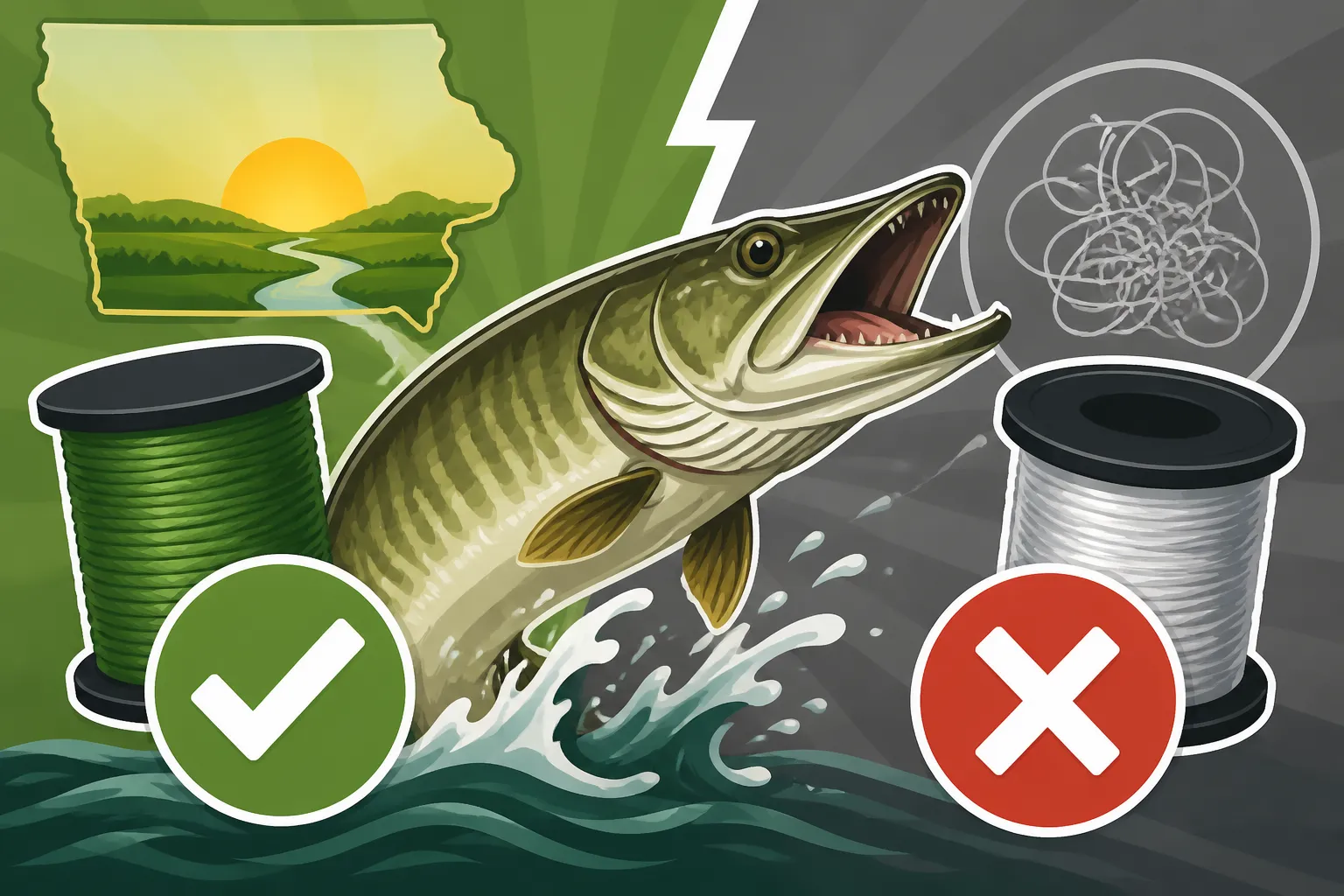
While leaders are absolutely crucial for muskie fishing to protect against bite-offs, using a full spool of fluorocarbon or monofilament as your main line comes with significant drawbacks. Heavy fluorocarbon, while abrasion-resistant, is stiff, expensive, and has more memory than braid, making it less pleasant to cast, especially with large lures. Monofilament lacks the sensitivity and strength-to-diameter ratio needed for muskie. Braided line offers the best balance of strength, sensitivity, and castability for your main line, with the leader providing the necessary tooth protection where it counts.
Does line color matter?
For braided main line, the color often matters less than for monofilament or fluorocarbon, primarily because you're using a leader. Many anglers prefer high-visibility colors like yellow or neon green for their main braid. This allows them to see their line easily, track their lure, detect subtle bites (especially when the line twitches), and avoid tangles with other lines if fishing with a partner. Some prefer low-visibility colors like dark green or black for more stealth, but with a leader, the main line's color is less critical in terms of fish spooking. It often comes down to personal preference for visibility.
How often should I replace my braided line?
Braided line is incredibly durable, but it's not invincible. How often you replace it depends on how frequently you fish, the conditions you fish in, and how well you inspect and maintain it. If you're fishing several times a week, you might consider replacing your line once a season. For casual anglers, a single spool of braid could last several seasons. The key is regular inspection.
Look for fraying, discoloration, or any signs of damage, especially the first 10-20 feet of line that sees the most action. If you notice any significant wear, it's always better to cut back a section or replace the line entirely rather than risk losing a trophy muskie. This attention to detail is part of being a successful muskie angler. Much like understanding Iowa Fishing Season Dates and Limits, knowing your gear's lifespan is vital.
Table: Fishing Line Comparison for Muskie Anglers
Here's a quick comparison of the different line types and their relevance to muskie fishing.
| Line Type | Primary Use for Muskie | Key Advantages | Key Disadvantages |
|---|---|---|---|
| Braided Line | Main Line | – High strength-to-diameter | – Requires leader for tooth protection |
| – Near-zero stretch for sensitivity & hooksets | – Can be more visible than mono/fluoro | ||
| – Excellent abrasion resistance | – Can cut hands or rod guides if not careful | ||
| – Long-lasting durability | – More expensive upfront | ||
| Fluorocarbon | Leader Material | – Nearly invisible underwater | – Not ideal as a main line (stiff, expensive, memory) |
| – Excellent abrasion resistance (as leader) | – More stretch than braid | ||
| – Sinks | |||
| Monofilament | Backing, Very Limited Use | – Good knot strength (for itself) | – High stretch (poor hooksets for muskie) |
| (e.g., specific topwater) | – Inexpensive | – Low abrasion resistance | |
| – Floats | – UV degradation, memory issues over time | ||
| Wire Leaders | Leader Material | – Absolute best tooth protection | – Can be more visible than fluorocarbon |
| – Extremely durable against cuts | – Prone to kinking, can impact lure action |
Concluding Thoughts on Braided Line and Muskie
So, do you need braided line for muskie fishing? For the serious Iowa muskie angler, the answer is a resounding yes, it's generally considered indispensable. While technically you could try other lines, braided line offers a combination of strength, sensitivity, and abrasion resistance that is unmatched by other options, making it the most effective and reliable choice for tackling these powerful fish. It's truly a game-changer when you're battling a monster on the end of your line.
Pair your high-quality braided main line with a robust fluorocarbon or wire leader, and you'll have a setup that gives you the best possible chance of turning those 10,000 casts into a triumphant memory. Don't skimp on your line; it's your most direct connection to the fish of a lifetime. Getting your gear right is just as important as knowing the Best Fishing Spots in Iowa or understanding Iowa Fishing Regulations Explained. Tight lines out there!
Disclaimer
This article is for general informational purposes only and does not constitute professional advice. Laws, prices and regulations vary by location and change over time. Consult a qualified professional for guidance on your specific situation.