Difference Between a Muskie and a Northern Pike
It’s a common scenario on Iowa’s lakes and rivers: you hook into an aggressive, toothy predator with an elongated body, and your first thought is, "Is it a muskie or a northern pike?" These two magnificent fish, while sharing many characteristics, have distinct differences that are crucial for anglers to understand, not just for bragging rights, but also for adhering to Iowa's specific fishing regulations. This guide will meticulously break down how to confidently distinguish between a muskellunge and a northern pike, ensuring you’re always in the know.
The Family Resemblance: Why the Confusion Exists
Before we dive into their unique traits, it's totally understandable why these two often get mistaken for each other. They're like cousins in the fishing world, and from a quick glance, they can certainly look alike. Both species are powerful, long, and slender, built like torpedoes ready to ambush their prey, and they share a preference for similar aquatic environments.
Shared Characteristics
Both the muskellunge (often shortened to "muskie") and the northern pike are proud members of the Esocidae family, commonly known as the pike family. This lineage means they naturally possess many of the same fundamental features. Think about it: they both have those distinctive, elongated, cylindrical bodies that are perfect for bursts of speed to catch unsuspecting fish. Their mouths are like duck bills, wide and flat, absolutely packed with razor-sharp teeth, making them formidable predators.
Furthermore, their dorsal and anal fins are positioned far back on their bodies, almost mirroring each other near the tail. This fin placement is a dead giveaway for any fish in the pike family, acting like rudders and propellers for rapid acceleration. In Iowa, both muskie and northern pike often inhabit similar waters, favoring areas with plenty of submerged vegetation, fallen timber, or other structures where they can hide and wait for a meal. For a new angler or someone just passing through, it’s easy to see how these shared physical traits and habitat preferences can lead to a moment of head-scratching identification. But don't worry, once you know what to look for, telling them apart becomes second nature.
Key Distinguishing Features: Knowing What You've Got
Alright, let's get down to the nitty-gritty. While they share a family tree, muskie and northern pike have several critical differences that will help you identify them correctly every time. These aren't just subtle nuances; they are reliable indicators that the pros use.
Coloration and Pattern
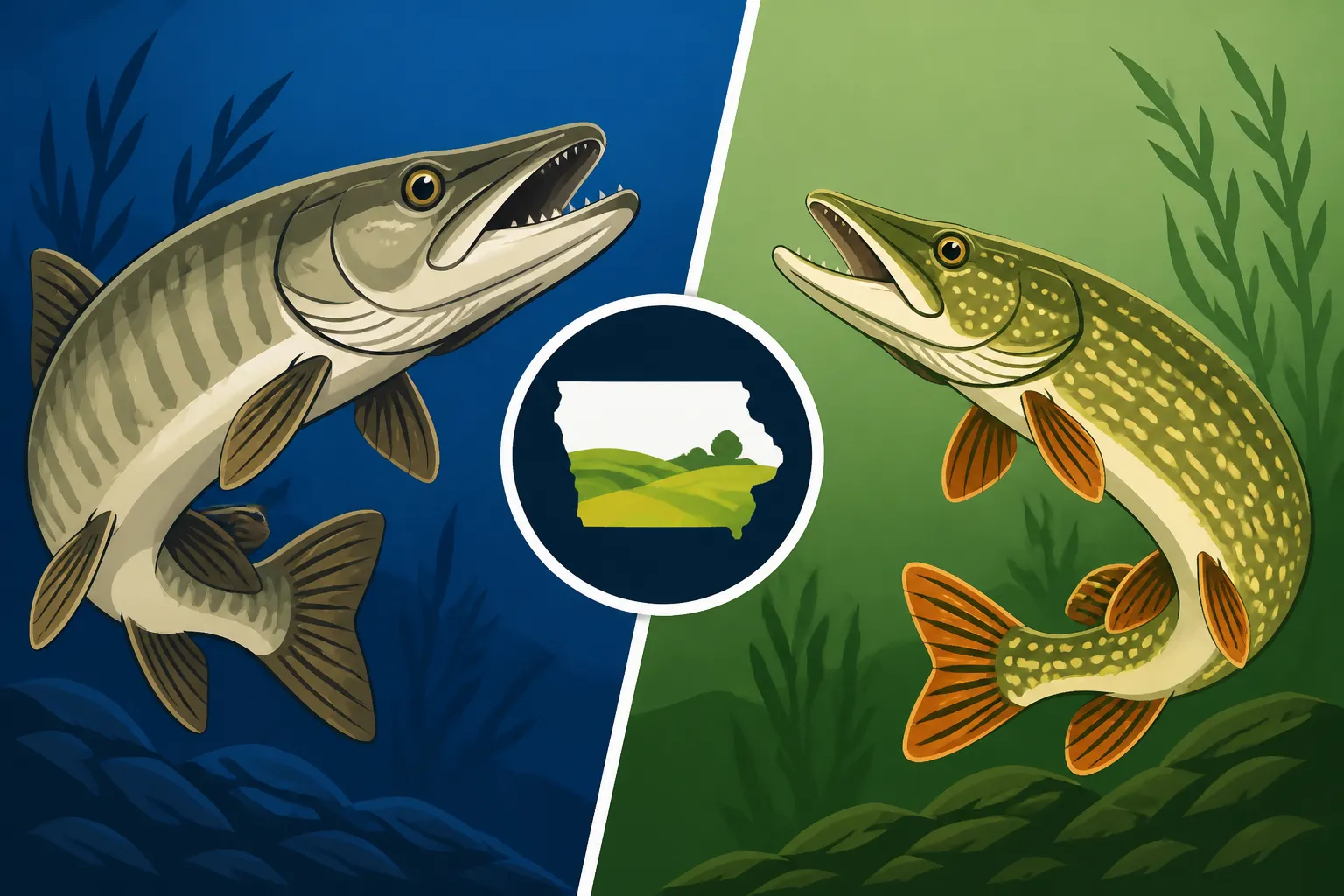
One of the first things many anglers look at is the fish's overall appearance – its color and markings. This is often the most subjective, as colors can vary based on water clarity, diet, and even geographic location, but there are some general rules that hold true. Muskie typically display darker markings, such as spots, bars, or irregular blotches, on a lighter background body color. These patterns can be quite striking, sometimes looking like tiger stripes or camouflage, and often cover a significant portion of their flanks. The exact pattern can vary from clear-sided to heavily barred or spotted, which sometimes adds to the confusion, but the key is that the markings are darker than the base color.
Northern pike, on the other hand, tend to have lighter, often yellowish or whitish, bean-shaped spots or bars on a darker body background. Their overall body color is frequently a darker olive green or brown, making those lighter spots really pop. Think of it as a reverse pattern compared to the muskie. While a muskie might have dark bars on a light green body, a northern pike will likely have light spots on a dark green body. Keep in mind that young pike or muskie can sometimes have less defined patterns, but as they grow, these differences usually become much clearer. If you're ever in doubt, don't rely solely on color; move on to the next, more definitive characteristics.
Scales on the Cheeks and Gill Covers
This is arguably the most reliable method for telling the two species apart, and it requires a close look, possibly a gentle touch if you're handling the fish responsibly. You'll want to examine the fish’s cheek and gill cover plates, which are located behind and below its eye.
For a true muskellunge, you will find that the upper half of its cheek and gill cover is scaled, while the lower half is completely bare, almost smooth to the touch. It’s like a clear dividing line running horizontally across those plates. Imagine drawing a line from the corner of its mouth back towards its tail; everything above that line on the cheek and gill cover would be scaled, and everything below would be naked skin. This specific pattern is a hallmark of the muskie and a key identifier.
Northern pike, in contrast, have a different scaling pattern. Their entire cheek area is fully scaled, from top to bottom. However, like the muskie, only the upper half of their gill cover is scaled, with the lower half being bare. So, if you run your finger gently over the cheek, you'll feel scales all the way down. Then, as you move back to the gill cover, you'll notice the scales stop about halfway down. This difference is consistent across all northern pike and muskellunge, making it an invaluable identification tool. Mastering this visual and tactile inspection will make you a pro at telling them apart quickly.
Pores Under the Jaw
Another highly accurate, though less commonly known, method for identification involves counting the sensory pores on the underside of the fish’s jaw. These pores are small, dark dots arranged in rows along the lower jaw bone. You'll need to gently hold the fish upside down (while keeping it submerged if possible for catch and release) or inspect it carefully if it's already landed.
Muskies typically have a higher number of these pores. If you look closely, you will usually count between 6 and 9 pores on each side of the underside of the jaw. These can sometimes be tricky to spot, especially on smaller fish or if the light isn't ideal, but with a good look, you should be able to make them out. Remember to count them symmetrically on both sides for confirmation.
Northern pike, on the other hand, generally have fewer pores. They almost always have 5 pores on each side of the underside of the jaw. This consistent number is a strong indicator of a northern pike. So, when you're examining your catch, gently open its mouth a bit and check for those distinctive rows of pores. Paired with the scaling pattern, this method provides almost foolproof identification. It's a precise detail, but one that makes all the difference when you're trying to figure out which toothy critter you've just landed.
Tail Fin Shape
While not as definitive as the scaling or pore count, the shape of the tail fin (caudal fin) can also offer a helpful clue, especially when combined with other features. It's a more general characteristic, but it adds to the overall picture.
Muskie often possess a more pointed, deeply forked, or V-shaped tail fin. The two lobes of their tail tend to come to a sharper point, giving the overall fin a more angular and defined appearance. Imagine a clear, pronounced "V" at the trailing edge of the tail. This shape is often associated with fish built for explosive, sustained speed.
Northern pike, conversely, tend to have a tail fin that is more rounded or less deeply forked. Some describe it as shovel-shaped or U-shaped, with the lobes being broader and less pointed. While still powerful, the overall impression is one of a slightly blunter or more robust tail. If the fork isn't as distinct and the tips are more rounded, you're likely looking at a northern pike. Again, use this as a supporting characteristic rather than the sole identifier, as individual variations can occur.
Body Shape and Size Potential
When it comes to overall size and bulk, there's a pretty significant difference, especially with mature fish. Muskie are famously known for their immense size and the challenge they present, earning them the moniker "the fish of 10,000 casts" for good reason. They grow much longer and can become significantly heavier and bulkier than northern pike. Landing a muskie pushing 40-50 inches or more is a truly monumental achievement in Iowa fishing, often requiring specialized Muskie Fishing in Iowa techniques and robust gear. Their sheer mass and power make them an incredible sport fish.
Northern pike, while still impressive predators and reaching respectable sizes, generally don't attain the same trophy dimensions as muskie. A large northern pike in Iowa might hit the 30-inch mark, with some exceptional specimens getting into the high 30s or even low 40s, but they typically remain slimmer and less massive than a mature muskie of comparable length. So, if you've landed a truly gargantuan fish that feels like a log with teeth, chances are you've got a muskie on your hands. Conversely, a solid, strong, but somewhat more slender fish is more likely to be a northern pike. This size distinction becomes more apparent as the fish age, so don't use it as the primary identification for smaller, younger fish.
To help you quickly summarize these key differences, here’s a handy table:
| Feature | Muskellunge (Muskie) | Northern Pike |
|---|---|---|
| Body Pattern | Dark markings (spots, bars) on a lighter background | Light markings (spots, bean-shaped) on a darker background |
| Cheek Scaling | Upper half scaled, lower half bare | Entire cheek scaled |
| Gill Cover Scaling | Upper half scaled, lower half bare | Upper half scaled, lower half bare |
| Jaw Pores (one side) | 6-9 pores | 5 pores |
| Tail Fin Shape | More pointed, often deeply forked or V-shaped | More rounded, less deeply forked, or U-shaped |
| Max Size Potential | Significantly larger (longer, heavier) | Generally smaller and slimmer |
Habitat, Behavior, and Fishing Experience in Iowa
Beyond their physical traits, muskie and northern pike also exhibit some differences in where they prefer to hang out, how they hunt, and what it's like to chase them on the water in Iowa. Understanding these nuances can not only help you identify them but also improve your chances of catching them.
Preferred Habitats
While there's certainly overlap, and you might find both species in the same general body of water, they often have slightly different preferences when it comes to specific hangouts. Muskies, particularly the larger ones, tend to favor big, clear lakes and expansive river systems with abundant weed beds, fallen timber, or other complex structures that provide ample ambush points and cover. Think about vast stretches of water like the Iowa Great Lakes (West Okoboji, Spirit Lake) or the mighty Mississippi River Fishing in Iowa. These larger, more pristine environments allow them to grow to their massive sizes and thrive. They are often found lurking at the edges of deep drop-offs or in dense aquatic vegetation, patiently waiting for prey.
Northern pike are a bit more adaptable and widespread across Iowa's waterways. You can find them in many lakes, smaller rivers, and even some larger farm ponds that offer good forage and cover. While they appreciate clear water and vegetation, they can often tolerate slightly murkier conditions or less complex habitats than muskie. Their distribution is generally broader, making them a more common catch for many anglers across the state. They're often found in bays, coves, and shallower weed lines, especially during cooler parts of the year. So, while you might specifically target a deep weed edge for muskie, a shallower, more accessible weed bed could hold a hungry northern pike.
Feeding Habits and Aggression
Both muskie and northern pike are quintessential ambush predators, masters of the surprise attack. They lie in wait, then explode with incredible speed to engulf their prey. However, their temperament and willingness to strike can differ, which impacts the fishing experience.
Muskies are notorious for being incredibly finicky. They are powerful, voracious eaters, but they are also incredibly cautious and smart. It's not uncommon for a muskie to follow your lure right to the boat, examine it, and then simply turn away without striking. This "follower" behavior is part of what makes them so challenging and why they demand so much patience and dedication from anglers. When they do strike, it's often with brutal force, but getting them to commit can be a lifelong pursuit. Their diet consists primarily of larger fish, often perch, suckers, and even smaller waterfowl or muskrats when the opportunity arises.
Northern pike are also aggressive hunters, but they tend to be less hesitant than their muskie cousins. They are often more willing to strike a lure or bait, making them a fantastic sport fish for anglers looking for consistent action. While they can also follow lures, they're generally quicker to commit to a strike. Their diet is similar to muskie, focusing on other fish, but they might be less selective in terms of size. This readiness to bite is part of why Northern Pike Fishing in Iowa is so popular and accessible. When a pike hits, be ready for a hard fight and some impressive acrobatics!
Fishing Challenges and Rewards
Chasing either of these species in Iowa offers a unique set of challenges and rewards. Fishing for muskie is often considered the pinnacle of freshwater angling for many. It's a game of patience, persistence, and often, heartbreak. The reward of finally landing a massive muskie, a true freshwater leviathan, is an unparalleled thrill that keeps anglers coming back, despite the "10,000 cast" reputation. Many muskie anglers practice catch and release exclusively, recognizing the value of these slow-growing fish as trophy specimens and vital parts of the ecosystem. Specialized gear is often employed, from heavy-duty rods and reels to large, expensive baits, which you can often find a great selection of on Amazon to start or expand your arsenal.
Northern pike, while perhaps not carrying the same "trophy of a lifetime" allure for every angler, still provide an incredibly exciting fishing experience. They fight hard, jump, and make powerful runs. Because they are more common and often more willing to bite, they offer a more consistent opportunity for action, making Northern Pike Fishing in Iowa an excellent choice for anglers of all skill levels. They can be caught on a wide variety of lures and baits, and while specialized gear can enhance the experience, a general-purpose heavy-action rod and reel will often suffice. The reward of a feisty pike on the line is a fantastic day on the water, and they are also considered good table fare by many, especially the smaller ones.
Conservation and Regulations in Iowa
Correctly identifying your catch isn't just about satisfying your curiosity; it's a critical part of being a responsible angler in Iowa. Both muskie and northern pike are managed under specific regulations designed to protect their populations and ensure sustainable fishing for future generations.
Importance of Correct Identification
Iowa has established different rules for muskellunge and northern pike regarding minimum length limits, daily bag limits, and possession limits. For example, the Muskie Season and Bag Limit will be different from the Northern Pike Season and Limit. These regulations are put in place to manage fish populations, allowing them to reach maturity and spawn, especially for slow-growing species like muskie. Misidentifying your catch could inadvertently lead to violating these laws, which carries penalties.
Imagine you catch a fish that looks like a small muskie, but it's actually a large northern pike. If you release it thinking it's undersized for muskie, you might miss a legal opportunity. Conversely, if you keep a fish thinking it's a pike, but it's an undersized muskie, you've broken the law. This is why paying close attention to the scale patterns, jaw pores, and tail shape is so vital. Always consult the official Iowa Fishing Regulations Explained before heading out, or check the GoOutdoors Iowa app for the most up-to-date information.
Catch and Release Practices
Given the slow growth rate of muskie and their status as a premier sport fish, catch and release is highly encouraged for both species, but especially for muskies in Iowa. These fish can take many years to reach trophy sizes, and returning them to the water ensures others can enjoy the thrill of catching them in the future. Proper handling techniques are paramount:
- Minimize Time Out of Water: Keep the fish in the water as much as possible. If you need a photo, be quick.
- Support the Body: Use two hands, one supporting the belly, the other holding the head or gill plate gently. Never hold a large fish by just the jaw, as it can damage their spine.
- Use the Right Tools: Long-nosed pliers or jaw spreaders (found on Amazon) are essential for safely removing hooks from their toothy mouths. A large, rubberized landing net designed for muskie is also invaluable for safely subduing and handling the fish.
- Revive Carefully: If the fish seems stressed, hold it gently in the water, facing into any current, until it swims away under its own power.
Responsible catch and release practices help maintain healthy fish populations and preserve Iowa's excellent fishing opportunities.
Reporting Your Catch
While not always mandatory, reporting significant catches, especially large muskie, can sometimes contribute valuable data to the Iowa Department of Natural Resources (DNR). This information helps biologists understand fish growth rates, population health, and the effectiveness of stocking programs. Knowing how to correctly identify your fish allows you to provide accurate reports, which in turn helps ensure effective conservation strategies for Muskie Habitat in Iowa Waters and Northern Pike Habitat in Iowa Lakes. Being able to confidently say, "I caught a 40-inch muskie!" backed by correct identification, adds credibility and helps the angling community as a whole.
Disclaimer
This article is for general informational purposes only and does not constitute professional advice. Laws, prices and regulations vary by location and change over time. Consult a qualified professional for guidance on your specific situation.