Biggest Fish Ever Caught in Iowa
Every angler who’s ever cast a line in Iowa has dreamt of it: the moment they hook into a fish so immense, so powerful, that it just might be a state record. It's not just about the size, it's about the story, the challenge, and the validation of countless hours spent on the water. This guide is dedicated to celebrating those legendary catches, exploring the incredible fish that have made history in Iowa, and helping you understand what it takes to pursue your own giant.
The Thrill of the Chase: What Constitutes a State Record in Iowa?
Chasing a state record fish in Iowa isn't just a casual pastime; it's a serious endeavor that involves understanding the rules, meticulous documentation, and a bit of luck. The Iowa Department of Natural Resources (DNR) maintains a comprehensive list of state record fish, recognizing those exceptional catches that push the boundaries of what's possible in our waters. Many anglers spend their entire lives hoping to encounter such a fish, let alone land one and have it officially recognized.
Understanding the Iowa DNR's Record Categories
When we talk about "biggest fish," it typically falls into two main categories: weight records and length records. For many species, especially those where catch-and-release is strongly encouraged for conservation, a length record might be the primary way to gain recognition without harvesting the fish. Weight records, on the other hand, often pertain to species where the fish is typically harvested for consumption or is a species that can withstand the handling process for an official weigh-in. The specific rules for each category are critical and can vary depending on the fish species. It’s always important to check the Iowa Fishing Regulations Explained booklet or the DNR website before you even head out, because things change and you don't want to accidentally break a rule while trying to make history.
It’s worth noting that the DNR's program is designed to acknowledge truly exceptional specimens. This isn't just about catching a "big fish for the day," but rather a fish that stands out significantly from the typical size range. This commitment to maintaining accurate and verifiable records helps to build a legacy of angling achievements in Iowa, inspiring future generations to explore our lakes and rivers for their own trophy catches.
The Verification Process: From Hook to Official Record
So, you've landed what you believe could be a state record. Now what? The process for verification is stringent to ensure fairness and accuracy. First, the fish must be caught legally, adhering to all Iowa Fishing Regulations Explained regarding methods, seasons, and bait. The fish needs to be weighed on a certified scale, usually at a grocery store, bait shop, or other commercial establishment that has scales regularly inspected and sealed by the Iowa Department of Agriculture and Land Stewardship. Two witnesses are typically required to attest to the weight. For length records, a tape measure must be used, and clear photos demonstrating the measurement are essential.
Beyond the initial measurements, an Iowa DNR fisheries biologist usually needs to confirm the species identification. This is especially crucial for similar-looking fish, like distinguishing a walleye from a sauger. Having clear photos and, if applicable, preserving the fish appropriately until a biologist can inspect it are vital steps. Failing to follow these steps meticulously can unfortunately disqualify an otherwise record-breaking catch. It's a lot of pressure in the moment, but imagine going through all that effort only to have it rejected on a technicality! Always carry a camera, a reliable measuring tape, and know where your nearest certified scale is located.
Iowa's Legendary Giants: Species Known for Record-Breaking Sizes
Iowa's diverse waters, from the mighty Mississippi River to our expansive natural lakes and smaller community ponds, harbor a surprising variety of fish capable of reaching truly monumental sizes. While every angler dreams of a state record, certain species are more commonly associated with these legendary catches due to their growth potential and prevalence in our waters. Understanding which fish grow to impressive sizes and where they tend to thrive can greatly improve your chances of encountering a trophy. For a general overview of what you might encounter, check out our Iowa Fish Species Guide.
Walleye and Bass: Trophy Catches in Iowa Waters
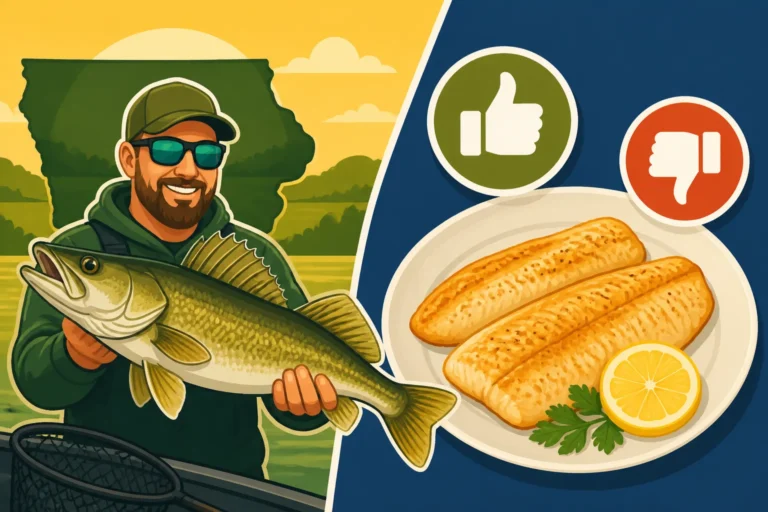
When most Iowans think of trophy fishing, walleye and bass often come to mind. Walleye, with their elusive nature and delicious fillets, are a prized catch. Our larger lakes, like the Iowa Great Lakes, and major rivers are prime Walleye Fishing in Iowa spots where these fish can grow to impressive lengths and weights. The conditions in these waters, with abundant forage and good habitat, allow walleye to mature into true giants. Catching a walleye over 10 pounds is a significant achievement for any angler, and the state record holders are well beyond that.
Similarly, both largemouth and smallmouth bass hold special places in the hearts of Iowa anglers. Largemouth Bass Fishing in Iowa is popular in farm ponds, state park lakes, and slower river sections, where they can become incredibly stout. Smallmouth bass, known for their aggressive fights, thrive in rocky river stretches and some of the clearer lake environments. A state record bass, whether largemouth or smallmouth, typically displays incredible girth and power, often weighing in at several pounds above what many consider a "big" bass. These fish often live for many years, learning to evade anglers, which makes catching one even more special.
The Monstrous Catfish and Elusive Muskie
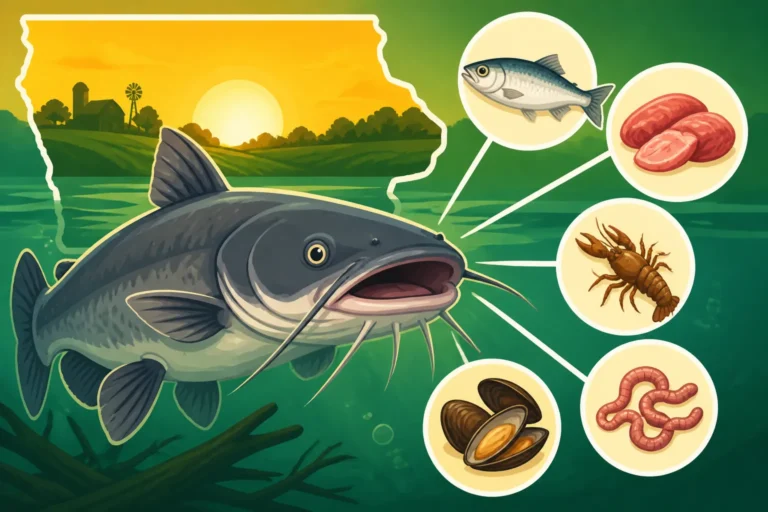
If sheer brute size is what you're after, then the catfish family is where you'll often find Iowa's true monsters. Channel catfish are abundant and grow large, but it's the flathead catfish that often takes the cake for truly immense catches. These powerful predators can weigh upwards of 50 or even 70 pounds, inhabiting deep holes and log jams in Iowa's major rivers. Landing a Channel Catfish Fishing in Iowa of this magnitude is a test of strength, patience, and robust tackle. The stories of anglers battling these river behemoths are legendary, and for good reason – they pull like freight trains!
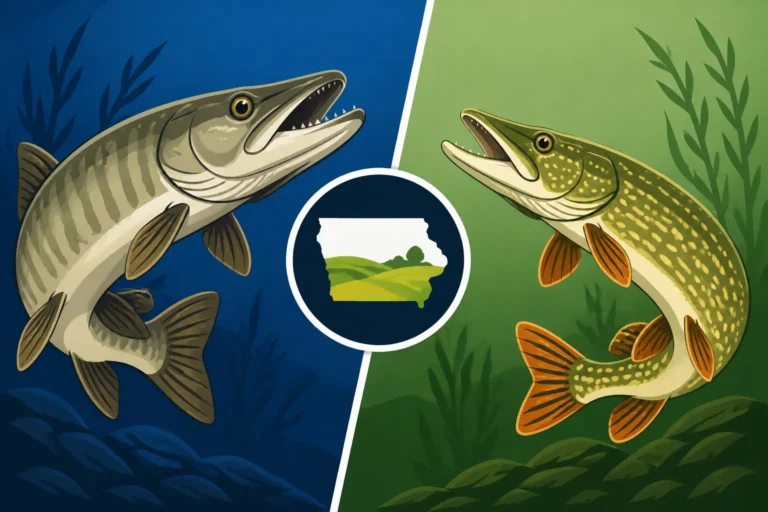
Then there's the muskie, often called "the fish of 10,000 casts." This apex predator is known for its voracious appetite and impressive size. While not as heavy as some of the catfish, muskie can reach incredible lengths, often exceeding 50 inches. They are a challenging fish to target, requiring specialized gear and techniques, but the reward of landing one is unparalleled. Our Muskie Fishing in Iowa page goes into more detail about how to tackle these toothy giants. Due to their long lifespan and slower growth rates, most muskie anglers practice catch-and-release to help preserve these magnificent creatures for future generations.
Surprising Records: Panfish, Trout, and More
While walleye, bass, catfish, and muskie grab many of the headlines, Iowa's record books also feature impressive entries for panfish and trout. Imagine a bluegill so large it barely fits in your hand, or a crappie that weighs more than a small bass! These panfish records show that even the "smaller" species can grow to extraordinary sizes given the right conditions and age. For instance, a record crappie will often be significantly larger than the average panfish you might catch for dinner.
Iowa also has a fantastic trout program, particularly in the coldwater streams of northeast Iowa. While our Trout Fishing Streams in Northeast Iowa are primarily stocked with rainbow and brown trout, these fish can grow quite large, especially if they survive multiple seasons in the wild. Catching a truly oversized trout from an Iowa stream is a testament to the healthy stream ecosystems and the fish's ability to thrive. Beyond these, there are records for less commonly targeted species, showcasing the rich biodiversity of Iowa's aquatic environments. Every species, no matter how small or common, has its own "biggest fish" story in the Iowa record books.
Here's a look at some of the species commonly targeted for their potential to be trophy catches in Iowa:
| Fish Species | Typical Trophy Characteristics (General) | Preferred Iowa Habitats | Key Strategies for Larger Specimens |
|---|---|---|---|
| Walleye | Exceptional length, pronounced dorsal fin, significant girth | Clear, deep lakes (e.g., Okoboji), major rivers (e.g., Mississippi) | Trolling with large crankbaits, jigging deep structure |
| Largemouth Bass | Heavy body, large mouth extending past the eye, dark green coloration | Weedy shallow areas, submerged timber, lily pads in ponds/lakes | Flipping jigs, slow-rolling spinnerbaits, topwater lures |
| Channel Catfish | Elongated body, deeply forked tail, dark color; immense girth and length | River channels, large reservoirs, deep holes near cover | Bottom fishing with cut bait or stink baits, trotlining |
| Muskie | Very long, torpedo-shaped body, sharp teeth, distinct barring pattern | Weedy edges of large lakes (e.g., Spirit Lake), river backwaters | Casting oversized lures (bucktails, crankbaits), fast retrieve |
| Rainbow Trout | Bright pink/red stripe, silvery sides; significantly heavier than stockers | Coldwater streams, spring-fed ponds in Northeast Iowa | Fly fishing nymphs/streamers, small spinners, live worms |
| Bluegill | Deep body, small mouth, prominent dark spot on dorsal fin; very thick | Shallow weedy areas, brush piles, submerged logs in lakes/ponds | Tiny jigs, crickets, waxworms under a bobber |
| White Crappie | Silvery body, often with vertical bars; much larger than average | Submerged brush, standing timber, deep creek channels in lakes | Jigging small tubes or minnows, slow trolling tiny crankbaits |
Strategies for Landing a Potential State Record Fish
Landing a fish that could potentially be a state record is a combination of preparation, skill, and being in the right place at the right time. It’s not just about luck; it’s about consistently putting yourself in a position to encounter and successfully battle a truly enormous fish. This requires a deeper understanding of fish behavior, meticulous planning, and the right gear to handle powerful adversaries. If you're serious about targeting bigger fish, it's a journey that will teach you a lot about angling.
Researching Prime Locations and Seasonal Patterns
The first step in chasing a trophy is knowing where these big fish live. Each species has preferred habitats and seasonal patterns that dictate when and where they're most accessible. For instance, targeting trophy walleye often means focusing on deep structure in large lakes or current breaks in major rivers during specific times of the year, like the spring spawn or late fall. For immense flathead catfish, you'll want to explore the deeper, snag-laden holes of the Mississippi or Missouri rivers. Our article on Best Fishing Spots in Iowa can give you a head start on regional hotspots.
Beyond location, understanding seasonal patterns is crucial. Fish behavior changes dramatically with water temperature, forage availability, and spawning cycles. A prime spot for bass in the spring might be barren in mid-summer. Learning when and where big fish feed most aggressively, or when they are concentrated in certain areas for spawning, is key. This knowledge comes from studying local fishing reports, talking to experienced local anglers, and spending time on the water observing conditions yourself. Even how fish respond to pressure and changes in weather can impact your success.
Gearing Up for the Big One: Tackle and Techniques
When you're targeting fish that could weigh dozens of pounds or fight with incredible power, your everyday panfish rod simply won't cut it. Investing in heavy-duty gear is non-negotiable. This means strong rods with backbone, reels with robust drag systems, and high-quality, high-pound-test line. For example, chasing muskie requires specialized rods designed to cast large, heavy lures all day and withstand powerful head shakes. Similarly, Catfish Gear Guide for Iowa Rivers emphasizes heavy line and stout hooks to pull those river monsters out of cover. You might even find some excellent heavy-duty tackle options on Amazon, if you're looking for gear that can stand up to the challenge.
Technique also plays a massive role. You're not just trying to catch a fish, you're trying to catch the biggest fish. This often means using larger baits or lures, fishing deeper or in heavier cover, and being incredibly patient. For walleye, this might involve slow trolling large crankbaits at specific depths. For bass, it could be flipping heavy jigs into dense cover where the biggest fish hide. Mastering these specialized techniques takes practice, but it dramatically increases your chances of connecting with a potential record breaker. Consider exploring our Iowa Fishing Techniques Guide for more in-depth advice on specific species and methods.
Beyond the Record: Responsible Angling and Conservation
While the pursuit of a state record fish is undeniably exciting, it's essential that this ambition is balanced with a strong commitment to responsible angling and conservation. Catching a truly enormous fish is a privilege, and ensuring these magnificent specimens continue to thrive for future generations is paramount. Our collective actions on the water directly impact the health and sustainability of Iowa's fisheries.
Catch and Release for Future Generations
For many trophy species, especially muskie and larger bass, catch-and-release is not just a recommendation but an unwritten rule among serious anglers. These large, older fish are vital to the ecosystem. They are often the best spawners, contributing significantly to the next generation of fish. Releasing a trophy fish ensures it can continue to grow, spawn, and potentially be caught again, offering another angler the thrill of a lifetime. It also allows the fish to continue its role in the food chain, maintaining ecological balance.
If you do land a potential record fish that you intend to release, prioritize its health. Minimize handling time, support its body weight properly, and use tools like a large landing net or specialized grippers to reduce stress. Avoid dragging fish onto rough surfaces, and quickly take any measurements or photos before gently returning it to the water. Watching a giant fish swim away strongly after a battle is often more rewarding than any number on a scale. It's a way of giving back to the waters that give us so much joy.
The Importance of Knowing and Following Regulations
Finally, no matter how passionate you are about catching a record-breaker, it's absolutely crucial to respect and adhere to all Iowa Fishing Regulations Explained. This includes understanding daily bag limits, size restrictions, and specific seasonal closures for certain species and bodies of water. For example, some lakes might have special slot limits for bass or walleye, designed to protect mature fish. Fishing without the proper Iowa Fishing License Guide is not only illegal but also undermines conservation efforts.
These regulations are not arbitrary; they are carefully developed by the Iowa DNR based on scientific research to ensure the long-term health and sustainability of our fish populations. Violating these rules can lead to serious penalties and, more importantly, can harm the very fisheries we cherish. Responsible anglers are stewards of our natural resources, setting an example for others and actively contributing to the preservation of Iowa's incredible fishing opportunities. Always remember that the integrity of your catch is as important as its size.
Disclaimer
This article is for general informational purposes only and does not constitute professional advice. Laws, prices and regulations vary by location and change over time. Consult a qualified professional for guidance on your specific situation.