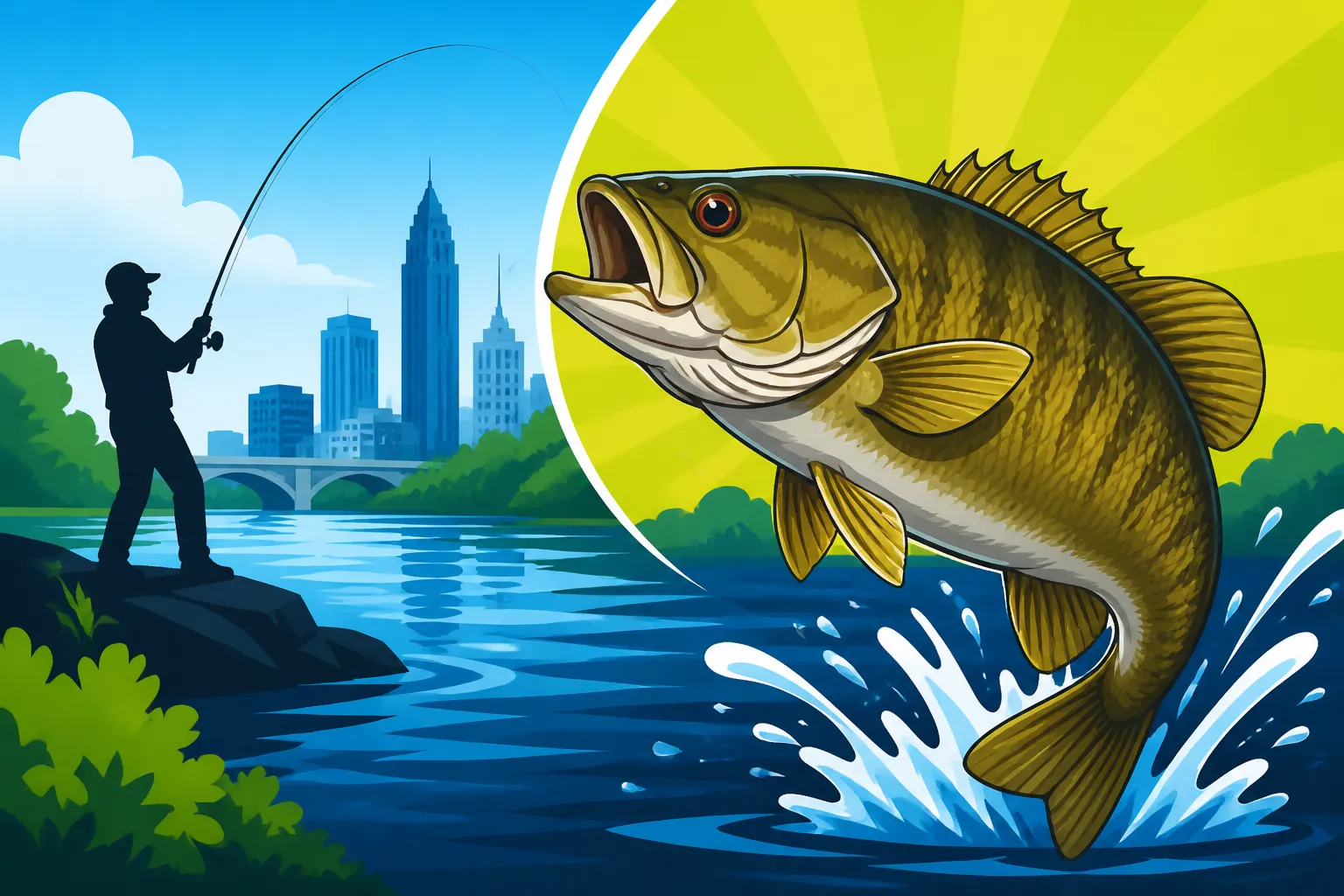
Is the Des Moines River Good for Smallmouth Bass?
When you think of fishing the Des Moines River, images of massive flathead catfish, schooling channel cats, or even the occasional walleye often come to mind. Many anglers assume it’s not much more than a big, muddy river, overlooking the incredible opportunities it presents for one of Iowa's feistiest game fish: the smallmouth bass. This comprehensive guide aims to shed light on why the Des Moines River is a fantastic, albeit often underestimated, fishery for smallmouth, giving you the insights and strategies to successfully target these hard-fighting bronzebacks.
The Surprising Truth About Smallmouth Bass in the Des Moines River
It’s easy to dismiss the Des Moines River as a prime smallmouth destination, especially when comparing it to the clearer, rockier rivers of northeast Iowa or even the mighty Mississippi. However, closer inspection reveals that certain stretches of this expansive waterway offer exactly what smallmouth bass crave: current, cover, and forage. It’s not uniformly excellent, but knowing where and how to look makes all the difference, transforming your perception of this river.
Understanding Smallmouth Habitat in a Big River System
Smallmouth bass are particular about their environment. They thrive in cooler, clearer water with good current and, most importantly, rocky substrate. Think boulders, gravel beds, ledges, and riprap – anything that breaks the current and provides ambush points for baitfish and crawfish. While much of the lower Des Moines River can be wide and slow-moving with a silty bottom, the story changes dramatically as you move upstream, particularly above the city of Des Moines. Here, the river narrows, the gradient increases, and bedrock outcrops become more prevalent.
These upstream sections, often characterized by a series of riffles, runs, and deeper pools, create the perfect mosaic of habitats. The moving water brings oxygen and food, while the rocks offer crucial cover and a stable environment. Smallmouth will position themselves just out of the main current, behind a large boulder or in an eddy, waiting for an easy meal to drift by. Understanding these micro-habitats is the first step to unlocking the Des Moines River’s smallmouth potential. It's a stark contrast to thinking of the river solely as a muddy, featureless waterway, and really, the key is to look for those distinct areas where the riverbed is less silty and more structured.
Dispelling Myths: Beyond Catfish and Carp
The Des Moines River has earned a reputation, and rightly so, as an outstanding fishery for species like channel catfish and flatheads, as well as a productive spot for common carp. These fish are abundant and provide excellent angling opportunities. Because of this, many anglers simply don't associate the river with smallmouth bass, assuming the water quality or habitat isn't suitable. This is where the surprise comes in. While the vast expanse of the river does indeed hold plenty of traditional river species, there are significant pockets that defy this expectation.
These pockets often occur where tributaries enter, bringing clearer water and sometimes rocky debris, or where the river naturally cuts through harder geology, exposing bedrock and creating rapids or faster runs. It's in these "hidden" stretches that the smallmouth flourish, often growing to impressive sizes because of less fishing pressure and abundant forage. Don't let the river's general reputation deter you. Think of it as a treasure hunt: the reward for those who seek out these specific smallmouth havens can be truly spectacular, often yielding trophy-sized bronzebacks that fight with incredible power in the strong current.
Prime Locations for Chasing Smallmouth on the Des Moines River
Finding smallmouth on a river as long and diverse as the Des Moines can feel like a daunting task. It’s not like simply pulling up to a stocked lake. You need to understand the nuances of the river's character and pinpoint those specific areas that provide the optimal conditions. The key is to think like a smallmouth: where would you hide from the current and ambush prey?
Upstream Stretches and Tributary Confluences
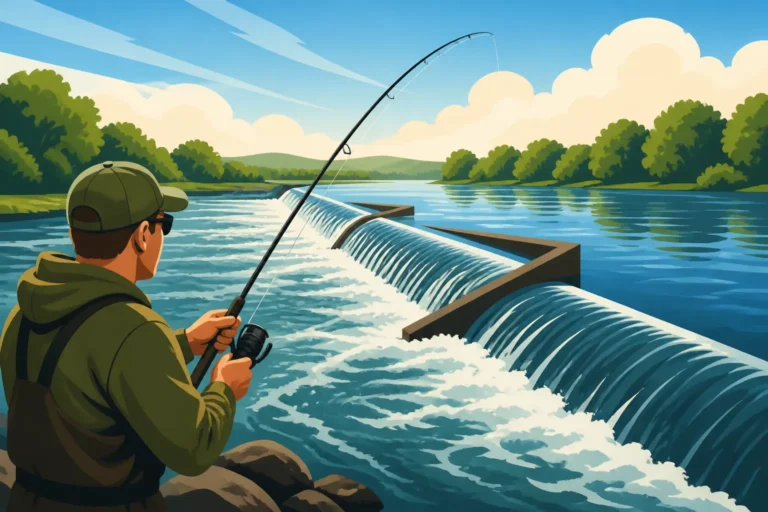
Your best bet for consistent smallmouth action on the Des Moines River generally lies in the upstream reaches, particularly north of the Saylorville Reservoir all the way up to Humboldt and beyond. These sections tend to have faster flows, more exposed rock, and clearer water, especially during stable weather periods. Towns like Boone, Fraser, and Stratford offer access points to these promising stretches. Look for areas where the river drops slightly, creating riffles and rapids, which are magnets for smallmouth.
Additionally, pay close attention to where smaller, clearer tributaries merge with the main river. These confluences often create a sudden infusion of cooler, more oxygenated water and can deposit gravel or rock, drawing in smallmouth who appreciate the improved conditions and the concentration of baitfish. A great example might be where the Boone River joins the Des Moines. These seams of converging currents are prime ambush points. Using resources like the official Iowa DNR fishing regulations, which you can read in our guide on Iowa Fishing Regulations Explained, can help you understand specific rules for these unique river sections.
Identifying Key Structures and Current Breaks
Once you're in a promising upstream section, the real detective work begins. Smallmouth aren't usually found in the middle of a wide, slow current. They position themselves precisely to expend minimal energy while maximizing their feeding opportunities. Here's what to look for:
- Riffles and Rapids: The broken water at the tail end of a riffle or the edges of a rapid are fantastic. Smallmouth will sit in the calmer water just adjacent to the fast current, darting out to snatch prey.
- Boulder Fields and Rock Gardens: Any area with a concentration of large rocks or bedrock ledges offers excellent current breaks and hiding spots. Cast your lures to drift over and around these structures.
- Log Jams and Downed Trees: While smallmouth prefer rock, they won't shy away from woody cover, especially if it's stable and creating an eddy. These can hold some of the biggest fish.
- Bridge Pilings: The concrete or rock foundations of bridges create significant current breaks and scour holes, making them prime real estate for smallmouth.
- Seams and Eddies: Look for the distinct lines where fast current meets slower water (seams) or areas where the water swirls back upstream (eddies). These are classic smallmouth holding spots.
You can often scout these locations using maps or even by walking the banks, though a boat or kayak provides much better access. Many public access points are detailed on the Iowa DNR's interactive maps, which can guide you to some great Iowa Fishing Atlas Access Points. If you're considering hiring a guide to help you pinpoint these spots, platforms like FishingBooker can connect you with local experts who specialize in river smallmouth, ensuring you make the most of your time on the water.
| River Feature | Smallmouth Behavior | Ideal Lure Presentation | Notes |
|---|---|---|---|
| Riffles/Rapids | Ambush prey at current breaks, oxygen-rich water. | Cast upstream, let drift naturally, retrieve slowly. | Focus on edges and transition zones. |
| Boulder Fields | Hiding spots, ambush points, crawfish habitat. | Bounce jigs/tubes off rocks, slow retrieve crankbaits. | Work every angle around large boulders. |
| Log Jams/Downed Trees | Current break, shade, cover. | Flip jigs or soft plastics into openings. | Use weedless setups to avoid snags. |
| Bridge Pilings | Strong current breaks, deep scour holes. | Cast parallel to pilings, vertical jigging. | Often holds larger, more aggressive fish. |
| Eddies/Current Seams | Low-energy feeding zones. | Fan cast across seams, retrieve through eddy. | Productive after heavy rains when main current is too fast. |
Essential Techniques and Tackle for Des Moines River Smallmouth
Catching smallmouth bass in a river environment, especially one with varying currents like the Des Moines, requires a specific approach. It’s not just about having the right lure; it’s about how you present it, understanding the fish’s behavior, and having the right gear to handle powerful strikes in moving water.
Go-To Lures and Baits for River Smallmouth
Smallmouth are aggressive predators, and they're often opportunistic. Matching the hatch – or in this case, matching the predominant forage like crawfish or minnows – is often key.
- Jigs and Soft Plastics: These are arguably the most versatile and effective lures for river smallmouth. Tube jigs (3-4 inches) in greens, browns, and black with a heavy jig head (1/8 to 3/8 oz depending on current) are deadly. Grubs, swimbaits, and creature baits rigged on a jig head or Texas-rigged also work wonders. The key is to imitate a crawfish scuttling along the bottom or a baitfish struggling in the current.
- Crankbaits and Jerkbaits: Small to medium-sized crankbaits (like those mentioned in our guide on Crankbait Fishing for Iowa Smallmouth Bass) are excellent for covering water and triggering reaction strikes, especially in clearer water. Look for models that dive to 3-8 feet and have natural baitfish patterns or crawfish colors. Jerkbaits, with their erratic darting action, are fantastic when fish are a bit more lethargic or suspended near structure.
- Spinnerbaits and Chatterbaits: These are great search baits, especially in areas with moderate current or when the water has a bit more stain. The flash and vibration can draw fish from cover. White, chartreuse, and perch patterns are often effective.
- Topwater Lures: Don't forget the thrill of a topwater strike! Poppers, walking baits, and buzzbaits can be incredibly effective during low-light conditions (dawn, dusk) or on overcast days, particularly in calmer pool sections or around current breaks.
Having a diverse tackle box is crucial. You never know what the smallmouth will be biting on, so being prepared with various options will increase your success rate. A good starting point for your tackle box, whether you're a seasoned angler or just beginning, can be found in our article on a Best Rod and Reel Combo Under $50, which often includes versatile options suitable for smallmouth.
Mastering River Current and Presentation
Fishing in current is a skill unto itself. It's not like stillwater fishing; the river itself plays a significant role in how your lure behaves and how a smallmouth reacts.
- Upstream Casts and Controlled Drifts: For jigs and soft plastics, casting slightly upstream and allowing your lure to tumble and bounce naturally along the bottom with the current is often the most effective presentation. Maintain a tight line to feel bites but let the current do some of the work. This mimics a dislodged crawfish or a struggling baitfish, making it irresistible to a hungry smallmouth.
- Working Current Seams: Smallmouth will hold on the "downstream" side of any current break. Cast beyond the structure, retrieve your lure through the eddy or seam, ensuring it spends as much time as possible in the strike zone.
- Varying Retrieve Speeds: While a slow, deliberate retrieve is often best for bottom-contact lures, crankbaits and spinnerbaits might require faster, more erratic retrieves to trigger a reaction. Experiment until you find what the fish want on a given day.
- Stealth and Approach: Smallmouth can be surprisingly spooky in clear, shallow river sections. Approach potential hotspots quietly, keeping a low profile, especially if you're wading or shore fishing. If you're fishing from a boat or kayak, consider how you position yourself relative to the current and the fish. For those using a kayak, learning Kayak Fishing Techniques in Iowa can significantly improve your ability to navigate and effectively fish river currents.
Remember, smallmouth bass are incredibly strong for their size, especially when hooked in current. Be prepared for a powerful fight, especially when they dive into cover or use the current to their advantage.
Timing Your Trip for Des Moines River Smallmouth Success
Just like any other species, smallmouth bass on the Des Moines River have preferred times to feed and certain conditions that make them more active. Understanding these seasonal and environmental factors can dramatically increase your chances of a successful outing.
Seasonal Patterns and Best Times to Fish
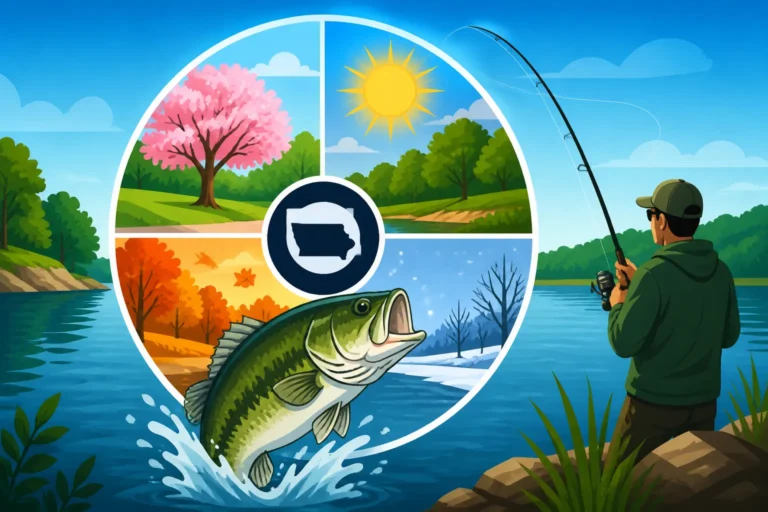
Smallmouth bass activity on the Des Moines River generally follows a predictable pattern throughout the year, with specific windows offering peak opportunities.
- Spring (Pre-spawn and Spawn): As water temperatures climb into the 50s and 60s Fahrenheit (around April to May), smallmouth move into shallower, rocky areas to feed aggressively before spawning. This is often an excellent time for big fish, but respect their spawning rituals. Our guide to Iowa Bass Season Opening Day will give you specifics on when you can legally target them. They'll be looking for crawfish and minnows, so jigs, spinnerbaits, and even slow-rolling crankbaits can be very effective. After spawning, they'll be a bit lethargic but will quickly resume feeding.
- Summer: During the heat of summer, smallmouth typically retreat to deeper, cooler pools, current breaks, or areas with dense overhead cover. Early morning and late evening bites are often best. Topwater action can be phenomenal at dawn and dusk. During the day, focus on fishing deep current seams and shaded areas with jigs or drop-shot rigs. You can find more specific advice in our article, Best Time of Day to Catch Bass in Summer.
- Fall: As water temperatures drop in the autumn months, smallmouth go on a feeding frenzy to pack on weight for winter. This is another prime time for trophy fish. They become very aggressive and will hit a wide variety of lures, from crankbaits and jerkbaits to larger jigs. They'll often school up in deeper pools or along rock lines, making them easier to locate once you find one.
Always remember to check the Iowa Fishing License Guide before heading out to ensure you have the proper permits, regardless of the season.
Weather and Water Conditions to Consider
River fishing is intrinsically linked to weather and water conditions. The Des Moines River is no exception, and fluctuating levels and clarity can either make or break your trip.
- Water Levels: After significant rainfall, the river can rise rapidly, become muddy, and be difficult to fish. Smallmouth will often pull into slackwater areas, eddies, or flooded shoreline cover. Fishing just as the river begins to drop and clear (the "falling and clearing" stage) can be incredibly productive. Conversely, during prolonged dry spells, low and clear water conditions can make smallmouth more wary and concentrated in deeper holes.
- Water Clarity: Smallmouth generally prefer clearer water. In very turbid conditions, bright or dark colors with a lot of vibration (like a chatterbait or a large spinnerbait) can be more effective. When the water is crystal clear, more natural colors, subtle presentations, and longer casts are often necessary to avoid spooking fish.
- Temperature: Smallmouth are cold-blooded, so water temperature dictates their metabolism and activity levels. They're most active in water temperatures between 60-70 degrees Fahrenheit. If it's too cold (below 50) or too hot (above 80), they'll be less aggressive and harder to catch, often holding tight to cover.
- Barometric Pressure: While less impactful than water levels or temperature, stable or slowly falling barometric pressure often corresponds with good feeding windows. Rapidly dropping pressure (before a storm) can often make them bite aggressively, while a quick rise after a cold front can make them shut down. For more detailed strategies on approaching difficult conditions, our guide on How to Catch Smallmouth Bass Near Rocky Structure offers excellent insights.
Always check recent river gauges and weather forecasts before your trip. Being prepared for varying conditions will help you adapt your tactics and increase your chances of encountering those feisty Des Moines River smallmouth. If you're new to fishing guides, or want to explore more options, a quick search on FishingBooker can help you find a local Des Moines River guide specializing in bass fishing.
Disclaimer
Fishing conditions and regulations can change. Always consult the official Iowa Department of Natural Resources (DNR) website or their most current fishing regulations guide before planning your trip to ensure compliance with all laws and for the most up-to-date information. Fishing involves inherent risks; always prioritize safety on the water.