Best Trout Streams Near Decorah Iowa
You drive up to Decorah with a fly rod in the back seat, cross the Upper Iowa River, and suddenly realize you have no idea which of the dozens of spring creeks in the hills is worth your morning. Northeast Iowa is packed with cold water, and that abundance can be paralyzing. This guide breaks down the best trout streams near Decorah, Iowa, and how to fish each one well.
Why Decorah Is the Heart of Iowa Trout Country
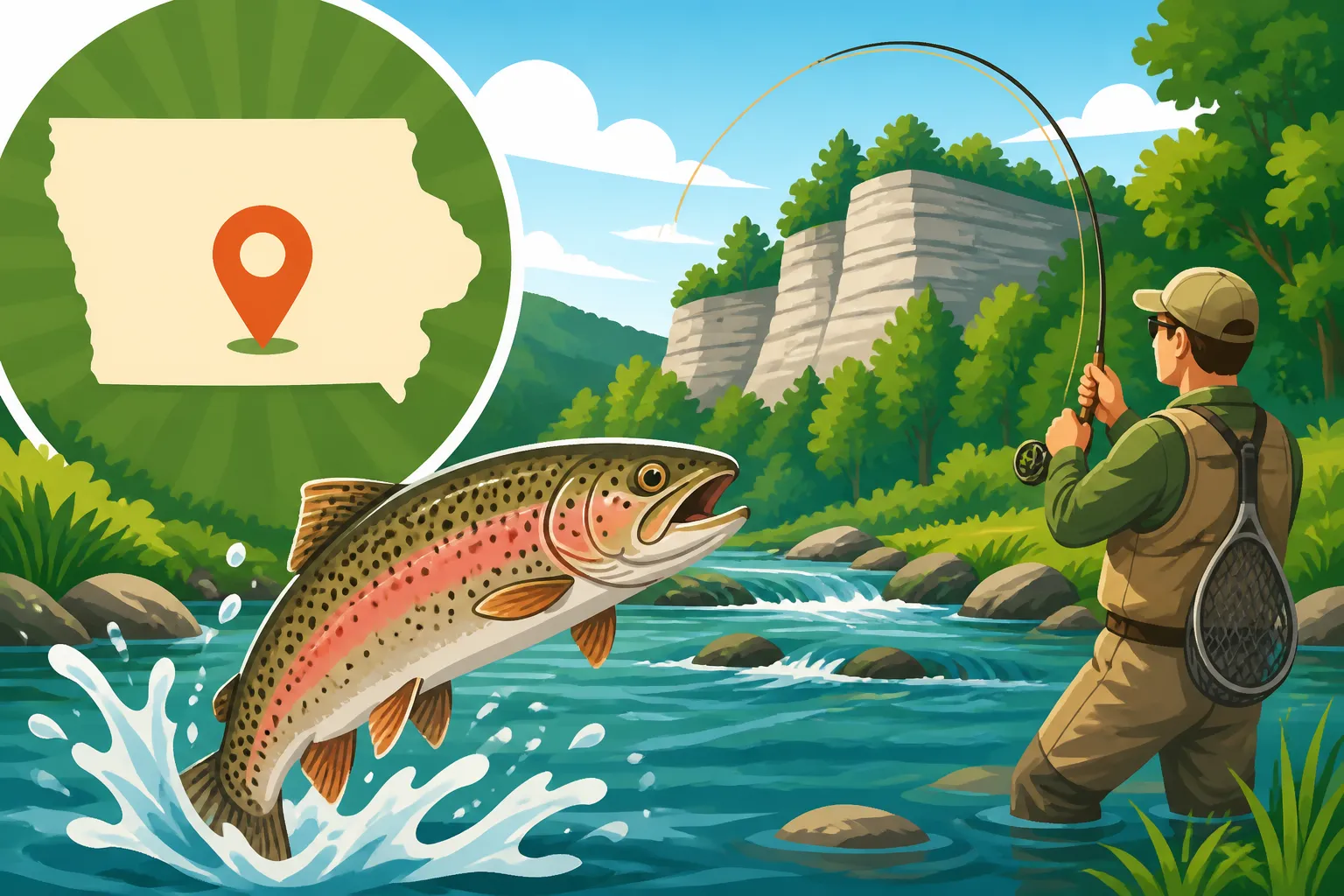
If you grew up in central or western Iowa, the idea of trout fishing in this state might sound like a joke. Corn, soybeans, muddy rivers and farm ponds are what most people picture. Then you drive into Winneshiek County and the landscape changes completely. Limestone bluffs rise above narrow valleys, cold springs pour out of the hillsides, and clear riffles run through pasture and hardwood timber. This is the Driftless Area, the corner of the Upper Midwest that glaciers skipped, and it is the reason Iowa has a genuine trout culture.
Decorah sits right in the middle of it. Within a short drive of town you can fish stocked put-and-take water, wild brown trout streams, and spring-fed brooks that hold fish through the hottest weeks of July. For a broader look at the whole region, Trout Fishing Streams in Northeast Iowa is a great companion read.
The Role of the Decorah Hatchery
Much of the trout fishing around Decorah is shaped by the state fish hatchery on the edge of town, fed by the big spring that also feeds Trout Run. Rainbow trout and some brook trout raised in the region are stocked into catchable-size streams across northeast Iowa through the warmer months, and brown trout have been introduced in many places where they now reproduce on their own.
Visiting the hatchery is worth an hour, especially if you have kids along. You can see raceways full of fish at different sizes, and it helps explain why a given stream fishes the way it does. If you want to know how the stocking side works, Rainbow Trout Stocking Program in Iowa lays out the system.
Wild Versus Stocked Water
Here is the frustration that catches a lot of first-timers. They hit a stream on a stocking day, catch a limit of rainbows in an hour, and come back the next weekend to find the same pool apparently empty. Stocked rainbows tend to be caught out fairly quickly in heavily fished water. Wild brown trout, on the other hand, are spookier, smarter and spread through a stream, but they are there year-round.
Knowing which type of water you are fishing changes your entire approach. On stocked streams, timing matters most. On wild water, stealth and presentation matter most. For more on what lives in these creeks naturally, see Do Iowa Trout Streams Have Wild Trout?.
The Best Trout Streams Near Decorah
Below are the streams I would send a friend to, starting closest to town and working outward. Each has its own personality, and the right one depends on whether you want easy access, wild fish or a quiet walk through the hills.
Trout Run
Trout Run flows right through the south side of Decorah, and it is about as accessible as trout fishing gets in Iowa. A paved trail runs along much of the stream, there is parking near the hatchery, and it is stocked regularly in season. This is where I would take a beginner, a child, or someone who just wants to see a trout on the line before lunch.
The downside is pressure. On a warm Saturday you will share the water with families, walkers and other anglers. Fish early in the morning or on a weekday evening and you will have far more room. Small spinners, simple nymphs under an indicator and bait where it is allowed all work well on recently stocked rainbows.
Coldwater Creek
Coldwater Creek, northwest of Decorah, is a favorite for anglers who want a more rural experience. The stream runs through pasture and timber with long riffles and undercut banks, and it has a reputation for wild brown trout along with stocked fish. Water clarity is often excellent, which means fish can see you as easily as you see them.
Approach from downstream, keep a low profile and make your first cast count. Small dry flies during hatches and ant or beetle patterns in summer can be deadly here. This is a stream that rewards patience more than it rewards covering ground.
Canoe Creek and the Trout River
Canoe Creek, north and east of Decorah, and the Trout River, a short drive southeast, are both good options when Trout Run is too crowded. Canoe Creek winds through farm country with a mix of public easements and areas that require attention to boundary signs. The Trout River has deeper pools that can hold larger browns.
Both streams are worth scouting on a map before you go, because access points are scattered. Look for state signage marking public fishing easements, and respect any private property beyond those easements. Anglers who keep landowner relationships good are the reason many of these streams stay open.
Bear Creek and North Bear Creek
Out toward Highlandville, in the northern part of Winneshiek County, the Bear Creek system offers some of the prettiest water in the area. North Bear Creek in particular is known for cold, clear flows and wild brown trout. The drive alone, through narrow valleys and past old farmsteads, is worth the trip.
These streams can be brushy in summer. Shorter rods, roll casts and a willingness to crawl a bit will pay off. Many locals fish them in early spring before the vegetation fills in, when the fish are hungry and the casting lanes are open.
Waterloo Creek and French Creek
Head east into Allamakee County and you reach Waterloo Creek near Dorchester and French Creek farther south. Waterloo Creek is a larger stream with long runs and good insect life, and it is one of the better places in the region for consistent hatches. French Creek is smaller, colder and shaded in stretches, which makes it a great midsummer option.
Both are a little farther from Decorah, so they tend to see fewer casual anglers. If you are willing to drive 30 to 45 minutes, they can deliver a much quieter day.
Bloody Run in Clayton County
Bloody Run near Marquette is a longer drive, but it deserves a mention because it has a well-known catch-and-release stretch with special rules on tackle. Water under special regulations often holds more and larger fish, because they are not removed. If you love the challenge of fooling a big brown with a small fly, Bloody Run is a pilgrimage worth making at least once. Always check the posted regulations on site, since special sections can have different rules from the rest of the stream.
Comparing the Streams at a Glance
| Stream | Approximate Location | Fish to Expect | Access | Best For |
|---|---|---|---|---|
| Trout Run | South side of Decorah | Stocked rainbows, some browns | Trail and hatchery parking | Beginners, families, quick trips |
| Coldwater Creek | Northwest of Decorah | Wild browns and stocked fish | Public easements | Stealthy fly fishing |
| Canoe Creek | North and east of Decorah | Stocked rainbows, browns | Scattered easements | Escaping crowds |
| Trout River | Southeast of Decorah | Browns in deeper pools | Easements and parking spots | Bigger fish potential |
| North Bear Creek | Northern Winneshiek County | Wild browns | Easements along the valley | Scenic, early-season trips |
| Waterloo Creek | Near Dorchester, Allamakee County | Stocked and wild trout | Several access areas | Insect hatches |
| French Creek | Allamakee County | Browns, cold-water fish | Smaller access points | Midsummer fishing |
| Bloody Run | Near Marquette, Clayton County | Browns and rainbows | Public area | Catch-and-release challenge |
Picking the Right Stream for Your Day
If you have one morning and a kid along, Trout Run wins. If you have a full day and want wild fish, I would split it between Coldwater Creek in the morning and North Bear Creek in the afternoon. If the weather is hot, head to the coldest, shadiest water you can find, which often means smaller spring-fed streams like French Creek.
If you are visiting for the first time and want to shorten the learning curve, booking a local guide for half a day can be a smart investment. Platforms like FishingBooker list guided trips in many regions, and it is worth searching there to see whether any guides cover the Driftless streams around Decorah. A good guide will show you access points and techniques you would otherwise spend years discovering.
Regulations to Know Before You Wade In
To fish for trout in Iowa you need a valid fishing license plus the trout fee, unless you qualify for an exemption. The statewide daily limit for trout is five, with a possession limit of ten, although special catch-and-release sections follow their own rules. For the details on fees and who needs what, read Iowa Trout Fishing Fee and Stamp Guide before your trip.
Northeast Iowa streams also have specific rules on tackle in some sections and on access along private land easements. A short read of Trout Stream Regulations in Northeast Iowa will save you from accidentally breaking a rule that applies to one stretch but not another.
How to Fish These Streams Successfully
Knowing where to go is half the battle. The other half is understanding how trout behave in small, clear spring creeks.
Reading Spring Creek Water
Driftless streams are typically narrow, with alternating riffles, runs and pools. Trout hold where they can get food without fighting the current all day: at the head of pools, along seams where fast water meets slow, under overhanging grass and beside submerged rocks or logs. In winter and early spring, look for them in slower, deeper water. In summer, they move into faster, oxygen-rich riffles and the shade of undercut banks.
Because these streams are spring-fed, water temperatures stay relatively stable. That is why you can catch trout around Decorah in January, when much of Iowa is frozen solid.
Flies, Lures and Bait
Fly anglers do well with small nymphs like pheasant tails and hare’s ears, scuds, which are a major food source in these spring creeks, and midges in the colder months. In late spring and summer, mayfly and caddis hatches bring fish to the surface, and terrestrials like ants, beetles and hoppers become important as the grass grows tall. For pattern ideas, see Best Fly Patterns for Iowa Trout Streams.
Spin anglers can do well with small inline spinners, tiny spoons and soft plastic micro baits. Bait like worms and prepared trout baits work on stocked fish where they are legal. Whatever you use, keep it small and natural. These are not big rivers, and oversized lures tend to spook fish.
Dealing With High or Muddy Water
The one thing that can ruin a Decorah trip faster than anything else is a hard rain the night before. Driftless streams rise quickly after storms because runoff pours off steep hillsides and farm fields, and a gin-clear creek can turn the color of chocolate milk overnight. I have driven three hours, pulled up to a favorite pool and found the water running high, fast and brown.
Do not give up immediately. Spring-fed streams often clear faster than you would expect, especially the smaller ones fed directly by big springs. Trout Run, which is fed by a large spring near the hatchery, can sometimes recover sooner than streams that drain more farmland. Work upstream toward the springs, where the water is often clearer and colder than it is lower in the watershed.
When the water is stained, change tactics. Go bigger and darker with flies, such as a black or olive woolly bugger, or use a spinner with a bit of flash. Fish the slower edges where trout move out of the heavy current. Worms, where legal, are also a classic high-water bait for good reason. A stained stream is not ideal, but it often means the fish are less spooky.
Seasonal Timing Around Decorah
Spring is prime time, with stocking ramping up, water levels usually good and insects becoming active. Summer can be excellent early and late in the day but tough at midday on the most popular streams. Fall brings colorful bluffs, fewer people and aggressive brown trout feeding before winter. Winter fishing is quiet and can be surprisingly productive on the warmer spring-fed sections.
| Season | What to Expect | Tactics That Work |
|---|---|---|
| Spring | Regular stocking, rising insect activity | Nymphs, small spinners, early hatches |
| Summer | Heavy vegetation, terrestrial insects | Ants, beetles, hoppers, low-light fishing |
| Fall | Fewer anglers, active browns | Streamers, larger nymphs, careful approach |
| Winter | Cold air, steady water temperatures | Midges, scuds, slow presentations |
Gear That Makes Life Easier
A 7 to 8 foot fly rod in a light line weight is ideal for most of these streams, though a 9 foot rod can help on larger water like Waterloo Creek. Hip boots or waders help in early spring and fall, although many anglers wet wade in summer. For the waders question in more detail, see Do You Need Waders for Iowa Trout Streams?. A small chest pack, polarized sunglasses and a net round out the essentials.
If you do not want to buy everything locally, it can be worth comparing gear from home before the trip. And if you decide a guided trip makes more sense than gearing up, FishingBooker is one place to look for local guides who may provide equipment. As always, check the platform’s own listings for current options and prices.
Fishing the Decorah Area With Kids
If you are bringing children, set yourself up for success with short sessions, easy access and a good chance of catching something. Trout Run near the hatchery is the obvious choice, with paved paths, restrooms nearby in town and fish that are often freshly stocked. A light spinning rod with a small spinner or a simple bait setup is easier for young anglers than a fly rod.
Keep the first trip short and fun. Bring snacks, plan a stop at the hatchery raceways, and let the kids decide when they are done. Iowa’s license and fee rules are friendlier for young anglers than for adults, though there are conditions on how their catch is counted, so read Trout Fee Waived for Kids Under 16 before the trip. For timing tips that boost your odds, read Best Time to Fish After Trout Stocking.
Etiquette, Access and Making It Last
Respecting Landowners and Other Anglers
Many of the best streams around Decorah flow through private land where the state has secured fishing easements. Stay within the marked areas, close gates behind you, do not walk through crops, and pack out every scrap of trash. These easements exist because landowners agreed to them, and they can disappear if anglers abuse them.
On busy streams, give other anglers space. If someone is working a pool, move upstream or downstream rather than crowding in. A friendly wave and a quick question about where they are headed avoids a lot of awkward moments.
Practicing Good Catch and Release
Even on put-and-take water, many anglers choose to release some or all of their fish, especially wild browns. Wet your hands before handling a trout, keep it in the water as much as possible, and use barbless hooks if you plan to release fish. A rubber mesh net helps protect the slime coat. Releasing fish carefully keeps more of them in the stream for the next angler and helps protect the region’s wild populations.
Making Decorah Your Base Camp
One of the nicest things about trout fishing near Decorah is that the town itself makes a comfortable base. You can fish Trout Run at sunrise, grab breakfast downtown, drive out to Coldwater Creek or North Bear Creek for the middle of the day, and be back in town for dinner. Campgrounds, motels and rental cabins in and around Decorah fill up on busy summer and fall weekends, so book ahead if your dates are fixed.
I like to plan a loop rather than a straight line. Start on the stream farthest from where you will sleep, then work your way back toward town as the day goes on. That way the long drive happens when you are fresh, and the last stop of the day is a short hop from a hot shower. Keep a paper map or downloaded offline map in the truck, because cell coverage in the deeper valleys can be spotty.
Local fly shops and sporting goods stores in the region are also worth a stop. Ask what is hatching, which streams were stocked recently and how the water is running. People who fish these streams every week know things no website can tell you.
Planning Your First Trip
- Buy your Iowa fishing license and trout fee before you leave home.
- Check the stocking schedule and any recent stream conditions.
- Pick two or three streams from the list above so you have backup options.
- Review the regulations for any special catch-and-release or artificial-only stretches.
- Pack gear suited to small, clear water and the season.
- Arrive early, start with the most accessible stream and work outward as the day goes on.
- Consider a guide through a service like FishingBooker if you want a faster start.
Decorah is one of those places that keeps pulling you back. Once you have fished the cold, clear water under those limestone bluffs, it is hard to think of Iowa the same way again. For more ideas on technique, Trout Fishing Techniques for Iowa Streams picks up right where this article leaves off.
Disclaimer
This article is for general informational purposes only and does not constitute professional advice. Laws, prices and regulations vary by location and change over time. Consult a qualified professional for guidance on your specific situation.