Best Battery for a Trolling Motor
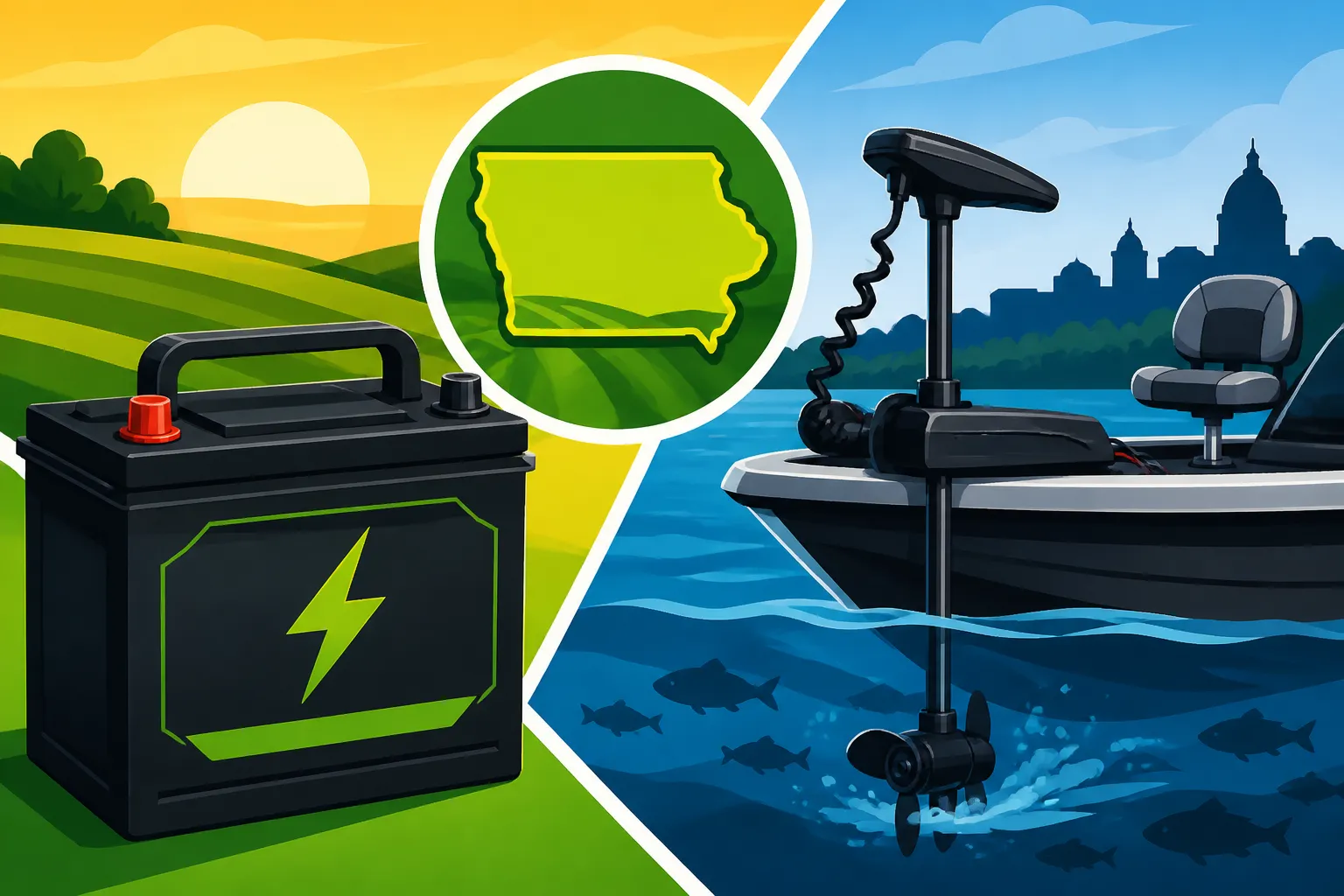
Trying to chase those elusive Iowa walleye or glide silently into a bass cove, only to have your trolling motor sputter and die, is every angler's nightmare. The wrong battery can turn a perfect fishing day into a frustrating paddle back to shore, leaving you stranded or simply unable to reach those prime fishing spots. This guide is all about helping you understand the different types of batteries available for your trolling motor and how to choose the best one to keep you powered up and on the fish across Iowa's diverse waters, from the Mississippi River to our quieter inland lakes.
The Unsung Hero: Why Your Trolling Motor Battery is Crucial for Iowa Fishing Success
When you're out on the water, whether it's navigating the currents of the Des Moines River or holding position over a submerged structure in Rathbun Lake, your trolling motor is often the unsung hero, silently doing the heavy lifting. And the heart of that hero is its battery. Many anglers, especially those just starting out or upgrading their setup, might underestimate the importance of a quality power source, thinking any deep cycle battery will do. But a subpar or improperly matched battery can lead to significant frustrations and cut short your fishing adventures.
Imagine you've driven hours to hit a hot bite reported on Clear Lake, only for your trolling motor to lose power after a couple of hours because your battery wasn't designed for sustained draws. Or perhaps you're trying to fish a specific piece of cover against a strong breeze, and your motor struggles due to insufficient voltage, causing you to drift off target. These scenarios are not only annoying but can genuinely impact your success and enjoyment on the water. A good trolling motor battery provides consistent, reliable power, giving you the runtime and thrust you need to maneuver precisely, cover more water, and stay focused on fishing, not on whether your motor will quit. It's about empowering you to control your boat effectively in varying conditions, making it an indispensable part of your Iowa Fishing Techniques Guide.
Preventing Premature Power Loss on the Water
There's nothing quite like the feeling of having your trolling motor die when you're far from the boat ramp or when the fish are really biting. This isn't just an inconvenience; it can be a safety concern, especially on larger bodies of water like the Iowa Great Lakes or the expansive Mississippi River. A battery that isn't up to the task for your trolling motor's power demands will discharge quickly, leaving you scrambling for an alternative power source or resorting to your main engine for slow, noisy maneuvering.
Modern trolling motors, especially those with advanced GPS features and higher thrust ratings, draw significant power. If your battery's capacity, measured in amp-hours (Ah), isn't sufficient for the motor's power consumption and your typical fishing duration, you're set up for disappointment. A robust battery ensures that you have ample reserve power for a full day, or even multiple days, of fishing, giving you peace of mind and allowing you to explore without constantly worrying about your charge level.
Maximizing Trolling Motor Performance and Longevity
The right battery doesn't just keep your motor running; it helps it run better. Trolling motors are designed to operate within certain voltage parameters. If your battery can't maintain a stable voltage under load, your motor's performance can suffer. You might notice reduced thrust, slower response times, or even inconsistent operation. This can be particularly frustrating when you need precise boat control for delicate presentations or when fighting against current or wind.
Furthermore, consistently over-discharging a battery, or drawing more power than it's designed to provide, can significantly shorten its lifespan. Lead-acid batteries, for instance, are particularly sensitive to deep discharges. By selecting a battery with adequate capacity and the right chemistry for your trolling motor's needs, you protect your investment in the motor itself and ensure both components work together efficiently for many seasons to come. Think of it as investing in the sustained performance of your entire fishing system.
Decoding Battery Types: Which Power Source is Right for Your Trolling Motor?
Choosing a battery for your trolling motor isn't a one-size-fits-all decision, mainly because there are several different battery chemistries, each with its own set of advantages and disadvantages. Understanding these differences is key to making an informed choice that matches your fishing style, budget, and the demands of your particular trolling motor and boat. You wouldn't use the same type of battery for starting your main engine as you would for powering your continuous-draw trolling motor, and within the deep cycle category, there are still crucial distinctions.
Traditional Lead-Acid Batteries: Flooded, AGM, and Gel
Lead-acid batteries have been the workhorse of marine applications for decades, primarily due to their proven reliability and more accessible upfront cost. Within the lead-acid family, you'll typically encounter three main types suitable for deep cycle applications: flooded (wet cell), Absorbent Glass Mat (AGM), and Gel.
-
Flooded Lead-Acid Batteries: These are the most common and often the least expensive option. They contain liquid electrolyte, which requires periodic maintenance like checking water levels and refilling with distilled water. They can handle deep discharges reasonably well but tend to have a shorter cycle life compared to AGM or Gel. They also vent hydrogen gas during charging, so proper ventilation is crucial, especially in enclosed spaces on a boat. Many anglers still opt for these due to their affordability, particularly if they have the space for proper ventilation and don't mind the occasional maintenance. You can find a wide range of these at local retailers or online at Amazon.
-
Absorbent Glass Mat (AGM) Batteries: AGM batteries are a step up in technology and performance. Instead of liquid electrolyte, the acid is absorbed into fiberglass mats between the plates. This makes them spill-proof, virtually maintenance-free, and much more resistant to vibration and shock – a big plus for a fishing boat bouncing across waves or trails. They charge faster, discharge slower, and offer a longer cycle life than flooded batteries. While they cost more initially, their longevity and lack of maintenance often make them a compelling choice for serious anglers. They are also sealed, so off-gassing is minimal, making them safer for tighter compartments.
-
Gel Batteries: Gel batteries also use a sealed design, but their electrolyte is suspended in a thick, gel-like paste. Like AGMs, they are spill-proof and maintenance-free. They are excellent for very deep discharges and have a long cycle life. However, Gel batteries typically have lower peak power output than AGMs and require a specific charging profile, which means you can't just use any charger. They also tend to be the most expensive type of lead-acid battery. They are less common for trolling motors compared to AGM because of their charging requirements and generally lower current output.
The Rise of Lithium-Ion (LiFePO4) Batteries
In recent years, lithium-ion batteries, specifically the Lithium Iron Phosphate (LiFePO4) variety, have burst onto the marine scene and are rapidly gaining popularity for trolling motor applications. While their initial purchase price is significantly higher than lead-acid options, they offer a host of benefits that make them incredibly attractive for many anglers.
LiFePO4 batteries are remarkably lightweight, often weighing less than half of an equivalent lead-acid battery. This can make a huge difference in boat performance, fuel efficiency, and ease of handling, especially if you're pulling your boat by hand or launching a smaller craft. They also boast an incredibly long cycle life, often 5 to 10 times that of lead-acid batteries, meaning they can last for many more charge-discharge cycles before their capacity degrades. They maintain a higher, more consistent voltage throughout their discharge cycle, which translates directly into consistent trolling motor performance, even as the battery drains. You won't experience that slow power fade you might with lead-acid.
Another major advantage is their efficiency; they charge much faster and lose very little energy during discharge, giving you more usable power. They are also virtually maintenance-free, just like AGM and Gel batteries. Many come with an integrated Battery Management System (BMS) that protects against overcharging, over-discharging, and short circuits, adding an extra layer of safety and longevity. If you're looking to upgrade your entire electrical system or if you need to optimize for weight and long-term reliability, a LiFePO4 battery, available from various brands at retailers like Bass Pro Shops, is definitely worth considering for its superior performance and lifespan, despite the higher upfront cost.
Here's a quick comparison of the main battery types:
| Feature | Flooded Lead-Acid | AGM Lead-Acid | Gel Lead-Acid | LiFePO4 Lithium-Ion |
|---|---|---|---|---|
| Initial Cost | Lowest | Moderate | High | Highest |
| Weight | Heavy | Heavy | Heavy | Very Light |
| Maintenance | High (water refills) | None | None | None |
| Cycle Life | Good | Better | Best (Lead-Acid) | Excellent (longest) |
| Discharge Rate | Moderate | Low | Low | Very Low |
| Consistent Power | Decreases with discharge | Good | Good | Excellent (steady voltage) |
| Charging Speed | Moderate | Fast | Slow (specific charger) | Very Fast |
| Spillage/Off-gass | Yes | No (minimal) | No | No |
| Vibration Resist. | Low | High | High | High |
Choosing Wisely: Essential Factors for Your Trolling Motor Battery
Selecting the right battery for your trolling motor involves more than just picking a type; you need to consider several practical factors to ensure it meets your specific fishing needs. A battery that works perfectly for short trips on a small lake might be completely inadequate for battling currents on the Mississippi River or spending all day chasing bass in a larger reservoir like Saylorville. Thinking through these details will help you make a choice you won't regret when you're out on the water.
Power Demands and Trolling Motor Thrust
The first thing to consider is the power demand of your trolling motor. Trolling motors are rated in pounds of thrust, which directly relates to their power consumption. A 12-volt motor typically draws less current than a 24-volt or 36-volt motor. Higher thrust motors (e.g., 80 lbs or 100 lbs) will naturally draw more current than lower thrust motors (e.g., 40 lbs). It's crucial to match your battery's voltage to your motor's requirements (e.g., one 12V battery for a 12V motor, two 12V batteries in series for a 24V motor, or three for a 36V motor).
You'll need to know your trolling motor's maximum amp draw. This information is usually found in your motor's manual or on the manufacturer's website. If you're running multiple motors or additional electronics off the same battery bank (though it's often better to have separate starting and trolling motor batteries), account for that as well. Overlooking this step can lead to a battery that simply can't provide enough juice, leading to weak performance and a quickly drained power source. For more on coordinating your boat's power, check out Best Trolling Motor Size for a Boat on Iowa Lakes.
Amp-Hour Capacity and Desired Runtime
Once you know the voltage and maximum amp draw, the next critical factor is the battery's amp-hour (Ah) capacity. This rating tells you how much current the battery can deliver over a certain period. For example, a 100Ah battery theoretically could deliver 10 amps for 10 hours. However, real-world performance is affected by discharge rate, temperature, and battery age. A good rule of thumb is to calculate your estimated average hourly amp draw and then multiply that by the number of hours you typically fish. Add a buffer for safety and to extend battery life (avoiding deep discharges).
For example, if your 12V trolling motor draws an average of 20 amps per hour and you want to fish for 6 hours, you'd need at least 120 Ah (20 amps x 6 hours). It's always better to oversize slightly to ensure longevity and consistent power. A larger capacity battery also means you can run your motor at higher speeds more frequently without worrying about running out of power too soon. This is especially important for extended trips or when fishing larger bodies of water where longer runs or more consistent boat positioning is needed. Many manufacturers, easily found on sites like Amazon or Bass Pro Shops, will list the cycle life ratings based on depth of discharge, so pay attention to these numbers.
Weight, Size, and Charging Considerations
Finally, consider the practical aspects of weight, size, and charging.
- Weight: This is where lithium-ion batteries truly shine. If you're frequently launching and loading your boat alone, or if you're concerned about overall boat weight for speed and fuel efficiency, the lighter weight of a LiFePO4 battery can be a significant advantage. Even for smaller craft like kayaks, which need portable power, the weight difference is huge.
- Size: Ensure the battery physically fits into your boat's battery compartment. Measure your available space carefully before purchasing, especially if you're upgrading to a larger capacity battery or a different chemistry that might have slightly different dimensions.
- Charging: Not all battery chargers are created equal. Lead-acid batteries use different charging profiles than lithium-ion batteries. If you switch battery types, you'll almost certainly need to invest in a compatible charger. Using the wrong charger can damage the battery or severely shorten its lifespan. Also, consider the charging time. Lithium batteries charge much faster, which can be a huge convenience if you need a quick turnaround between fishing trips. For tips on charging and overall power management, you might find useful information in How Long a Trolling Motor Battery Lasts.
Making these calculations and considerations upfront will save you headaches, and potentially money, down the road. It ensures you have a reliable power source that supports your fishing ambitions without compromise.
Keeping the Juice Flowing: Maintenance Tips for Your Trolling Motor Battery
Getting the best battery for your trolling motor is only half the battle; proper maintenance is what truly ensures its longevity and reliable performance year after year. Neglecting your battery can drastically shorten its lifespan, leading to premature replacement and unexpected power failures on the water. A little bit of care goes a long way in keeping your trolling motor humming and your fishing trips uninterrupted.
Regular Cleaning and Connection Checks
Batteries, especially those in a marine environment, are susceptible to corrosion. The terminals can build up a white, powdery substance over time, which can interfere with the electrical connection and reduce the power reaching your trolling motor. Regularly inspect your battery terminals and cables for any signs of corrosion.
To clean them, disconnect the battery (always disconnect the negative terminal first) and use a stiff wire brush and a mixture of baking soda and water to scrub away any corrosion. Rinse with clean water and dry thoroughly. Once clean, apply a thin layer of dielectric grease or an anti-corrosion spray to the terminals to prevent future buildup. Also, ensure all cable connections are tight. Loose connections can generate heat, cause power loss, and even be a fire hazard. These simple steps, performed a few times a season, can dramatically improve your battery's efficiency and prevent frustrating power interruptions.
Proper Charging and Storage Practices
How you charge and store your battery when not in use is critical to its health. For lead-acid batteries (flooded, AGM, or Gel), using a smart, multi-stage charger designed for marine deep cycle batteries is essential. These chargers optimize the charging process, preventing overcharging which can damage the battery. Never let a lead-acid battery sit in a discharged state for an extended period, as this can lead to sulfation and permanent capacity loss. Always charge it fully after each use.
When storing your boat for the off-season, particularly during Iowa's cold winters, fully charge your lead-acid battery and then disconnect it from any accessories to prevent parasitic drains. Store it in a cool, dry place where it won't freeze. For flooded batteries, check water levels before storage. Lithium-ion (LiFePO4) batteries are a bit more forgiving; they can be stored at a partial charge (around 50-70%) and have very low self-discharge rates. However, they also require a compatible charger and should generally not be charged or discharged in freezing temperatures. Consult your battery's manual for specific cold weather recommendations. Remember, a well-charged battery is a happy battery, and it's key for ensuring readiness for that first spring bite! Proper maintenance can help you avoid common issues, as covered in How to Winterize a Boat Battery for Iowa Winters.
Monitoring Battery Health
While you can't see inside your battery, you can certainly monitor its health over time. For flooded lead-acid batteries, a hydrometer can be used to check the specific gravity of the electrolyte in each cell, giving you a direct indication of its state of charge and overall health. For sealed batteries (AGM, Gel, and LiFePO4), a voltmeter or a dedicated battery monitor is your best friend.
A fully charged 12V lead-acid battery should read around 12.6-12.8 volts when rested (not under charge or load). If you notice your battery consistently reading lower voltages after a full charge, or if its runtime significantly decreases despite proper charging, it might be a sign of internal degradation. Many modern fish finders and boat electronics, like those mentioned in Fish Finders and Electronics for Iowa Anglers, can also display real-time voltage, allowing you to keep an eye on your battery while fishing. Keeping a log of your battery's performance can also help you identify any patterns or declines, allowing you to plan for replacement before you're left stranded mid-lake.
Disclaimer
This article is for general informational purposes only and does not constitute professional advice. Laws, prices and regulations vary by location and change over time. Consult a qualified professional for guidance on your specific situation.