Free Fishing License for Disabled Iowa Residents
For many Iowans living with a disability, the idea of getting out on the water and casting a line can feel like a distant dream, bogged down by financial worries or complicated bureaucratic hurdles. It's frustrating when you just want to enjoy the peace and thrill of fishing, but the process of obtaining a license adds another layer of stress. This comprehensive guide is here to cut through that confusion, explaining exactly how eligible disabled Iowa residents can secure a free fishing license, ensuring that the joy of the outdoors is accessible to everyone.
Understanding Iowa's Commitment to Accessible Fishing
Iowa prides itself on its natural beauty and the countless opportunities it offers for outdoor recreation. Recognizing that everyone deserves a chance to experience these treasures, the state has actively worked to remove barriers, especially for residents with disabilities. The free fishing license program isn't just a handout; it's a testament to a broader philosophy of inclusion and respect.
The Spirit Behind the Free License Program
Imagine the feeling of a gentle breeze on your face, the quiet ripple of water, and the sudden tug on your line – moments of pure joy and tranquility that fishing provides. For individuals managing a permanent disability, these experiences can be incredibly therapeutic, offering not just a break from daily routines but also significant mental and physical health benefits. The Iowa Department of Natural Resources (DNR) understands this deeply. They know that fishing can improve mood, reduce stress, and even offer a gentle form of physical activity.
This program embodies the idea that financial constraints or the complexity of traditional license purchasing shouldn't stand in the way of someone accessing these vital benefits. It's about empowering disabled residents to participate fully in the rich outdoor heritage of our state, validating their desire for connection with nature. It’s more than just a piece of paper; it’s an open door to recreation.
Who Qualifies as a Disabled Resident in Iowa?
The term "disabled" can mean many things, but for the purposes of Iowa's free fishing license, there are specific, clearly defined criteria. It's not just any disability that qualifies, but rather a permanent disability that is recognized by federal programs. This helps ensure the program targets those most in need of this support.
To be eligible, an Iowa resident must be permanently disabled and currently receiving federal Social Security disability benefits (SSDI), Supplemental Security Income (SSI), or receiving a service-connected disability compensation from the Veterans Administration (VA) for a 100% service-connected disability. The key here is "permanently disabled" and being a recipient of these specific federal benefits. This streamlines the verification process and focuses the benefit on those who have already undergone a rigorous disability determination through federal channels. Without this specific documentation, it can be challenging to prove eligibility for this particular license exemption.
Eligibility Requirements for a Free Disabled Fishing License
Navigating the paperwork for any government program can feel overwhelming, but understanding the precise requirements for Iowa's free disabled fishing license makes the process much smoother. It really boils down to two main things: proving you live in Iowa and proving your disability status according to the state’s guidelines.
Proving Your Iowa Residency
First things first, you need to show that you're a bona fide Iowa resident. This isn't just a formality; it ensures that state resources are benefiting those who contribute to the Iowa community. The good news is that proving residency for a fishing license is usually quite straightforward.
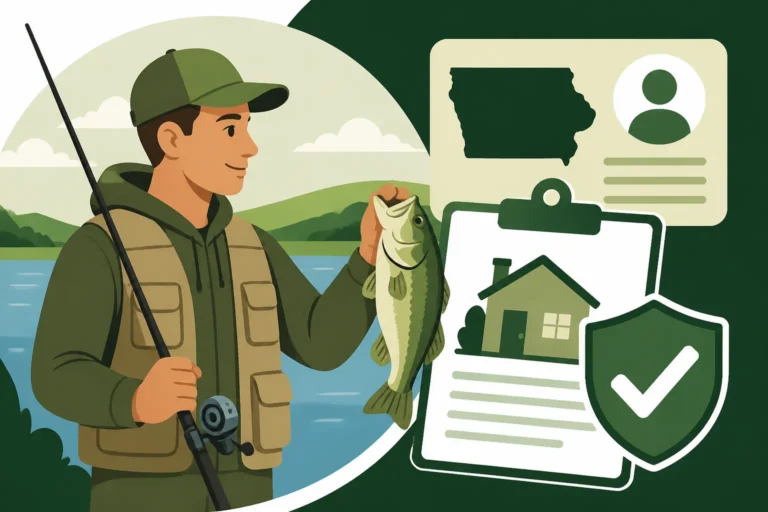
The most common and easiest forms of proof include a valid Iowa driver's license or a non-operator identification card issued by the Iowa Department of Transportation. These documents are generally accepted without question, as they clearly state your current Iowa address. If you’ve recently moved or don’t have one of these, other documents might be considered, such as current utility bills (electricity, water, gas) in your name at an Iowa address, or even recent tax returns showing Iowa residency. The key is that the document must clearly link you to a physical address within Iowa. It’s always a good idea to bring a couple of options if you’re applying in person, just to be on the safe side, because the staff at the DNR office are there to help, but they need clear documentation.
Documenting Your Disability Status
This is the most critical part of your application, as it directly verifies your eligibility for the free license. The Iowa DNR relies on specific federal documentation to confirm permanent disability and benefit status. They don't typically accept general doctor's notes or personal attestations, so having the right paperwork from the right agencies is crucial.
You'll need an official, current award letter from the Social Security Administration (SSA) if you are receiving Social Security Disability Insurance (SSDI) or Supplemental Security Income (SSI). This letter should clearly state your benefit status and that your disability is considered permanent. For veterans, you will need a Veterans Affairs (VA) disability compensation letter that explicitly states you have a 100% service-connected disability. It’s important that this letter clearly indicates the "service-connected" aspect and the 100% rating. Without this precise language, your application might be delayed or denied. Always make sure these documents are up-to-date and reflect your current status, as outdated letters may not be accepted.
The Step-by-Step Application Process
Once you’ve confirmed your eligibility, the next hurdle is the application itself. It might seem like a lot, but by breaking it down into manageable steps, you'll find it's quite achievable. The goal is to make sure you have everything in order before you submit, minimizing any back-and-forth.
Gathering Your Necessary Paperwork
The preparation phase is really important here. Think of it like packing your tackle box before a big fishing trip—you want to make sure you have all the right lures and tools. For this application, your "lures" are your essential documents.
First, revisit the proof of Iowa residency. This could be your Iowa driver’s license, a state-issued ID card, or official mail like a utility bill with your name and address. Second, and equally critical, is your proof of disability status. This means your official, current award letter from the Social Security Administration (for SSDI or SSI) or your Veterans Affairs (VA) disability compensation letter verifying a 100% service-connected disability. It's a good practice to make photocopies of all your original documents. You’ll want to keep the originals safe and submit copies with your application. While many anglers looking for a standard license might ask "where to buy a fishing license in Iowa" and simply head to a vendor or use the GoOutdoors Iowa app, this special disabled license typically requires a specific application form. You can usually find this form on the Iowa DNR website, or you can request one directly from a DNR office. Make sure you get the specific form for the free disabled fishing license, as there are different applications for various exemptions.
Submitting Your Application and What to Expect
With all your documents in hand and the application form filled out completely, it's time to submit. For this specific free disabled fishing license, direct submission to the Iowa DNR is generally the required method. This isn't usually something you can process through an authorized vendor or quickly on the GoOutdoors Iowa app like a regular annual license.
Most applicants will either mail their completed application and copies of supporting documents to the Iowa DNR licensing bureau or submit them in person at a regional DNR office. Mailing is often the most convenient option for many. Be sure to use a reliable mailing service, and it's not a bad idea to keep a record of when you sent it. Once submitted, the DNR will review your application. This process can take some time, so try to be patient. You might receive a confirmation that your application has been received, or you might hear back if they need additional information or clarification. If everything is in order, your free fishing license will be issued and mailed to you. If for some reason your application is denied, the DNR should provide a reason, which can help you understand if there was a missing document or if you didn't meet a specific criterion.
Beyond the License: Making Your Fishing Trip Enjoyable
Getting your free fishing license is a huge win, but it's just the first step. The real goal is to get out there and enjoy yourself! Iowa offers so many fantastic fishing opportunities, and with a little planning, you can make sure your trips are as comfortable and rewarding as possible.
Accessible Fishing Spots and Facilities in Iowa
Iowa is actively working to make its beautiful natural areas more accessible to everyone, and fishing spots are no exception. You don't have to scramble over rough terrain to find a great place to fish. Many lakes and rivers now boast features designed to accommodate anglers with diverse needs.
When planning your outing, look for public fishing piers that are wheelchair-accessible, often with paved pathways leading right to them. Places like Lake Macbride State Park near Solon and Big Creek Lake north of Des Moines are known for having excellent accessible facilities, including paved trails and fishing piers with railings that make casting and reeling easier. Some state parks also offer accessible fishing docks or hard-surface ramps for easy access to the water's edge. Even in more urban settings, you can find accessible ponds and lakes. The Iowa DNR's website often highlights specific accessible features at various locations, and referring to the Iowa Fishing Atlas Access Points can give you a visual guide to many spots with good access. Don't be afraid to call ahead to a specific park or county conservation board if you have questions about current conditions or specific accessibility features.
Adapting Gear for Comfort and Ease
Fishing should be relaxing, not a struggle. Fortunately, a wide range of adaptive fishing gear is available today to make the experience more comfortable and enjoyable, regardless of your physical capabilities. The right gear can truly make all the difference.
Consider investing in rod holders that can be clamped to a chair, a boat, or a pier, allowing you to rest your rod without constantly holding it. There are also specialized grips for fishing rods that offer better ergonomics and a more secure hold for those with limited hand dexterity. Electric reels are another fantastic option for individuals who struggle with manual reeling, taking the strain out of bringing in a fish. You can find many of these innovative products on online retailers like Amazon, offering a convenient way to browse and purchase adaptive equipment from the comfort of your home. Lightweight rods and reels can also reduce fatigue, making a long day of fishing much more pleasant. And don't forget the basics: a comfortable, supportive chair if you're shore fishing, good sun protection, and a cooler that's easy to access for drinks and snacks. If you're considering a more active approach, like using a watercraft, looking into Kayak Fishing Gear Guide for Iowa Rivers might offer insights into lightweight and stable options that can be adapted for individual needs.
Important Considerations and Remaining Compliant
Congratulations, you've got your free fishing license, and you're ready to hit the water! But your journey doesn't end there. Like all anglers, it's important to understand the ongoing requirements and responsibilities to ensure you remain compliant with Iowa's fishing regulations. After all, the goal is stress-free enjoyment, not unexpected fines.
Annual Renewal and Staying Informed
A common question people have about specialized licenses is whether they need to be renewed. For most free or discounted fishing licenses in Iowa, including the one for disabled residents, the answer is generally yes, they do require annual renewal. While the initial application involves submitting your disability documentation, subsequent renewals might be simpler, but you'll still need to formally renew your license each year.
The Iowa fishing license year typically runs from January 1st to December 31st. It's crucial to renew your license before the new year begins if you plan to fish in January or beyond. The DNR usually sends out reminders, but it's always a good idea to mark your calendar. The process for renewing an Iowa fishing license might involve submitting a simplified form or, in some cases, the DNR might pre-populate forms for you to verify. Always check the current year's process on the DNR website. Beyond just your license, remember that Iowa Fishing Regulations Explained can change from year to year, including things like Iowa Fishing Season Dates and Limits or Iowa Fishing Daily Bag Limits Guide. Staying informed by checking the latest regulations booklet or the DNR website before each season is a smart habit for all anglers.
What This License Covers and What It Doesn't
Receiving a free disabled fishing license is fantastic, but it's important to understand its scope. This license typically covers your basic statewide fishing privileges. However, fishing in Iowa can sometimes require additional permits or stamps, especially for specific species or waters.
The most common additional requirement is the Iowa Trout Fee. If you plan on fishing in designated trout streams or stocked community trout ponds in Iowa, your free general fishing license will not exempt you from needing to purchase this additional trout stamp. This is a separate fee that helps fund the state's trout stocking and management programs. You can find more details about this in our Iowa Trout Fishing Fee and Stamp Guide and understand How Much the Iowa Trout Fee Costs. Similarly, while your license allows you to fish, it doesn't exempt you from adhering to all other statewide fishing regulations concerning bag limits, size limits, and species-specific seasons. Always carry your license and any required stamps with you while fishing, as conservation officers conduct checks regularly. This ensures everyone is doing their part to protect Iowa's precious aquatic resources.
Free Fishing License for Disabled Iowa Residents: At a Glance
Here's a quick summary of the key eligibility and documentation requirements for the free fishing license for disabled Iowa residents.
| Requirement | Details | Required Documentation |
|---|---|---|
| Iowa Residency | Must be a current legal resident of Iowa. | Valid Iowa Driver's License OR Iowa Non-Operator ID Card. (Alternatively: current utility bill with Iowa address, recent tax return, etc., if other ID not available). |
| Disability Status | Must be permanently disabled AND receiving one of the following federal benefits: | |
| 1. Federal Social Security Disability Benefits (SSDI) | Current official award letter from the Social Security Administration (SSA) stating SSDI benefit. | |
| 2. Supplemental Security Income (SSI) | Current official award letter from the Social Security Administration (SSA) stating SSI benefit. | |
| 3. Veterans Administration (VA) Service-Connected Disability | Current official letter from the Veterans Administration (VA) stating 100% service-connected disability compensation. | |
| Application Method | Must apply directly through the Iowa Department of Natural Resources (DNR). Not typically available via online vendors or the GoOutdoors Iowa app for initial application. | Completed Iowa DNR application form for free disabled fishing license. |
| Additional Fees | The free license covers general fishing privileges but does NOT waive additional fees like the Iowa Trout Fee for designated trout waters. | Purchase of Iowa Trout Fee stamp required separately if fishing for trout in designated areas. |
| Renewal | Requires annual renewal. | Check current Iowa DNR guidelines for annual renewal process and deadlines. |
Remember, this table provides a snapshot. Always refer to the most current Iowa DNR regulations and forms for the most accurate and up-to-date information.
Disclaimer
Please note that while we strive to provide accurate and up-to-date information, regulations and policies can change. It is always the angler's responsibility to consult the official Iowa Department of Natural Resources (DNR) website or contact them directly for the most current rules and requirements before purchasing a license or heading out to fish. This guide is for informational purposes only and should not be considered legal advice.