How to Set the Hook on a Big Catfish
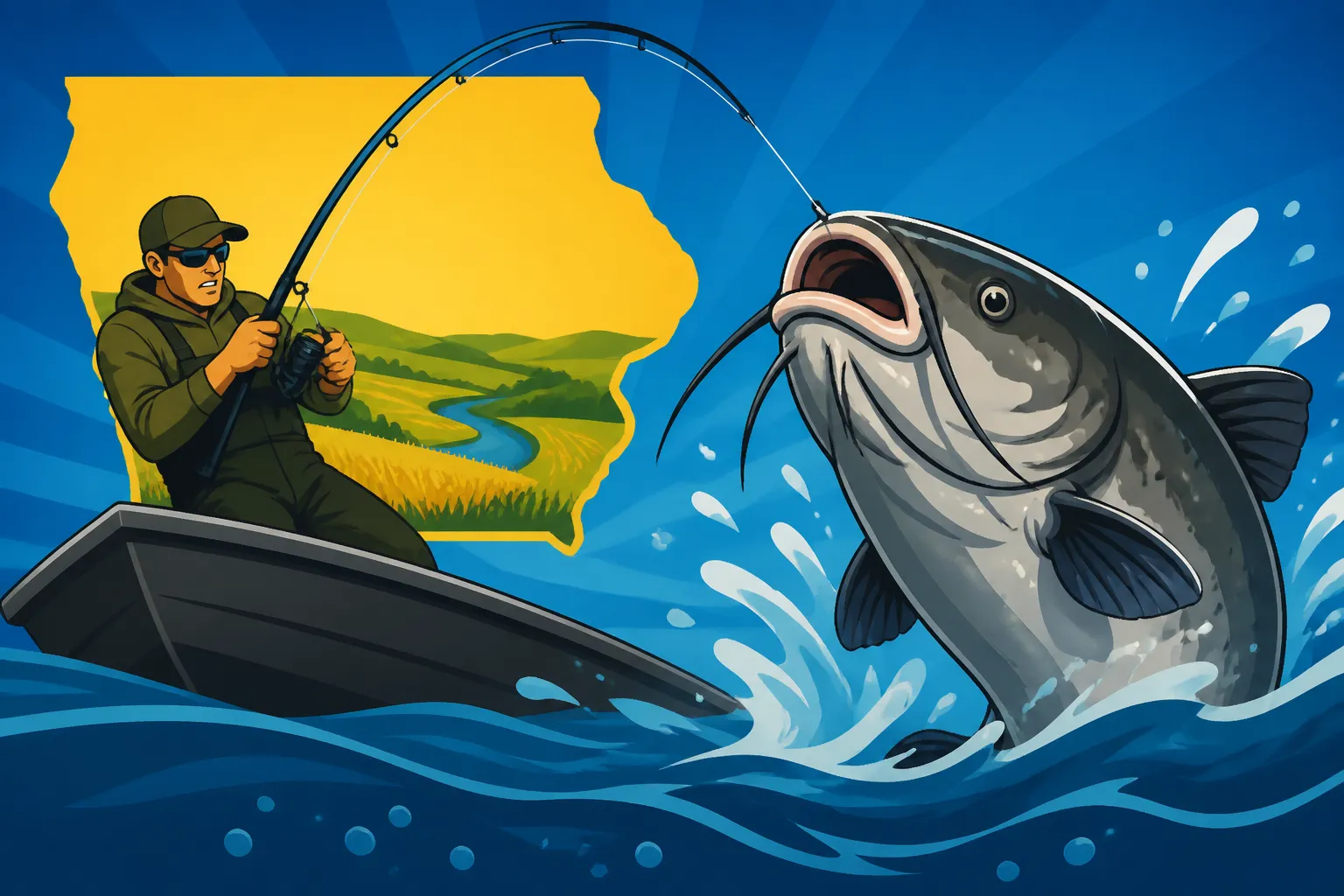
There's nothing quite like the heart-stopping moment a big catfish finally takes your bait, but that excitement can quickly turn to crushing disappointment if you miss the hook set. Many anglers struggle with knowing exactly when and how to react to those tell-tale tugs, often pulling the bait right out of the fish's mouth or setting the hook too weakly. This guide is here to walk you through the essential techniques and strategies to confidently set the hook on those Iowa monsters, ensuring more fish make it to your net.
Understanding the Catfish Bite and Your Gear
Before you can effectively set the hook, you need to truly understand what's happening on the other end of your line and trust the tools you're using. Catfish bites aren't always aggressive, smash-and-grab affairs; sometimes they're subtle, tentative, and require a bit of patience and understanding. Equally important is having the right gear that can handle the power needed for a solid hook set, especially when you're targeting those truly large flatheads or channel cats that call Iowa's waters home.
The Nuances of a Catfish Strike
A catfish bite can vary wildly depending on the species, water temperature, bait, and even the time of day. Channel catfish, especially smaller ones, might peck at your bait, giving you a series of rapid taps before a solid pull. Larger channel cats and blue catfish, on the other hand, often produce a more definitive, steady pull or even a sudden, rod-bending yank. Flathead catfish are notorious for their deliberate, often slow and heavy take; they'll typically mouth the bait, moving off slowly before really committing.
Learning to differentiate these subtle indications from false alarms like current or smaller panfish nibbling is crucial. It’s a skill that comes with time on the water, but paying close attention to your rod tip or bobber is the first step. Are the taps consistent and increasing in intensity, or random? Is there a deliberate weight coming onto the line, even if it’s slow? Often, the best advice is to wait until the fish really takes the bait and starts to move off with it, creating sustained pressure on your line. Trying to set the hook on the first little tap usually results in a miss.
Gear Matters: Rod, Reel, and Line for Hook Setting Power
When you're fishing for big catfish in Iowa, whether it's on the mighty Mississippi River or one of our productive reservoirs like Saylorville, your gear needs to be up to the task. A flimsy ultralight rod simply won't cut it. You need a rod with a strong backbone and a medium-heavy to heavy power rating. This isn't just for fighting the fish; it's essential for driving the hook point deep into a catfish's tough, cartilaginous mouth. A shorter rod, typically 6 to 7.5 feet, can offer more leverage for powerful hook sets, especially when you're fishing from a boat or tight quarters. If you're looking for recommendations, our guide on the Best Rod Setup for Catfish on the Mississippi River offers some great insights.
Your reel also plays a critical role. A sturdy baitcasting reel or a large, robust spinning reel with a good drag system is ideal. For line, you want something strong and abrasion-resistant. Braided line, with its near-zero stretch, is a fantastic choice for catfish because it transmits every bump and pull directly to your rod tip and allows for incredibly direct, powerful hook sets. However, some anglers prefer monofilament for its stretch, which can act as a shock absorber during a fight. A good compromise can be a tough monofilament leader if you're using braid for your main line. When considering your setup, remember our detailed information about the Best Pound Test Line for Catfish Fishing on Iowa Rivers.
Hook Selection: The Right Tool for the Job
The type of hook you choose profoundly impacts how you should set it. For serious catfishing, you'll generally be choosing between J-hooks (sometimes called Kahle hooks or O'Shaughnessy hooks) and circle hooks. Both have their advantages, and understanding them is key to successful hook sets. If you're wondering about the appropriate size, check out our guide on the Best Hook Size for Channel Catfish.
J-hooks require a traditional, forceful hook set. When you feel that definitive bite, you need to reel up any slack and then sweep your rod upward and backward with authority. This drives the point home. The downside is that fish can often swallow J-hooks, leading to gut-hooking, which makes catch-and-release difficult and often fatal for the fish. Circle hooks, on the other hand, are designed to hook the fish in the corner of the mouth without requiring a dramatic hook set. They are highly effective for reducing gut-hooking and are often preferred by conservation-minded anglers. We'll delve into the specific techniques for each hook type next.
Here’s a quick comparison of the two main hook types for catfish:
| Feature | J-Hook (e.g., Kahle, O'Shaughnessy) | Circle Hook |
|---|---|---|
| Hook Set Action | Requires forceful, upward/backward sweep | No traditional hook set; let fish hook itself |
| Primary Advantage | Immediate, aggressive hook-up when executed correctly | Minimizes gut-hooking; higher survival rate for C&R |
| Typical Placement | Anywhere in the mouth, often deep (gut-hooking risk) | Corner of the mouth, almost always |
| User Skill Level | More active engagement required by angler | Requires patience, less active hook-setting |
| Bait Retention | Excellent, wide gap holds large baits | Excellent, especially for live bait |
The Art of the Hook Set: Techniques for Different Scenarios
Now that we've covered the nuances of the bite and the importance of your gear, let's get into the actual execution of the hook set. This is where patience meets power, and where knowing your hook type really pays off. Whether you prefer the satisfying slam of a J-hook set or the subtle efficiency of a circle hook, there's a technique to master.
Setting the Hook with J-Hooks
When you're using a traditional J-hook (which many anglers still prefer, especially when targeting larger fish they intend to keep), the hook set needs to be definitive and powerful. You've felt the taps, perhaps a gentle pull, and then that rod-bending, line-pulling commitment from the fish. This is your moment. First, quickly reel down any slack line until you feel direct contact with the fish. You want your rod tip low, almost pointing at the fish, to maximize the length of your hook-setting sweep.
Next, with a firm grip on your rod, sweep it upwards and sideways in a single, fluid, powerful motion. Imagine you're trying to lift a heavy bucket. This isn't a gentle flick; it's a full-body engagement. Your goal is to drive the hook point past the barb into the tough tissue of the catfish's mouth. Don't stop your sweep too early; continue through the motion until the rod is bent over your shoulder. The leverage from your rod, combined with the power of your arms and shoulders, should ensure a solid connection. Without this aggressive action, especially with a sharp, heavy-duty hook, the point might just nick the fish's lip, leading to a lost fish mid-fight.
Mastering the Circle Hook: Let the Fish Do the Work
Circle hooks, once a niche item, have become incredibly popular in catfishing due to their effectiveness and fish-friendly design. The crucial thing to remember with a circle hook is that you do not set the hook in the traditional sense. A hard, upward sweep will almost always pull the hook right out of the fish's mouth without setting it. Instead, the magic of the circle hook lies in its design: as the fish swims away with the bait, the hook naturally rotates and catches in the corner of its mouth.
So, how do you "set" it? It's all about reeling into the fish. When you feel a bite, resist the urge to yank. Instead, simply start reeling steadily. As the fish pulls away, the line tension will engage the hook. Continue to reel until you feel the weight of the fish and the rod bends under steady pressure. At this point, the hook is almost certainly set perfectly in the corner of the mouth. This method requires patience and trust in your gear, but once you master it, you'll find your hook-up ratio improves, and you'll spend less time dealing with deeply hooked fish. This is particularly effective for those times you're trying to catch and release.
When to Strike: Reading the Bite
This is perhaps the most challenging aspect of hook setting, especially for new anglers. The "when" is often more critical than the "how." For both J-hooks and circle hooks, patience is truly a virtue. With a J-hook, you're waiting for that undeniable, sustained pull where the fish has clearly taken the bait and is moving off. Don't react to every tap or peck. Think of it like a game of tug-of-war; you want to set the hook when the fish has a firm grip on the rope and is trying to pull it away from you. This might mean waiting for your rod tip to load up significantly or for your bobber to disappear completely and stay down.
For circle hooks, the waiting game is even more pronounced. You're waiting for the rod to load up on its own. If you see your rod tip gently bend, then bend a little more, and then smoothly pull downwards, that's your cue to start reeling. You're not looking for a sudden, violent strike. It's a steady, building pressure. Many experienced catfish anglers will actually put their rod in a sturdy rod holder and let the fish completely bend the rod over before they even touch it, then simply pick it up and begin reeling. This "rod holder method" is incredibly effective for circle hooks and is a common technique when doing some Night Fishing Techniques for Catfish.
Common Mistakes and Troubleshooting Hook Sets
Even seasoned anglers can make mistakes when setting the hook, especially when the adrenaline kicks in. Recognizing these common pitfalls and understanding how to correct them can significantly improve your success rate on the water. It’s all part of the learning curve, and even the most experienced Iowa catfishers have been there, watching a big one swim away after a flubbed hook set.
Rushing the Hook Set: The Biggest Blunder
The number one mistake anglers make, especially with J-hooks, is setting the hook too early. That initial tap or bump sends a jolt of excitement through you, and instinct screams "SET THE HOOK!" However, more often than not, those early signs mean the fish is still mouthing or investigating the bait. It hasn't fully committed yet, and a premature hook set will simply yank the bait right out of its mouth. You might feel a brief resistance, only to reel in an empty hook or a partially mangled bait.
To avoid this, cultivate patience. Remind yourself to count to three or even five after you feel the initial strong pull before you react. Wait for the line to be under continuous tension, indicating the fish has fully taken the bait and is attempting to move away. This waiting period allows the fish to get the hook fully into its mouth, setting the stage for a solid connection. It's a mental game as much as it is a physical one, and it often feels counter-intuitive to wait when all your senses are telling you to act immediately.
Insufficient Power and Angle
Another common issue is a weak or improperly angled hook set. If you're using a J-hook and simply flick your wrist or make a half-hearted sweep, you're unlikely to drive the hook point through the tough mouth of a large catfish. Big catfish, especially those you might find in larger bodies of water like the Mississippi or Missouri rivers, have incredibly strong jaws and cartilaginous mouths. A powerful, deliberate sweep from your entire upper body is necessary to ensure deep penetration.
The angle of your rod during the hook set is also vital. If your rod is too high when you start your sweep, you have less room to generate power and leverage. Aim to have your rod tip pointed low towards the water or even slightly at the fish just before your strike. This maximizes the arc of your sweep and the force you can apply. Think of it as pulling a heavy object; you get more power from a full pull than a short tug. If you often miss fish or only hook them lightly, evaluate the power and angle of your hook set.
Dealing with Difficult Conditions
Fishing conditions aren't always ideal, and adverse situations can make hook setting even more challenging. Strong winds can create a large belly in your line, making it hard to detect subtle bites and diminishing the directness of your hook set. In these cases, it's crucial to minimize slack by keeping your rod tip low and pointing it slightly into the wind to cut down on line drag. Using heavier sinkers to keep your line taut on the bottom can also help.
Current, especially on rivers, can also complicate matters. The constant pull of the water on your line can make it difficult to distinguish a fish bite from the river's flow. Here, line watchers or heavier baits and weights can give you a better feel. For instance, knowing how to fish wing dam fishing on the Mississippi River effectively in strong currents often requires heavier tackle and precise line management. Snags, another common river challenge, can also impact your ability to set the hook. If you suspect your bait is near structure, be extra vigilant with your line, and try to keep your rod tip higher to pull the fish up and away from potential hang-ups immediately after the hook set.
Practice Makes Perfect and Post-Hook Set Strategies
Becoming proficient at setting the hook on a big catfish isn't just about reading the bite and yanking on the rod; it's a refined skill that improves with conscious effort and understanding what happens after the initial connection. Just like any sport, practice helps, and knowing what to do in those critical seconds after the hook is set can determine whether you land that trophy or tell another "one that got away" story.
Practicing Your Hook Set
You don't always need a live fish on the line to improve your hook-setting technique. Dry runs at home or on the bank can build muscle memory. Attach a heavy weight (like a brick or a five-gallon bucket of water) to your line, cast it out a short distance, and then practice your hook set. Feel how your rod loads up, how much force it takes to move the weight, and what a solid sweep feels like. Pay attention to your body mechanics: are you using your core and shoulders, or just your arms?
Another useful practice method involves watching your rod tip. Sit on the bank without bait and simply watch your rod tip in different conditions. Observe how wind, current, or even minor bumps affect it. This helps you calibrate your "fish bite detector." Imagine a fish is biting and mentally go through the steps: wait for the sustained pull, reel up slack, then execute your powerful sweep (for J-hooks) or steady retrieve (for circle hooks). Visualization is a powerful tool in fishing, and understanding when to strike improves significantly with mental rehearsal.
Maintaining Pressure After the Hook Set
Congratulations, you've set the hook! But the battle is far from over. The moments immediately following the hook set are crucial. A big catfish will often make a powerful initial run, trying to escape. If you give it slack line, even for a second, it can spit the hook. Your immediate goal is to keep constant, unwavering pressure on the fish. This means keeping your rod tip up (often at a 90-degree angle to the water) and your line tight.
Don't be afraid to let the fish run if it's pulling drag. That's what your drag system is for! However, maintain tension. If the fish stops running, immediately begin reeling to regain any line it took and to keep it from shaking the hook loose. Think of your rod as a shock absorber; it bends and flexes to absorb the fish's surges while maintaining the critical tension needed to keep the hook firmly embedded. This is especially important for species like the Channel Catfish Fishing in Iowa, which can put up a surprisingly strong fight.
The Fight is On: Playing a Big Catfish
Once the hook is set and you've established pressure, you're officially in a fight. Playing a big catfish requires a combination of patience, proper rod control, and smart drag management. Keep your rod tip high, letting the rod's bend do the work. Don't "straight-stick" the fish by pointing your rod directly at it; this puts all the strain on your line and reel, and offers no shock absorption. Instead, let the rod's parabolic curve wear the fish down.
Adjust your drag as needed during the fight. If the fish is making a strong run, let it take some line rather than risk breaking your line or pulling the hook. If it's tiring, you can tighten the drag slightly to gain line more quickly. Pump the rod by lifting it smoothly, then lowering it while reeling in the slack. This repetitive motion brings the fish closer without putting undue strain on your gear. Remember, patience is key. Big catfish have incredible stamina, and rushing the fight often leads to a lost fish. Our general guide on How to Catch Catfish in Iowa provides even more tactics for landing these impressive fish. Many great tools for managing big fish can be found on Amazon, from heavy-duty landing nets to reliable fish grips that make handling safer for both you and the fish.
Disclaimer
This article is for general informational purposes only and does not constitute professional advice. Laws, prices and regulations vary by location and change over time. Consult a qualified professional for guidance on your specific situation.