How to Catch Bluegill on a Fly Rod
Fly fishing for bluegill in Iowa is a uniquely rewarding experience, offering incredible action and a chance to hone your angling skills without the pressure of chasing a trophy. Many anglers overlook the sheer joy these feisty panfish can provide on light tackle, but once you feel that strong tug on a delicate fly rod, you'll be hooked. This comprehensive guide will walk you through everything you need to know, from selecting the right gear to mastering the techniques and finding the best spots to catch bluegill on a fly rod across the Hawkeye State.
Why Fly Fishing for Bluegill is Such a Delight in Iowa
There’s something truly special about connecting with fish on a fly rod, and bluegill are, in my humble opinion, one of the best species to learn and practice with in Iowa. They're abundant, aggressive, and incredibly fun to catch, making them an ideal target for fly anglers of all skill levels.
The Underrated Fight of Iowa Bluegill on Light Tackle
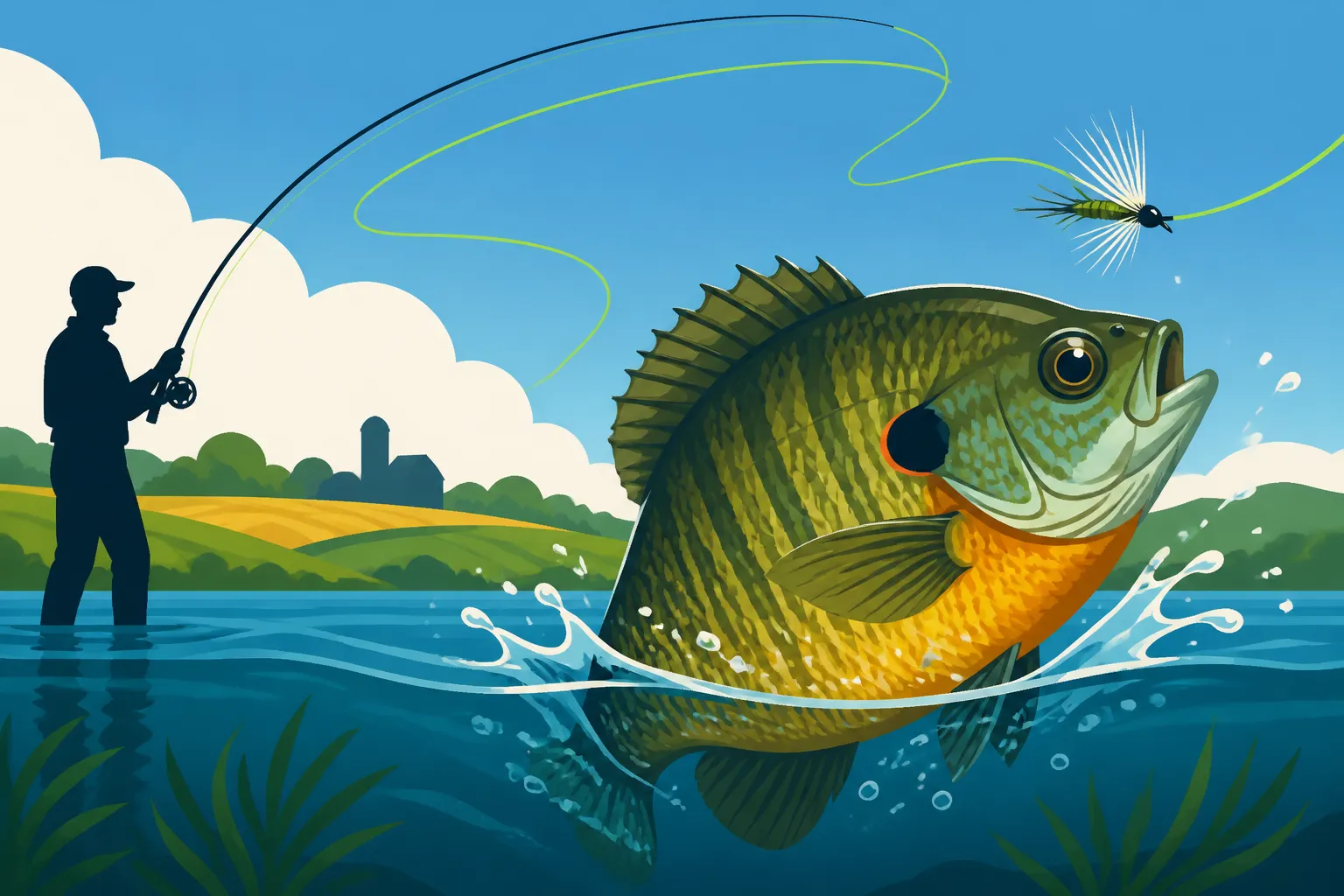
Bluegill might not grow to massive sizes, but what they lack in girth, they more than make up for in pure, unadulterated fight. When you hook into a palm-sized bluegill on a 2 or 3-weight fly rod, it feels like you've latched onto something much bigger. Their broad, disc-shaped bodies allow them to turn sideways in the water, creating surprising resistance and powerful pulls. You’ll feel every head shake and every dart they make, giving you a real thrill, especially if you’re used to heavier gear.
Imagine a warm summer evening, casting a small popper near a lily pad patch on a quiet Iowa farm pond. Suddenly, the water explodes as a hungry bluegill inhales your fly, and your rod bends deeply. That’s the kind of excitement we’re talking about. Plus, they’re incredibly accessible. Whether you’re fishing a small farm pond, a state park lake, or even slow-moving backwaters of a river, bluegill are often just a short cast away, making them perfect for a quick outing or a full day of fun. For a broader look at what's biting across the state, check out our general Iowa Fishing Techniques Guide.
The Zen and Skill of Presentation
Beyond the fight, fly fishing for bluegill cultivates a deeper appreciation for the art of the cast and presentation. It's not just about getting the fly out there; it's about putting it exactly where you want it, with a gentle touch that mimics natural insect landings. There's a certain zen to the rhythm of the cast, the delicate placement of a tiny dry fly, and then the patient wait for a fish to rise.
This pursuit teaches you invaluable skills: reading the water, understanding insect behavior, and perfecting your casting mechanics. Even seasoned anglers return to bluegill to sharpen their skills because the fundamentals of fly fishing are so beautifully applied to these eager fish. It's a peaceful, engaging way to spend time outdoors, focusing on the subtle nuances that make fly fishing such a captivating sport.
Essential Fly Rod Setup for Iowa Bluegill
Getting your gear dialed in for bluegill is fairly straightforward, and thankfully, it doesn't require breaking the bank. The key is to lean towards lighter tackle to truly enjoy the experience.
Choosing the Right Rod, Reel, and Line
When it comes to bluegill, think "light and lively." A properly balanced setup will make all the difference in feeling every nibble and fully appreciating the fight.
- Fly Rod: For bluegill in Iowa, a 2-weight, 3-weight, or 4-weight fly rod is generally perfect. A 2-weight or 3-weight will offer the most sport, making even small bluegill feel like giants. If you anticipate catching larger bass or want a more versatile setup for multiple panfish species, a 4-weight is a great all-around choice. Most rods are 7.5 to 9 feet long; an 8.5-foot rod is a good compromise for various casting situations. A medium-fast action rod is a good starting point, providing enough backbone for casting while still offering plenty of feel. You can find excellent entry-level rods on platforms like Amazon that are more than capable of handling Iowa's bluegill.
- Fly Reel: For bluegill, the reel is primarily a storage device for your line. A simple, lightweight reel with a basic click-and-pawl drag system is more than sufficient. You won't be "fighting" fish off the reel much, as bluegill don't typically make long runs that require a sophisticated drag. Focus on one that balances well with your chosen rod.
- Fly Line: A weight-forward (WF) floating line matching your rod weight (e.g., WF3F for a 3-weight rod) is the standard. The weight-forward taper helps with casting small, light flies and poppers. For bluegill, you generally won't need sinking lines, as they are often caught in shallower water or just below the surface.
- Backing: While bluegill rarely strip all your fly line off the reel, it's good practice to spool about 50 yards of 20-pound dacron backing onto your reel before your fly line. This fills the arbor and provides a cushion, preventing your fly line from getting too tightly coiled.
- Leader and Tippet: A tapered leader, typically 7.5 to 9 feet long with a 4X to 6X tippet section, is ideal. The tapered leader helps transfer casting energy smoothly to present your fly delicately. For very small flies or extremely clear water, you might extend your tippet with a piece of 6X or even 7X fluorocarbon.
Must-Have Flies for Iowa Bluegill
Bluegill aren't particularly picky eaters, which is fantastic for fly anglers! Their aggressive nature means they'll often strike at a wide variety of patterns. Having a small selection of these key fly types will set you up for success.
- Dry Flies/Poppers: These are incredibly fun to fish because you get to see the take!
- Poppers: Small foam or cork poppers (sizes 8-12) in bright colors (chartreuse, white, black, yellow) are irresistible to bluegill. Brands like Boogle Bugs or simple Gurgle Poppers create a disturbance on the surface that mimics struggling insects or small critters.
- Small Dry Flies: Patterns like the Elk Hair Caddis, Griffith's Gnat, or a tiny Parachute Adams (sizes 14-18) can be very effective when bluegill are keying in on natural hatches or small terrestrial insects falling into the water.
- Rubber Legged Spiders/Ants: Terrestrial patterns with rubber legs can drive bluegill crazy, especially near overhanging vegetation.
- Wet Flies/Nymphs: When bluegill aren't looking up, subsurface flies are the way to go.
- Small Nymphs: Patterns like the Pheasant Tail Nymph, Hare's Ear Nymph, or Prince Nymph (sizes 12-18) imitate aquatic insects. Fish these under a small indicator or with a slow, twitching retrieve.
- Worm Imitations: A simple San Juan Worm in red or pink can be deadly, especially after a rain or when fish are in a sluggish mood.
- Small Streamers: Don't underestimate the power of a small streamer to entice aggressive bluegill or even a bonus bass.
- Woolly Buggers: A small Woolly Bugger (sizes 10-14) in olive, black, or brown is a versatile fly that imitates baitfish or leeches. Slowly strip it through structure.
- Crappie/Panfish Jigs: Tiny marabou jigs on a fly rod can also be incredibly effective for panfish, including bluegill, especially when they're a bit deeper.
You can often find these fly patterns in starter kits or individually at local fly shops, or conveniently through online retailers. When stocking up, consider having a few different sizes and colors for each pattern to match various conditions.
Here's a quick summary of recommended bluegill fly gear:
| Item | Recommendation | Details |
|---|---|---|
| Rod | 2-4 weight, 7.5-9 ft, Medium-Fast action | Provides excellent feel, handles bluegill fight well. |
| Reel | Lightweight, basic click-and-pawl drag | Primarily for line storage, balances rod. |
| Line | WF2F – WF4F (Weight-Forward Floating) | Easy casting for light flies and poppers. |
| Backing | 50 yards, 20 lb Dacron | Fills reel arbor, rare use for bluegill but good practice. |
| Leader | 7.5-9 ft, Tapered, 4X-6X | Smooth energy transfer, delicate presentation. |
| Tippet | 4X-7X Fluorocarbon (for extensions/refinement) | Clearer in water, helps with finicky fish. |
| Dry Flies | Small Poppers (8-12), Elk Hair Caddis (14-18) | Surface action, exciting visible strikes. |
| Nymphs | Pheasant Tail, Hare's Ear, Prince Nymph (12-18) | Subsurface imitations of aquatic insects. |
| Streamers | Small Woolly Buggers (10-14) | Imitates baitfish/leeches, attracts larger bluegill/bass. |
Mastering the Techniques for Iowa Bluegill on a Fly Rod
Fly fishing for bluegill is less about brute force and more about finesse and understanding their behavior. Once you have your gear, applying the right techniques will lead to consistent success.
Casting and Presentation Fundamentals
You don't need to be an expert caster to catch bluegill, but a few fundamental skills will greatly improve your catch rate.
- Basic Casts: The overhead cast is your bread and butter. Focus on smooth, controlled movements that allow the line to unfold gracefully. Practice in your yard to build muscle memory. The roll cast is also incredibly useful for when you have limited back-casting room, such as when fishing from shore near brush or from a kayak. Remember, accuracy often trumps distance when targeting bluegill, as they are frequently found close to cover.
- Soft Presentation: Bluegill can be easily spooked by a sloppy cast that splashes down heavily. Aim for a delicate landing of your fly. This is where a good tapered leader helps, allowing the energy of the cast to dissipate before the fly hits the water.
- Retrieve: The way you retrieve your fly is crucial.
- Dry Flies/Poppers: Let your dry fly drift naturally for a few seconds. If nothing happens, give it a very subtle twitch. For poppers, a short, sharp strip of the line to make it "pop," followed by a pause, is often irresistible. Experiment with pause lengths – sometimes they want it fast, sometimes they want it still.
- Nymphs/Wet Flies: These are often fished slower. A slow, steady hand-twist retrieve, or short, gentle strips, can mimic a swimming insect. Sometimes, simply letting the current drift the fly naturally is enough. Pay close attention to your line for any subtle movement that indicates a bite.
- Observation: Before you even cast, take a moment to observe the water. Look for rises, ripples, or shadows near structure. Understanding where the fish might be will guide your casting.
Where and When to Find Bluegill with a Fly Rod in Iowa
One of the great things about bluegill is their wide distribution across Iowa. You can find them in almost any body of freshwater, from major rivers to tiny farm ponds.
- Habitat Hotspots: Bluegill love cover and structure.
- Lily Pads and Weed Lines: These provide both cover from predators and ambush points for food. Cast your poppers right up to the edge or even a foot or two into the pads.
- Submerged Timber and Brush Piles: Sunken trees and brush are magnets for bluegill. Fish nymphs and small streamers around these areas.
- Docks and Boat Hoists: The shade and structure offered by man-made objects often hold schools of bluegill.
- Shaded Areas: On bright, sunny days, bluegill will often seek refuge in shaded areas under trees, bridges, or overhanging banks.
- Iowa Lakes and Ponds: Almost any public lake or private pond in Iowa will hold bluegill. Lakes like Clear Lake, Rathbun Lake, and even smaller community ponds are excellent options. Many of Iowa's State Parks offer great fishing piers and shore access.
- River Backwaters: The slow-moving backwaters and oxbows of Iowa's larger rivers, including the Mississippi and Des Moines Rivers, can be phenomenal for bluegill, especially during warmer months.
- Time of Day: Bluegill can be active throughout the day, but generally, early morning and late evening tend to be the most productive, especially for dry fly action. During the midday sun, they might move to deeper water or denser cover, requiring you to switch to nymphs or streamers.
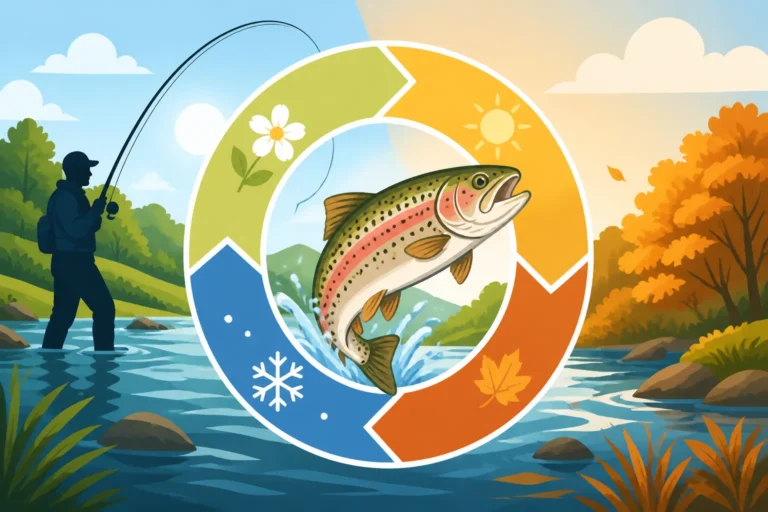
- Seasons:
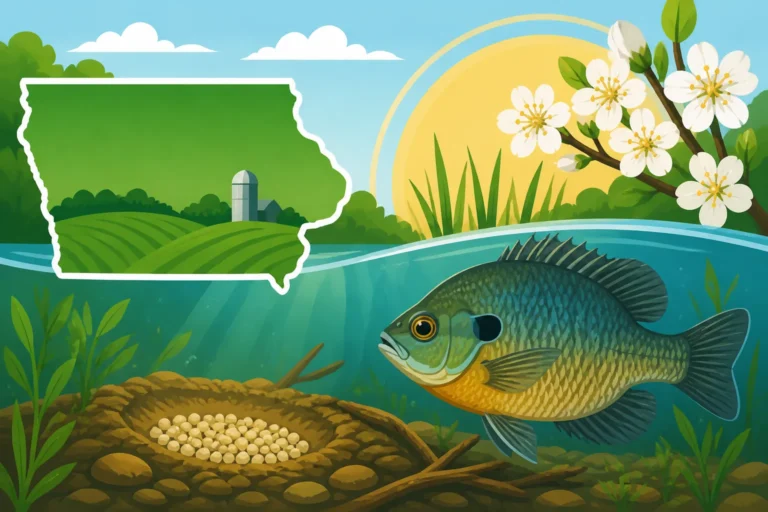
- Spring: This is prime time! As water temperatures rise, bluegill move into shallower waters to spawn. They become incredibly aggressive and will readily strike at almost anything. Look for them in less than 5 feet of water, often near spawning beds (circular depressions).
- Summer: Bluegill are still active but may move deeper during the heat of the day. Focus on shaded areas, weed lines, and deeper edges of structure. Morning and evening will provide the best surface action.
- Fall: As water temperatures cool, bluegill continue to feed heavily in preparation for winter. They often school up, making it possible to catch many in one spot.
- Winter: While fly fishing for bluegill through the ice is less common, it’s not impossible in open water during mild periods. Generally, the season is quieter, but they can still be caught with small nymphs in deeper, slower areas. To learn more about how Iowa's regulations might affect you throughout the year, refer to our Iowa Fishing Seasons Explained guide.
Beyond the Basics: Tips for Consistent Fly Rod Bluegill Success
Consistent success with bluegill on a fly rod often comes down to adaptability and attention to detail. These small adjustments can make a big difference.
Reading the Water and Adjusting Your Approach
Being able to "read the water" is a skill that develops over time, and bluegill fishing is a fantastic way to practice it.
- Current and Wind: Even in ponds, gentle breezes create currents. Observe which way debris is drifting. Bluegill will often face into the current, waiting for food to drift by. Wind can also push baitfish and insects into specific areas, concentrating fish. If it's windy, try casting to the wind-blown bank where food might accumulate. In rivers, pay attention to eddies and slow pockets, as bluegill avoid strong currents.
- Water Clarity: In clear water, bluegill can be more wary. Use longer leaders, finer tippets (5X or 6X), and smaller, more natural-colored flies. In murkier water, you can often get away with bolder flies and presentations.
- The Power of Experimentation: If a particular fly or retrieve isn't working, don't be afraid to change.
- Change Flies: If dry flies aren't getting attention, try a small nymph or a Woolly Bugger. Change colors, change sizes.
- Change Retrieve: Speed up, slow down, add more pauses, add more twitches. The fish will tell you what they prefer.
- Change Depth: If you're fishing nymphs, try adding a small split shot to get your fly deeper, or adjust your indicator.
- Polarized Sunglasses: These are an absolute game-changer. They cut glare, allowing you to see into the water, spot submerged structure, and sometimes even see the fish themselves. This dramatically increases your chances of making accurate casts. You can find many effective and affordable options for polarized sunglasses on sites like Amazon. For a more general overview of essential gear, check out the Iowa Fishing Gear Guide.
Handling Your Catch and Practicing Conservation
While bluegill are plentiful, it's always good practice to handle them with care, whether you plan to release them or keep a few for a delicious meal.
- Gentle Handling: If you're practicing catch and release, try to minimize the time the fish is out of the water. Handle them with wet hands to protect their slime coat, which is crucial for their health.
- Barbless Hooks: Consider crimping down the barbs on your hooks or using barbless hooks. This makes hook removal much easier, faster, and less damaging to the fish.
- Keeping Fish: Bluegill are excellent table fare! If you plan to keep some, be sure to check the current Bluegill and Sunfish Combined Limit for the waters you are fishing to ensure you are compliant with Iowa's regulations. Keep them in a cooler with ice or on a stringer in the water to maintain freshness.
- Respect the Environment: Always pack out what you pack in. Leave the fishing spot cleaner than you found it. This includes discarded fishing line, bait containers, and any other trash. Preserving Iowa's beautiful fishing spots ensures they remain enjoyable for everyone.
Remember, fly fishing for bluegill is about the experience as much as the catch. Enjoy the peace, the challenge, and the simple joy of connecting with nature.
Disclaimer
Fishing regulations can change, and it's always the angler's responsibility to stay informed. Please consult the official Iowa Department of Natural Resources (DNR) website or their current fishing regulations booklet before heading out. This guide is for informational purposes only and does not supersede state or local laws.