Flathead Catfish Habitat and Behavior
For many Iowa anglers, the flathead catfish represents the ultimate challenge: a powerful, elusive, and often gigantic fish that seems to vanish into the deep, dark corners of our rivers. It's frustrating when you spend hours on the water, only to come up empty-handed, leaving you wondering if you're even looking in the right places. This comprehensive guide will pull back the curtain on the flathead's mysterious world, diving deep into their preferred habitats and unique behaviors, giving you the insights you need to consistently find and land these magnificent whiskered giants across Iowa.
Understanding the Flathead Catfish in Iowa
Flathead catfish are truly distinct among Iowa's catfish species. They're not just bigger channel cats; they have entirely different habits, diets, and preferred hangouts. Getting to know these fundamentals is the first step toward becoming a successful flathead hunter.
Physical Characteristics and Identification
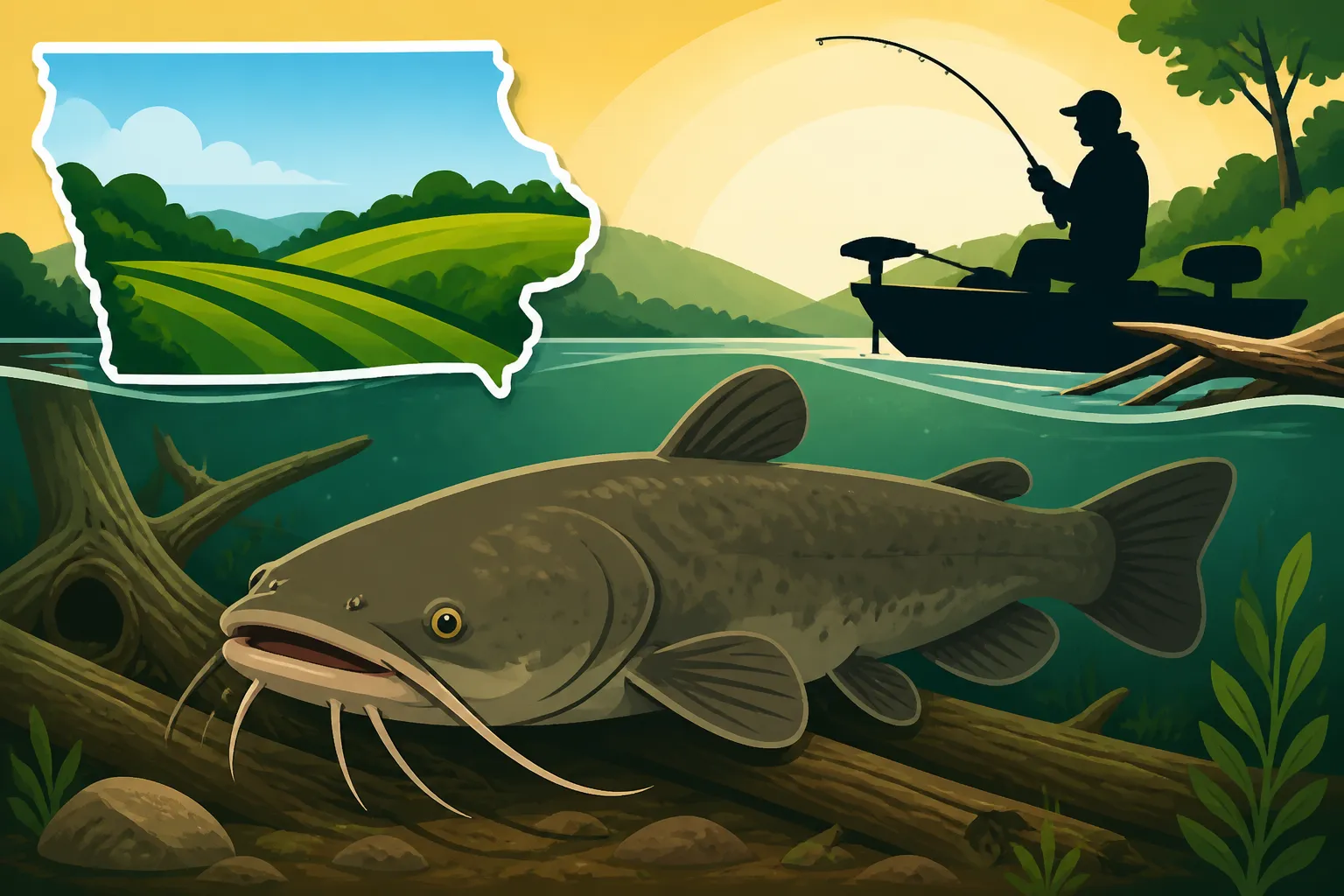
When you picture a catfish, you might think of the sleek, spotted channel catfish. Flatheads, however, are a different breed entirely. Their most defining feature, and the one that gives them their name, is their broad, flattened head, which is disproportionately large compared to their body. Their lower jaw protrudes beyond the upper, giving them a perpetually determined, almost grumpy, look. Their eyes are relatively small, which makes sense given their preference for hunting in low light and murky conditions.
Unlike the channel catfish's deeply forked tail, the flathead sports a squared-off or slightly notched tail, which is another easy identifier. Their coloration can vary quite a bit depending on the water they live in, ranging from a mottled yellow and brown to dark olive green, often with dark spots or blotches that help them camouflage perfectly against rocky bottoms or submerged timber. As for size, Iowa is home to some truly enormous flatheads. While most anglers are thrilled to catch a 10-20 pounder, these fish can easily exceed 50 pounds, with the Iowa State Record Flathead Catfish weighing in at a colossal 81 pounds!
Native Range and Iowa's Flathead Populations
Flathead catfish are native to a vast stretch of North America's central waterways, and Iowa is right in the heart of their prime territory. You'll find them predominantly in our larger river systems and their major tributaries, rather than smaller lakes or ponds where channel catfish often thrive. The Mississippi River, flowing along Iowa's eastern border, is arguably the state's premier flathead fishery, offering a diverse array of deep holes, heavy current, and abundant structure that these fish adore. The Missouri River, on our western border, is another excellent location, though its dynamic, ever-changing nature presents different challenges.
Beyond these giants, you'll also find robust populations in major interior rivers like the Des Moines River, Cedar River, Iowa River, and Skunk River. These rivers provide the perfect combination of deep water, strong currents, and dense cover that flatheads require. While some reservoirs and larger lakes might hold flatheads, they generally prefer the constant flow and habitat diversity of rivers. Their natural presence in these waterways means they are well-adapted to Iowa's aquatic environments, making them a cornerstone species for many dedicated anglers.
Dietary Habits and Preferred Prey
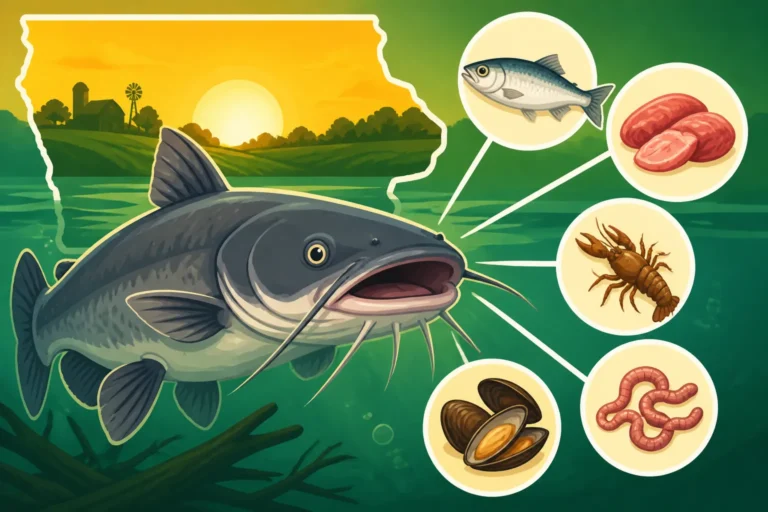
This is where the flathead really sets itself apart from its catfish cousins. While channel catfish are opportunistic omnivores, scavenging on just about anything, flatheads are voracious predators with a strong preference for live prey. They are the true ambush hunters of the catfish world. Their diet primarily consists of smaller live fish, crayfish, and even larger invertebrates. They're not going to be thrilled with your standard stink bait or cut bait, although they might occasionally pick it up if food is scarce.
Their predatory nature means they're constantly on the hunt, often using their flattened heads to pin prey against the bottom or structure. Common items on a flathead's menu include bluegill, carp, suckers, shad, and other small forage fish available in their ecosystem. Understanding this preference is absolutely critical for successful flathead fishing; if you're not offering something alive and enticing, you're severely limiting your chances.
Flathead Catfish Habitat: Where to Find Them
Knowing what a flathead eats is only half the battle; the other half is knowing where they live. These fish are not random roamers; they are structure-oriented creatures with very specific demands for their home turf.
Riverine Environments: The Flathead's True Home
Rivers are, without a doubt, the quintessential flathead habitat in Iowa. They are masters of current, using it to their advantage while also seeking refuge from its strongest forces. Look for flatheads in deep holes that are associated with significant structure, especially those on the outside bends of a river where the current has scoured out deep pockets. These deep holes offer thermal refuge, protection from predators, and a prime ambush point for unsuspecting prey carried by the current.
Snags, log jams, and fallen trees are absolute magnets for flatheads. These structures provide cover, a break from the main current, and excellent places to hide and wait for food. The more complex and dense the snag, often the better. They will wedge themselves deep into these submerged tangles, making them incredibly difficult to extract once hooked. Undercut banks, especially those with root systems extending into the water, also offer superb cover. The Mississippi River Pool 12 Fishing area, for instance, offers a plethora of these types of structures where flatheads love to hang out.
Lake and Reservoir Preferences
While primarily river dwellers, flatheads do inhabit some of Iowa's larger reservoirs and lakes, particularly those that have riverine characteristics or significant flooded timber. Think about bodies of water like Saylorville Reservoir or Coralville Reservoir, which are essentially dammed sections of rivers. In these environments, flatheads will still seek out the deepest parts of the old river channels, especially where there's remaining flooded timber or rock piles.
They will use similar structures to rivers, such as deep humps, old roadbeds, submerged bridges, or large rock formations. The key is still depth and structure. They won't typically be found cruising open water or shallow flats. If a lake or reservoir has a constant flow through it, even if it's subtle, and offers abundant cover, you might find flatheads there. However, the sheer density and size potential often lean heavily towards the true river systems.
Seasonal Movements and Preferred Structures
Flathead behavior is heavily influenced by the seasons, especially when it comes to their location. Understanding these shifts can dramatically improve your success.
- Spring (Pre-Spawn): As water temperatures rise in late spring (typically late April to June), flatheads begin to move out of their deep wintering holes and become more active. They'll start cruising shallower, structure-laden areas in rivers, looking for food to bulk up before the spawn. Look for them in areas adjacent to their deeper wintering spots, often along channel edges or near large log jams where they can easily move between deep and shallower water. This is a great time to target them as they are actively feeding.
- Summer (Spawn and Post-Spawn): The spawn usually occurs from late May through July when water temperatures are consistently in the mid-70s Fahrenheit. During this time, they become less focused on feeding and move into shallower, protected areas with hard bottoms for nesting. After the spawn, they'll often be found somewhat sluggish near these spawning grounds before gradually returning to their preferred deeper, cover-rich habitats to recuperate and feed.
- Fall (Feeding Frenzy): As fall approaches and water temperatures begin to drop (September to November), flatheads enter a "feeding frenzy" phase, actively trying to put on weight for the upcoming winter. They'll be very aggressive and responsive to live baits. Look for them in their typical deep-water, heavy-cover haunts, but they might be more willing to move and strike. This is often considered one of the best times to target trophy flatheads.
- Winter (Dormancy): In winter, when water temperatures plummet, flatheads become largely inactive. They retreat to their deepest, most stable wintering holes, often congregating in large groups. They feed very little, if at all, and are incredibly difficult to catch. How Deep to Fish for Walleye in Spring is a very different question than how deep to fish for flatheads in winter! While not impossible, it's generally not the most productive time for flathead fishing.
Flathead Catfish Behavior: Understanding Their Ways
Beyond where they live, understanding how flatheads live is crucial. Their unique behavioral traits dictate when and how you should approach targeting them.
Nocturnal Nature and Feeding Patterns
One of the most defining characteristics of flathead catfish is their predominantly nocturnal nature. While they can be caught during the day, especially in heavily overcast conditions or extremely deep, dark holes, their peak activity period is typically from dusk until dawn. This is when they actively leave the safety of their heavy cover to hunt. They use their excellent sense of smell and lateral line system to detect prey moving in the low light or darkness.
This nocturnal preference means that dedicated flathead anglers often spend long nights on the water. The shift from daylight to twilight, and then again from darkness to dawn, are often prime windows of opportunity. This behavior is a direct result of their predatory diet; many of their preferred prey fish are also more active or vulnerable in low light conditions. If you're serious about chasing flatheads, be prepared to embrace the night. It's why things like Night Fishing Rules for Anglers are so important to understand.
Solitary Hunters: Territoriality and Aggression
Unlike channel catfish, which are often found schooling or in loose aggregations, flathead catfish are largely solitary creatures. They are highly territorial, especially the larger specimens, and will stake out a prime piece of habitat—a deep hole with a massive log jam, for example—and defend it fiercely against other flatheads. This territoriality contributes to their aggressive nature, particularly when defending their chosen ambush spot or during the spawn.
This solitary behavior has implications for anglers. If you catch a large flathead from a specific hole, you might not catch another one from that exact spot immediately. However, it also means that once you locate a prime piece of flathead habitat, it's likely to consistently hold a large fish, or at least one will move in to occupy it once the previous resident is gone. Their aggression is also why they strike live bait with such power; they're not just nibbling, they're attacking.
Spawning Habits and Reproduction
Flathead catfish typically spawn when water temperatures consistently reach the mid-70s Fahrenheit, usually from late May through July in Iowa. Unlike other catfish that might broadcast spawn, flatheads are cavity nesters. The male flathead will find a suitable, secluded cavity—this could be an undercut bank, a hollow log, a rock crevice, or even an old tire—and meticulously clean it out. This chosen spot will be in relatively shallow, protected water, often with a hard bottom, away from strong currents.
The female will then lay her eggs in this nest, and the male takes on the role of guarding the eggs and, later, the fry. He aggressively defends the nest from predators, fanning the eggs to keep them oxygenated. During this period, the male is extremely protective and will rarely leave the nest to feed, making them very difficult to catch. Anglers should be mindful of this spawning period and consider practicing catch and release for these fish to ensure future generations, as the male is crucial for the survival of the nest.
Key Environmental Factors Influencing Flathead Catfish
Flatheads are sensitive to their environment, and understanding the conditions they prefer can give you a significant advantage in locating them.
Water Temperature and Oxygen Levels
As discussed with seasonal movements, water temperature is a huge driver of flathead activity. They are warm-water fish, becoming most active in temperatures ranging from the upper 60s to low 80s Fahrenheit. Below 50 degrees, they become quite lethargic, and above 85 degrees, they can also become less active, seeking cooler, deeper water.
Oxygen levels are equally vital. Flatheads, like all fish, need adequate dissolved oxygen to survive. In many Iowa rivers, especially during hot summer months or after heavy algal blooms, oxygen levels can drop in shallower, stagnant areas. Flatheads will always seek out areas with higher oxygen content, which usually means areas with some current or deeper water where temperatures are more stable. This often reinforces their preference for river channels and current breaks.
Current and Water Flow
Current is perhaps the single most important environmental factor for flathead catfish in river systems. They don't just tolerate current; they use it. Strong currents bring food directly to them, and they are adept at positioning themselves in current seams, eddies, or behind obstructions where food funnels past them. However, they also need places to escape the strongest current and conserve energy.
This is why structures like log jams, deep holes, and rock piles are so crucial. They provide a current break, allowing the flathead to hold comfortably without expending too much energy, while still being in a prime location to ambush prey moving downstream. Understanding how current flows around various structures is key to identifying potential flathead lies. Heavy rain can drastically alter current patterns and water clarity, sometimes sending flatheads scrambling for new, more comfortable spots.
Cover and Structure: The Importance of Snags and Debris
We've mentioned it repeatedly, but it bears emphasizing: cover and structure are non-negotiable for flathead catfish. These fish live in and around the nastiest, most unforgiving underwater obstacles you can imagine. We're talking about massive log jams, submerged trees, rock piles, bridge pilings, and anything that creates a dark, protected hideout.
This cover serves multiple purposes:
- Protection: It hides them from predators (though adult flatheads have few natural predators) and, more importantly, from light during the day.
- Ambush Points: They use these structures to conceal themselves and ambush unsuspecting prey.
- Current Breaks: They offer refuge from strong currents, allowing the fish to rest and conserve energy.
- Spawning Sites: As mentioned, cavities within these structures are often used for nesting.
If you're not finding flatheads, you're likely not fishing tight enough to the cover. This often means losing some tackle, but it's part of the game when targeting these big, structure-loving fish. Identifying these prime spots is a skill developed over time, often aided by boat electronics that reveal underwater topography and obstructions. How to Find Deep Holes for Catfish is a great resource for learning how to identify these critical holding areas.
Applying Knowledge for Successful Flathead Fishing
Now that we've covered their habitat and behavior, let's talk about how to translate that knowledge into successful fishing trips. It’s all about putting yourself in the right place at the right time with the right presentation.
Targeting Prime Habitat
The first step in targeting flatheads is identifying those key habitat features we've discussed. On rivers, focus on outside bends with deep scour holes, especially those that contain significant submerged timber or rock piles. Look for current seams where faster water meets slower water, or eddies behind large obstructions. Bridge pilings and wing dams can also be incredibly productive. For example, Wing Dam Fishing on the Mississippi River is a known tactic for various species, including flatheads that position themselves in the turbulent waters.
When approaching a spot, consider where the flathead would be positioned to ambush prey or rest comfortably. They won't be in the direct, fastest current, but usually just out of it, or deep within the cover provided by log jams. Use a boat to thoroughly explore areas, noting changes in depth, current breaks, and potential submerged structures. Many anglers even use side-imaging sonar to map out underwater log jams and rock fields, revealing the exact "sweet spots" where a flathead might be hiding.
Best Times for Action
Based on their nocturnal habits, the best times to fish for flatheads are generally from late evening through the night, and into the early morning hours. This is particularly true during the warm summer months when daytime temperatures are high and the fish are most likely to be hunkered down in heavy cover. The first few hours after sunset and the last few hours before sunrise can be especially productive, as the fish transition between their daytime resting spots and their nighttime feeding grounds.
Seasonally, late spring (pre-spawn) and fall (post-spawn feeding frenzy) offer some of the most consistent action. During these periods, flatheads are actively feeding and can be more willing to move out of their heaviest cover. While summer nights are prime, be aware of the spawning period when males are guarding nests and less inclined to bite. Best Month to Catch Catfish on the Mississippi River often aligns with these peak feeding times.
Recommended Gear and Bait
Since flatheads are big, powerful, and live in heavy cover, your gear needs to be robust. You'll want a heavy-action baitcasting rod, typically 7-8 feet long, paired with a stout baitcasting reel capable of holding a lot of heavy line. Many flathead anglers opt for braided line, often 50-80 pound test, due to its strength, abrasion resistance, and lack of stretch, which is crucial for pulling fish out of snags. A tough leader, often fluorocarbon or heavy monofilament, is also a good idea. Best Rod for Catfish Fishing and Best Pound Test Line for Catfish Fishing on Iowa Rivers will offer more specifics for setting up your tackle.
For bait, remember: flatheads prefer live! Your best bets are healthy, lively baitfish such as bluegill, suckers, shad, or even smaller carp. The size of your bait should match the size of the flathead you're targeting—don't be afraid to use a 6-8 inch baitfish for trophy flatheads. Use a sturdy circle hook, often a 7/0 to 10/0, large enough to properly hook the bait and withstand the flathead's powerful jaws. A heavy sinker (3-6 ounces) is typically needed to hold your bait in place against the current. Many anglers find great deals on these specialized rods, reels, and terminal tackle on online retailers like Amazon, making it easy to get what you need delivered right to your door. And don't forget a substantial Best Landing Net Size for Catfish for handling these big fish!
| Flathead Catfish Trait | Description | Angling Implication |
|---|---|---|
| Habitat Preference | Primarily large rivers and tributaries; deep holes, log jams, undercut banks, rock piles, current breaks. | Focus on river systems. Look for heavy, complex underwater structure. Fish in the snags. |
| Dietary Habits | Predatory; prefers live fish (bluegill, suckers, shad, carp). | Use live, healthy bait. Ignore traditional stink baits. |
| Activity Time | Largely nocturnal, most active from dusk till dawn. | Plan fishing trips for evening, night, and early morning. Carry proper lighting for night fishing. |
| Social Behavior | Solitary and territorial, especially larger fish. | Don't expect multiple large fish from the exact same snag. Once a spot is identified, it's often consistently productive over time. |
| Seasonal Peaks | Late Spring (pre-spawn) and Fall (feeding frenzy) are most active. Summer nights are also good. Winter is very slow. | Adjust fishing schedule based on season for best results. Be mindful of spawning period. |
| Gear Requirements | Heavy-action rods, stout reels, strong braided line (50-80 lb), large circle hooks (7/0-10/0), heavy sinkers. | Invest in durable, heavy-duty tackle capable of handling large fish in heavy cover. |
Chasing flathead catfish in Iowa is more than just fishing; it's an immersive experience that challenges your patience, knowledge, and angling skills. By understanding their preferred habitats—the deep, snag-laden holes of our mighty rivers—and their distinct behaviors—their nocturnal, predatory nature and solitary tendencies—you'll be better equipped to unlock the secrets to consistently catching these incredible fish. Remember, it's about being where they are, when they're active, and offering them the meal they crave. Tight lines, and may your next flathead adventure be a successful one!
Disclaimer
This article is for general informational purposes only and does not constitute professional advice. Laws, prices and regulations vary by location and change over time. Consult a qualified professional for guidance on your specific situation.