Kayak Fishing Techniques in Iowa
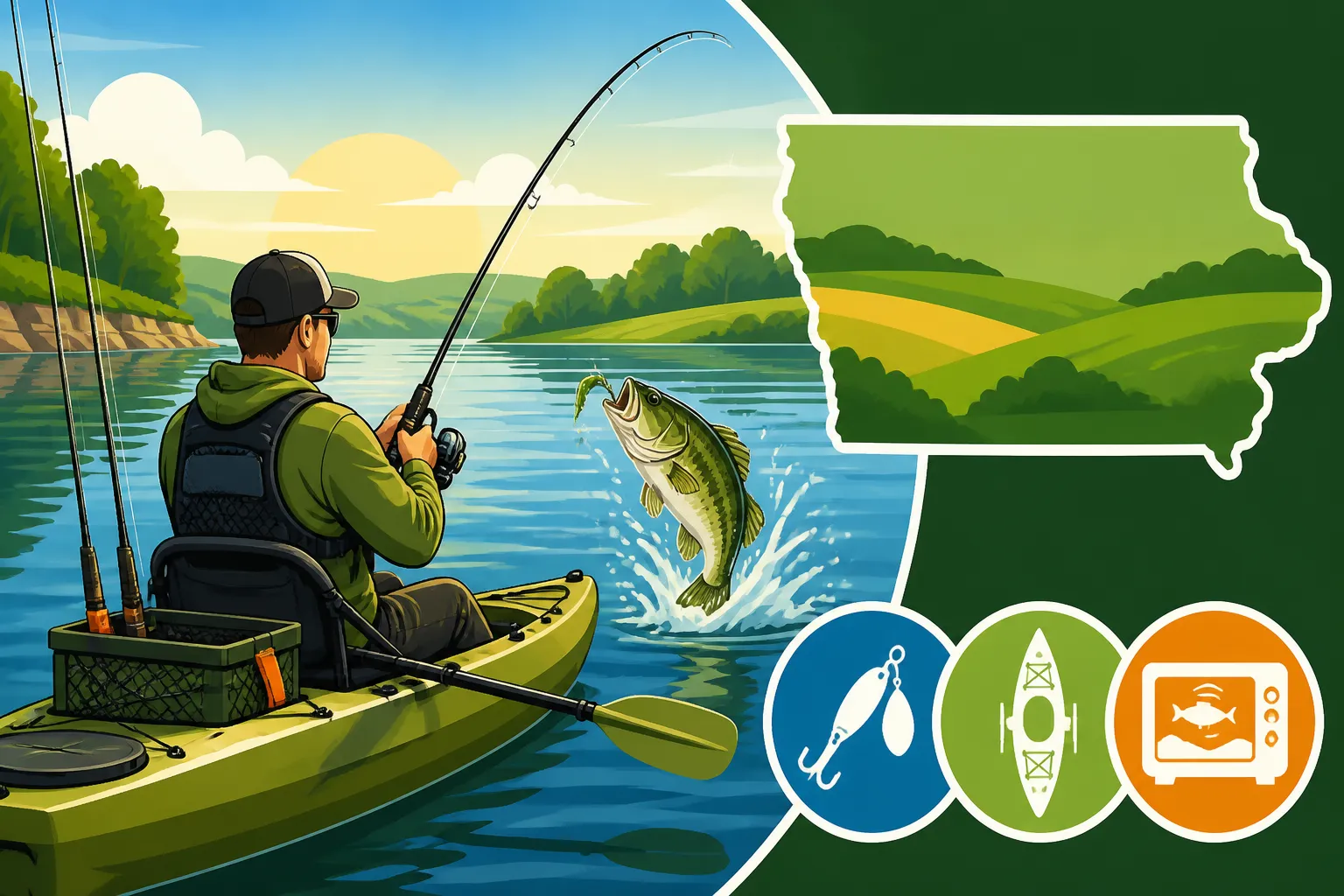
For many Iowa anglers, the thought of reaching those untouched pockets of water, away from crowded boat ramps or inaccessible shorelines, can feel like a distant dream. Traditional boats can be costly and cumbersome, while bank fishing often limits you to easily reachable spots. But what if you could silently glide into prime fishing territory, feel every twitch of your line, and connect with nature in a truly intimate way? Kayak fishing opens up a whole new world on Iowa's lakes, rivers, and streams, offering unparalleled access and a thrilling angling experience. This comprehensive guide will equip you with the knowledge to choose your vessel, set up your gear, and master the techniques needed to become a successful kayak angler in the Hawkeye State.
The Allure of Kayak Fishing in Iowa: Why Go Small?
There's a unique magic to kayak fishing that larger boats simply can't replicate. It's not just about catching fish; it's about the entire journey, the quiet glide across the water, and the personal connection you develop with your surroundings. In Iowa, with its extensive network of rivers, numerous lakes, and even smaller community ponds, a kayak transforms your fishing possibilities.
Unlocking Secluded Waters
One of the biggest advantages of kayak fishing in Iowa is the ability to reach spots that are simply out of bounds for bigger boats or shore anglers. Think about those hidden backwaters on the Mississippi River, the narrow channels connecting oxbow lakes, or the quiet coves on larger reservoirs like Rathbun Lake or Saylorville Reservoir that are too shallow for powerboats. Kayaks can navigate tight spaces, glide over submerged timber with ease, and handle extremely shallow water, allowing you to explore pristine areas where fish feel less pressured. This access often means less competition from other anglers and a higher chance of finding untouched populations of bass, crappie, or even elusive walleye. You might even find yourself in the serene beauty of one of the many Trout Fishing Streams in Northeast Iowa, where a smaller, more nimble craft can be a huge asset.
This unparalleled access also extends to smaller public ponds and conservation areas that might not even have boat ramps. A lightweight fishing kayak can often be launched by hand from nearly any shoreline, opening up countless local fishing opportunities that were previously overlooked. Imagine pulling up to a quiet farm pond, easily sliding your kayak into the water, and spending an afternoon targeting largemouth bass in serene solitude. It’s a freedom that larger vessels can’t provide, making the entire fishing trip less about logistics and more about the experience itself.
The Stealth and Intimacy Factor
Another compelling reason to embrace kayak fishing is the incredible stealth it offers. Kayaks are inherently quiet; there's no noisy outboard motor to spook fish, no slapping hull creating vibrations in the water. This silent approach allows you to get incredibly close to fish without alerting them to your presence. Whether you're sight fishing for bedding bass in clear water or slipping up to a logjam where a big channel catfish might be lurking, the kayak's stealth is a game-changer. You become less of an intruder and more a part of the environment.
Beyond the practical fishing advantages, there's a profound sense of intimacy that comes with kayak fishing. You're low to the water, feeling every ripple, hearing every splash, and experiencing the environment in a deeply personal way. It's a minimalist approach to fishing that strips away distractions and allows you to truly focus on the tug of the line and the beauty of Iowa's natural landscapes. This immersive experience is often cited by seasoned kayak anglers as the primary reason they prefer it over other forms of fishing.
Choosing Your Vessel: Kayaks for Iowa's Diverse Waters
Selecting the right kayak is foundational to a successful and enjoyable kayak fishing experience. With so many options available, it can feel a bit overwhelming, but understanding the basic types and features will help you narrow down your choices for Iowa's varied waters.
Understanding Kayak Types: Sit-on-Top vs. Sit-in
The primary distinction in fishing kayaks comes down to sit-on-top (SOT) versus sit-in (SIK) designs. Each has its own set of pros and cons, making one more suitable than the other depending on your fishing style and the types of water you plan to tackle.
Sit-on-top kayaks are overwhelmingly popular for fishing, and for good reason. They are extremely stable, making them easier to stand in for casting or sight fishing, and they are self-bailing, meaning any water that splashes into the kayak drains right back out through scupper holes. This makes them ideal for rougher waters or if you anticipate getting wet. SOTs also offer abundant deck space for mounting accessories like fish finders, rod holders, and storage crates, which is crucial for an angler. Many modern fishing-specific SOT kayaks, like those from popular brands such as Hobie or Old Town, offer impressive stability and feature-rich designs. They might be heavier to transport but offer superior comfort and utility for extended fishing trips. For more detailed insights, you might want to check out our guide on the Best Kayak for Iowa River Fishing.
Sit-in kayaks, while less common for dedicated fishing, do have their place, especially in colder climates or for those prioritizing speed and efficient paddling. They offer more protection from the elements, keeping you drier and warmer, which can be a significant advantage during early spring or late fall fishing on Iowa's waters. However, they typically offer less open storage space and can be challenging to re-enter if you capsize in deeper water. While not ideal for stand-up casting, a sit-in kayak can be an excellent choice for calm lake fishing or navigating narrow, protected streams where speed and protection from splash are more important than maximum stability or expansive rigging options.
Essential Kayak Features for Anglers
Once you've decided on the general type, several key features make a kayak truly angler-friendly. Look for a stable hull design that allows for comfortable casting and re-positioning, possibly even standing. Wider kayaks generally provide more stability but sacrifice some speed. Dedicated fishing kayaks often feature flat, open decks with integrated tracks (like YakAttack GearTrac or similar systems) for easy accessory mounting without drilling.
Comfortable seating is non-negotiable, especially for long days on the water. Many premium fishing kayaks offer raised, adjustable frame seats that provide excellent back support and keep you elevated above any water that might collect in the cockpit. Ample storage — both front and rear tank wells with bungee tie-downs, internal dry storage hatches, and paddle parks — is also critical for keeping your gear organized and accessible. Many kayaks also come pre-wired for fish finders or have transducer mounts molded into the hull, simplifying electronics installation. For a complete rundown, our Kayak Fishing Gear Guide for Iowa Rivers offers fantastic insights into what to look for.
| Kayak Feature | Sit-on-Top (SOT) Advantages | Sit-in (SIK) Advantages |
|---|---|---|
| Stability | Generally higher, easier to stand | Moderate, can feel more tippy |
| Access/Storage | Open deck, vast accessory mounting | Limited open deck, internal dry storage |
| Comfort | Often raised, adjustable seats | Lower seating, less back support unless upgraded |
| Self-Bailing | Yes, water drains through scuppers | No, can fill with water if capsized |
| Speed/Efficiency | Moderate | Generally faster, more efficient paddling |
| Protection | Less protection from elements | More protection from wind/splash, warmer |
| Re-entry | Easier in deep water | More challenging in deep water |
| Best Use | All-around fishing, rougher water, standing | Calm waters, colder weather, longer distances |
Gearing Up: Beyond the Kayak Itself
Having the right kayak is just the beginning. Equipping yourself with the essential gear, both for safety and fishing efficiency, is paramount. From what keeps you safe to how you power your craft and store your tackle, every piece plays a vital role in your kayak fishing adventure.
Safety First: PFDs and Essential Safety Gear
Safety should always be your top priority when kayak fishing. Wearing a properly fitted personal flotation device (PFD) is not just a good idea; in Iowa, it's legally required to have one on board for each person, and children under 13 must wear one at all times while underway. For kayak anglers, specific fishing PFDs are available, often featuring multiple pockets, tool attachments, and a comfortable, high-back design that doesn't interfere with your kayak seat. Investing in a good fishing PFD, even if it costs a bit more, will make your time on the water much safer and more comfortable.
Beyond your PFD, always carry a whistle or other sound-producing device to signal for help, a visible light (especially if fishing near dawn or dusk), and a signaling flag if you're on larger, busier waters. A dry bag is essential for protecting your phone, keys, and other valuables from water. Consider a paddle leash to prevent losing your paddle, and a small first-aid kit is always a smart addition. For a comprehensive list of what's required and recommended, refer to our Boat Safety Equipment for Iowa Waters guide. Remember, even on calm days, conditions can change quickly on Iowa's lakes and rivers.
Paddle Power and Propulsion Alternatives
Your paddle is your primary engine when kayak fishing, so choosing a good one is important. Look for a lightweight, durable paddle that's the correct length for your kayak width and your height. Carbon fiber or fiberglass paddles are lighter and more efficient, reducing fatigue over long paddling sessions. Adjustable-length paddles are a great option if you share your kayak or fish in different conditions. Remember to practice your paddling strokes – efficient paddling conserves energy, allowing you more time and focus for fishing.
While paddling is fundamental, many kayak anglers in Iowa are now incorporating alternative propulsion methods to enhance their efficiency and cover more water. Pedal-drive systems, like those offered by Hobie or Old Town, allow you to propel your kayak using your legs, freeing up your hands for casting and reeling. This can be a huge advantage when trolling or fighting fish. Electric trolling motors, often mounted to the stern or side, are another popular option, providing silent, effortless propulsion. Always check Iowa Boat Registration Requirements if you plan to add a motor, as motorized kayaks might require registration depending on horsepower and duration of use. Using a motor can be particularly beneficial when fishing large reservoirs or fighting strong currents on the Fishing the Mississippi River in Iowa.
Fishing Specific Add-ons and Storage Solutions
To truly optimize your kayak for fishing, a range of specialized accessories can make a world of difference. Rod holders are a must-have, allowing you to troll, hold spare rods, or simply keep your current rod secure while paddling. Flush-mount holders are great for storage, while adjustable rail-mounted holders offer more flexibility for different fishing techniques. For anchoring, a Best Kayak Anchor System is crucial, whether it's a small grapnel anchor for calm waters or a more sophisticated stake-out pole or even a shallow-water anchor like a Power-Pole Micro for holding position in soft bottoms.
Storage is key in a kayak's limited space. A milk crate or dedicated kayak fishing crate placed in the stern tank well is a popular solution for organizing tackle boxes, bait buckets, and other essentials. Many anglers add DIY PVC rod holders to their crates. Waterproof bags and boxes, easily found on platforms like Amazon, are invaluable for keeping sensitive electronics, phones, and extra layers dry. Don't forget a quality landing net – ideally one with a rubberized mesh to protect fish and prevent hooks from tangling. Mounting a fish finder and GPS unit can significantly improve your success, helping you locate structure and track your position, especially on unfamiliar waters.
Techniques for Stillwater Success: Lakes and Reservoirs
Iowa boasts numerous lakes and reservoirs perfect for kayak fishing, from the expansive waters of Lake Red Rock and Coralville Reservoir to the popular chain of the Iowa Great Lakes. These stillwater environments present unique opportunities and challenges that kayak anglers can master with specific techniques.
Strategic Positioning and Covering Water
One of the greatest assets of a kayak on still waters is its ability to access shallow coves, tight pockets of weeds, and submerged timber that larger boats avoid. When fishing lakes and reservoirs, think strategically about how you approach these areas. Instead of charging straight in, paddle quietly along the edges, casting into cover. Use your kayak to explore secondary points, submerged humps, and creek channels that feed into the main body of water. These are often prime holding areas for walleye, crappie, and bass.
Covering water efficiently is also vital. In larger reservoirs, you might employ slow trolling with crankbaits or jigs and minnows, using either your paddle, pedal drive, or a small trolling motor to maintain a consistent speed. This allows you to present your bait to a wider range of fish as you move along contours or across flats. For instance, when targeting walleye on Clear Lake, covering a lot of ground near drop-offs or humps is often more productive than staying put. Don't be afraid to experiment with different speeds and depths until you find what the fish are responding to.
Anchoring, Drifting, and Spot-Locking
Maintaining your position is critical for effective fishing, and kayaks offer several methods to achieve this in still waters. Traditional anchoring with a small grapnel or folding anchor is effective for holding steady over a specific piece of structure, a brush pile, or a spawning bed. Make sure you have enough anchor rope (at least 3-4 times the depth of the water) and an anchor trolley system, which allows you to deploy and retrieve your anchor from either the bow or stern of your kayak, providing better control and safety in windy conditions.
Drifting is another powerful technique, especially when you want to cover a larger area or when fish are scattered. By letting the wind or a subtle current push your kayak, you can present baits naturally. This is particularly effective for panfish or crappie over flats or submerged vegetation. You can control your drift speed and direction using a drift sock or by occasionally paddling to correct your course. Some anglers even use a small anchor on a very long rope to "drag" the bottom, slowing their drift while feeling for structure.
For the ultimate in precise positioning, modern electric trolling motors with GPS spot-lock features (like those from Minn Kota or MotorGuide) are revolutionary for kayak anglers. These systems use GPS to automatically hold your kayak in a precise location, even in wind or current, without needing an anchor. This frees you up completely to focus on fishing, casting to specific targets, or working a productive area thoroughly. While an investment, a spot-lock trolling motor is a game-changer for serious kayak anglers on Iowa's larger lakes.
Conquering Current: River and Stream Kayak Fishing
Iowa's rivers and streams, from the mighty Mississippi to smaller tributaries, offer thrilling kayak fishing opportunities. However, fishing in current requires a different approach than stillwater tactics. Understanding how to read the water and manage your kayak in moving water is key to success.
Reading the Water and Current Management
The first step to successful river kayak fishing is learning to "read the water." Look for seams where fast current meets slower water, eddies behind obstacles, and current breaks created by logjams or wing dams. These are prime ambush points for predatory fish like smallmouth bass, walleye, and catfish. Fish typically hold out of the main current to conserve energy, darting out to feed when prey washes by.
When paddling upstream, stay close to the banks in slower water or use eddies to gain ground. When moving downstream, you can drift with the current, casting into promising areas. Use your paddle to subtly steer and position your kayak, controlling your speed to match the current when necessary. Learning how to ferry glide – a technique where you angle your kayak slightly upstream to move across the current without losing ground – is invaluable for maneuvering around obstacles or reaching specific fishing spots. Our guide on Best Kayak Setup for River Fishing delves deeper into these nuances.
Navigating Obstacles and Shallow Water
Rivers present unique obstacles that you won't typically find on lakes, such as snags, logjams, rapids, and constantly shifting sandbars or rock gardens. Always scout ahead, either by visually scanning the water or by consulting maps and local reports. Develop a "plan B" for navigating around or through challenging sections. If a section looks too dangerous, be prepared to portage your kayak around it.
Kayaks excel in shallow water, allowing you to access skinny backwaters and riffles that bigger boats can't. However, navigating these areas requires finesse. Learn to use your paddle as a push pole in very shallow sections, lifting your rudder or skeg to avoid damage. Be mindful of submerged rocks and timber, which can damage your hull. For many of Iowa's rivers, especially in spring or after heavy rains, water levels can fluctuate dramatically, so always be aware of changing conditions. The Mississippi River, in particular, demands respect for its ever-changing currents and navigation channels, making specific knowledge from resources like Fishing the Mississippi River in Iowa incredibly useful.
Rod, Reel, and Rigging: Optimized for Kayak Angling
The gear you choose, especially your rods and reels, should be optimized for the unique challenges and advantages of kayak fishing. Space is limited, so efficiency and versatility are key.
Shorter Rods and Specialized Combos
In the confined space of a kayak, a long, unwieldy fishing rod can be more of a hindrance than a help. Shorter rods, typically in the 6'6" to 7'6" range, are generally preferred. They are easier to cast, especially when seated, and much simpler to manage when fighting a fish around the bow or stern of your kayak. Medium-light to medium-heavy power rods with fast actions are versatile choices that can handle a wide range of Iowa's common species, from panfish to larger bass and walleye. For specific recommendations, our guide on the Best Rod for Kayak Fishing offers excellent suggestions.
Many kayak anglers opt for spinning combos for their ease of use, especially for lighter baits or when fishing for panfish and crappie. However, baitcasting setups are excellent for heavier lures, targeting larger species like muskie, or when accuracy in casting is paramount. Consider keeping your rod and reel collection minimal for kayak trips; perhaps one or two versatile combos are all you need for a day's outing. Look for combos that balance well and are comfortable to hold for extended periods, as you'll be doing a lot of casting and retrieving.
Efficient Line Management and Tackle Organization
Line management on a kayak can be tricky. With less deck space, stray line can easily get tangled around your feet, paddle, or rudder control. Many anglers use a stripping basket or a soft-sided container to manage excess line, especially when fly fishing or using techniques that involve a lot of line play. Choose braided line for most applications due to its strength, sensitivity, and smaller diameter, usually with a fluorocarbon or monofilament leader for stealth.
Tackle organization is paramount in a kayak. You don't want to be fumbling around for lures or hooks when the bite is hot. Utilize small, compact tackle boxes that fit snugly into your crate or dry storage hatches. Pre-rigging a few baits or leaders before hitting the water can save valuable fishing time. Soft tackle bags with multiple clear-view compartments are excellent for keeping plastics, jigs, and terminal tackle organized and easily accessible. Remember the "less is more" philosophy; bring only the essentials you expect to use for your targeted species and conditions. Keeping your most frequently used items, such as pliers, line cutters, and a small lure box, within arm's reach is a smart move. Many useful organization tools can be found on Amazon, making it easier to customize your setup.
Advanced Kayak Fishing Tips for Iowa Waters
Once you've got the basics down, you can start exploring more advanced techniques and equipment to elevate your kayak fishing game. From leveraging technology to fine-tuning your presentation, there's always more to learn and implement.
Utilizing Electronics and Mapping
Modern electronics have revolutionized kayak fishing, turning these small vessels into highly capable fishing platforms. A good fish finder with GPS capabilities is arguably the most impactful upgrade for any serious kayak angler. These units allow you to identify underwater structure, locate schools of baitfish, mark individual fish, and most importantly, navigate precisely to productive spots you've marked. Down imaging and side imaging technologies provide incredibly detailed views of the underwater world, helping you decipher bottom contours, weed lines, and submerged timber.
Many dedicated fishing kayaks come with transducer scuppers or mounting plates, making installation relatively straightforward. A compact, portable unit like a Garmin Striker or Lowrance Hook Reveal is perfect for kayaks. Pair your fish finder with detailed mapping apps on your smartphone or a dedicated GPS unit. Apps like Navionics or C-MAP provide contour maps for many Iowa lakes and rivers, allowing you to scout potential fishing spots before you even launch. Understanding how to read and interpret these maps in conjunction with your fish finder will put you miles ahead in locating fish.
Specialized Tactics for Kayak Angling
Because kayaks offer such a unique perspective and stealth, they lend themselves well to specialized fishing tactics. Sight fishing, where you visually spot fish and cast to them, is particularly effective from a kayak in clear waters. The low profile allows you to sneak up on wary fish, and the ability to pivot and cast quickly is a huge advantage. This works well for bass in spawning beds or even carp in shallow flats.
Flipping and pitching into heavy cover is another technique that kayaks excel at. The precise maneuverability allows you to get into tight spots that larger boats can't, dropping jigs or soft plastics into dense lily pads, thick brush, or undercut banks where big bass love to hide. Vertical jigging directly over submerged structure or schools of fish identified on your fish finder is also highly effective. Whether you're targeting suspended crappie or walleye holding tight to a hump, the stability and stationary positioning capabilities of a kayak make vertical presentations incredibly precise. Remember to always consult the Iowa Fishing Regulations Explained for any specific rules or limits on the species you're targeting.
Mastering the Iowa Kayak Fishing Lifestyle
Kayak fishing in Iowa is more than just a technique; it's a lifestyle that offers a unique blend of adventure, tranquility, and effective angling. While there's a learning curve, the rewards – from accessing untouched fishing spots to experiencing the water on a deeply personal level – are immense. Whether you're chasing trophy walleye on the Iowa Great Lakes, wrestling smallmouth bass in the Des Moines River, or seeking panfish in a quiet community pond, your kayak can take you there.
Always prioritize safety, respect the waterways, and adhere to all local regulations. Start with simpler trips, gradually building your skills and confidence before tackling more challenging waters. Remember, the goal isn't just to catch fish, but to enjoy the journey, connect with nature, and create unforgettable memories on Iowa's beautiful waters. So grab your paddle, pack your gear, and get ready to discover the incredible world of kayak fishing in the Hawkeye State!
Disclaimer
Please note that fishing regulations and conditions can change. Always consult the official Iowa Department of Natural Resources (DNR) website or their current fishing regulations booklet before heading out on the water to ensure you are compliant with all applicable laws and have the most up-to-date information. Stay safe and enjoy your time on Iowa's beautiful waters!