Nymphing Techniques for Iowa Trout Streams
There's nothing quite like the beauty of Iowa's trout streams, but if you've spent frustrating hours casting to seemingly empty water, you're probably feeling the familiar ache of unfulfilled expectation. Those clever trout often aren't looking up; they're feeding on the abundant insect larvae drifting beneath the surface. This comprehensive guide will pull back the curtain on nymphing techniques for Iowa trout streams, giving you the practical strategies and detailed knowledge to consistently entice those wily fish that seem to ignore everything else.
Understanding Iowa's Trout Streams and Nymph Habitat
Before you even think about tying on a fly, it's crucial to understand the unique characteristics of Iowa's trout waters and where these fish, and their primary food source, the nymphs, tend to hang out. Our streams aren't your typical roaring western rivers; they often require a more nuanced approach.
Characteristics of Iowa's Trout Waters
Iowa's trout fishery is a special gem, primarily concentrated in the "Driftless Area" of northeast Iowa. These are spring-fed streams, meaning they maintain a relatively consistent cold temperature year-round, which is absolutely vital for trout survival. Unlike larger rivers that might have vast, uniform stretches, our Iowa trout streams are often a series of riffles, runs, and pools, frequently punctuated by logjams, undercut banks, and overhanging vegetation. The water clarity can vary from crystal clear on a calm day to a milky tint after a significant rain event, which directly impacts how you choose your flies and presentation. Many of these streams are quite intimate, sometimes narrow enough to jump across, and they often flow through wooded areas, which means overhead casting space can be limited. This topography makes careful wading and precise, often short, casts paramount for success. Understanding these physical traits is your first step to unlocking their secrets, and it's a completely different ballgame than fishing for species like walleye or bass in the state's larger lakes. You'll find these unique conditions create some fantastic opportunities for specific tactics, as detailed in our guide to Trout Fishing Streams in Northeast Iowa.
Identifying Nymph-Rich Areas
Trout are opportunistic feeders, but they're also energy conservators. They want the most food for the least effort. This means they'll position themselves in spots where food is delivered directly to them, or where they can dart out from cover to grab a passing meal. Nymphs, being immature aquatic insects, live on or near the streambed and are dislodged by current, making them a consistent food source. So, where do nymphs live, and where do trout ambush them? Look for areas with slower current adjacent to faster water – classic holding lies where trout can rest but still grab passing food. Riffles, the shallower, turbulent sections, are oxygen-rich and often dislodge nymphs, sending them downstream like a conveyor belt of trout treats. The transition zones between riffles and pools, often called "runs," are prime real estate. Deep pools, especially those with structure like submerged logs, large rocks, or undercut banks, provide cover and a stable environment for larger nymphs. Even the subtle seams where two currents meet, or behind any obstacle that breaks the flow, can be a goldmine. The trick is to think like a trout and consider where you would comfortably wait for food to come to you without expending too much energy fighting the current.
Essential Nymphing Gear for Iowa Anglers
You wouldn't bring a butter knife to a steak dinner, right? The same goes for nymphing in Iowa. Having the right tools makes a monumental difference, transforming frustration into fluid, effective fishing. Don't worry, you don't need to break the bank, but a few key items will elevate your game significantly.
Rods, Reels, and Lines for Nymphing
When it comes to nymphing, your traditional 9-foot 5-weight dry fly setup might not be the absolute ideal. For the smaller, more intimate Iowa trout streams, a slightly shorter, lighter rod, perhaps an 8 to 9-foot 3 or 4-weight, can offer better control and sensitivity for detecting subtle strikes. If you're really serious about modern nymphing techniques like Euro nymphing, a specialized nymphing rod, often 10 to 11 feet long with a very sensitive tip and a light line weight (2 or 3-weight), is a game-changer. These longer rods allow for superior line control and keeping your flies in the strike zone longer. For traditional indicator nymphing, a standard weight-forward floating line is fine. However, if you're venturing into Euro nymphing, you'll want a specialized nymphing line—typically a very thin, level line that cuts through the air easily and minimizes drag. The reel simply serves as a line holder here; a basic, reliable reel with a smooth drag is perfectly adequate. For those exploring different options, a quick search on Amazon reveals many great beginner-friendly fly fishing combos that can get you started. You can also dive deeper into options with our guide to selecting the Best Fly Rod Setup for Trout.
Leaders, Tippet, and Indicators
This is where the rubber meets the road for nymphing. Your leader system is paramount. For indicator nymphing, a tapered leader, perhaps 7.5 to 9 feet, transitioning from a thicker butt section to a finer tip, is standard. You'll then tie on a section of tippet. Fluorocarbon tippet is almost a non-negotiable for nymphing. Why? It's nearly invisible underwater and, crucially, it sinks. This helps get your nymphs down to the fish faster and keeps them there. A 4X, 5X, or even 6X tippet is common in Iowa, depending on water clarity and how spooky the trout are. Length matters too; longer tippet sections (18-36 inches) allow for more natural drift. Indicators, often called bobbers by non-fly anglers, are essential for traditional nymphing. These can be foam, yarn, or cork, and their job is to suspend your flies at the desired depth and, most importantly, signal a strike. Learning to read your indicator for even the slightest pause or twitch is a key skill. For Euro nymphing, you'll often use a sighter, which is a brightly colored section of monofilament integrated into your leader, acting as your visual strike detector. No matter your choice, ensure your knots are strong and secure; fluorocarbon can be a bit tricky to tie for beginners, so practice makes perfect.
Must-Have Nymph Patterns for Iowa
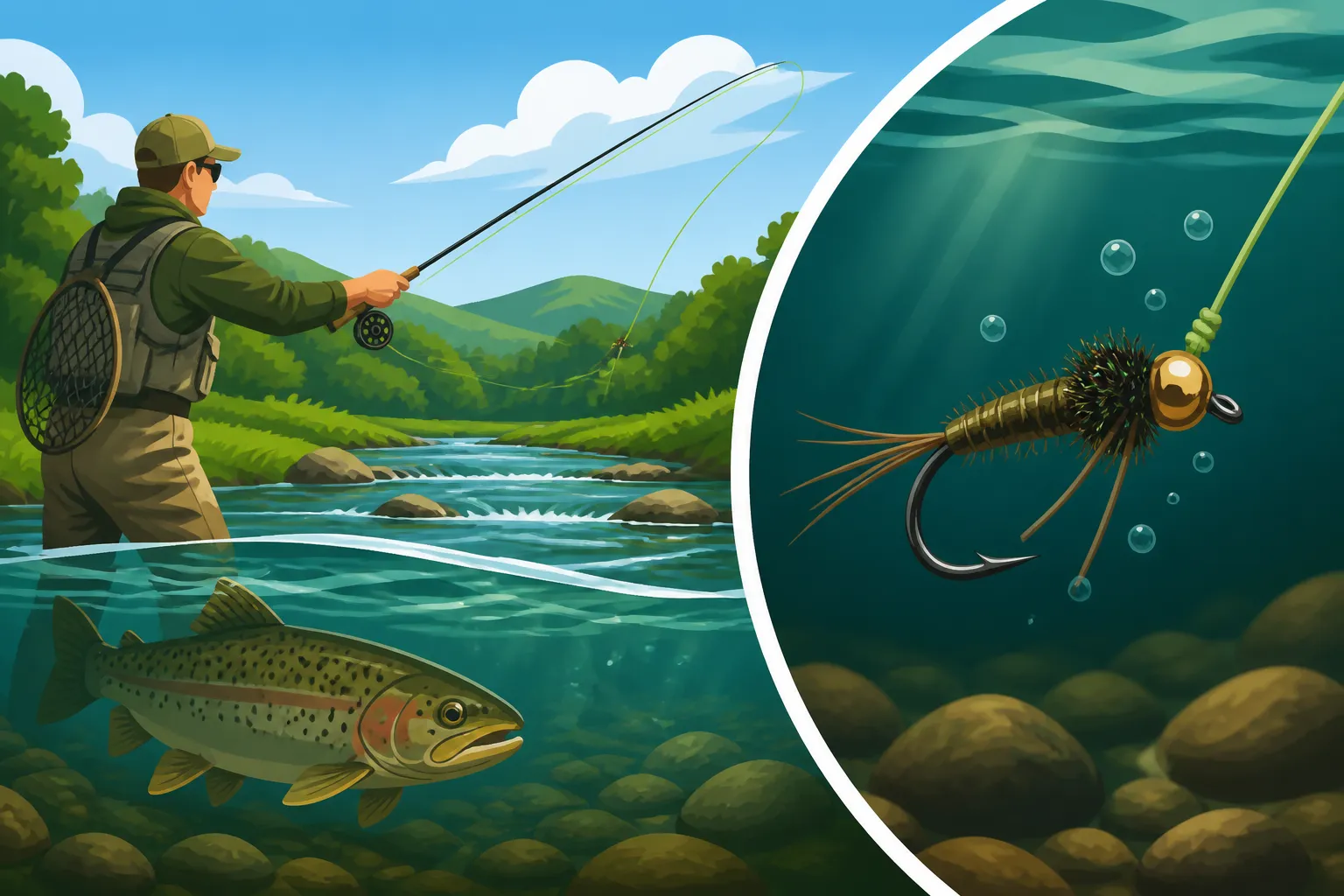
Iowa's trout eat what's available, and a diverse fly box is your best friend. You don't need a thousand patterns, but a solid selection of reliable nymphs in various sizes and weights will cover most situations. Start with generalist patterns that mimic common aquatic insects. The Pheasant Tail Nymph (sizes 14-20) is an absolute classic, imitating mayfly nymphs. The Hare's Ear Nymph (sizes 12-18) is another versatile pattern, mimicking a range of mayflies and caddis larvae. For caddis, you'll also want some Caddis Larva or Pupa patterns (sizes 12-18), often in olive or tan. When stoneflies are present, especially in larger streams, a Pat's Rubber Leg or a Prince Nymph (sizes 8-14) can be deadly. Don't forget scuds and sowbugs (sizes 14-18), which are abundant in many limestone-rich Iowa streams. And of course, the San Juan Worm and Squirmy Wormy (sizes 10-16) can be incredibly effective, especially after rain or when fish are aggressive. Carrying a few Egg Patterns (size 16) is also a smart move, particularly during spawning seasons. Varying the weight of your nymphs is also key; some should have a bead head for quick sinking, while others can be unweighted for a more subtle presentation. You can find many of these essential patterns in multi-packs on Amazon, saving you time and effort. For even more detail on specific insects and their imitations, check out our guide on Best Fly Patterns for Iowa Trout Streams.
Key Nymphing Techniques for Success
Nymphing isn't a "one size fits all" game. Different situations call for different approaches. While the goal is always to present a nymph naturally, the methods to achieve that can vary significantly. Let's break down the two main families of nymphing and some critical techniques within them.
Euro Nymphing vs. Indicator Nymphing
These are the two big players in the nymphing world, and understanding their core differences will help you decide which is best for the situation at hand.
Indicator Nymphing: This is probably what most anglers picture when they think of subsurface fly fishing. You attach a strike indicator (a fancy bobber) to your leader, typically 1.5 to 2 times the depth of the water you're fishing, then suspend one or two weighted nymphs below it. The indicator's job is twofold: to suspend your flies at the right depth and, crucially, to show you when a fish takes the fly. Any twitch, stop, or subtle drag of the indicator signals a strike. This method is fantastic for covering wider swaths of water, especially in moderately flowing runs or deeper pools, and it's generally easier for beginners to pick up. The main challenge is achieving a truly "drag-free" drift, as the indicator itself can be caught by differing currents, pulling your flies unnaturally. It's also less sensitive for detecting subtle takes, as the fish has to move the indicator, which takes a moment.
Euro Nymphing (Contact Nymphing): This technique has exploded in popularity, and for good reason—it's incredibly effective, particularly in faster, shallower, or more complex currents often found in Iowa's smaller streams. With Euro nymphing, you eliminate the strike indicator entirely. Instead, you use a specialized long, light rod and a very fine, often level, fly line that terminates in a multi-colored "sighter" section. The rod tip becomes your indicator. You actively "lead" your nymphs through the water, keeping a tight line to your flies, often with a slight sag in the sighter that instantly straightens or twitches when a fish inhales the fly. The beauty here is direct contact and unparalleled sensitivity. You feel everything. This method excels at short to medium ranges, fishing pocket water, seams, and precise runs. The downside is it has a steeper learning curve, demands more active rod work, and isn't ideal for covering large, open stretches of water. However, for those tricky, finicky Iowa trout holding tight to structure, it's often the most productive approach.
High-Sticking and Short-Leashing
These are fundamental techniques, especially for fishing the intimate waters of Iowa. They are about maintaining control and reducing drag.
High-Sticking: This technique involves holding your rod tip high in the air, keeping as much of your fly line as possible off the water. This minimizes contact with conflicting currents, allowing your nymphs to drift naturally, essentially isolating your leader and tippet from drag-inducing forces. When high-sticking, you're constantly following your indicator or sighter with your rod tip, keeping it just ahead or directly over your flies. This not only aids in drag reduction but also allows for instant strike detection and a quick, positive hook set. It's particularly effective when fishing pocket water, small seams, or when wading through choppy riffles where currents are varied and complex. Mastering the high-stick involves subtle wrist and arm movements, always anticipating where your flies are drifting and adjusting your rod tip accordingly. It’s a bit like guiding a miniature remote-control submarine with your rod.
Short-Leashing (Micro Nymphing): This is a close-quarters tactic, often used in conjunction with high-sticking, and it's fantastic for the smaller, brushy Iowa streams. You're fishing with a very short amount of line outside your rod tip, sometimes only a few feet of leader and tippet. This allows for extremely precise presentations in tight spots, under overhanging branches, or right against undercut banks. The angler is often very close to the fish, sometimes just a rod's length away, making stealth paramount. Short-leashing gives you maximum control over your nymphs' drift and depth, and because there's so little line on the water, drag is almost non-existent. It's a highly visual and tactile method, ideal for targeting specific fish you've spotted or for dissecting small, productive pieces of water. This is where those longer Euro nymphing rods truly shine, extending your reach without sacrificing control.
Dead-Drifting and Strike Detection
At the heart of all successful nymphing is the "dead drift," and mastering strike detection is what separates a good day from a great day.
Achieving a Perfect Dead Drift: A dead drift means your nymphs are moving at the exact same speed as the natural current, completely untethered by any drag from your line or indicator. This is paramount because natural insects don't speed up or slow down unnaturally with a visible line attached. For indicator nymphing, this involves casting upstream, mending your line (throwing a small loop of line upstream to delay the pull of the current), and following your indicator downstream with your rod tip, ensuring there's no unnatural tension. For Euro nymphing, it's about leading your sighter with your rod tip, always keeping a slight "micro-slack" in your line so the flies can tumble naturally. Any unnatural movement or acceleration of your indicator or sighter often means drag, and trout are experts at spotting this deception. It's a constant dance with the current, requiring subtle adjustments to your rod position and line management throughout the drift. Think of it as guiding a tiny, invisible leaf down a stream.
Decoding Strike Detection: This is often the biggest hurdle for new nymphers, and it's also the most rewarding to master. With indicator nymphing, a strike can be obvious—the indicator might plunge, scoot sideways, or dart upstream. However, more often, especially with wary Iowa trout, it's incredibly subtle: a slight hesitation, a barely perceptible dip, or even just a momentary stop in its drift. The key is to treat any unusual behavior from your indicator as a strike and set the hook. With Euro nymphing, where your sighter and rod tip are your primary detectors, strikes are felt as much as seen. The sighter might just stiffen, twitch, or pause, or you might feel a faint "tick" transmitted directly through the rod. It truly feels like an electrical current running through your hands. The rule of thumb for both methods is: When in doubt, set the hook! You'll hook bottom sometimes, but you'll hook a lot more fish too. Developing this sensitivity takes practice, but once it clicks, you'll wonder how you ever missed so many fish.
Reading the Water and Presenting Your Nymph
Being able to cast is one thing; knowing where to cast and how to make your fly look natural is another entirely. This is where true angling artistry comes into play, especially on finicky Iowa trout streams.
Understanding Current and Structure
Iowa's trout streams, despite their often modest size, are dynamic environments. The current isn't uniform; it flows at different speeds, creating distinct "seams" and "eddies." Fast water usually carries the most food, but trout rarely sit in the fastest current, expending energy. Instead, they position themselves in the slower, calmer water adjacent to the fast water—the "current seams." These seams are highways for nymphs, and trout sit just off to the side, snatching passing meals. Look for these seams along banks, behind large rocks, or where a riffle transitions into a deeper pool.
Structure is another critical element. Anything that provides cover or breaks the current is a potential trout lie. This includes submerged logs, fallen trees, large boulders, undercut banks, and even clumps of aquatic vegetation. These spots offer trout protection from predators and a place to rest out of the main current while still being close to the food delivery system. When you approach a section of stream, take a moment to observe. Where is the fastest water? Where is the slowest? What kind of structure is present? How deep is it? Imagine you're a trout – where would you hide and wait for food? This mental exercise is incredibly helpful. For a comprehensive overview of Iowa's fishing rules, especially for specific bodies of water, be sure to check out Iowa Fishing Regulations Explained.
Achieving a Natural Drift
The "natural drift" is the holy grail of nymphing. It means your fly travels through the water at the same speed and in the same manner as a free-floating insect. Any drag, where your line pulls your fly unnaturally faster or slower than the current, is a red flag to wary trout. To achieve this:
- Upstream Casting: Generally, you want to cast upstream and across the current, allowing your nymphs time to sink to the appropriate depth before they reach the trout's likely holding lie. This also minimizes the chances of spooking fish by having your line drift over them first.
- Mending the Line: This is your primary tool for managing drag. As your line floats downstream, different currents will pull on different sections. A mend is a flip of the rod tip that throws a loop of line upstream, effectively putting slack into your drift and allowing your flies to continue their natural trajectory without being pulled by the surface current. You'll often need to mend multiple times during a single drift, constantly adjusting to maintain that perfect, drag-free presentation.
- Controlling Depth: This is crucial. Nymphs live on the bottom, so your flies need to be down there too. Adjust the amount of weight you use (split shot or weighted flies) to ensure your nymphs are ticking the bottom occasionally. If you're not occasionally snagging, you might not be deep enough! For indicator nymphing, adjust the depth of your indicator on your leader. For Euro nymphing, the weight of your flies and the angle of your rod tip dictate depth.
- Following the Drift: With your rod tip, follow your indicator or sighter downstream at the same speed it's moving. This allows you to react instantly to a strike and prevents slack line from building up, which can hinder strike detection.
This relentless pursuit of the perfect, natural drift is what makes nymphing so challenging and ultimately, so rewarding.
Seasonal Considerations for Nymphing in Iowa
Trout fishing in Iowa is a year-round pursuit, thanks to our spring-fed streams and the Iowa DNR's dedicated stocking program. However, the conditions, and thus your nymphing strategies, will change dramatically with the seasons.
Spring and Early Summer Nymphing
Spring is a time of renewal, and often, high water. Snowmelt and spring rains can swell streams, bringing increased turbidity and higher flows. While this might seem challenging, it's often a prime time for nymphing. The higher water dislodges nymphs more frequently, and trout are actively feeding to regain energy after winter.
- Spring (March-May): Focus on larger, heavier nymphs to cut through the increased current and reach fish holding deep. Patterns like large Pheasant Tails, Prince Nymphs, or even Pat's Rubber Legs in sizes 10-14 are good choices. Water clarity might be reduced, so brighter "attractor" nymphs or those with a bit of flash can sometimes get noticed. Don't be afraid of using a bit more weight to get down. Trout will often be tucked into slower eddies, behind large structure, or in the soft seams near the banks, so target these areas carefully. Remember to check for specific Iowa Fishing Season Dates and Limits as well as the Iowa Spring Trout Stocking Strategy which can greatly influence where you find active fish.
- Early Summer (June-July): As waters recede and warm slightly, insect activity picks up, and clarity generally improves. This is when smaller, more imitative nymphs become highly effective. Mayfly hatches become more prolific, so having a good selection of Pheasant Tails and Hare's Ears in sizes 16-20 is key. Caddis larva and pupa patterns are also excellent. Trout are still holding in their usual lies but might be more willing to move short distances for a well-presented nymph. Fishing early mornings or late evenings can be particularly productive as water temperatures are cooler and insect activity is higher. This is also a fantastic time for precise, delicate presentations, making Euro nymphing a powerful tool.
Fall and Winter Nymphing Strategies
Don't hang up your waders just because the air gets chilly! Fall and winter offer some of the most serene and rewarding nymphing experiences in Iowa.
- Fall (September-November): Fall in Iowa's trout streams is simply magical. Water levels are typically stable, and clarity is often excellent. Trout are putting on weight for winter, and their metabolism is still high. This is a time for diverse nymphing. Larger nymphs like stoneflies and even scuds can be very effective as trout key in on larger meals. Mayfly and caddis nymphs are still present, so having your standard patterns in various sizes remains important. As the leaves fall and sunlight penetrates more, trout might become more wary, necessitating longer leaders, finer tippets, and impeccable drag-free drifts. The Iowa Fall Trout Stocking Strategy often sees a surge in fish, making these periods especially productive. Focus on deep pools, runs, and any structure that offers thermal refuge.
- Winter (December-February): This is the ultimate test of a nympher's patience and skill. Water temperatures are at their coldest, and trout become sluggish. Their metabolism slows down, meaning they don't need to eat as often, and they're less willing to move for a meal. The key to winter nymphing is going small and slow. Use very small nymphs (size 18-22) like tiny Pheasant Tails, Midges, or even microscopic scuds. Presentation needs to be excruciatingly slow and precise. Trout will often be concentrated in the deepest, slowest parts of pools and runs, conserving energy. They won't chase, so your nymph needs to drift directly into their strike zone. Detecting strikes in winter is also incredibly challenging, as they can be barely perceptible "takes"—a slight twitch of the indicator or a minuscule bump on the sighter. For dedicated anglers, learning How to Nymph for Trout in Cold Water can lead to some truly memorable catches when many others have packed away their gear. Wearing appropriate layers, including good waders and warm socks, is essential for comfort during these colder months. You can often find excellent cold-weather fishing gear, from waders to thermal layers, by browsing online retailers like Amazon.
Common Nymphing Mistakes and How to Fix Them
Even experienced anglers fall into bad habits. Nymphing can be frustrating, especially when you feel like you're doing everything right but still not catching fish. Let's tackle some common pitfalls.
Improper Weighting and Depth Control
This is arguably the most frequent mistake in nymphing, and it directly leads to an empty net. If your nymphs aren't getting down to the fish, you're just practicing casting. Trout feed on or near the bottom for nymphs.
- The Problem: Many anglers don't use enough weight. They're afraid of snagging, or they underestimate the power of the current to keep their flies suspended. The result is flies drifting over the fish's heads, out of their strike zone. Another issue is using too much weight without proper technique, causing your flies to constantly snag or drift unnaturally.
- The Frustration: You see fish, you cast to them, but they ignore your offerings. You might even feel a "tick" but assume it's the bottom, only to realize later it was a subtle take.
- The Fix:
- Start Heavy, Adjust Lighter: When you begin fishing a new section of water, especially if you're unsure of the depth or current, start with slightly more weight than you think you need. Your goal is to occasionally feel your flies ticking the bottom. If you're not touching bottom at all, add more weight (either heavier flies or split shot). If you're constantly snagging, then you can slowly reduce the weight. This trial-and-error process is vital.
- Use Various Weighted Nymphs: Keep an assortment of nymphs with different bead head weights (tungsten beads are much heavier than brass for their size). This allows for quick adjustments without adding split shot.
- Adjust Leader Length/Indicator Depth: For indicator nymphing, ensure your indicator is set at 1.5 to 2 times the estimated water depth. This gives your flies plenty of time and space to sink.
- Feel the Bottom, Not Fight It: There's a difference between a snag and a gentle tick. A "tick" feels like your fly briefly bumps a pebble or sand, while a snag feels like a sudden, firm stop. Learn to differentiate, and don't be afraid of those occasional bottom taps—it means you're in the zone!
Missed Strikes and Presentation Flaws
You've got your flies at the right depth, but fish are either ignoring them or you're missing every bite. This often comes down to drag or late hook sets.
- The Problem:
- Drag: Your flies are not drifting naturally, either speeding up or slowing down unnaturally due to your line being pulled by conflicting surface currents. This is the biggest turn-off for trout.
- Late Hook Sets: You're seeing the strike but hesitating, or not setting the hook with enough conviction, or in the right direction.
- Slack Line: Too much slack in your line means a delay in seeing or feeling a strike, and a less effective hook set.
- The Frustration: You see your indicator dip, you strike, and… nothing. Or you see a fish dart out, follow your fly, and then turn away at the last second. It feels like the trout are toying with you.
- The Fix:
- Master the Mend: As discussed earlier, constant, subtle mends are key to eliminating drag. Practice casting upstream and immediately mending upstream to create slack that allows your flies to sink and drift naturally. If you're finding you constantly need to mend, consider your casting angle or position relative to the current.
- Positioning is Key: Try to position yourself directly across or slightly upstream of your target area. This reduces the amount of line you have on the water and makes mending more effective. Sometimes, a short move can make all the difference. You can often find accessible bank fishing spots or wading access using resources like the Iowa Fishing Atlas Access Points.
- The "Set it Like You Mean It" Hook Set: When your indicator twitches, or you feel that subtle tick, set the hook immediately and with authority. A proper hook set is typically a firm, upward or sideways sweep of the rod, not just a gentle lift. Keep your rod tip high and sweep it to the side, away from the direction of the current. This helps drive the hook home effectively.
- Minimize Slack: Whether indicator or Euro nymphing, try to maintain just enough tension to detect a strike, but not so much that it creates drag. This is a delicate balance learned through practice. For Euro nymphing, that means constantly moving your rod tip to track your flies and keep the sighter straight but not tight.
Nymphing is a journey of continuous learning and refinement. Don't get discouraged by setbacks; every missed fish or tangled line is a lesson learned. With patience and persistence, you'll soon be confidently navigating Iowa's beautiful trout streams and enjoying the rewards of effective nymphing.
| Nymphing Technique | Primary Detection Method | Ideal for | Advantages | Challenges |
|---|---|---|---|---|
| Indicator Nymphing | Strike Indicator | Wider runs, deeper pools, moderate current | Easier for beginners, covers more water | Can be prone to drag, less sensitive strikes |
| Euro Nymphing | Sighter/Rod Tip | Pocket water, complex currents, tight spots | High sensitivity, minimal drag, precise drifts | Steeper learning curve, shorter casting range |
Disclaimer
Fishing regulations and conditions can change. Always consult the latest official Iowa Department of Natural Resources (DNR) fishing regulations before heading out on the water. This guide is for informational purposes only and should not replace official sources.