Best Waterproof Phone Case for Fishing
There’s nothing quite like the feeling of reeling in a big one on an Iowa lake or river, but that thrill can quickly turn to dread if your phone takes an unexpected dip. We’ve all been there: fumbling with wet hands, a sudden splash, or that moment you realize your pockets aren't as secure as you thought. This guide is all about helping you keep your precious device safe and dry, ensuring you can snap those trophy photos and stay connected without worry.
Why a Waterproof Phone Case is a Non-Negotiable for Iowa Anglers
Let's face it, water and electronics are natural enemies. When you're out fishing in Iowa, you're not just near water; you're often in it, on it, or dealing with the elements it brings. A good waterproof phone case isn't just a luxury; it's an essential piece of gear that protects your investment and provides peace of mind. No one wants to end a perfect day on the water with a dead phone, or worse, scrambling to replace it.
The Ever-Present Risk of Accidental Submersion
Picture this: You’re out on Saylorville Reservoir, the walleye are biting, and you lean over the edge of the boat to land a beauty. Your phone, perched precariously in your shirt pocket, decides it wants to join the fish. Splash! Or maybe you're bank fishing along the Des Moines River, admiring the scenery, and your phone slips from your grasp into the muddy current. These aren’t just hypothetical situations; they happen all the time. Iowa's waters, from the deep stretches of the Mississippi River to our beloved Iowa Great Lakes, are full of opportunities for your phone to go for an unintended swim. A proper waterproof case means that momentary lapse in attention doesn't turn into a day-ruining, expensive disaster. It's about being prepared for the inevitable clumsiness that comes with hands-on activities like fishing.
Even if you’re meticulously careful, accidents can still occur. A rogue wave from a passing boat, an unexpected bump, or simply setting your phone down on a wet surface can be enough to compromise its integrity if it’s not properly protected. It’s not just about protecting against a full dunking, but also against those smaller, more frequent exposures to moisture that can degrade your phone over time.
Battling Iowa's Unpredictable Weather
Iowa weather has a mind of its own, especially during prime fishing seasons. A sunny morning can quickly give way to a sudden thunderstorm, bringing pouring rain and gusty winds. If you're caught out on the water, or even just hiking to a remote fishing spot like one of the Trout Fishing Streams in Northeast Iowa, your phone is going to get wet. Holding it under your shirt or burying it in a backpack might offer a tiny bit of reprieve, but it’s rarely enough to prevent water damage from prolonged exposure.
A waterproof case allows you to keep your phone accessible even in inclement weather. You might need to check a weather radar app, navigate with GPS, or even make an emergency call. Fumbling with a phone that’s wrapped in plastic bags or constantly tucked away is not only inconvenient but can also be dangerous if you need quick access. Imagine trying to check for severe weather warnings during a sudden downpour, only to find your phone soaked and unresponsive. A waterproof case helps you stay connected and safe, regardless of what Mother Nature throws your way. It allows you to focus on the fishing, knowing your communication device is protected.
Types of Waterproof Phone Cases: Understanding Your Options
When it comes to waterproof phone protection, there isn't a one-size-fits-all solution. Different cases offer varying levels of protection and functionality, and understanding these differences is key to choosing the best one for your Iowa fishing adventures. We typically see two main categories: soft waterproof pouches and rugged hard-shell cases. Each has its own strengths and ideal scenarios.
Soft Waterproof Pouches
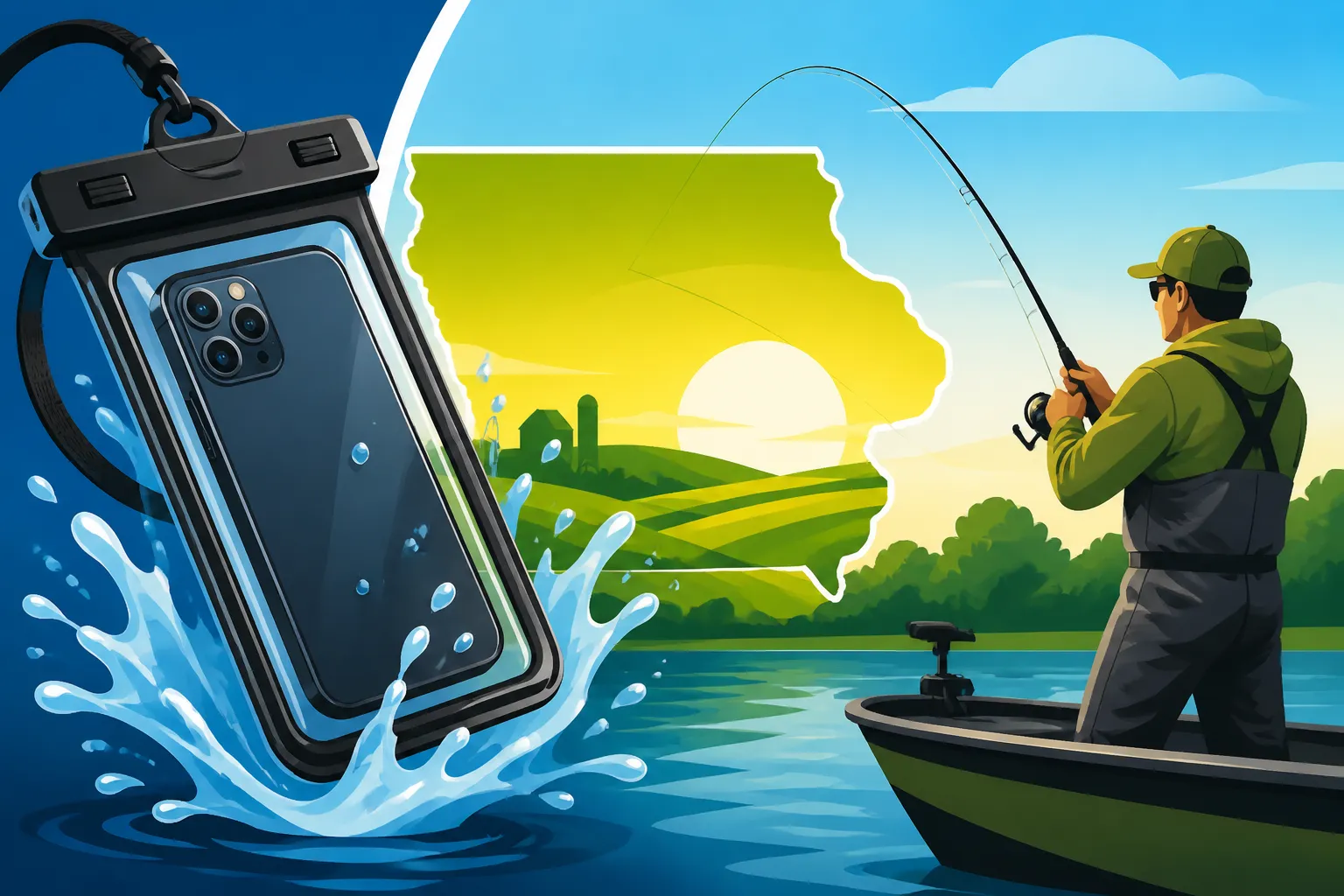
These are often the most affordable and versatile option, acting like a dry bag for your phone. They're typically made of clear, flexible PVC or TPU material with a strong sealing mechanism, usually a double-zip lock and a fold-over Velcro flap or a secure clamp. Many come with a lanyard, which is incredibly handy for keeping your phone around your neck or wrist, preventing it from sinking if it does go overboard.
The biggest advantage of soft pouches is their universal fit; most can accommodate a wide range of phone sizes, even with a slim case already on. They also tend to be quite buoyant, so if your phone does end up in the water, there’s a good chance it will float, giving you a chance to retrieve it. They are fantastic for lighter activities like shore fishing, kayaking on a calm lake, or during Iowa's Free Fishing Weekend when you might not need extreme durability but still want peace of mind. You can often find a good selection of these at outdoor retailers like Bass Pro Shops or with plenty of options to compare on Amazon. However, while they protect against water, they usually offer minimal impact protection, meaning a hard fall could still damage your phone.
Rugged Hard-Shell Cases
For those who demand maximum protection, hard-shell waterproof cases are the way to go. These are specifically designed for individual phone models, encasing your device completely in a rigid, durable shell. They often feature built-in screen protectors and port covers, and are engineered to be both waterproof and shockproof. They're built to withstand drops, bumps, and even significant pressure.
These cases are ideal for more extreme fishing scenarios, such as navigating choppy waters on the Mississippi River, ice fishing where your phone might take a tumble on slippery surfaces, or any situation where impact protection is as important as waterproofing. They typically boast higher IP ratings (more on that in a moment) and provide a much more secure feeling. The trade-off is often bulk and cost, and they can sometimes make your phone feel less "sleek." However, for serious anglers who are frequently exposing their gear to harsh conditions, the added protection is well worth it. They seamlessly integrate with your phone, allowing for full use of buttons and touchscreens, which is a major benefit when you’re trying to quickly snap a photo of your Iowa State Record Walleye Weight candidate.
Here's a quick comparison of the two main types:
| Feature | Soft Waterproof Pouch | Rugged Hard-Shell Case |
|---|---|---|
| Water Protection | Excellent (often IPX8 rated) | Superior (often IP68 or higher) |
| Impact Protection | Minimal (protects from scratches, not drops) | Excellent (designed for drops and impacts) |
| Fit | Universal (fits many phone sizes) | Specific (designed for individual phone models) |
| Bulkiness | Low to moderate | Moderate to high |
| Accessibility | Touchscreen generally works, some button access limited | Full functionality of phone buttons and touchscreen |
| Buoyancy | Often floats | Rarely floats (may require a separate float accessory) |
| Price Point | Generally more affordable | Typically higher |
| Ideal Use | Bank fishing, light rain, kayaking, casual use | Boat fishing, ice fishing, heavy use, extreme conditions |
Key Features to Look For in a Fishing Phone Case
Beyond just "waterproof," there are several critical features that elevate a phone case from merely acceptable to truly essential for your Iowa fishing trips. Thinking about these specifics will help you narrow down the best option for your particular needs and how you typically interact with your phone on the water.
Understanding IP Ratings: Your Guide to Waterproofing
The first thing you absolutely need to look for is an IP (Ingress Protection) rating. This two-digit number tells you exactly how resistant a device is to solids (like dust) and liquids (like water). The first digit refers to solid particle protection (0-6, with 6 being dust-tight), and the second digit refers to liquid ingress protection (0-8, with 8 being submersible beyond 1 meter for extended periods).
For fishing, you want to focus on that second digit, specifically looking for an IPX8 rating. The 'X' simply means it hasn't been tested for solid particle protection, which is common for some cases. An IPX8 rating means the device can be continuously submerged in water beyond 1 meter (the exact depth and duration are specified by the manufacturer, but generally it's at least 30 minutes at a certain depth). This is the gold standard for full waterproofing, ensuring your phone can survive a quick dip in the lake or river. Anything less, like IPX7 (submersible up to 1 meter for 30 minutes), might be okay for splashes but won't cut it if your phone truly goes for a swim in deeper waters or for longer durations while you retrieve it. Don't settle for less than IPX8 if you want serious protection against full submersion.
Impact Resistance and Drop Protection
While waterproofing keeps the water out, impact resistance keeps your phone intact when gravity takes over. Fishing environments are often unforgiving – slippery docks, rocky riverbanks, the hard deck of a boat. A dropped phone without adequate impact protection can lead to a shattered screen or internal damage, even if it's waterproof. Many rugged hard-shell cases come with military-grade drop test ratings (e.g., MIL-STD-810G), which means they've been tested to withstand drops from certain heights onto various surfaces.
Look for cases with reinforced corners, a durable outer shell, and perhaps a slightly raised bezel around the screen to absorb shocks. If you frequently find yourself on the move, climbing into and out of boats, or dealing with active kids who might accidentally knock your phone, this feature is just as important as the waterproofing itself. Even if your phone survives the water, it won't be much good if the screen is shattered and unusable. For instance, imagine fishing from a slippery bank on the Des Moines River Catfish Spots, and your phone takes a tumble onto some jagged rocks. A robust case could be the difference between a close call and a costly replacement.
Accessibility and Usability Features
What good is a protected phone if you can’t actually use it? When you're out fishing, you still need to check Iowa Fishing Season Dates and Limits, snap photos, or answer a call. Look for cases that allow for seamless interaction. This includes:
- Touchscreen sensitivity: Does the case interfere with your phone's touch response? Test it out if possible, especially for soft pouches, to ensure you can easily swipe, tap, and type.
- Button access: Can you easily press the power and volume buttons? Some cases make them stiff or hard to locate.
- Port access: While waterproof, can you easily open a flap to charge your phone or plug in headphones if needed, without compromising the seal?
- Camera clarity: Is the camera lens area clear and free from distortion? You don't want a perfectly protected phone that takes blurry pictures of your trophy catch.
- Lanyards and attachment points: Many waterproof cases, especially pouches, come with lanyards. This is a game-changer for keeping your phone secure around your neck or attached to your gear, preventing drops. Some rugged cases also offer attachment points for clips or carabiners.
These seemingly small details make a huge difference in your overall experience. A case might be waterproof and durable, but if it's a pain to use, you'll find yourself taking your phone out of it, defeating the purpose of the protection.
Choosing the Right Case for Your Iowa Fishing Style
Your ideal waterproof phone case really depends on how and where you typically fish in Iowa. Are you a calm, serene bank angler, or do you brave the elements in a boat? Each style presents different challenges and calls for specific features in your phone protection. Let's break down some common Iowa fishing scenarios.
Cases for Bank and Shore Fishing
If your fishing adventures usually involve casting from the bank of a community pond, strolling along the edges of a smaller lake, or enjoying a peaceful day on a fishing pier, your needs might be slightly different. While accidental submersion is still a risk (a slippery bank, a clumsy reach), the chances of your phone being violently thrown around or subjected to extreme impacts might be lower than on a boat.
For bank and shore fishing, a high-quality soft waterproof pouch is often an excellent choice. They are lightweight, easy to carry, and many are buoyant, offering that critical second chance if your phone slips into the water. The included lanyard is invaluable here, allowing you to wear your phone around your neck or securely attach it to a belt loop, keeping your hands free for casting and reeling. This accessibility means you can quickly check the Crappie Daily Limit in Iowa or snap a photo without fumbling. Look for pouches that still allow for good touchscreen interaction and offer robust sealing mechanisms. While Amazon has countless options, checking out customer reviews for sealing quality and touch sensitivity is crucial.
Cases for Boat and Kayak Fishing
When you're out on the water, whether it’s in a sturdy bass boat on Clear Lake or a kayak navigating the Cedar River, the risks to your phone escalate. Constant motion, spray, splashes, and the ever-present danger of an unexpected capsize mean you need robust protection.
For boat fishing, especially on larger bodies of water like Lake Rathbun or the Mississippi River, a rugged hard-shell waterproof case is often the superior choice. These cases are designed not only to keep water out but also to absorb significant impacts from drops onto hard surfaces or from being jostled around in the boat. They provide consistent, reliable protection against both water and physical damage. If your phone takes a dive from a boat moving at speed, you need more than just waterproofing; you need something that can handle the impact as it hits the water. For kayakers, where space is at a premium and capsizes are a real possibility, a hard-shell case combined with a secure tether system offers the ultimate peace of mind. Some anglers might even combine a hard-shell case with a buoyant lanyard or a small float accessory for added security, particularly in a Kayak Fishing Techniques in Iowa scenario where retrieval might be difficult.
Cases for Ice Fishing and Extreme Conditions
Iowa winters bring unique fishing opportunities, but also unique challenges for your electronics. Ice Fishing in Iowa means dealing with extreme cold, snow, slush, and slippery ice surfaces. Your phone is at risk of being dropped, left out in sub-zero temperatures, or accidentally submerged in an ice hole.
For ice fishing, a rugged hard-shell case is almost mandatory. The extreme cold can make your hands clumsy, increasing the risk of drops. A case with excellent impact protection is vital to prevent cracking from a fall onto hard ice. While waterproofing is still crucial (especially around ice holes), thermal insulation isn’t a direct feature of most cases, but a hard-shell case can offer a minor buffer against the immediate cold. Many ice anglers also appreciate cases that allow for easy gloved operation, which can be a tricky balance. Furthermore, keeping your phone protected means you can reliably use it for important tasks like checking navigation for Ice Fishing Safety on Iowa Lakes or communicating with your fishing buddies across the ice. Being able to confidently use your device in these harsh conditions is a huge advantage.
Practical Tips for Using Your Waterproof Phone Case
Getting the right waterproof phone case is only half the battle; knowing how to properly use and maintain it will ensure it performs when you need it most. A little bit of diligence can go a long way in preventing a costly mistake out on the water.
Performing a Water Test
Before you ever put your precious phone inside a new waterproof case, especially a soft pouch, perform a water test! This is a simple, yet critical step that many people skip. Take a tissue or a piece of paper towel, place it inside the empty case, seal it according to the manufacturer's instructions, and then submerge it in a sink or bucket of water for at least 30 minutes. Apply some pressure to simulate a drop.
After the test, carefully remove the case, dry the exterior thoroughly, and then open it to check the paper towel. If it's bone dry, your case is good to go! If there's any moisture, even a tiny speck, do NOT use that case with your phone. Contact the manufacturer for a replacement. This simple test can save you hundreds of dollars and a ton of heartache. It’s also a good idea to periodically re-test soft pouches, as wear and tear can eventually compromise their seal. For hard cases, inspect the seals and port covers regularly for any debris or damage that could prevent a perfect seal.
Keeping Your Case Clean and Clear
A dirty case can compromise both its functionality and the quality of your photos. Fishing environments are often dusty, muddy, and covered in fish slime. Over time, dirt and grit can accumulate around the seals, preventing a watertight closure. Regularly clean your case, especially around the edges and sealing mechanisms, with fresh water and a mild soap. Make sure to rinse it thoroughly and dry it completely before sealing your phone inside.
For clear screen protectors, both on soft pouches and hard cases, use a soft, non-abrasive cloth to wipe away smudges and dirt. This ensures that your touchscreen remains responsive and that your Iowa Fish Species Guide photos come out crisp and clear. If you’re at all concerned about visibility, especially when targeting Walleye Fishing in Iowa where clear photos can really show off your catch, keeping that lens and screen cover pristine is key. Scratches on the clear plastic over the camera lens can significantly degrade photo quality, so handle with care.
Maximizing Battery Life in a Case
While not directly related to waterproofing, battery life can sometimes feel like it suffers when your phone is in a case. This is usually due to reduced heat dissipation, or if the case slightly interferes with cellular signal, causing your phone to work harder. In colder conditions, like during Winter Walleye Techniques Near Dubuque, battery drain can be a major issue, regardless of the case.
To combat this, consider keeping a portable power bank charged and ready. Many power banks are also rugged and water-resistant. If you're on a multi-day fishing trip, or just a long day out, having an external power source means you can keep your phone protected in its case for longer, only exposing it to charge when absolutely necessary and in a dry environment. Furthermore, ensure your phone is fully charged before you head out. Close unnecessary apps, lower screen brightness, and put your phone in airplane mode if you don't need data or calls, especially if you're just using it for photos or pre-downloaded maps.
Disclaimer
This article is for general informational purposes only and does not constitute professional advice. Laws, prices and regulations vary by location and change over time. Consult a qualified professional for guidance on your specific situation.