Required Safety Equipment for Iowa Boats
There's nothing quite like casting a line on one of Iowa's serene lakes or navigating the mighty Mississippi, but the peace can quickly be shattered if you're caught unprepared. Many of us, myself included, have felt that little pang of anxiety wondering if we've got everything just right, especially when it comes to the safety gear required on our boats. Navigating the rules and regulations can feel like a labyrinth, but this guide is here to untangle the confusion, helping you understand precisely what safety equipment is legally required on your Iowa boat and why it’s absolutely essential for a safe and enjoyable outing.
Why Boating Safety Equipment Matters in Iowa Beyond the Law
It’s easy to think of boating safety equipment purely in terms of legal compliance – what you need to have onboard to avoid a ticket from the Iowa Department of Natural Resources (DNR) water patrol. But honestly, that’s missing the bigger picture entirely. While knowing the law is crucial, the true value of safety gear lies in its ability to protect lives and livelihoods when the unexpected inevitably happens on the water.
The Unexpected Reality of Iowa Waters
Iowa's waterways, from its peaceful farm ponds to the bustling currents of the Mississippi River, can appear calm and inviting. However, this tranquility can be deceptive. We've all seen how quickly a sunny, calm afternoon can transform into a turbulent, wind-whipped deluge with a pop-up thunderstorm. What seems like a minor inconvenience on land can become a genuine emergency when you're miles from shore in a small boat.
Rivers like the Des Moines and Cedar, and especially the mighty Mississippi, bring their own set of challenges, from strong, unpredictable currents to hidden snags and submerged debris that can appear after heavy rains. Lakes, too, can kick up formidable waves in strong winds, turning a pleasant cruise on Big Creek Lake into a white-knuckle ride. Without the right equipment, even minor issues like an unexpected engine stall can quickly escalate into a serious situation, leaving you vulnerable to the elements or other boaters.
Beyond weather, consider the isolation factor on some of our more remote fishing spots. Help might not be immediate, and being truly prepared means having the tools to handle a problem yourself or at least signal for assistance. Knowing you have the right gear onboard isn’t just about following rules; it’s about having the peace of mind that you can face these unexpected realities with confidence and competence.
Protecting Your Loved Ones and Your Investment
Ultimately, safety equipment is about protecting what matters most: the people on your boat and the boat itself. No one wants to imagine a scenario where a child falls overboard and isn't wearing a properly fitted personal flotation device (PFD), or a small engine fire rapidly spreads because there wasn't an accessible fire extinguisher. These aren't just hypotheticals; they are real dangers that quality safety gear is designed to mitigate.
While getting a citation for non-compliance can certainly sting your wallet, the financial penalties pale in comparison to the human cost of an accident. Think about the medical expenses, boat repair costs, or even the devastating emotional toll of a severe incident. A well-equipped boat is an investment in safety, much like a good insurance policy for your outdoor adventures. It helps prevent costly accidents, minimizes damage, and most importantly, can be the difference between a scary moment and a tragic outcome.
The goal isn't just to avoid a penalty; it's to ensure everyone returns home safely, ready for the next adventure. Whether you're chasing bass, cruising with family, or enjoying Walleye Fishing in Iowa, prioritizing safety equipment is the most responsible choice you can make. It demonstrates a commitment to the well-being of your passengers and the longevity of your cherished vessel, which is one of the Best Boats for Iowa Fishing for your needs.
Essential Safety Equipment Mandated by Iowa Law
Understanding Iowa's specific legal requirements for boating safety equipment can sometimes feel like a puzzle. These rules aren't arbitrary; they are carefully crafted to minimize risks on our waterways. Let's break down the essential items you must have onboard to stay compliant and, more importantly, safe.
Personal Flotation Devices PFDs
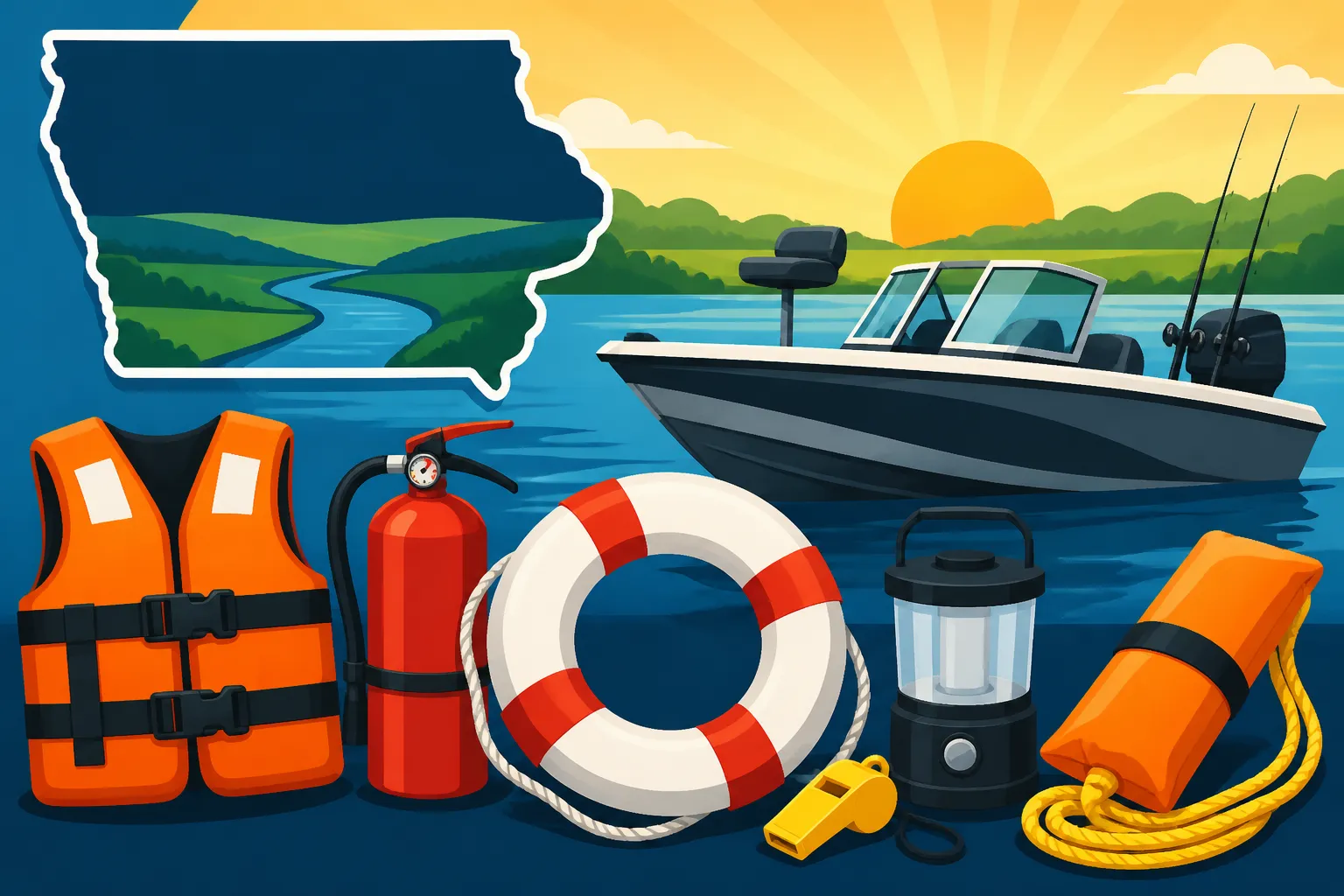
Perhaps the most critical piece of safety equipment, every person on your boat must have a readily accessible, U.S. Coast Guard (USCG) approved Personal Flotation Device (PFD). This isn't just a requirement; it's a fundamental principle of boating safety. "Readily accessible" means it shouldn't be buried under a mountain of tackle boxes or tucked away in a hard-to-reach locker; it needs to be available for immediate use. These aren't just seat cushions; they are specifically designed to keep a person afloat.
For families, there's an even stricter rule: children under 13 years of age must wear a properly fitted PFD when the vessel is underway. There are very few exceptions to this, so always ensure your young passengers are securely buckled into their life jackets before you leave the dock. A properly sized PFD is paramount; one that's too large can slip off, and one that's too small won't provide adequate flotation. Many reputable retailers, like Bass Pro Shops, offer excellent resources for PFD sizing and fitting to ensure maximum effectiveness.
There are various types of PFDs (Type I, II, III, IV, V), each designed for different situations and levels of buoyancy. Type III PFDs, often called "flotation aids," are common for general recreational use, fishing, and watersports, offering comfort and freedom of movement. Regardless of type, always check your PFDs for rips, tears, broken straps, or excessive fading that might compromise their integrity. Remember, ensuring kids are safe on the water directly relates to knowing the rules outlined in Iowa Fishing License Rules for Kids Under 16.
Visual Distress Signals
Visual Distress Signals (VDS) are your way of signaling for help, day or night, if you find yourself in an emergency situation. The requirement for VDS can be a bit confusing, as it primarily applies to vessels operating on federally controlled waters, which in Iowa, mainly refers to portions of the Mississippi River and other larger bodies that directly connect to federal waterways. Many smaller, entirely inland Iowa lakes might not strictly require them, but it’s still smart to have some form of visual signaling device.
VDS come in several forms. Pyrotechnic flares, both handheld and aerial, are highly effective but have a limited shelf life and must be replaced periodically. Orange signal flags are a common daytime VDS, simple and reusable. More modern options include electronic visual distress signals (eVDs), which are battery-operated lights that flash the SOS signal and offer a longer lifespan than traditional flares.
It's crucial to understand where and when VDS are required. If you're out on Mississippi River Pool 10 Fishing after dusk, you absolutely need to have appropriate VDS onboard. If you're only planning to fish a small, local pond during daylight hours, the legal requirement might not apply, but a bright flashlight or a signaling mirror can still be invaluable. Always store your VDS in a waterproof container and know how to use them effectively in an emergency.
Sound Producing Devices
A sound-producing device might seem like a minor detail, but it's an incredibly important tool for communication and collision avoidance on the water. For most recreational boats under 39.4 feet (12 meters), a simple whistle or an air horn that can produce a continuous blast for at least two seconds and be audible for at least half a nautical mile is sufficient.
Larger vessels may have additional requirements, such as a horn and a bell. The purpose of these devices is multi-faceted: signaling your intentions to other vessels (e.g., when passing or turning), warning of danger, and making distress signals (typically five short, rapid blasts). In situations of restricted visibility, like a sudden fog bank, your sound signal becomes your voice on the water, alerting others to your presence.
Imagine navigating through a thick fog while enjoying Winter Walleye Fishing Near Dubuque. Without a clear sound signal, you become a ghost on the water, increasing the risk of a collision. A cheap, readily available whistle or air horn is a small item that can prevent a major headache and potentially save lives. Ensure your device is working, loud enough, and easily accessible should you need it in a hurry.
Fire Extinguishers
Fire on a boat is an incredibly dangerous situation, often escalating rapidly due to the presence of fuel, oil, and flammable materials. Iowa law requires a USCG-approved fire extinguisher on your boat if it has certain features, such as an enclosed engine compartment, permanently installed fuel tanks, certain electrical systems, areas where fuel vapors can accumulate, or double bottoms not entirely sealed. Many smaller boats without these specific features might not be legally mandated to carry one, but it is unequivocally recommended for any boat with a motor.
Typically, Type B fire extinguishers, designed for flammable liquid fires, are required. The size and quantity needed will depend on the length and features of your vessel. When inspecting your extinguisher, ensure the pressure gauge is in the "green" (charged), the safety seal is intact, and it's free from corrosion or damage. Most importantly, it must be mounted in an easily accessible location, away from potential heat sources, so you can grab it instantly if a fire breaks out.
A small fuel line leak or an electrical short can quickly turn into an inferno. Having a functioning fire extinguisher onboard and knowing how to use it can make the difference between a minor scare and losing your entire boat. It's an immediate response tool, and every second counts when dealing with a boat fire.
Navigation Lights
Operating your boat from sunset to sunrise, or during periods of restricted visibility such as fog, heavy rain, or mist, absolutely requires proper navigation lights. These aren't just for aesthetics; they are critical collision avoidance devices that tell other boaters your position, direction, and whether you're anchored or underway.
The standard configuration for recreational powerboats includes a red light on the port (left) side, a green light on the starboard (right) side, and an all-around white light visible for 360 degrees. Larger vessels or sailboats have slightly different requirements for masthead and stern lights. It's crucial to check that all your navigation lights are clean, bright, and functioning correctly before you head out, especially if you anticipate being on the water after dark.
Imagine trying to spot another boat in the dark on Fishing the Iowa Great Lakes without proper lighting – it's an incredibly dangerous gamble. Faded or dirty lenses, burnt-out bulbs, or simply forgetting to turn them on can lead to serious accidents. Always carry spare bulbs if possible, and make a pre-night-trip light check a mandatory part of your routine.
Ventilation Systems
Ventilation systems are a vital, though often unseen, safety feature primarily for boats with inboard engines or permanently installed fuel tanks in enclosed compartments. Their purpose is to prevent the dangerous accumulation of explosive gasoline fumes in the bilge or engine space. These fumes are heavier than air and can settle in low areas, creating a highly volatile environment.
These systems typically consist of natural ventilation (vents and ducts that allow air circulation) and mechanical ventilation (a power blower). If your boat is equipped with a blower, it's absolutely critical to run it for at least four minutes before starting your engine, especially after fueling, to purge any potential fumes. Always turn off the blower before opening the fuel cap to refuel to prevent any sparks.
The lingering smell of gasoline on a boat is a serious warning sign. If your vessel requires a ventilation system, ensure that all vents are clear of obstructions and that the blower is fully functional. This often-overlooked piece of equipment plays a quiet but incredibly important role in preventing catastrophic explosions on the water.
Additional Smart Safety Gear for Iowa Anglers and Boaters
While the law dictates certain minimum safety equipment, being truly prepared means going beyond the basics. Many additional items, while not strictly required by Iowa statute for all vessels, are indispensable for safety, comfort, and a successful outing on Iowa's diverse waterways. These are the items veteran boaters wouldn't leave the dock without.
Anchors and Anchor Lines
For most small recreational boats, an anchor isn't always legally mandated. However, any experienced boater or angler will tell you that a reliable anchor and sufficient anchor line are absolutely essential for both safety and effective fishing. An anchor provides stability, allows you to hold your position over a productive fishing spot, and prevents you from drifting into hazards if your engine unexpectedly fails.
Having enough anchor line, also known as rode, is critical. A good rule of thumb is to have at least 7:1 scope (seven feet of line for every one foot of water depth) in calm conditions, and more in rougher water or strong currents. Adding a few feet of chain between your anchor and the rode significantly improves the anchor's ability to bite into the bottom and hold securely.
Different anchor types are designed for different bottom compositions: fluke anchors for mud and sand, grapnel anchors for rocky areas, and river anchors for strong currents. Whether you're trying to stay put for Clear Lake Walleye Fishing or need to stop your drift quickly while Drift Fishing the Mississippi River, a well-chosen anchor system, easily found on Amazon or at Bass Pro Shops, is a small investment that offers immense peace of mind and greatly enhances your boating experience.
First-Aid Kits and Emergency Supplies
Even a seemingly minor incident like a hook prick, a nasty scrape, or a sudden allergic reaction can become a significant problem when you're out on the water, potentially miles from immediate medical help. That's why a comprehensive, well-stocked first-aid kit is an absolute must-have on any boat, regardless of its size. Customize your kit for a marine environment, including waterproof bandages, antiseptic wipes, pain relievers, motion sickness medication, and definitely a good pair of tweezers for those inevitable splinters or embedded hooks.
Beyond basic first aid, consider assembling a small "go-bag" with essential emergency supplies. This could include bottled water to combat dehydration, non-perishable snacks, a flashlight with extra batteries, a multi-tool, sunscreen, and bug repellent. In Iowa's unpredictable climate, a compact thermal blanket can be a lifesaver if you're stranded unexpectedly in cold weather.
If you're planning a full day of adventure, perhaps Fishing the Des Moines River, pack for potential scenarios like sun exposure, minor injuries, or sudden changes in temperature. Thinking ahead about what you might need if you're unexpectedly delayed or stranded for a few hours is a proactive step that will significantly enhance your safety and comfort on the water.
Communication Devices
While nearly everyone carries a cell phone these days, relying solely on it for communication on the water can be a dangerous gamble. Cell signal can be notoriously spotty or non-existent on many of Iowa's waterways, especially in more remote lakes or river valleys. Furthermore, phone batteries can die, or the device can be damaged by water.
For serious boaters, particularly on larger lakes or the Mississippi River, a VHF marine radio is a game-changer. It provides reliable boat-to-boat and boat-to-shore communication, allowing you to hail other vessels, contact marinas, or send out a distress call to the Coast Guard or local authorities. Many VHF radios also have weather alert functions, providing critical real-time updates. For truly off-grid adventures in areas with no cell or VHF coverage, a satellite messenger or personal locator beacon (PLB) offers a direct line to emergency services, sending an SOS signal even when all other communications fail.
Having multiple means of communication ensures you're never completely stranded and can call for help when needed. Whether it's reporting a lost item, requesting assistance, or even needing to How to Report Someone Fishing Without a License, reliable communication is a priceless asset on the water.
Paddles or Oars and a Bailing Device
It might sound incredibly basic, but even the most powerful motorboats can experience engine failure. Fuel issues, electrical problems, or prop damage can suddenly leave you adrift. In such a scenario, a sturdy paddle or a pair of oars can be a literal lifesaver, providing a manual means of propulsion to get you back to shore from a short distance or maneuver your boat to a safer location. Don't underestimate the power of human ingenuity when technology fails.
Equally essential is a reliable bailing device. Whether it's persistent heavy rain, unexpected large waves washing over the bow, or a minor hull leak, water can accumulate surprisingly quickly in your boat. While many modern boats have automatic bilge pumps, these can clog, blow a fuse, or simply be overwhelmed. A simple bailing bucket or a manual hand pump ensures you can remove water effectively, even if your electrical systems fail.
These items are often overlooked in favor of flashier gear, but they represent fundamental aspects of self-reliance on the water. A manual bailing device and a paddle take up minimal space but offer immense security and peace of mind, especially when you're far from the nearest dock or marina.
Understanding Iowa's Specific Boat Registration and Education Rules
Beyond the gear you carry, Iowa has important administrative rules regarding who can operate a boat and how vessels must be identified. These regulations are designed to ensure accountability and a basic level of knowledge among boat operators, contributing to overall safety on the water.
Who Needs to Register a Boat in Iowa
This is a point of frequent confusion for many new boaters in Iowa. Generally speaking, almost all motorized vessels, regardless of their size or horsepower, need to be registered with the state. This also extends to sailboats over a certain length or horsepower. If it has a motor, assume it needs registration.
What often surprises people is that many non-motorized vessels also fall under registration requirements. Canoes, kayaks, and even stand-up paddleboards that are 13 feet or longer need to be registered. There are a few specific exemptions, such as certain inflatable boats under 7 feet in length or very small paddlecraft, but generally, if you're using it in public waters, it’s best to check the rules. For a comprehensive breakdown, always consult Iowa Boat Registration Requirements. Specifically, if you're wondering Do Kayaks Need to Be Registered in Iowa?, the answer is often yes, depending on its length.
The registration process typically involves submitting an application and proof of ownership to your county recorder. Once approved, you'll receive a registration certificate and decals, which are critical for legal operation and identification on the water. This system ensures that vessels are properly identified, which is vital for law enforcement and in emergency situations.
Boater Education Requirements for Young Operators
Iowa is committed to ensuring that its younger generation of boaters operates vessels safely and responsibly. The state has specific requirements for boater education certificates. If you were born after January 1, 1979, and you plan to operate a motorized vessel with an engine over 10 horsepower, you are legally required to possess a valid boating safety education certificate.
Beyond the certificate requirement, there are also age restrictions for operating boats unsupervised. For example, a person under 12 years of age generally cannot operate a motorboat with an engine greater than 10 horsepower unless they are accompanied by a responsible person who is at least 18 years old and holds a boating safety certificate if required. These rules are in place not to create hurdles, but to ensure that all boat operators, especially younger ones, have a foundational understanding of navigation rules, safety procedures, and emergency responses.
These boating safety courses are widely available, often offered online or through in-person classes. They cover everything from basic boat handling to navigation rules and environmental stewardship. It's an investment in knowledge that pays dividends in safety and confidence on the water. You can find more specific details and course options through resources like Boater Education Requirements for Young Anglers.
Displaying Your Registration Numbers and Decals
Once your boat is registered, it's not enough to simply have the paperwork; your vessel must clearly display its identification. The registration numbers must be painted or permanently attached to both sides of the forward half of the vessel. They need to be block letters, at least three inches high, and in a color that sharply contrasts with the hull color, ensuring they are easily readable from a distance.
In addition to the numbers, you'll receive current registration decals. These decals, which indicate the validity of your registration, must be placed correctly near the registration numbers. Both the numbers and decals must be maintained in a clear, visible, and legible condition for law enforcement and emergency personnel.
Many boaters inadvertently get this wrong, leading to easy citations. Faded decals, peeling numbers, or incorrect placement not only look sloppy but can also attract the attention of water patrol. A quick check before each season to ensure your numbers are correctly formatted and maintained is a simple step to keep everything in compliance and avoid unnecessary fines.
Common Mistakes and How to Avoid Them on Iowa Waters
Even with all the right gear and knowledge, it's easy to fall into common traps that can compromise your safety and enjoyment on Iowa's waterways. Being aware of these pitfalls and adopting proactive habits can make all the difference between a smooth trip and a frustrating, or even dangerous, one.
Overlooking Routine Equipment Checks
We've all been there: the fishing report is perfect, the sun is shining, and you're eager to get out on the water. In the rush, it's incredibly easy to overlook routine checks on your boat and safety gear. However, failing to perform these quick, pre-trip inspections is one of the most common and dangerous mistakes boaters make. A small oversight can lead to major problems down the line.
Before every trip, take a few dedicated minutes to go through a mental, or even written, checklist. Verify that all your PFDs are in good condition and easily accessible. Test your navigation lights, horn, and blower (if your boat has one). Double-check that your fire extinguisher is charged and that the safety pin is in place. Crucially, ensure your drain plug is in – countless days have been ruined by this simple oversight! Check fuel levels and inspect all visible lines for leaks.
Don't forget about expiration dates on items like pyrotechnic flares, or the battery life on electronic devices and flashlights. A quick, thorough check at the ramp takes mere minutes but can prevent hours of frustration, a costly emergency, or even save lives. Just as you wouldn't drive your car without checking its basic functions, you shouldn't launch your boat without a quick safety audit.
Underestimating Weather Conditions
Iowa's weather is notoriously fickle. A beautiful, calm morning can quickly give way to violent thunderstorms, strong winds, and dangerously choppy waters by afternoon. Underestimating these rapid and often sudden changes is one of the most frequent and perilous mistakes boaters make. What looks like a mild gust on shore can whip up significant waves on a large lake, and a distant rumble of thunder can indicate a rapidly approaching storm system.
Always check the marine weather forecast before you head out onto the water, and crucially, continue to monitor it while you're out there. Look for visual cues of approaching storms: darkening skies, sudden shifts in wind direction, and any distant lightning or thunder. Pay attention to small craft advisories – these aren't just suggestions; they are serious warnings that conditions are unsafe for smaller vessels.
When in doubt, it is always better to err on the side of caution. Head back to the dock early or simply postpone your trip. No fish or leisurely cruise is worth risking your life or the lives of your passengers. Understanding How Weather Affects Bass Fishing is one thing, but knowing when to not fish at all is a true mark of a wise and responsible boater. It's far better to be safe and reschedule than to be caught in a dangerous situation miles from shore.
Neglecting Ongoing Education and Awareness
Thinking that once you've learned the basic rules of boating, you're set for life is another common and potentially dangerous trap. Just like fishing techniques evolve, so do boating regulations, safety technologies, and environmental best practices. Laws can be updated, new safety gear emerges, and specific rules for certain waterways might change due to environmental concerns or resource management.
Make it a habit to stay informed. Regularly check the Iowa Department of Natural Resources (DNR) website for updates to Iowa Fishing Regulations Explained or to see Are Iowa Fishing Regulations the Same Every Year?. Consider taking refresher boating safety courses every few years, even if you’re not legally required to do so. These courses often introduce new information, reinforce critical safety concepts, and provide a valuable opportunity to brush up on rules you might have forgotten.
Engaging with the boating community, whether through local clubs, online forums, or even chatting with knowledgeable staff at retailers like Bass Pro Shops or finding informative articles on Amazon's boating sections, can also keep you up-to-date on local conditions and regulatory changes. Continuous learning ensures you're always operating your boat safely, legally, and with the most current knowledge available.
Disclaimer
This article is for general informational purposes only and does not constitute professional advice. Laws, prices and regulations vary by location and change over time. Consult a qualified professional for guidance on your specific situation.