Are There Alligator Gar in Iowa?
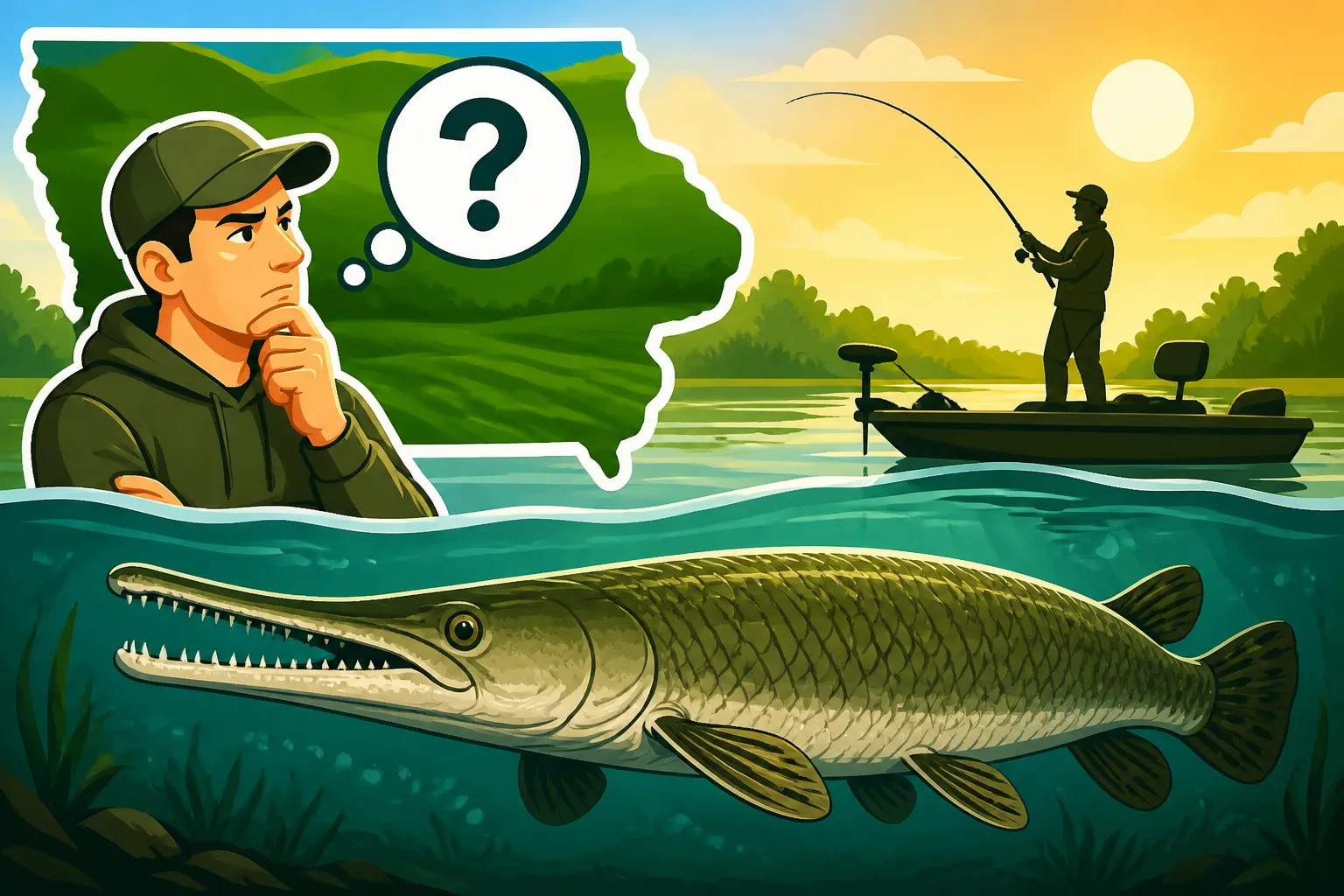
It's easy to get swept up in the excitement when you see pictures or videos of those truly colossal alligator gar, looking like something straight out of the Jurassic period. Their sheer size and prehistoric appearance can make any angler dream of encountering such a magnificent creature. The natural question then arises: could these incredible fish be swimming in Iowa's rivers and lakes? This guide is here to untangle the facts from the fishing tales, giving you a clear picture of whether alligator gar lurk in our waters and what impressive gar species you can find here in the Hawkeye State.
The Alligator Gar: A True River Monster
Let's be honest, the alligator gar is a fish that captures the imagination like few others. These leviathans of the freshwater world can grow to astonishing lengths, sometimes exceeding ten feet and weighing hundreds of pounds. Imagine reeling in something that looks like a crocodile with fins – it's the kind of fishing story you'd tell for generations! Their long, powerful bodies, armored scales, and a mouth full of razor-sharp teeth give them an undeniably intimidating, yet fascinating, presence. They are apex predators, known for their ambush tactics, lurking in quiet waters before exploding into action to snatch unsuspecting prey.
This allure is exactly why many Iowa anglers, hearing snippets of discussion or seeing dramatic photos online, might wonder if these magnificent beasts roam our local waterways. The thought of encountering such a powerful, ancient fish on a tranquil Iowa morning is a thrilling one. It speaks to that deep-seated desire to connect with nature's more untamed side, to face a truly challenging adversary. It's a valid curiosity, especially given the diverse and often surprising fish species that do call Iowa home.
Are Alligator Gar Native to Iowa Waters?
To directly answer the burning question: no, alligator gar are not historically native to Iowa waters, nor are there established populations here today. While Iowa is blessed with a fantastic array of fish species and incredible fishing opportunities, the alligator gar's natural range lies significantly further south.
Their primary habitat stretches across the southern United States, particularly in the Gulf Coast states, extending into Mexico. Think large, slow-moving rivers, bayous, and brackish waters where temperatures remain warm year-round and their immense size can be accommodated. Iowa's climate and river systems, while robust, simply don't provide the consistent warm water and specific habitat characteristics that alligator gar need to thrive and reproduce naturally. Our winters are too harsh, and our rivers, while major, are generally not considered the core range for these warm-water giants.
It's entirely possible that on very rare occasions, an individual alligator gar might have been introduced by human hands – perhaps an exotic pet owner releasing a fish that grew too large for their aquarium. However, these are isolated incidents and do not represent a self-sustaining population. There's no scientific evidence or historical data to suggest alligator gar ever established themselves naturally in Iowa. So, while the idea is certainly exciting, you won't be encountering a native alligator gar on your next fishing trip to the Mississippi or Des Moines River.
Why the Confusion? Other Gar Species in Iowa
The excitement around alligator gar often leads to a common misconception, and that's usually because Iowa does have its own fascinating family of gar species! These native fish, while not reaching the monumental size of their alligator cousin, are equally ancient, predatory, and offer a thrilling challenge to anglers. It's easy to see how someone unfamiliar with the specific differences might spot a large gar and wonder if it's the famous alligator gar.
In Iowa, you're most likely to encounter three distinct species of gar: the Longnose Gar, the Shortnose Gar, and the Spotted Gar. Each has its own unique characteristics, but all share that distinctive, elongated, tooth-filled snout and armored body that makes them look like living fossils. Understanding these differences is key to proper identification and appreciating the gar that truly belong in our state.
Distinguishing Features: Alligator Gar vs. Iowa's Gar
The biggest giveaway when trying to tell an alligator gar from Iowa's native gar species is often sheer size, but beyond that, specific anatomical features are critical.
Let's break down the key differences:
| Feature | Alligator Gar | Longnose Gar | Shortnose Gar | Spotted Gar |
|---|---|---|---|---|
| Max Size | Up to 10+ feet, 300+ lbs | Up to 6 feet, 50 lbs (typically smaller in Iowa) | Up to 3 feet, 10 lbs | Up to 4 feet, 15 lbs |
| Snout | Broad, alligator-like, relatively short and wide | Very long and slender, tube-like | Shorter and wider than longnose, distinct | Moderate length, typically with spots |
| Teeth (Upper) | Double row of large, prominent teeth | Single row of needle-sharp teeth | Single row of needle-sharp teeth | Single row of needle-sharp teeth |
| Body Markings | Typically mottled brown/green, few distinct spots | Usually olive to brown, sometimes faint spots | Mostly olive to brown, minimal spots | Distinct round spots on body and fins |
| Habitat | Warm, slow rivers, bayous (Southern US) | Rivers, backwaters, sometimes lakes | Rivers, backwaters, slow-moving areas | Clear, vegetated backwaters and shallow lakes |
One of the most defining characteristics of the alligator gar is its exceptionally wide, alligator-like snout and, crucially, a distinctive double row of large, sharp teeth on its upper jaw. None of Iowa's native gar possess this double row of teeth or such a broad, flat snout. Our gar species have a single row of needle-sharp teeth. So, if you manage to safely get a look at the mouth, that's a surefire way to tell them apart.
Habitat Preferences of Iowa's Gar Species
While alligator gar crave those warm, southern, sluggish waters, Iowa's gar species are well-adapted to our local environment. You'll find them in a variety of places, often quite different from where you'd expect to find a largemouth bass or a walleye.
- Longnose Gar: These graceful predators are perhaps the most common gar species in many parts of Iowa. They prefer clearer, slower-moving sections of rivers, large backwater areas, and even some of our bigger reservoirs. They're often found lurking near submerged vegetation, logs, or other structure, waiting to ambush smaller fish. You might spot their slender forms cruising just beneath the surface in places like the Mississippi River Pool 9 Fishing or the lower stretches of the Des Moines River.
- Shortnose Gar: As their name suggests, these have a noticeably shorter and broader snout than their longnose cousins. They tend to favor slightly more turbid or muddy waters, often found in the calmer sections of rivers and larger creeks. You'll encounter them in similar areas to the longnose, but they might be more prevalent in areas with slower current and more silty bottoms, like backwater sloughs along the Mississippi or the quieter parts of Saylorville Reservoir Catfish Spots.
- Spotted Gar: The spotted gar is arguably the most visually distinct of Iowa's native gar, easily identified by the prominent dark spots covering its body and fins. They generally prefer clearer, shallow waters with abundant aquatic vegetation. Think marshy backwaters, slow-moving channels, and even some of the clearer lake coves. If you're exploring the vegetated areas of large reservoirs or slow tributaries, you might stumble upon a spotted gar. You can learn more about specific fish species in our comprehensive Iowa Fish Species Guide.
These gar species are perfectly at home in Iowa's diverse aquatic ecosystems, playing an important role as predators and contributing to the unique character of our fishing landscape.
Encountering Other Gar in Iowa: What to Expect
So, while the colossal alligator gar isn't on the list for Iowa, don't write off gar fishing entirely! Our native gar species are incredible game fish in their own right. They are fierce fighters, can grow to respectable sizes, and offer a truly unique angling experience. Plus, they look super cool.
Techniques and Tackle for Iowa Gar
Fishing for gar in Iowa requires a specific approach due to their hard, bony mouths and needle-sharp teeth. Regular hooks often have trouble penetrating, or the gar simply cut the line.
- Rods and Reels: You'll want sturdy gear. A medium-heavy to heavy action spinning or baitcasting rod, about 6.5 to 7.5 feet long, paired with a reel spooled with strong line (20-50 lb braid or monofilament) is a good starting point. You don't want to be undergunned when one of these prehistoric fish takes your bait. For more general advice, check out our Fishing Rod and Reel Guide for Iowa Anglers.
- Leaders: This is crucial. Gar teeth will slice through regular monofilament or fluorocarbon like butter. You must use a steel leader, heavy fluorocarbon (80+ lb), or a specialized gar leader made from braided wire. You can often find a good selection of these heavy-duty leaders on online marketplaces like Amazon, especially if your local bait shop has a limited stock.
- Baits: Gar are primarily piscivores (fish eaters). Live bait such as shiners, sunfish, or chubs often works best, drifted under a bobber or fished on the bottom. Cut bait (strips of oily fish like shad) can also be effective. Some anglers even have success with large, flashy lures like spoons or crankbaits, or even specialized rope lures that entangle their teeth. Our Iowa Fishing Techniques Guide delves into more general strategies that can be adapted.
- Techniques:
- Float Fishing: A popular method involves suspending a live or cut bait under a large bobber. Allow the gar to take the bait and swim with it for a good amount of time (often 30 seconds to a minute) before setting the hook. This gives them time to swallow the bait past their bony snout.
- Still Fishing/Bottom Fishing: Similar to catfish fishing, rigging a cut bait on the bottom with a heavy sinker can also be effective in slower currents. Be sure to use a fish-finder rig with a strong leader.
- Bowfishing: While not traditional rod-and-reel fishing, bowfishing is a popular and effective method for targeting gar in Iowa, especially in shallower waters. Always check Iowa Fishing Regulations Explained for rules specific to bowfishing before you head out.
- For heavier-duty gear that might cross over, you might find some useful tips in our Catfish Gear Guide for Iowa Rivers.
Identifying Your Catch and Handling Gar
When you do hook into an Iowa gar, be prepared for an exciting fight! They are incredibly strong and will put up quite a struggle. Once you get one to the boat or bank, careful handling is paramount.
- Safety First: Their teeth are sharp, and their bodies are covered in hard, abrasive scales. Use long-nosed pliers to remove hooks. A landing net with a rubberized mesh can help protect the fish and your hands, or you can use a sturdy fish gripper tool. Many anglers even wear tough gloves when handling gar.
- Identification: Before you release or keep a gar, try to identify which species you've caught using the table above or a local fish identification guide. Knowing your Iowa Fishing Daily Bag Limits Guide for gar species is important, although limits are often quite liberal for gar, encouraging harvest where populations are abundant.
- Are Gar Good to Eat? This is a question many people ask. The answer is yes, gar meat can be quite tasty! It's firm, white, and often compared to chicken or even lobster in flavor. The trick is that cleaning them can be a challenge due to their tough, armor-like scales. Many anglers use heavy-duty shears or a hatchet to cut through the hide, then fillet the meat out. You can find many online tutorials on how to clean gar. Dive into more details by checking out Are Gar Good to Eat?.
Notable Iowa Gar Fishing Spots
While gar can be found in many Iowa waterways, some areas are known hotspots for these impressive fish.
- The Mississippi River: This mighty river, especially its backwaters, sloughs, and slower channels, is prime gar territory. Pools like those mentioned in Fishing the Mississippi River in Iowa offer abundant opportunities for all three native gar species. Look for them in calmer areas, particularly around wing dams and submerged timber.
- Large Reservoirs: Lakes like Fishing Rathbun Lake in Iowa, Fishing Saylorville Reservoir in Iowa, and Coralville Reservoir all hold good populations of gar. Focus on large coves, shallow flats with vegetation, and areas where feeder creeks enter the main body of water.
- Major River Systems: Beyond the Mississippi, rivers such as the Des Moines River, Cedar River, and Iowa River also have strong gar populations, especially in their lower, slower-moving sections. Look for areas with slower currents, deep pools, and plenty of cover.
- Smaller Lakes and Ponds (with Caution): While less common, some larger natural lakes and even large farm ponds connected to river systems can hold gar. Always ensure you have permission to fish on private property by reviewing License Rules for Fishing on Private Property.
So, while the allure of the massive alligator gar might lead you to Iowa, rest assured that our native longnose, shortnose, and spotted gar offer a fantastic, challenging, and truly unique angling experience. They're a testament to the rich biodiversity of Iowa's waters, and certainly worth targeting!
Disclaimer
This article is for general informational purposes only and does not constitute professional advice. Laws, prices and regulations vary by location and change over time. Consult a qualified professional for guidance on your specific situation.