Asian Carp Identification and Rules
It's a frustrating reality for many of us who love spending time on Iowa's beautiful waters: the increasing presence of invasive species. Among the most concerning are the various types of Asian carp, which don't just compete with our beloved native fish but can also pose a genuine hazard to boaters. This guide is here to break down everything you need to know about identifying these troublesome fish and understanding the specific rules and guidelines Iowa has in place to manage them, so you can be part of the solution.
The Menace of Asian Carp in Iowa Waters
Let's face it, nobody wants to see our local fish populations struggle, or worse, have their peaceful day on the water interrupted by a jumping fish to the face. The story of Asian carp in Iowa is one of unintended consequences, a classic case of an introduced species throwing a wrench into a delicate ecosystem. They weren't meant to be here, but now that they are, understanding their impact and how we can help is crucial for every Iowa angler.
Why Asian Carp are a Problem
It's not just that these fish are big; it's what they do to the aquatic environment that makes them such a menace. Asian carp, particularly Bighead and Silver Carp, are voracious filter feeders. Imagine hundreds, even thousands, of fish constantly sucking up the plankton – the very base of the food web – that our native species like crappie, bluegill, and even juvenile walleye depend on for survival. This direct competition for food means less for everything else, leading to stunted growth, reduced reproduction, and ultimately, a decline in desirable fish populations. They essentially vacuum up the groceries before our native fish can even get a look in.
Then there's the infamous "jumping carp" phenomenon, almost exclusively associated with Silver Carp. These fish have an astonishing habit of leaping out of the water, sometimes several feet high, when startled by boat noise. It might sound comical until you realize these are solid, often large fish, traveling at high speeds. They can cause serious injuries to boaters, kayakers, and even waterskiiers, leading to broken noses, black eyes, and even concussions. It's not an exaggeration to say it's a legitimate safety concern on some of our river systems, especially the larger ones like the Mississippi. Beyond the physical danger, their sheer numbers and disruptive behavior can make fishing and boating less enjoyable for everyone.
A Quick Overview of the Species
When we talk about "Asian carp," we're actually referring to a group of different species, each with its own specific characteristics and impacts. The four main types that concern us in Iowa are the Bighead Carp, Silver Carp, Grass Carp, and Black Carp. These fish were originally imported from Asia in the 1970s to help control aquatic weeds and plankton in aquaculture facilities and wastewater treatment ponds in the southern United States. Unfortunately, they escaped into the Mississippi River system during floods and have been steadily moving northward, colonizing new waterways ever since, including many of Iowa's major rivers and some connected lakes. They're incredibly resilient, reproduce quickly, and adapt well to various environments, making their containment and eradication a monumental challenge.
Identifying the Invasive Four: Key Distinguishing Features
Knowing your fish is always important, but when it comes to invasive species, accurate identification is absolutely critical. You don't want to accidentally mistake a native sucker for an Asian carp, nor do you want to release an invasive species back into the water thinking it's something else. While they share some general "carp" characteristics, each of the four main Asian carp species has distinct features that set them apart. A good field guide or even a quick search on Amazon for an Iowa fish identification chart can be a great tool to keep handy in your tackle box or boat.
Bighead Carp Identification
The Bighead Carp (Hypophthalmichthys nobilis) gets its name for a very obvious reason: it has a disproportionately large head compared to its body. This head can sometimes make up a third of its entire length! Another key identifying feature is its upturned mouth, meaning its lower jaw protrudes beyond the upper jaw. If you look closely, you'll also notice its eyes are set very low on its head, below the midline of its body. The body itself is generally dark gray or olive on the back, fading to silvery sides with irregular dark blotches or spots, which can be a bit variable. They have small, fine scales, which might be hard to see without closer inspection.
One common mix-up can be with the native Bigmouth Buffalo, which also has a large head. However, the Bigmouth Buffalo's mouth points downwards, and its eyes are positioned higher on its head. The Bighead Carp's distinct upturned mouth and low-set eyes are your best indicators. These fish can grow quite large, often reaching 60 pounds or more, and are primarily filter feeders, consuming zooplankton and phytoplankton.
Silver Carp Identification
If you've heard stories of jumping fish on the Mississippi or other Iowa rivers, chances are they were Silver Carp (Hypophthalmichthys molitrix). These fish are perhaps the most notorious of the bunch due to their spectacular leaping behavior. Identification is fairly straightforward once you know what to look for. Silver Carp have a very deep, compressed body and are, as their name suggests, predominantly silvery in color. They have very small scales that give them a smooth, almost scaleless appearance. Like the Bighead Carp, their eyes are set very low on their head, well below the midline of their body.
However, the most distinctive feature, besides their jumping, is a sharply keeled belly that extends from their anal fin all the way to their throat. This keel is a hard, sharp ridge along their underside. Native species like gizzard shad have a keel, but it doesn't extend as far forward. Silver Carp are plankton eaters, primarily feeding on phytoplankton, making them direct competitors with young native game fish and baitfish. They can also grow quite large, commonly reaching 20-30 pounds, though larger specimens are certainly caught.
Grass Carp Identification
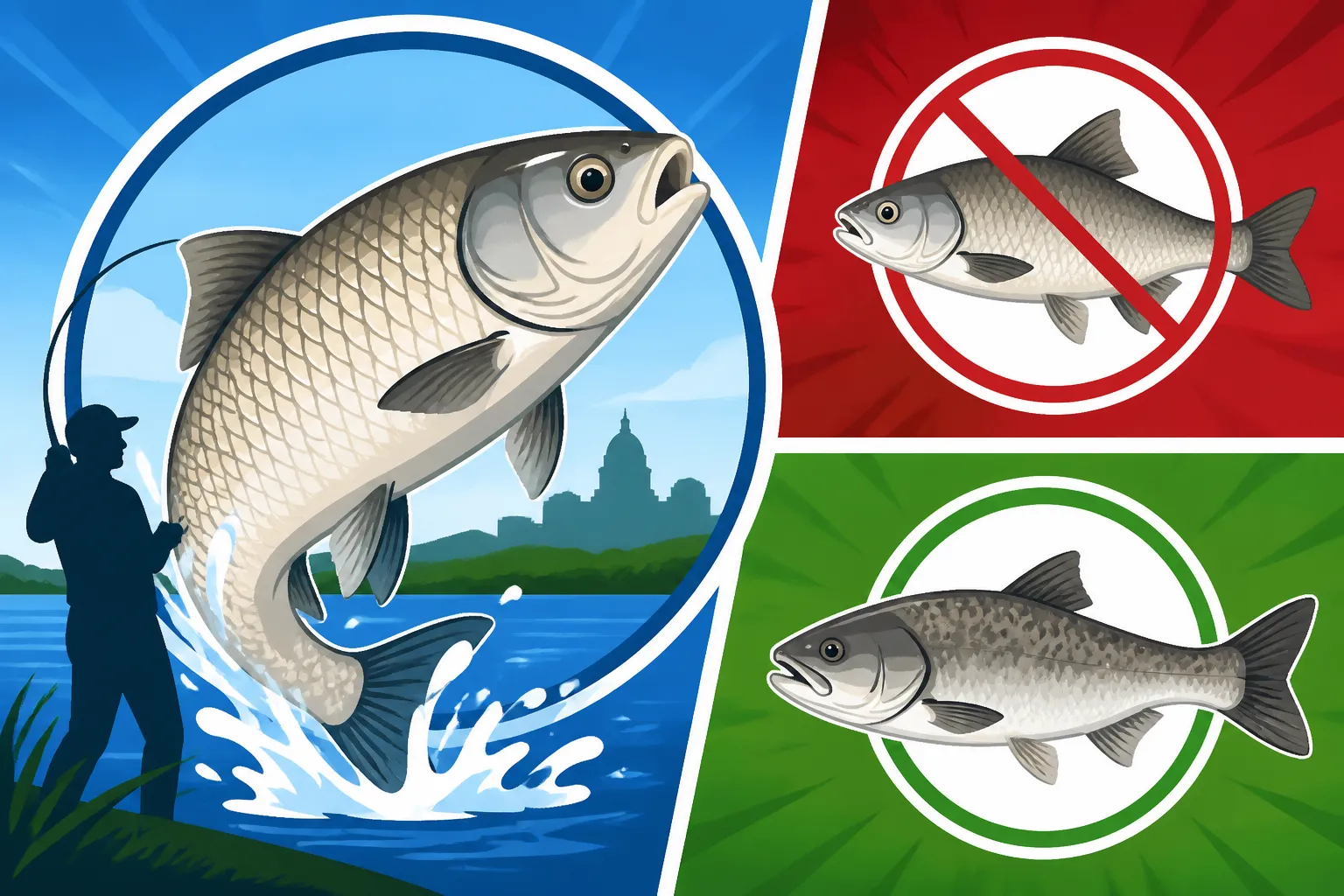
The Grass Carp (Ctenopharyngodon idella) presents a slightly different challenge. While still invasive, their primary diet of aquatic vegetation sets them apart. They look a bit more like a torpedo, with a long, slender body shape. Their coloration is usually dark olive to brownish-gold on the back, fading to silvery-white on the belly. A key identification feature is their large, distinct scales, which often have a dark outline, giving them a cross-hatched appearance. Unlike Bighead and Silver Carp, their mouth is located at the very tip of their head (terminal mouth), and their eyes are positioned normally, not low-set. They also have a relatively short dorsal fin.
One way to differentiate them from common carp is the absence of barbels (whiskers) around their mouth; Grass Carp do not have these. They also typically have a shorter dorsal fin than common carp. Grass Carp can grow impressively large, often exceeding 40-50 pounds. Their impact is primarily on aquatic plant life, which can destroy critical habitat for many native fish, insects, and waterfowl. However, it's worth noting that some sterile (triploid) Grass Carp are sometimes stocked under strict permits to control vegetation in private ponds, but the wild, fertile populations are still a major concern.
Black Carp Identification
The Black Carp (Mylopharyngodon piceus) is perhaps the most recent and potentially devastating of the Asian carp species to become established in some parts of the Mississippi River basin. Their identification is relatively easy due to their distinct appearance. As their name implies, they have a very dark, almost black or very dark brown body, with large, pronounced scales that are often outlined in an even darker shade. They are robust, powerfully built fish with a torpedo-shaped body, and their mouth is terminal (at the front of the head) with no barbels. Their eyes are normally set.
What truly makes Black Carp a serious threat, however, are their specialized pharyngeal teeth – crushing teeth in their throat – which they use to consume mussels and snails. This diet directly threatens native mollusk populations, many of which are already endangered. Their presence is a huge concern for biodiversity. They can grow very large, often over 70 pounds, and their massive size coupled with their destructive feeding habits make them an ecological nightmare for our freshwater mussel beds. If you encounter a large, dark, scale-laden carp-like fish with these features, it's highly likely a Black Carp.
| Species | Key Identification Features | Primary Diet | Typical Adult Size | Major Ecological Impact |
|---|---|---|---|---|
| Bighead Carp | Large head, upturned mouth, eyes below midline, irregular dark blotches | Zooplankton, Phytoplankton | 20-60+ lbs | Competes with native fish for food |
| Silver Carp | Silvery body, small scales, sharply keeled belly, eyes below midline, jumps | Phytoplankton | 15-40 lbs | Competes for food, physical hazard to boaters |
| Grass Carp | Torpedo shape, large scales with dark outlines, terminal mouth, no barbels | Aquatic Vegetation | 20-50+ lbs | Destroys native aquatic plant habitat |
| Black Carp | Dark/black body, large dark scales, robust build, pharyngeal teeth | Mussels, Snails | 40-100+ lbs | Devastates native mollusk populations |
Iowa's Rules and Regulations for Asian Carp
Understanding the regulations around fishing in Iowa is always important, and it's especially critical when dealing with invasive species like Asian carp. The state's approach is designed to encourage their removal and prevent their spread, rather than protecting them like native game fish. You can find comprehensive details in the official Iowa Fishing Regulations Explained booklet, which is updated annually.
Catch and Possession Rules
When it comes to Asian carp, Iowa's stance is pretty clear: they are considered undesirable, and anglers are strongly encouraged to remove them from the water. This means there are generally no daily bag limits or size restrictions on Bighead, Silver, or Grass Carp. Black Carp are also treated similarly. If you catch one, you're not just allowed to keep it; you're doing a service to Iowa's waterways by removing it. However, it's absolutely crucial that if you do catch an Asian carp, you do not release it alive back into any body of water. Releasing them, even into a different lake or pond, can contribute to their spread and cause further ecological damage. This rule is non-negotiable for all invasive species. For contrast, our cherished native species usually have strict Iowa Fishing Daily Bag Limits Guide to protect their populations.
Methods of Taking and Prohibited Activities
Anglers have several legal methods for taking Asian carp, reflecting the state's desire to control their populations. Traditional hook-and-line fishing is, of course, permitted, although many anglers find these filter feeders challenging to catch consistently with conventional baits. This is why other methods are often more effective.
Bowfishing is a very popular and highly effective method for targeting Asian carp, especially the jumping Silver Carp and the larger Bighead and Grass Carp. It's a thrilling way to contribute to carp control. Many anglers invest in specialized bowfishing gear, which you can find a good selection of on Amazon, including bows, reels, and specialized arrows.
Commercial fishing operations using nets are also actively engaged in removing Asian carp from major rivers under specific permits, contributing significantly to control efforts. For recreational anglers, the use of certain types of nets might require a special permit, so always check the latest regulations if you're considering anything beyond hook and line or bowfishing. Snagging fish for sport is generally prohibited in Iowa, though it may be allowed for rough fish like carp in specific seasons and locations, again, always consult current regulations. The key takeaway is that methods that lead to the effective removal of the fish from the ecosystem are generally favored.
The Importance of Not Spreading Them
Preventing the spread of Asian carp is just as important as removing them. These fish, or their eggs and larvae, can easily hitch a ride on boats, trailers, and fishing gear. This is why the "Clean, Drain, Dry" principle is so vital for every angler. Always make sure to thoroughly clean your boat, trailer, and all fishing equipment after leaving any body of water, especially if you've been in areas known for Asian carp.
Drain all water from your livewells, bilges, and transom before leaving the boat ramp. Livewells are particularly problematic if they contain water with larvae or small fish that can be transferred. Drying your gear completely in the sun for several days can kill any lingering hitchhikers. This isn't just about Asian carp; it's a best practice for preventing the spread of all aquatic invasive species. Remember, even if you're just shore fishing, cleaning your boots and waders is essential. For those with boats, understanding Iowa Boat Registration Requirements often goes hand-in-hand with these important prevention practices.
How Anglers Can Help Control Asian Carp Populations
As anglers, we have a vital role to play in managing invasive species. It's not just up to state agencies; our actions on the water can make a real difference. By understanding the threats, knowing the rules, and taking direct action, we become frontline conservationists.
Bowfishing and Commercial Fishing Efforts
As mentioned, bowfishing is an incredibly effective tool for Asian carp management in Iowa. It's a growing sport, and dedicated bowfishers routinely remove thousands of pounds of these fish from our waterways. If you're looking for an exciting and impactful way to contribute, bowfishing for carp might be for you. There are many online resources and local groups that can help new bowfishers get started. Specialized gear like bowfishing reels and arrows are readily available.
Beyond recreational bowfishing, commercial fishing operations, often funded through state or federal grants, employ large-scale netting operations specifically to reduce Asian carp numbers in key river systems, particularly on the Fishing the Mississippi River in Iowa. These efforts involve significant time and resources but are crucial for attempting to stem the tide of these prolific spawners. Supporting these efforts, even passively, by advocating for their funding and understanding their necessity, is part of being an informed angler. These techniques are often covered in broader Iowa Fishing Techniques Guide resources as well.
Responsible Disposal and Reporting Sightings
What do you do with a caught Asian carp? The most important thing is not to put it back into the water, dead or alive. For smaller numbers, you can take them home to eat (yes, they are edible and quite good when prepared properly, especially the firmer white meat from the fillets) or use them as fertilizer in your garden. For larger hauls, especially from bowfishing, many communities have designated drop-off points or events where carp can be disposed of or collected for composting/rendering. Always check with local authorities or your fishing community for the best disposal methods in your area. You can also find heavy-duty coolers on Amazon to transport your catch safely and hygienically.
Perhaps even more important than disposal is reporting new sightings. If you catch an Asian carp in a water body where they are not commonly known to exist, or if you suspect you've identified a Black Carp (which are less widespread but highly destructive), it's crucial to report it. Contact the Iowa Department of Natural Resources (DNR) with details including the location, date, and ideally, a photograph. Early detection in new areas can be vital for preventing full establishment. The process is similar to how you would report a fishing violation in Iowa, ensuring the right authorities receive the information quickly.
Practical Tips for Anglers Targeting Other Species
Even if you're not actively targeting Asian carp, you might encounter them, especially while fishing in areas like the Best Fishing Spots in Iowa or Fishing the Iowa Great Lakes if they've managed to infiltrate. If you accidentally hook a Bighead or Silver Carp while trying for walleye or catfish, handle it responsibly. Do not release it alive. If you're on a multi-species trip and aren't equipped to take it home, consider humanely dispatching it and disposing of it properly on land, away from the water's edge, or placing it in a public trash receptacle if available.
Another tip is to be mindful of your bait. While Asian carp are filter feeders, juveniles can sometimes be caught on small baits. More importantly, using live baitfish caught from one body of water and transferring them to another is a huge no-no. You could inadvertently transfer Asian carp eggs or larvae, or other invasive species, hiding within your bait bucket. Always use baitfish from a reputable dealer or catch your bait from the same water body you intend to fish. Understanding the broader context of Invasive Fish Species in Iowa Waters helps reinforce why these practices are so critical.
Frequently Asked Questions About Asian Carp in Iowa
Anglers often have a lot of questions about Asian carp, given their unique challenges and impacts. Let's tackle some of the most common ones.
Are Asian Carp Dangerous to Boaters?
Yes, absolutely. This is not an urban legend. The Silver Carp, in particular, is notorious for its jumping behavior. When startled by boat motors, they can launch themselves several feet into the air. Imagine a 15 to 20-pound fish flying through the air at high speed and colliding with your head, chest, or face. Injuries ranging from minor cuts and bruises to broken bones, concussions, and even unconsciousness have been reported. It's a serious safety concern, especially on busy river stretches like parts of the Mississippi River, where boats are frequently passing. Always wear appropriate safety gear, like life jackets, and maintain situational awareness, particularly in areas known for high concentrations of Silver Carp. We have a dedicated article on this very topic: Are Asian Carp Dangerous to Boaters?.
Can You Eat Asian Carp?
Despite their reputation as invasive pests, Asian carp are surprisingly good to eat! This often surprises people, but in many parts of the world, they are a prized food fish. Their flesh is white, firm, and flaky, similar to cod or tilapia, with a mild flavor. The main challenge for many American anglers is that they can be quite bony, with numerous Y-bones that require careful filleting. However, there are many techniques for preparing them, from grinding the meat for patties or sausages to slow-cooking to soften the bones, or carefully filleting to remove them.
The perception that they are "trash fish" often prevents people from trying them, but if you're willing to put in a little effort, they can be a sustainable and delicious food source. Utilizing them for food is another excellent way to contribute to their removal from the ecosystem. You can find specialized fillet knives on Amazon that are designed to handle bonier fish, which might make the process easier.
What Happens If You Fish Without a License in Iowa (and catch carp)?
This is a really important question that highlights why proper licensing is always necessary, regardless of what you're targeting. Even though Asian carp are an invasive species you're encouraged to remove, you still need a valid Iowa Fishing License Guide to fish for them (or any other species) in Iowa waters. The state's licensing laws apply to all angling activity. If you are found fishing without a license, even if you only catch Asian carp, you could face fines and penalties. The specific fine amount for this violation varies, but it's never worth the risk. It's simply part of being a responsible angler in Iowa. This applies whether you're fishing from a boat or wondering Do You Need a License to Fish From Shore?. Always ensure your license is current before you cast a line!
Disclaimer
This article is for general informational purposes only and does not constitute professional advice. Laws, prices and regulations vary by location and change over time. Consult a qualified professional for guidance on your specific situation.