Walleye vs Sauger Differences
It's incredibly frustrating when you're out on the water, you reel in a beautiful fish, and then you're left scratching your head, wondering if it's a walleye or a sauger. These two popular Iowa game fish share so many similarities that even experienced anglers can get them mixed up, leading to potential confusion over regulations and even missed opportunities. This guide is here to clear up that confusion, diving deep into the key differences between walleye and sauger so you can confidently identify your catch and understand the nuances of fishing for each.
Unpacking the Physical Distinctions: Walleye vs. Sauger Appearance
When you pull a fish out of the water, the first thing you notice is its appearance. While walleye and sauger look remarkably similar at first glance, a closer inspection reveals several telling features that can help you distinguish between them. Knowing these subtle yet crucial details is key, especially given that Iowa has specific regulations for each species.
The Tell-Tale Dorsal Fin Spots
Perhaps the most consistent and easiest way to tell a walleye from a sauger is by looking at their dorsal fins. Both fish have two dorsal fins, but it's the spiny dorsal fin – the one closer to the head – that holds the most obvious clue.
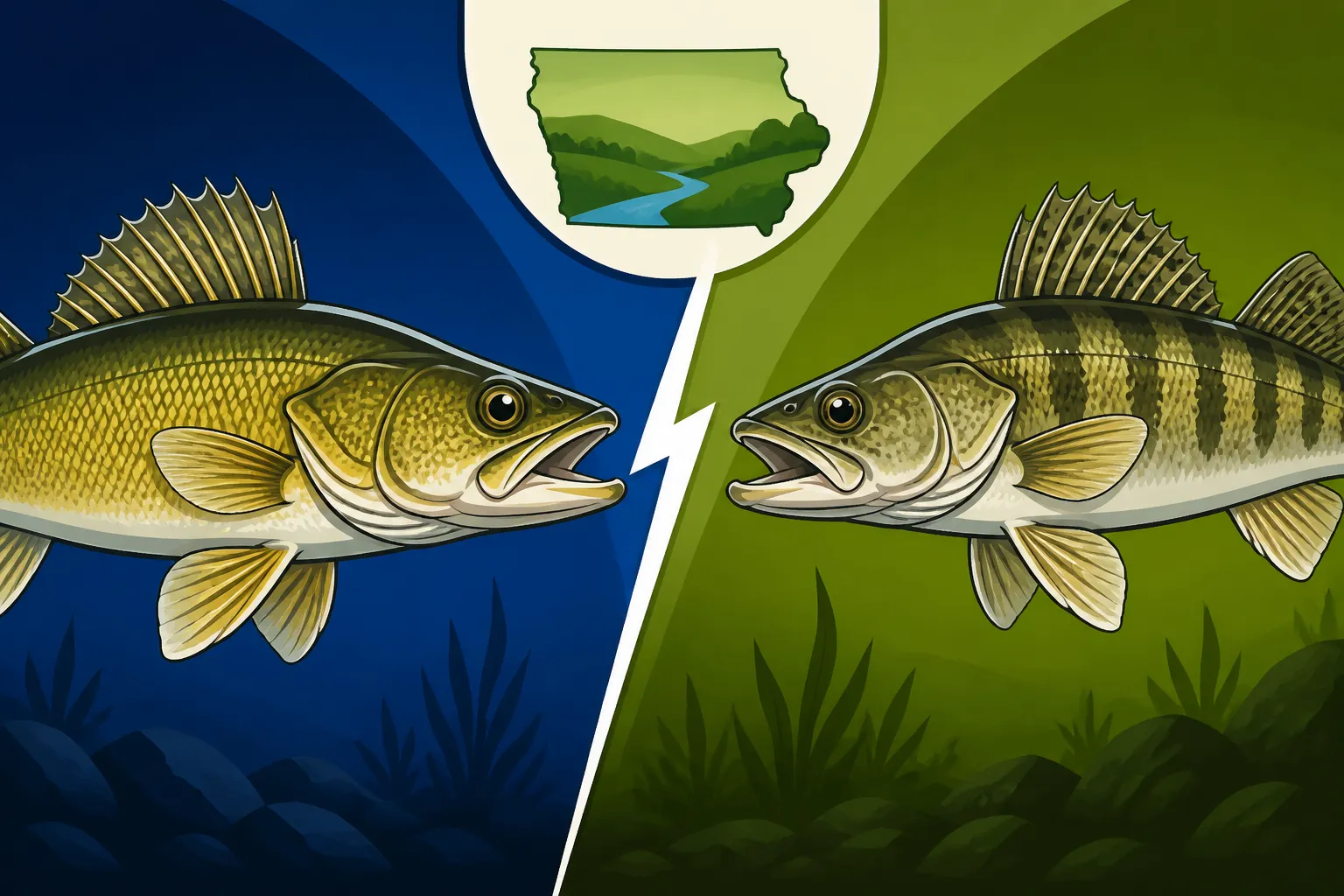
On a walleye, this spiny dorsal fin is usually quite uniform, featuring a distinct, opaque black blotch at the very rear base. It's like a little ink stain right where the fin meets the body. The rest of the fin might have some faint mottling or clear membranes, but that prominent black spot is a dead giveaway. Think of it as the walleye's signature birthmark. This characteristic is so reliable that it's often the first thing experienced anglers check when in doubt. If you're looking for Walleye Identification and Habitat in Iowa, this is one of the top tips you'll find.
Sauger, on the other hand, boast a spiny dorsal fin that is far more ornate and speckled. Instead of a single black blotch, you'll see several distinct rows of small, dark spots or streaks spread across the entire fin membrane. It's almost like a leopard print or fine stippling. These spots create a much more mottled, intricate pattern compared to the walleye's simple black spot. If you don't see that single, dark blotch, and instead see a series of small dots, you're almost certainly looking at a sauger. This feature is particularly helpful when trying to identify fish caught in swift river currents, where sauger often thrive.
Body Shape, Coloration, and Eye Shine
Beyond the dorsal fin, there are other general characteristics that, when taken together, can help solidify your identification. While not always as definitive as the dorsal fin, they contribute to the overall picture.
Walleye tend to have a slightly more streamlined, elongated body shape. Their overall coloration can vary widely depending on the water clarity and type of habitat they live in, but they generally range from olive green to golden brown on their backs, fading into a lighter, often yellowish-white belly. They might have several faint, dark vertical bars along their sides, but these are often quite subtle and can fade quickly once the fish is out of the water. Another notable feature is their eyes. Walleye are known for their large, cloudy, reflective eyes, which are adapted for low-light conditions. This "walleyed" look is where they get their name! You can often see a distinct, almost glowing quality to their eyes, especially when a light source hits them at night or in deeper water.
Sauger generally possess a more slender, cigar-shaped body compared to the walleye, though this can be subjective depending on the individual fish. Their coloration is typically more mottled and camouflaged, with irregular blotches or saddles of dark brown or black over a lighter, often brassy or gray-green background. This speckled pattern is designed to blend in with rocky or sandy river bottoms. The mottling often extends onto their caudal (tail) fin, which is another differentiating factor. Unlike walleye, sauger typically do not have the distinct white tip on the lower lobe of their caudal fin. While both fish have reflective eyes, the sauger's eyes tend to be less prominent or "walleyed" than their larger cousins, reflecting less light. Pay close attention to the tail fin; the lack of a white tip on a mottled fish is a strong indicator of a sauger.
Jawline and Cheek Scales
Sometimes, you need to go a bit deeper, especially when dealing with smaller specimens or if the dorsal fin isn't perfectly clear. The jawline and the presence (or absence) of scales on the cheeks can be another helpful, albeit more subtle, identifier.
For walleye, if you gently run your finger over their cheek area (the operculum), you'll typically find that it's mostly smooth or has very few scales, especially towards the bottom. Their upper jaw often extends back to align with the middle of their eye, but this isn't always a foolproof method as individual variations occur. The mouth of a walleye is large, filled with sharp, needle-like teeth, perfectly designed for grasping prey.
Sauger, in contrast, usually have noticeably rougher cheeks, as their operculum is fully scaled. If you feel scales all the way down to the bottom of their cheek plate, it's a strong sign it's a sauger. Their snout also tends to be slightly more pointed than a walleye's, and their mouth might appear a tad smaller. Like walleye, they have plenty of sharp teeth, so handle both species with care! When in doubt, a quick check of the cheek scales combined with the dorsal fin pattern can provide a very reliable identification.
Here's a quick comparison table to help you keep these features straight:
| Feature | Walleye | Sauger |
|---|---|---|
| Spiny Dorsal Fin | Single, prominent black blotch at rear base | Multiple rows of distinct dark spots/streaks |
| Body Coloration | Olive to golden-brown, subtle bars, lighter belly | Mottled, irregular dark blotches, brassy/gray-green |
| Caudal (Tail) Fin | Distinct white tip on lower lobe (usually) | No white tip, often mottled |
| Eye Shine | Very prominent, reflective ("walleyed") | Less prominent, less reflective |
| Cheek Scales | Mostly smooth or sparsely scaled | Fully scaled, feels rougher |
| Body Shape | More elongated, somewhat robust | More slender, cigar-shaped |
Habitat and Behavioral Tendencies: Where They Live and How They Act
Understanding where walleye and sauger prefer to live and how they behave in their environments is just as important as knowing their physical differences. Their habitat choices dictate where you're likely to find them and how you should approach fishing for them.
Preferred Water Types and Conditions
Walleye are incredibly adaptable fish, found in a wide variety of waters across Iowa. They thrive in large, open-water lakes, reservoirs, and major rivers. They generally prefer cooler, deeper water, especially during the warmer months, and are often associated with structural elements like rock piles, drop-offs, points, and submerged weed beds. Water clarity is also a factor; while they can tolerate some turbidity, they often favor slightly clearer waters that allow them to use their excellent low-light vision to their advantage. Their distribution often leans towards the larger, more expansive water bodies like the Iowa Great Lakes or the deeper sections of the Mississippi River. If you're out fishing in Fishing the Iowa Great Lakes, you're likely targeting walleye.
Sauger, on the other hand, are much more specialized in their habitat. They are predominantly river fish, strongly preferring flowing water systems, particularly those with turbid (cloudy) conditions. They are most commonly found in Iowa's major rivers, such as the Mississippi, Missouri, and Des Moines Rivers. Sauger aren't as keen on bright light as walleye, and the murkier water provides excellent camouflage and comfort for them. They typically inhabit deeper channels, current seams, eddies, and below wing dams or other structures that break the current. Their preference for these specific riverine environments is a key ecological difference. Knowing this can immediately narrow down your identification once you know what river system you are fishing. For more insights, check out Sauger Identification on the Mississippi River.
River vs. Lake Preferences
This is where the distinction becomes really useful for anglers. While there's always some overlap, the general rule of thumb is that if you're fishing a large, clear-water lake or reservoir, you're primarily targeting walleye. If you're fishing a major river system, especially one with a strong current and somewhat stained water, you're more likely to encounter sauger, though walleye are certainly present in rivers too!
In Iowa's lakes and reservoirs like Clear Lake or Rathbun Lake, walleye will dominate the "walleye family" population. They'll be found patrolling extensive flats, navigating contours, and often suspending over deeper water during certain times of the day or year. They are adept at chasing baitfish in these open-water environments. If you're looking for Walleye Fishing in Iowa in lake settings, you'll be focusing on these types of structures and depths.
In contrast, sauger truly shine in the dynamic environment of Iowa's rivers. They are masters of using current to their advantage, often tucking themselves behind current breaks, scouring deep holes, or positioning themselves at the bottom of wing dams to ambush prey. Their mottled coloration is perfectly adapted for blending into a rocky, sand, or gravel bottom in a river setting. While walleye also inhabit rivers, they sometimes prefer slightly less intense current or larger pools compared to sauger, which seem to thrive right in the thick of it. This knowledge is crucial when applying Walleye Fishing Techniques for Iowa Rivers versus river sauger techniques.
Schooling Behavior and Distribution
Both walleye and sauger are schooling fish, meaning they tend to group together. However, their schooling behavior can differ slightly, influenced by their preferred habitats and feeding strategies.
Walleye often form larger, more loosely associated schools, particularly in open water. They might spread out over a wide area, especially when actively foraging for baitfish. When you find one walleye in a lake, there are often more nearby, though they might not be tightly packed. Their movements can be more nomadic, covering significant distances in search of food or temperature preferences. When targeting walleye in a lake or reservoir, using electronics to find these dispersed schools or individual fish along structure is often key.
Sauger tend to form tighter, more concentrated schools, especially in river systems. Because they often relate to specific current breaks or deep holes, you might find a significant number of sauger congregated in a relatively small area. Once you locate a sauger hotspot, you can often catch multiple fish from the same spot, sometimes one right after another. This tighter schooling behavior makes them a favorite target for river anglers who can pinpoint these specific "holding" areas. They often stick close to the bottom, hugging structure to avoid being swept away by strong currents and to ambush unsuspecting prey.
Fishing Techniques and Tackle Considerations
Given their different habitats and behaviors, it stands to reason that the most effective ways to catch walleye and sauger will also vary. While there's overlap, tailoring your approach can significantly improve your success.
Locating Walleye vs. Sauger
Finding walleye often involves covering water, especially in larger lakes and reservoirs. Anglers might troll crankbaits or spinner rigs over expansive flats, along breaklines, or around submerged points. Using sonar to identify schools of baitfish or individual walleye holding near structure is paramount. Walleye can be found anywhere from shallow weed edges in spring to deep main lake basins in summer. During specific periods, like the spring spawn, they might move into shallower rocky areas or tributary mouths. Understanding How Deep to Fish for Walleye in Spring can be a game-changer. Shore anglers often target walleye during low-light periods from piers or points with access to deeper water.
Locating sauger, particularly in rivers, is much more about finding specific current-related structure. Think wing dams, rip-rap banks, deep scour holes, bridge pilings, and the downstream side of islands. Sauger will often be found right in the current seam or just out of the main flow, conserving energy while waiting for food to drift by. They are bottom-oriented fish, so you'll rarely find them suspending high in the water column. Drifting with the current using bottom-bouncing rigs or vertical jigging directly over these structures are popular and effective methods for sauger. Many anglers use heavy jigs or three-way rigs to keep their bait close to the river bottom in the strong flow.
Best Baits and Lures
Both species are predatory and will strike a variety of baits and lures, but certain presentations are more effective for one over the other.
For walleye, live bait such as leeches, nightcrawlers (often on a Best Live Bait for Iowa Walleye harness), or minnows are incredibly effective, especially when trolled or drifted slowly. Artificial lures like crankbaits, jerkbaits, and swimbaits are also popular, particularly when fish are aggressive. Jigs tipped with soft plastics or live bait are versatile and can be used in many situations. The choice of lure often depends on the water temperature, depth, and the fish's mood. Many anglers find specific crankbait colors or jig combinations on Amazon for their particular lake conditions.
Sauger, due to their riverine, bottom-dwelling nature, are often best caught on presentations that stay close to the bottom and can withstand current. Heavy jigs tipped with minnows or soft plastics (like a paddle-tail grub) are perennial favorites. Three-way rigs with a minnow or a brightly colored fly are also very productive for drifting along the bottom. Blade baits, spoons, and tight-wobbling crankbaits that can be cast and retrieved or trolled close to the bottom also work. The key is often getting the bait down quickly and keeping it in the strike zone in the current. Strong current and rocky bottoms can lead to lost tackle, so having a good supply of jigs and weights from Amazon is a wise move for river sauger anglers.
Time of Day and Year Considerations
Both walleye and sauger are known for their low-light feeding habits, often being most active at dawn, dusk, and even after dark. Their large, reflective eyes give them a significant advantage over prey fish in these conditions.
Walleye fishing can be excellent during these low-light periods, and also on overcast days. During bright sunshine, they often retreat to deeper, darker water or seek shade under structure. The spring and fall are generally considered prime walleye seasons, as they are more active and accessible in shallower water. However, ice fishing for walleye can be incredibly rewarding in the winter months. Knowing Walleye Season and Size Limits is always important before heading out.
Sauger are also very active during low light, but their preference for turbid water means they can often be caught throughout the day, even under bright sun, as long as the water is murky enough to diffuse the light. Winter, particularly late fall through early spring, is often considered the best time to target sauger in Iowa's rivers. They school up in deeper holes and channels, making them more concentrated and easier to locate. Ice fishing the backwaters of the Mississippi River for sauger can be phenomenal.
Culinary Differences and Management
Once you've successfully identified and caught your fish, you might be wondering about their table fare. Both walleye and sauger are highly prized for their taste, but there are subtle differences, and their management often reflects their conservation status.
Taste and Texture of the Fillets
Iowa anglers cherish both walleye and sauger for their delicate, flaky white meat, which is why they are so highly sought after. However, there are nuances in their culinary profiles that some connoisseurs can detect.
Walleye are renowned for their exceptionally mild, sweet flavor and firm, yet flaky, white fillets. Many consider them among the best-tasting freshwater fish available. Their diet, often consisting of smaller baitfish in cleaner lake environments, contributes to their clean taste. The fillets are typically thick and boneless, making them a joy to prepare, whether fried, baked, or broiled. Because they can grow to larger sizes, walleye often yield substantial fillets, perfect for a family meal.
Sauger also offer excellent table fare, with a flavor profile that is very similar to walleye—mild, sweet, and flaky. However, some anglers describe sauger as having a slightly "nuttier" or richer flavor, perhaps due to their riverine diet and environment. Their fillets tend to be thinner and smaller than those of a large walleye, reflecting their generally smaller average size. But don't let the size fool you; a plate of freshly caught sauger fillets is a true delicacy. Both fish are fantastic, and you won't be disappointed with either on your dinner plate!
Size Limits, Bag Limits, and Regulations
This is perhaps the most critical section for anglers, as misidentification can lead to legal issues. Iowa has distinct regulations for walleye and sauger, including different size and bag limits, which can also vary by water body. It's not uncommon to have a more restrictive minimum size limit for walleye than for sauger, or different daily possession limits.
For example, a lake might have a 15-inch minimum size limit for walleye, but sauger caught in a river might have a shorter minimum size or no minimum at all. Conversely, the daily bag limit for walleye might be more restrictive than for sauger, or there might be a combined bag limit with specific restrictions on how many of each species you can keep. These regulations are put in place by the Iowa Department of Natural Resources (DNR) to manage fish populations and ensure sustainable fishing for both species. Always check the current Iowa Fishing Regulations Explained booklet or the Iowa DNR website before you head out. This information changes, and being caught unaware of the specific rules for the water you're fishing can result in fines and other penalties. A portable, waterproof rulebook that you can keep in your tackle bag, available on Amazon, can be a lifesaver.
Conservation Efforts and Management
Both walleye and sauger populations are actively managed in Iowa through a combination of stocking programs, habitat protection, and fishing regulations.
Walleye are heavily managed through extensive stocking programs in many Iowa lakes and reservoirs. The DNR stocks millions of walleye fry and fingerlings annually to supplement natural reproduction and maintain healthy populations for recreational fishing. Habitat improvement projects, such as creating artificial reefs or protecting spawning areas, also play a crucial role. The Iowa Fishing License Guide fees often contribute directly to these conservation efforts, ensuring future generations can enjoy these prized fish.
Sauger management, while also relying on regulations, focuses heavily on protecting riverine habitat. Given their strong preference for flowing water, ensuring healthy river ecosystems, managing water levels, and controlling pollution are vital. While sauger are also stocked, their management often involves a greater emphasis on natural reproduction and habitat preservation in the state's major river systems. Understanding these efforts can help anglers appreciate the importance of adhering to regulations and practicing responsible catch-and-release, especially for larger breeding fish.
Why It Matters: Legal and Conservation Aspects
Beyond just satisfying your curiosity, knowing the difference between a walleye and a sauger has real-world implications, impacting your fishing trip and the broader conservation efforts in Iowa.
Iowa Regulations: The Critical Difference
This cannot be stressed enough: Iowa's fishing regulations often treat walleye and sauger as separate species with distinct rules. Failing to correctly identify your catch can lead to serious consequences. Imagine you're on the Mississippi River, you catch a limit of what you think are sauger, but a conservation officer inspects your cooler and finds that half are actually undersized walleye. Even if it's an honest mistake, ignorance of the law is no excuse.
Rules might include:
- Minimum Size Limits: Walleye often have a higher minimum size limit than sauger in certain waters.
- Daily Bag Limits: The number of walleye you can keep in a day might be different from sauger, or there might be a combined limit that specifies how many of each you can possess.
- Closed Seasons: While less common for these two species, specific seasons could theoretically exist for one but not the other in certain areas.
Always, always refer to the most current Iowa Fishing Regulations Explained booklet or the Iowa DNR website before you go fishing. Keep a copy on your boat or in your tackle box. It could save you a lot of grief and money.
Consequences of Misidentification
The repercussions of misidentifying a walleye for a sauger (or vice-versa) can range from minor inconvenience to significant legal trouble.
- Fines and Penalties: Being caught with undersized fish or exceeding the daily bag limit for a particular species can result in hefty fines. Conservation officers are highly trained in fish identification and will not hesitate to enforce regulations.
- Confiscation of Catch: Your hard-earned catch may be confiscated, and your fishing trip could be cut short.
- Loss of License: In severe or repeated cases, you could face temporary or even permanent suspension of your fishing license.
- Conservation Impact: Beyond the legal aspects, misidentification can unknowingly undermine conservation efforts. If anglers are keeping undersized walleye under the assumption they are legal-sized sauger, it can negatively impact walleye populations that require more protection to reach maturity and spawn. Each species plays a unique role in its ecosystem, and proper management relies on accurate reporting and adherence to species-specific rules.
Contributing to Conservation and Sustainable Fishing
By taking the time to learn the differences between walleye and sauger, you become a more responsible and informed angler, directly contributing to the sustainability of Iowa's fisheries.
Accurate identification allows you to:
- Comply with Regulations: You can ensure you are always within legal limits, protecting yourself from penalties and showing respect for the rules designed to conserve fish populations.
- Support Data Collection: When reporting your catch or participating in creel surveys, accurate species identification provides the DNR with vital data needed to assess fish populations and adjust management strategies.
- Educate Others: Your knowledge can help fellow anglers, especially those new to the sport, learn the correct identification and foster a culture of responsible fishing. Sharing your knowledge, perhaps after consulting a comprehensive resource like the Iowa Fish Species Guide, empowers everyone.
- Protect Vulnerable Populations: If one species is more vulnerable or has more restrictive limits, correct identification ensures that those populations receive the protection they need to thrive.
Ultimately, being able to confidently distinguish between a walleye and a sauger isn't just about showing off your fishing prowess; it's about being a good steward of Iowa's natural resources and ensuring that future generations can enjoy the thrill of catching these magnificent fish. Happy fishing, and remember to always know your fish!
Disclaimer
This article is for general informational purposes only and does not constitute professional advice. Laws, prices and regulations vary by location and change over time. Consult a qualified professional for guidance on your specific situation.