Is Winter Walleye Fishing Good Near Dubuque?
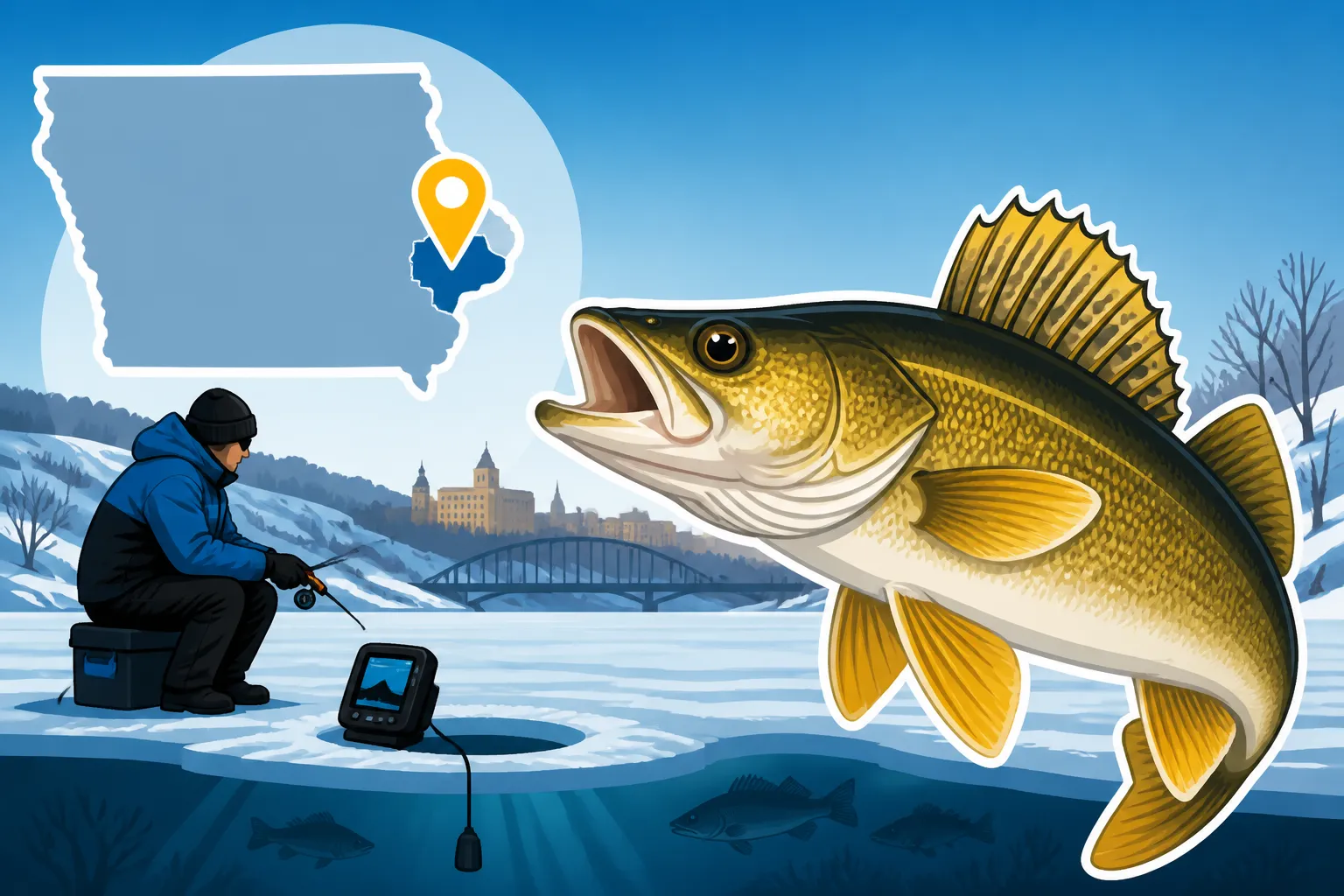
The winter chill can be tough for Iowa anglers, often making us wonder if those trophy walleye are even biting or if we should just resign ourselves to bundling up on the couch. But for those of us near Dubuque, the thought of open water or even hardwater action for walleye is far from a pipe dream. This guide dives deep into why winter walleye fishing around Dubuque isn't just possible, but often incredibly rewarding, offering a real chance to connect with some fantastic fish when many others have hung up their rods.
Understanding Winter Walleye Behavior Near Dubuque
When winter truly sets in around Dubuque, the Mississippi River doesn't just freeze over; it transforms into a complex system of current, ice, and open water, each harboring walleye in predictable patterns. Understanding these behaviors is key to success, as walleye become more concentrated and often less aggressive, demanding a different approach than their summer counterparts.
Walleye Migration and Winter Holds
As water temperatures drop, walleye on the Mississippi River begin a significant migration. They're not just looking for comfort; they're actively seeking out areas that offer stable food sources, protection from strong currents, and consistent water temperatures. Think of it like this: they're trying to find the warmest, most comfortable diner in town that also has a good hiding spot.
Typically, this means moving from sprawling summer feeding grounds into deeper holes, slack water pockets, and beneath the protection of wing dams and main channel points. These locations become critical bottlenecks where walleye stack up, making them prime targets for anglers. Near Dubuque, the various pools of the Mississippi, such as Pool 11 and Pool 12, offer abundant such structures. It's not uncommon to find large schools of walleye hunkered down in these spots, sometimes in surprisingly shallow water if current breaks are substantial, but more often in 15-30 feet of water where the current is lessened but baitfish still funnel through.
Impact of Current and Ice Formation
The Mississippi River's dynamic current plays a massive role in winter walleye location. Strong currents during colder months push walleye to seek refuge in areas where they can expend less energy. This means focusing your efforts on current seams, eddy lines, and behind structural elements like wing dams, bridge pilings, and lock and dam structures. These areas create natural ambush points where walleye can wait for unsuspecting baitfish to be swept past. You might even find success fishing below Lock and Dam 12 at Bellevue.
When ice forms, especially in the backwaters and shallower side channels, it provides a different kind of refuge and a new set of challenges and opportunities. While the main channel often remains open or features unstable ice due to heavy current, expansive backwater lakes and protected bays can develop safe ice. These areas attract walleye seeking more stable environments, particularly during periods of extreme cold. Always prioritize safety and check ice thickness meticulously, as conditions on a large river system like the Mississippi can change rapidly and unpredictably. For more detailed insights on ice safety, check out our guide on Ice Fishing Safety on Iowa Lakes.
Prime Winter Walleye Fishing Spots Near Dubuque
The area around Dubuque, stretching along the Mississippi River, is blessed with incredible structure and diverse fishing environments that hold walleye through the colder months. Knowing where to focus your efforts can drastically improve your chances of success, whether you're targeting open water or venturing onto the ice.
The Mighty Mississippi River Pools
The Mississippi River is a series of navigational pools, each with its own character and hot spots for winter walleye. Near Dubuque, Pool 10, Pool 11, and Pool 12 are particularly renowned. These pools feature a mix of main channel, main channel border, side channels, and expansive backwater areas.
-
Pool 10 and Pool 11: These pools, while slightly upstream or overlapping with the broader Dubuque area, share similar characteristics to Pool 12. They are characterized by numerous wing dams, rock piles, and deep scour holes. Anglers often find success focusing on the downstream side of wing dams or where main channel current meets slower side channel flows. Walleye will position themselves right at these current breaks, waiting for baitfish. Searching for structures like submerged timber or sudden depth changes on your electronics can be extremely productive. Consider exploring our specific guides on Mississippi River Pool 9 Fishing and Mississippi River Pool 10 Fishing for more localized tips, as these areas share a lot of traits with the Dubuque region.
-
Pool 12 (Dubuque's Backyard): This is arguably the most accessible and popular area for Dubuque anglers. The diverse habitat, including the famous Lock and Dam 12 at Bellevue, creates perfect wintering grounds. The tailwaters below the dam are fantastic for open-water jigging, especially early in the winter before extensive ice forms. Further downstream, the many wing dams and deep holes throughout Pool 12 concentrate walleye. Look for distinct current breaks, particularly near the mouths of creeks and tributaries that feed into the main river, as these can be warmer and attract bait.
Backwaters and Protected Bays
While the main river channel is excellent for open-water fishing, when the cold truly bites and stable ice forms, the backwater lakes and protected bays become magnets for ice anglers. These areas, often shallower and less affected by the powerful river current, freeze over more reliably.
-
Sloughs and Inlets: Many sloughs, such as those found in the extensive backwater complexes near areas like Eagle Point Park or further south towards Bellevue, offer superb ice fishing. Walleye will move into these areas for stable conditions and to feed on panfish. Jigging small spoons or tungsten jigs tipped with wax worms or minnow heads can be deadly. Look for old river channels or deeper pockets within these backwaters, as these will hold fish. Remember, always consult local bait shops for the most up-to-date ice conditions and intel. They are your best resource! If you're looking for guidance on safety, our piece on Best Ice Thickness for Safe Ice Fishing is essential reading.
-
Protected Coves: Even in areas where the main channel remains open, sheltered coves and bays can ice over. These pockets of still water become crucial holding areas. While many associate these with panfish, larger walleye will often cruise these areas, especially during low-light conditions, to prey on schools of baitfish that also seek refuge. Be aware that river ice can be notoriously tricky, with varying thickness due to current, springs, and debris. Never venture out alone, and always have appropriate safety gear.
For those planning a trip and looking for local expertise, resources like FishingBooker can connect you with experienced guides who specialize in winter walleye fishing on the Mississippi River near Dubuque, providing invaluable local knowledge and ensuring a safe and productive outing.
Essential Gear and Techniques for Dubuque Winter Walleye
Winter walleye fishing, whether through the ice or in open water, demands specialized gear and techniques to coax bites from these often finicky fish. The slower metabolism of walleye in cold water means presentations need to be precise and often subtle.
Open Water Tactics: Jigging and Trolling
Even in the dead of winter, parts of the Mississippi River near Dubuque often remain open, especially below the dams where water flow is constant. This allows for productive open-water fishing, primarily by boat.
-
Vertical Jigging: This is a cornerstone technique for winter walleye. Whether you're targeting fish below the Lock and Dam 12 at Bellevue or working current breaks, a good sensitive rod paired with a spinning reel spooled with braided line and a fluorocarbon leader is ideal. Heavier jigging spoons (like a 1/4 to 3/8 ounce Northland Buck-Shot Rattle Spoon or a Rapala Jigging Rap) or blade baits (like a Cicada or Vibe) are excellent choices. Drop your lure to the bottom, give it a sharp lift of about 6-12 inches, and let it flutter back down on a semi-slack line. Most bites occur on the fall. Tipping your jig with a live minnow head or a small plastic minnow can significantly increase your strike rate. Understanding Winter Walleye Techniques Near Dubuque can provide even more tailored advice.
-
Trolling and Drifting: If conditions allow for boat maneuvering, slow trolling or controlled drifting can be effective, particularly with crankbaits or live bait rigs. Use a three-way swivel rig with a bell sinker to keep your bait near the bottom while drifting live minnows. For crankbaits, choose models that dive to the depth where fish are holding. The key is extreme slowness; cold water walleye aren't chasing baits enthusiastically. Many anglers utilize specialized electronics to pinpoint fish and structure. If you're new to the area, considering a guided trip through services like FishingBooker can give you a major advantage, as local pros know the river's subtle nuances and current patterns.
Ice Fishing Innovations: Jigging and Tip-Ups
When the backwaters and calmer sections of the river system freeze solid, ice fishing becomes the go-to method. This is where specialized gear truly shines.
-
Aggressive Jigging: Unlike the slow lifts of open water jigging, ice fishing often benefits from a slightly more aggressive, yet still controlled, jigging motion. Small tungsten jigs, tipped with wax worms, spikes, or a small minnow head, are fantastic for panfish and smaller walleye. For larger walleye, larger jigging spoons or horizontal jigs (like a VMC Tingler Spoon or Clam Drop-Kick Jig) in 1/8 to 1/4 ounce sizes, tipped with a full minnow or a large minnow head, can be irresistible. The key is to experiment with jigging cadence until you find what triggers bites. A flasher or an ice fishing sonar unit is almost mandatory for maximizing your success, allowing you to see your lure and any approaching fish. We have a great guide on How to Jig for Winter Walleye Near Dubuque that delves into this more deeply.
-
Tip-Up Strategy: Tip-ups are a passive yet highly effective way to cover more ice and present live bait. Set up several tip-ups (check Iowa Fishing Regulations Explained for limits on lines allowed) spread across different depths or structural features. Use a large shiner or golden roach minnow hooked lightly behind the dorsal fin, suspended just off the bottom or slightly above known fish marks. The visual strike indicator on a tip-up is incredibly exciting, especially when a flag pops in the middle of a quiet winter day. Just remember to have a warm place to retreat to between bites!
Key Gear Considerations for Winter Walleye
- Rods and Reels: For open water, a medium-light to medium power spinning rod (6'6" to 7'6") with a fast action tip and a 2500-3000 series reel is versatile. For ice fishing, specialized ice rods (28-36 inches, medium-light to medium power) offer better sensitivity and control in a confined space.
- Line: Braided line (8-10 lb test) with a fluorocarbon leader (6-8 lb test) is excellent for sensitivity and strength in open water. For ice fishing, specialized low-stretch monofilament or fluorocarbon (4-6 lb test) designed for cold weather is preferred.
- Baits and Lures: Minnows (shiners, fatheads, rosies) are paramount. Spoons, blade baits, jigs, and small crankbaits (especially those with rattling features) are all winter walleye staples. Consider brighter colors (chartreuse, orange, glow) for stained water or low light, and natural colors for clearer conditions.
- Electronics: A good fish finder is invaluable for locating fish and structure. For ice fishing, a flasher or a dedicated ice sonar unit makes a huge difference in understanding what's below your hole.
- Safety Gear: Personal flotation devices (PFDs) are a must for open water. For ice fishing, ice picks, a spud bar for checking ice thickness, and knowing the Iowa Fishing Daily Bag Limits Guide are crucial.
Here's a quick overview of common winter walleye baits and their best uses:
| Bait/Lure Type | Best Use Case | Key Characteristics | Retrieval/Presentation Tip |
|---|---|---|---|
| Live Minnows | All conditions, often best overall | Natural scent/action, most reliable | On a jig, under a bobber/tip-up, slow retrieve |
| Jigging Spoons | Active fish, vertical presentation | Flash, vibration, distinct fall | Sharp lifts, controlled drops, pause frequently |
| Blade Baits | Aggressive vertical jigging, open water | High vibration, mimics fleeing baitfish | Rip-jigging, short hops off bottom |
| Tungsten Jigs | Ice fishing, subtle bites | Dense, falls fast, small profile | Slow jigging, quiver, slight lifts with bait |
| Small Crankbaits | Trolling (open water), dead-sticking (ice) | Mimics baitfish, rattles, dives to depth | Very slow troll, short pulls/pauses on ice |
| Plastics (Grubs) | Tipped on jigs, highly versatile | Various shapes/colors, adds bulk/action | Paired with a jig head, slow drag or short hops |
Regulations and Safety When Winter Fishing Near Dubuque
Winter fishing, especially on a major river system like the Mississippi, comes with its own set of rules and risks. Being prepared and informed isn't just about avoiding fines; it's about ensuring a safe and enjoyable experience for everyone.
Understanding Iowa's Fishing Regulations
Even in the heart of winter, all standard Iowa fishing regulations apply, and sometimes specific rules for border waters come into play. It's crucial to be aware of these.
- Fishing Licenses: Make sure your Iowa Fishing License Guide is current. While kids might not need a license depending on age, adults always do. For those who aren't Iowa residents, you'll need an Iowa Nonresident Annual Fishing License or a short-term option like an Iowa Three-Day Nonresident Fishing License. This also extends to any special stamps, though a trout fee isn't generally required for walleye.
- Daily Bag and Possession Limits: Walleye have specific daily bag and possession limits. On the Mississippi River, these limits can sometimes differ slightly from inland waters due to reciprocal agreements with neighboring states like Illinois or Wisconsin. Currently, the daily limit for walleye and sauger on the Mississippi River is 6, and the possession limit is 12, with a minimum length limit of 15 inches for walleye. Always double-check the latest Iowa DNR fishing regulations booklet, as rules can change annually. You can find comprehensive details in our Iowa Fishing Season Dates and Limits and Walleye Season and Size Limits articles.
- Number of Lines: Generally, Iowa allows an angler to use two lines. However, on the Mississippi River, you might be allowed more, often up to three, depending on specific reciprocal agreements. It's vital to confirm this directly with the Iowa DNR's current regulations, as this rule can be a common point of confusion.
- Boat Registration and Safety: If you're using a boat in open water, ensure it's properly registered and equipped with all required safety gear, including life jackets for all occupants, a fire extinguisher, and a sound-producing device. Even small boats need to adhere to these rules. Learn more in our Iowa Boat Registration Requirements guide.
Prioritizing Ice Safety
The Mississippi River is a dynamic and often dangerous body of water, especially when ice is involved. Never assume ice is safe simply because others are on it or because it's been cold.
- Check Local Conditions: Always check with local bait shops, the Iowa DNR, or trusted online forums for up-to-date ice conditions. They are your best source of real-time information. River ice is much less predictable than lake ice due to currents, springs, and fluctuating water levels.
- Minimum Ice Thickness: A general rule of thumb is at least 4 inches of clear, solid ice for safe foot travel, 5-7 inches for ATVs/snowmobiles, and 8-12 inches for cars/small trucks. However, this is a general guideline, and river ice requires extra caution. Never drive a vehicle onto river ice unless absolutely certain of its safety and permitted by local regulations.
- Safety Gear is Non-Negotiable: Always carry ice picks, a spud bar or auger to test ice thickness as you go, and wear a life jacket or flotation suit, especially when venturing onto new or questionable ice. Fish with a buddy and inform someone of your plans and expected return time. A throw rope can be a lifesaver in an emergency.
- Avoid Dangerous Areas: Stay clear of inlets, outlets, bridge pilings, wing dams, and areas near locks and dams where current is strong, as ice can be dangerously thin or non-existent in these spots. Pay particular attention to areas where currents are obvious from shore or open water is visible.
By adhering to regulations and prioritizing safety, your winter walleye fishing adventures near Dubuque can be both productive and memorable, allowing you to experience the thrill of a cold-water bite without unnecessary risks. If you're ever in doubt about conditions or regulations, consulting with a local guide, perhaps found through platforms like FishingBooker, can provide invaluable peace of mind.
Disclaimer
The information provided in this guide is for general informational purposes only and is not a substitute for official regulations. Fishing regulations, conditions, and safety guidelines can change rapidly. Always consult the latest Iowa Department of Natural Resources (DNR) official publications and local authorities before engaging in any fishing activities. Personal safety, especially on ice or open water in winter, should always be your top priority.