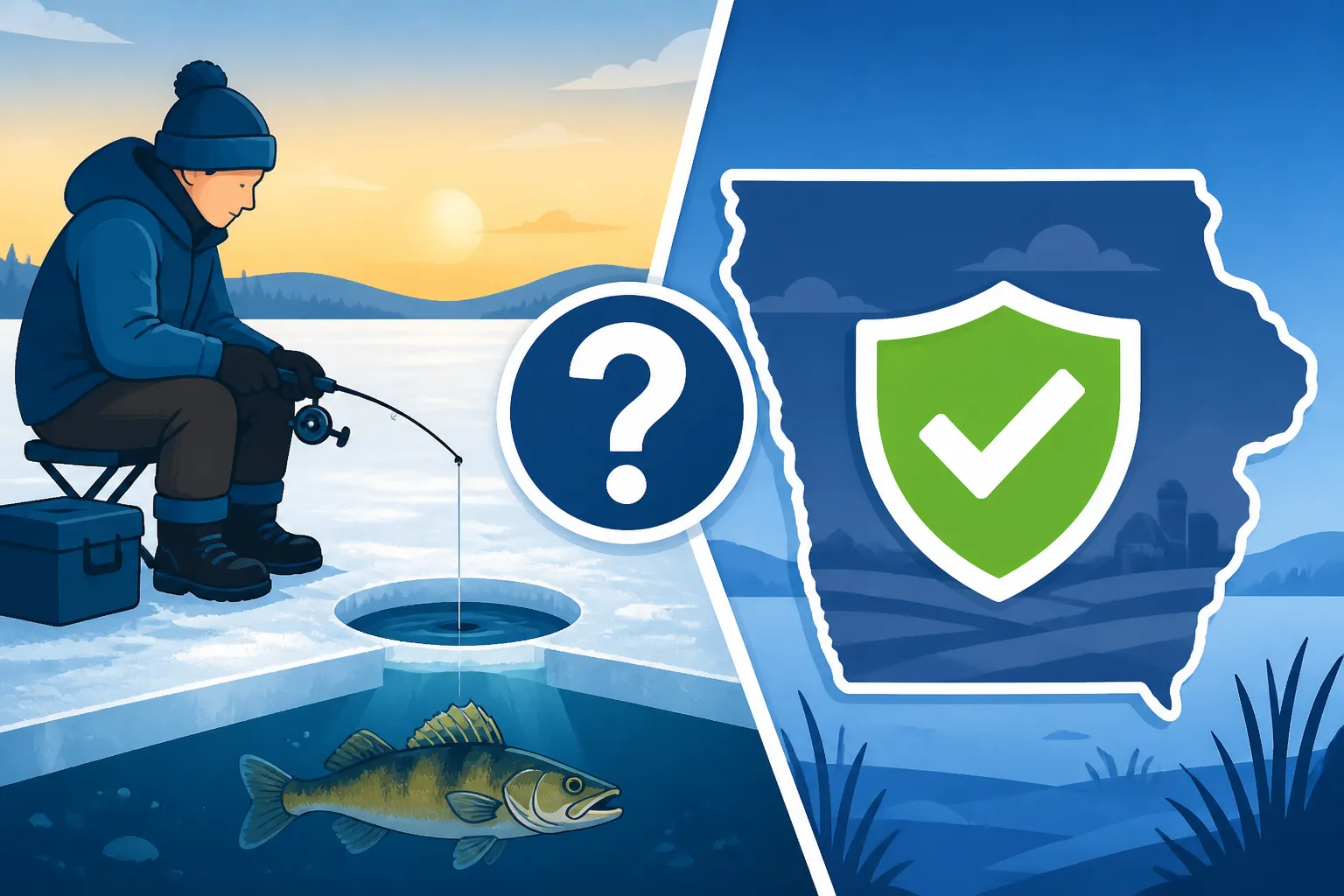
Is It Safe to Ice Fish in December in Iowa?
Ah, December in Iowa! The holiday lights are going up, the first real chill is in the air, and for many of us, the thoughts immediately turn to one thing: ice fishing. That fresh, crisp air, the quiet solitude, and the thrill of pulling a slab crappie or a feisty walleye through a hole in the ice—it’s pure magic. But that early season excitement often comes with a big, nagging question: Is it really safe to ice fish in December in Iowa? The short answer is: it can be, but it absolutely demands a healthy dose of caution, local knowledge, and preparation. This guide will walk you through the unique challenges of December ice, the critical safety measures you need to take, and how to assess the ice conditions to ensure your early season adventures are both successful and safe.
The Volatility of Early December Ice in Iowa
Let's be honest, that first skim of ice forming on our favorite Iowa lakes and ponds is incredibly tempting. After months of open water, seeing those shimmering, frozen surfaces just calls to us. But December ice, especially in early to mid-December, is often far from uniform and can be deceptively dangerous. It's a period marked by rapid changes in temperature, sudden thaws, and refreezes, which can create a patchwork of ice thicknesses across a single body of water. What looks solid in one spot might be paper-thin just a few yards away, especially if there are currents, underwater springs, or aeration systems at play.
The main challenge with early December ice is its unpredictable nature. One day you might have a solid four inches after a cold snap, and the next, a couple of days of above-freezing temperatures combined with bright sunshine can degrade that ice rapidly, leaving you with less than safe conditions. This isn't like the stable, consistent ice we often see in January or February. Early season ice needs to be approached with an abundance of caution, recognizing that conditions can change not just day-to-day, but hour-to-hour. Always remember that local knowledge from bait shops or DNR reports can be invaluable, but nothing beats your own personal assessment of the ice you plan to fish on.
Many eager anglers, myself included, have felt the pull to get out there as soon as possible. The prospect of being the first one on a hotspot often outweighs common sense for a moment. But a momentary lapse in judgment can have serious consequences. It's crucial to understand that even popular ice fishing spots in Iowa may not be safe across their entire surface. Larger lakes with deeper water or those with significant river inlets often take longer to freeze thoroughly and consistently. Always prioritize safety over the urge to be the first one to drill a hole.
Understanding Ice Thickness and Formation
When we talk about ice safety, the absolute bedrock is understanding ice thickness and how it forms. This isn't just about a magic number; it's about the quality of the ice. A clear, solid blue or black ice, often called "black ice," is far stronger than white, opaque, or "snow ice." Snow ice forms when snow falls on thin ice and mixes with slush, freezing into a much weaker structure. You might find several inches of snow ice that offers the same load-bearing capacity as half that amount of clear ice. This difference is critical for December ice, where snowfalls can be intermittent and freeze-thaw cycles common.
The general guidelines for safe ice thickness are just that – guidelines. They assume clear, solid ice. For walking, most experts suggest a minimum of four inches of clear, newly formed ice. For a snowmobile or ATV, you're looking at five to seven inches, and for a small car or light truck, eight to twelve inches. However, these numbers come with a massive asterisk. Variables like underwater currents, springs, aeration systems, water depth, and even the type of fish structure below can all affect ice formation. A shallow, protected bay might have five inches of perfect black ice, while the main lake basin nearby, or an area with flowing water, could have only two inches. When you’re thinking about Best Ice Thickness for Safe Ice Fishing, these nuances are incredibly important.
Checking the ice isn't a suggestion; it's a mandatory step for early season anglers. Never assume. The most reliable tools for this are a spud bar or an ice auger. A spud bar is a heavy chisel-like tool you use to strike the ice ahead of you. It's loud, but it tells you immediately if the ice is solid or punky. If it goes through in one or two hits, you know you're in trouble. An auger, while meant for drilling fishing holes, is also excellent for checking thickness. Drill a hole every few yards as you venture out, especially when first stepping onto the ice or moving to a new area. This constant vigilance is your best defense against unexpected thin spots. Remember, the deeper the water, the longer it generally takes for ice to form sufficiently thick and safely.
You might also consider how quickly Iowa can get cold enough to truly set the ice. While we often get cold snaps in December, sustained deep freezes are less common than in January. This means the ice that forms might not be subject to consistent, single-digit temperatures for long periods. Instead, you get a few cold nights, then a sunny, relatively warm day, then cold again. This cycle creates weak ice layers. Understanding How Cold Iowa Gets During Ice Fishing Season is vital, but also consider the duration of those cold spells.
Factors Influencing Ice Integrity
Beyond simple thickness, several factors can drastically impact the integrity of early December ice, making careful assessment even more critical.
Water Movement and Currents
Any body of water with significant flow – think rivers, channels between lakes, or even areas near culverts and inlets – will have weaker ice, or no ice at all. The Mississippi River, for example, even when partially frozen, has incredibly dangerous currents and should be approached with extreme caution, often requiring very different safety considerations than a land-locked lake. Even subtle currents in larger lakes can create "hot spots" where warmer water prevents solid ice formation. Always be wary of areas where water enters or exits a lake, or any narrow channels. These are often the last to freeze and the first to weaken.
Underwater Springs and Aeration Systems
Hidden underwater springs can pump warmer ground water into a lake, creating persistent thin spots that are impossible to see from the surface. Similarly, some Iowa lakes use aeration systems to prevent winterkill for fish, and these areas will always have open water or dangerously thin ice. These locations are often marked with signs, but not always. If you see open water in a generally frozen lake, treat it as a potential aeration site or spring and give it a wide berth. These spots are death traps for unsuspecting anglers.
Snow Cover and Sunshine
A layer of snow on top of new ice, while seemingly benign, can actually slow down further ice growth by insulating the ice from cold air. It also makes it impossible to visually assess the ice quality beneath. When snow melts and refreezes, it creates that weaker "snow ice" we discussed. Conversely, direct sunshine, even on cold days, can degrade ice, especially darker colored ice or ice that has already absorbed some heat. A bright, sunny December day can weaken surface ice rapidly, even if the air temperature is below freezing. Always be mindful of the sun's impact, particularly on the edges and shallower areas where ice might be thinner to begin with.
Essential Safety Gear for Early Ice Anglers
Going out on early December ice without the right safety gear is like driving a car without seatbelts—it’s just asking for trouble. Even if you consider yourself an experienced angler, early ice conditions demand extra precautions. Having the proper equipment readily accessible can literally be the difference between a scary story and a tragic one. Don't skimp on these items; they are an investment in your life.
Ice Picks: Your Lifeline
These are non-negotiable. Ice picks are small, pointed handles usually worn around your neck, allowing you to quickly grab them if you fall through. If you break through, you need something to grip the slick, crumbling ice edge to pull yourself out. Trying to get out without them is incredibly difficult, almost impossible, due to the lack of traction. They are inexpensive and vital. You can often find great deals on ice picks and other essential safety items on Amazon before your first outing.
Spud Bar and Auger: Constant Ice Assessment
As mentioned, a spud bar is your first line of defense. Use it constantly as you walk. An ice auger is also critical for drilling test holes to confirm thickness. Never walk further than a few steps without checking. This disciplined approach will keep you safe. If you're looking into Best Ice Auger for Thick Ice, remember it can also be your best friend for checking ice thickness.
Flotation Suit or PFD (Personal Flotation Device)
A flotation suit not only provides incredible warmth but, more importantly, it offers buoyancy if you go through the ice. Many modern ice fishing suits are designed with built-in flotation. If a full suit isn't in your budget, wearing a traditional PFD or life jacket over your winter layers is an absolute must. Cold water shock can quickly incapacitate you, making it hard to keep your head above water, even for strong swimmers. Don't leave shore without one. This is a critical piece of Ice Fishing Safety on Iowa Lakes.
Rope and Throw Bag
Carry at least 50 feet of sturdy rope, preferably in a throw bag for easy deployment. If a fishing buddy goes through, you can extend the rope to them from a safe distance without putting yourself in danger. Never try to run directly to someone who has fallen through; the ice around them is inherently weak. Practice throwing it beforehand so you know how it handles. This is an item you can easily order from Amazon to ensure you have it packed and ready.
Communication Device
Always carry a fully charged cell phone in a waterproof case or bag. Make sure someone on shore knows your plans – where you're going, when you expect to be back, and who you're with. If possible, fish with a buddy. A two-way radio can also be useful if you're out with a group and need to communicate across distances, especially if cell service is spotty.
Appropriate Clothing Layers
While not strictly a safety device against falling through, proper layering is crucial for preventing hypothermia if you do get wet. Cold water quickly zaps body heat. Wear moisture-wicking base layers, insulating middle layers, and a waterproof/windproof outer shell. Bring extra dry clothes, especially extra socks and gloves, stored in a waterproof bag. Understanding Best Cold Weather Clothing for Ice Fishing is about comfort and survival.
A Quick Check for Your Tackle Bag
Before you even step on the ice in December, make sure your gear is in order. A small kit of essentials, like a headlamp with fresh batteries, a fire starter, and a small first-aid kit, can make a huge difference in an emergency. Remember to pack warm drinks in a thermos and some high-energy snacks. Even if you're just planning a short outing for How to Ice Fish for Panfish, being prepared for the unexpected is always smart.
Ice Thickness Guidelines for Safe Fishing
To make it a little easier, here's a general guideline for clear, solid new ice. ALWAYS verify conditions yourself, and understand that these are minimums.
| Ice Thickness (Clear, New Ice) | Activity Level | Notes |
|---|---|---|
| Less than 4 inches | STAY OFF | Dangerously thin, highly unstable. |
| 4 inches | Ice fishing, walking | Minimum for single person on foot. Proceed with extreme caution. |
| 5-7 inches | Snowmobile or ATV | Requires consistent thickness across the path. |
| 8-12 inches | Small car, light truck | Only on well-established, clear ice. Rarely safe in early December. |
| 12-15 inches | Medium truck | Very rare in early December. Consider extreme caution and local intel. |
Remember, white "snow ice" often requires double the thickness of clear ice for the same safety margin. Always err on the side of caution.
What to Do in an Emergency on Early Ice
Even with all the precautions, accidents can happen. Knowing what to do in an emergency, both for yourself and for others, is paramount. This knowledge can literally save a life.
If You Fall Through the Ice
The first, and hardest, thing to do is don't panic. Cold water shock can take your breath away and make your muscles spasm. Fight the urge to gasp for air.
- Yell for help: Alert anyone nearby that you're in trouble.
- Turn back the way you came: The ice you just walked on was strong enough to support you moments ago, or at least it's the most likely area for stronger ice.
- Use your ice picks: Dig them into the ice and kick your feet vigorously to propel yourself horizontally onto the ice. You're trying to get your chest onto the ice, not lift yourself straight up, which would break the ice.
- Kick and Pull: Kick your feet as if you're swimming, and pull with your picks, slowly wiggling and rolling yourself back onto the solid ice.
- Roll away: Once you're out, don't stand up. Roll away from the hole to distribute your weight over a larger area of ice until you're on truly solid ground.
- Seek immediate warmth: Get to shore, strip off wet clothes, and get into dry, warm layers. If you have a car nearby, blast the heat. Hypothermia sets in quickly.
If Someone Else Falls Through the Ice
This is where the "rescue without becoming a victim" mantra comes into play. Your instinct might be to rush, but that's the most dangerous thing you can do.
- Call for help immediately: Shout to alert them and anyone else nearby. Call 911 or emergency services.
- Stay calm and assess: Do not run to the hole. The ice that gave way for them is likely too weak for you.
- Reach, Throw, Go:
- Reach: If you can reach them from solid ground with a branch, pole, or extended arm (while lying flat to distribute your weight), do so.
- Throw: Your throw bag with a rope is ideal here. Lie flat on the ice, secure one end of the rope to yourself or something sturdy, and throw the bag past them so they can grab the rope. This is why practicing with your throw bag is so important!
- Go (if necessary and safe): If you must go onto the ice, lie flat and push a ladder, boat, or large branch ahead of you to distribute your weight. Crawl towards them, pushing the object, and extend it to them. Remember the dangers of thin ice; this should only be done with extreme caution and proper support.
- Pull them out: Once they have a hold of the rope or object, pull them slowly and steadily onto the ice.
- Get them warm: Follow the same steps as if you had fallen in yourself – dry clothes, warmth, and medical attention as quickly as possible. Even if you're out chasing Where to Ice Fish for Walleye in Iowa, always have a plan for unexpected emergencies.
Remember, the best defense against an emergency on early ice is prevention. Being informed, carrying the right gear, and exercising extreme caution are your best tools for a safe and enjoyable December ice fishing season in Iowa. Stay safe out there, fellow anglers!
Disclaimer
This article is for general informational purposes only and does not constitute professional advice. Laws, prices and regulations vary by location and change over time. Consult a qualified professional for guidance on your specific situation.