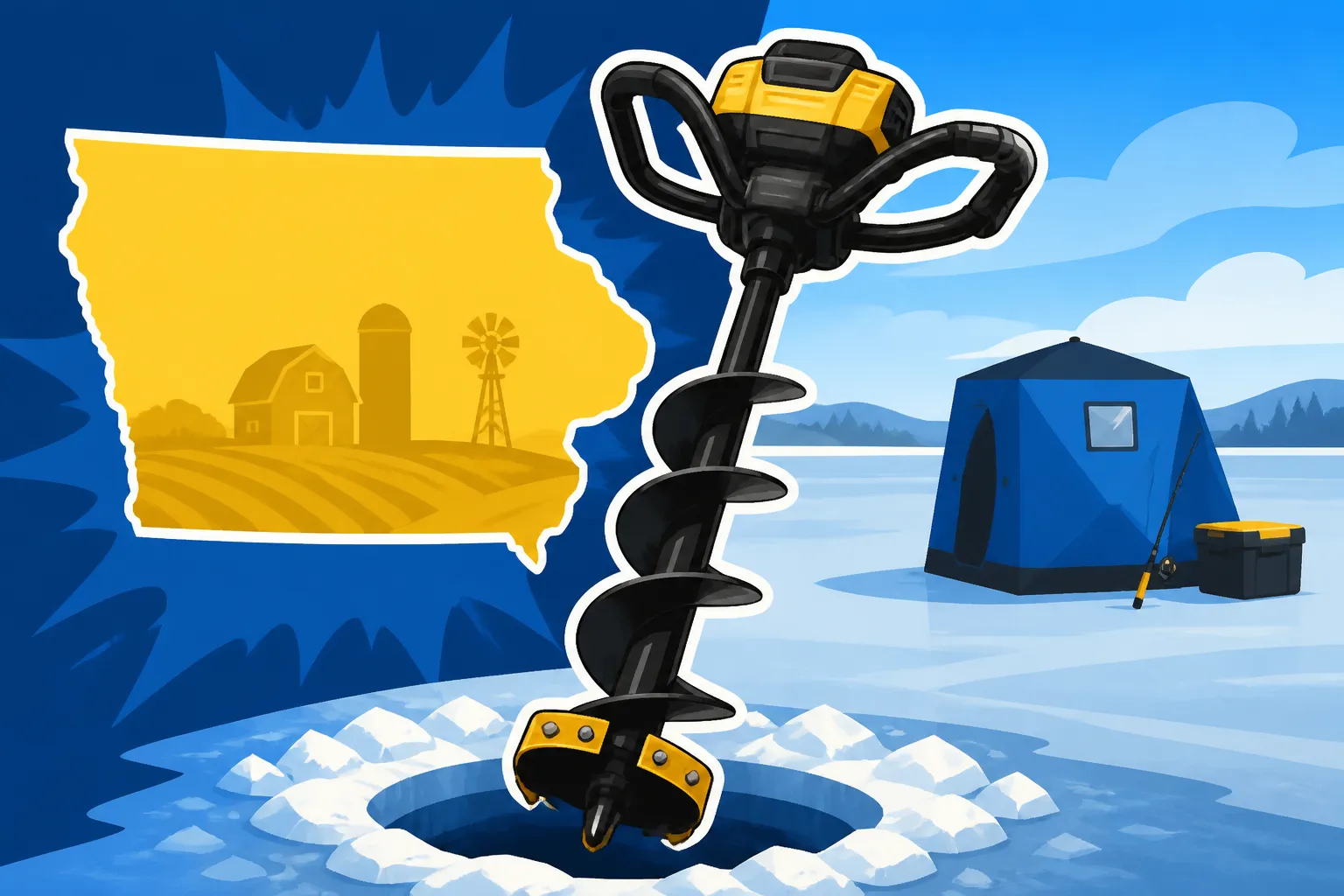
Best Auger for Iowa Ice Fishing
For Iowa ice anglers, the annual chill brings an age-old dilemma: how do you punch through that often stubborn, sometimes slushy, sometimes rock-hard ice without breaking your back or your budget? Choosing the right ice auger can be genuinely frustrating, leading to wasted money on a tool that's either underpowered or simply too cumbersome for your style of fishing. This guide is here to cut through the confusion, helping you pick the perfect auger to ensure you're drilling holes efficiently and comfortably all winter long in the Hawkeye State.
Understanding Different Auger Types for Iowa Ice
When you step onto a frozen lake in Iowa, whether it's a vast reservoir or a cozy farm pond, the first thing on your mind is getting a hole open. But not all augers are created equal, and what works wonders for one angler might be a total headache for another. Let's break down the main types you'll encounter and how they stack up against Iowa's diverse ice conditions.
Manual Augers: The Old Faithful
Ah, the good ol' hand auger. This is where many of us started, and for good reason. A manual auger is simply a hand-cranked device with sharp blades that you twist into the ice. There's no motor, no fuel, just good old-fashioned elbow grease.
For Iowa anglers, manual augers have some clear advantages. They are incredibly affordable, making them a fantastic entry point into ice fishing, especially for beginners or those who only hit the ice a few times a season. They're also super lightweight and simple, which means less gear to haul and fewer things to break down. If you're heading out for a quick, solo trip to a small lake or pond, especially during early or late ice when it's not super thick, a manual auger can be your best friend. Plus, let's be honest, it's a bit of a workout, which can help keep you warm on those chilly Iowa mornings!
However, the "manual" part is also its biggest drawback. Try drilling a dozen holes in 20 inches of mid-winter Iowa ice with a hand auger, and you'll quickly understand the meaning of arm fatigue. They're slow, tiring for multiple holes, and generally not suited for large diameter holes that you might need for bigger fish like a trophy walleye or northern pike. If you're bringing the family or planning an all-day session where you'll be moving and drilling frequently, a manual auger will likely leave you frustrated and exhausted.
Propane Augers: The Reliable Workhorse
Stepping up a notch, we find propane-powered augers. These clever machines use small, disposable propane cylinders (the kind you might use for a camping stove) to power their engines. They offer a significant jump in power and convenience over manual models without the fuss of gasoline.
One of the biggest selling points for propane augers in Iowa's cold climate is their consistent power and relatively easy starts. Unlike gasoline engines that can be finicky in sub-zero temperatures, propane tends to ignite more readily. You also don't have to deal with mixing gas and oil, which keeps things cleaner and simpler. Many anglers appreciate that they're generally quieter and produce fewer fumes than their gasoline counterparts, making them a bit more pleasant to operate, especially near a portable shelter. These are a great middle-ground choice, handling medium-thickness Iowa ice with ease and being able to churn out a good number of holes without wearing you out.
Of course, there are a few considerations. You'll need to carry spare propane cylinders, which adds a bit of weight and cost, and running out on the ice can be a real bummer. While powerful, some propane models might not quite match the raw, brute force of a top-tier gas auger when you're punching through extremely thick, late-season ice. Still, for the regular Iowa ice angler who wants reliable performance without the typical gas engine hassle, propane models are a fantastic choice.
Gas-Powered Augers: Power and Speed
For those who demand maximum power and speed, the traditional gasoline-powered auger reigns supreme. These are the workhorses you'll often see guides and serious ice anglers using, capable of drilling through the thickest ice Iowa can throw at them, often in mere seconds.
The main advantage here is pure, unadulterated power. Gas augers are typically the fastest at drilling holes, effortlessly chewing through even 30 inches of mid-winter ice. They come in a wide range of sizes, allowing you to choose anything from a 6-inch panfish hole to a massive 10-inch or even 12-inch diameter for big fish or multiple lines. If you're targeting large species like muskie or pike, or if you're frequently setting up multiple tip-ups across a vast expanse of ice, a gas auger's brute strength is invaluable.
However, this power comes with a trade-off. Gas augers are usually the loudest and heaviest options, making them less ideal for quiet, stealthy approaches or long treks across the ice. They also require you to mix gasoline and oil, which can be messy, and they produce exhaust fumes that can be unpleasant, especially if you're fishing inside a portable ice shelter. Starting can sometimes be a challenge in extreme cold, and they generally require more maintenance than other types. For the dedicated angler who values performance above all else, though, a gas auger is often the go-to.
Electric/Battery Augers: The Modern Contender
In recent years, electric battery-powered augers have rapidly gained popularity and are quickly becoming a favorite among Iowa ice anglers. These innovative tools run on rechargeable lithium-ion batteries, offering a compelling alternative to fuel-powered options.
The biggest draws of electric augers are their quiet operation and complete lack of fumes. Imagine drilling a hole silently, without disturbing nearby anglers or spooking fish, and without choking on exhaust – it's a game-changer for many. They are also typically lighter than gas or propane models and offer instant, push-button starting, which is a huge bonus on a frigid Iowa morning. Many electric augers are surprisingly fast, often rivaling or even surpassing the drilling speed of gas models. They're particularly fantastic for anglers who frequently move around, drill a lot of holes, or fish in smaller, enclosed shelters where fumes would be an issue. If you're looking for an efficient way to drill multiple holes while scouting for a good bite of walleye near Dubuque or for crappie at Rathbun Lake, an electric auger can really shine.
The main concern with electric augers is battery life, especially in extreme cold. Frigid temperatures can significantly reduce a battery's runtime, and while many modern batteries are much improved, you'll likely want to invest in at least one spare battery for longer outings or colder days. Keeping those spare batteries warm, perhaps in an insulated bag, is crucial. The initial cost of a high-quality electric auger, especially with extra batteries, can also be higher than other types, but many anglers find the convenience and performance worth the investment. You can often find great deals on these accessories, including spare batteries or even the augers themselves, on Amazon.
Key Features to Consider for Iowa Ice Fishing
Choosing the right auger isn't just about the power source; it's also about understanding the specific features that will make your ice fishing experience in Iowa more effective and enjoyable.
Auger Blade Type and Diameter
The business end of your auger is its blade, and the type and size you choose will significantly impact your drilling performance and what kind of fish you can realistically pursue.
There are generally two main types of blades: chipper blades and shaver blades. Chipper blades are designed with a serrated edge that "chops" through ice. They tend to perform better in inconsistent ice conditions, like refrozen slush or dirty ice, which isn't uncommon on Iowa lakes. Shaver blades, on the other hand, have a smooth, razor-sharp edge that shaves through clean, clear ice. They are often faster in ideal conditions but can struggle if they hit dirt or debris embedded in the ice. Consider the typical ice quality you encounter on your favorite Iowa fishing spots when making this choice.
The auger's diameter is another critical factor. Smaller diameters, like 6 inches, are perfect for panfish like bluegill and crappie. They're quick to drill, require less effort, and are generally all you need for smaller species. If you're specifically looking to learn How to Ice Fish for Panfish, a 6-inch auger is often ideal. For general multi-species fishing, especially if you're targeting walleye or northern pike, an 8-inch auger is a popular choice. This size provides a good balance of drilling ease and hole size for most sport fish. If you're chasing bigger fish, like aiming for a Trophy Walleye Size in Iowa or even tackling muskie, you might consider a 10-inch diameter. This larger size is also useful if you plan to use multiple lines in a single hole, where regulations allow. Be aware that larger diameters require significantly more power and effort to drill.
Weight and Portability
Imagine strapping your gear to a sled and trekking across a vast expanse like West Okoboji Lake or even just a long walk from the parking lot to your favorite honey hole at Clear Lake. The weight and portability of your auger suddenly become very important.
Manual augers are obviously the lightest, making them a breeze to carry for short distances or when you're moving around a lot on foot. Electric augers often come in next, as their battery packs can be heavy, but the overall unit is usually lighter than a full tank of gas or propane. Gas and propane augers, with their engines and fuel, tend to be the heaviest options.
Consider your typical fishing style. Are you a "run-and-gun" angler who drills a dozen holes, checks for fish, and moves on? Then a lightweight electric or manual auger might be best. If you primarily fish from a permanent shelter that you drive out to, then the weight of the auger is less of a concern. For many Iowa anglers, balancing power with portability is key, especially if you frequently fish areas requiring a walk-in or use smaller modes of transport like ATVs or snowmobiles. The easier it is to carry, the more energy you'll have for actually fishing! If you're still working on gathering your core Ice Fishing Gear Basics for Beginners, don't overlook how an auger's weight can impact your overall setup.
Power Source Reliability and Runtime
Iowa winters are no joke; temperatures can plunge, and reliable equipment is crucial. The consistency of your auger's power source directly impacts your frustration levels on the ice.
For gas and propane augers, cold-weather starting can be a major headache. Old fuel, dirty spark plugs, or simply extreme cold can turn what should be an exciting morning into a struggle to get your engine to turn over. Always test your auger before heading out for the season, and consider using fresh, high-quality fuel for gas models. For propane, ensure your cylinders are full.
Electric augers, while offering instant starts, face challenges with battery runtime in the cold. Lithium-ion batteries perform best when warm, so keeping your spare batteries in an insulated bag or even inside your jacket can significantly extend their life on those brutally cold days. The number of holes you can drill on a single charge depends on ice thickness, temperature, and hole diameter. If you anticipate drilling many holes or fishing for extended periods, multiple charged batteries are a must. Checking for new auger blades or replacement parts for your existing model on Amazon before the season starts can save you a last-minute scramble. Knowing How Cold Iowa Gets During Ice Fishing Season is vital for planning your battery strategy.
Ergonomics and Safety Features
Spending hours on the ice means comfort and safety should never be overlooked. A well-designed auger makes your day more enjoyable, and proper safety features are non-negotiable.
Look for augers with ergonomic handle designs that provide a comfortable grip, even when wearing thick gloves. Wider handles can offer better leverage, reducing strain when drilling. Controls should be intuitive and easy to operate. Safety features are paramount: always ensure your auger has an accessible kill switch that can quickly shut off the motor in an emergency. A sturdy blade guard is essential to protect both the sharp blades from damage and yourself from accidental cuts, both when transporting and storing the auger. Remember, Ice Fishing Safety on Iowa Lakes always starts with safe equipment handling.
Matching Your Auger to Your Iowa Ice Fishing Style
Your ideal auger isn't just the "best" auger on the market; it's the one that perfectly complements your personal ice fishing style and the conditions you typically encounter in Iowa. Let's explore some common angler profiles.
The Run-and-Gun Angler
If your ice fishing strategy involves covering a lot of ground, drilling many holes, and constantly searching for active fish, you're a run-and-gun angler. This style is popular for locating schools of roaming walleye or aggressive pike. You value speed, efficiency, and minimal fatigue.
For this style, a lightweight electric auger is often the champion. Its quiet operation allows you to sneak up on spots without spooking fish, and the instant start and fast drilling mean you can punch a hole, check your flasher, and move on quickly. The lighter weight makes it easier to carry between spots, especially if you're walking or using a portable sled. Many anglers fishing for Best Winter Walleye Fishing Near Dubuque find electric augers indispensable for covering wide areas. Lightweight propane augers can also be a good fit, offering strong power without the extreme bulk of some gas models. The key is agility and rapid hole production.
The Stationary Shelter Angler
Perhaps you prefer the comfort of a heated portable ice shelter or a more permanent shack. You set up camp in a promising spot and settle in for an extended period, perhaps jigging for crappie or waiting for a tip-up flag to fly. For you, the ability to move quickly between holes might be less critical than raw power and reliability.
In this scenario, a powerful gas or a high-capacity electric auger shines. Since you're not constantly hauling it across the ice, the weight of a gas auger is less of an issue. Its brute force ensures you can punch through any ice thickness you encounter, and its larger fuel capacity means you're unlikely to run out during a long session. If using a gas auger in an enclosed shelter, always ensure proper ventilation to avoid dangerous carbon monoxide buildup. Electric augers with robust battery systems also work well here, offering quiet, fume-free operation within the shelter. The main consideration is ensuring your chosen power source can handle the number of holes you need to drill over your extended stay.
The Panfish Enthusiast
Are you happiest when you're filling a bucket with plump bluegills or tasty crappies? The panfish enthusiast usually targets smaller fish, which means smaller holes are perfectly adequate. You might be fishing shallower water, often in community ponds or smaller lakes.
For the panfish angler, a manual auger or a smaller, lighter electric auger is usually the best choice. A 6-inch diameter hole is plenty big for panfish and takes significantly less effort to drill than an 8-inch or 10-inch hole. Manual augers are economical and perfectly capable of handling the modest ice thickness typically found during the prime panfish bite. Lighter electric augers offer speed and convenience without the bulk, making them ideal for drilling a series of small holes to locate a school of hungry bluegills. The focus here is on ease of use, light weight, and a smaller hole size. This approach ties directly into techniques like How to Ice Fish for Panfish, where precision and quick movement can often be more important than brute force.
The Trophy Hunter
If your sights are set on landing a monster, whether it's a huge northern pike, a wall-hanger walleye, or an elusive muskie, you're a trophy hunter. These bigger fish require bigger holes and an auger with serious muscle.
For trophy hunting, a powerful gas auger or a high-end, large-diameter electric auger is typically required. You'll likely want an 8-inch or even 10-inch diameter auger to ensure you can safely land a large fish without it getting stuck in the hole. The raw power of a gas auger will quickly chew through thick ice, allowing you to set up your spread for those big bites. While the weight might be a factor, the ability to punch larger holes quickly often outweighs the portability concerns. When chasing the Trophy Walleye Size in Iowa or thinking about the Muskie Season and Bag Limit, having an auger that can handle the biggest fish is non-negotiable.
Maintenance and Care for Iowa's Winter Conditions
An ice auger is an investment, and like any valuable piece of equipment, it needs proper care to perform reliably season after season, especially when dealing with the harsh realities of an Iowa winter.
Pre-Season Checks
Before the first cold snap hits and you're itching to get out on the ice, take the time for a thorough pre-season inspection of your auger. This small effort can save you huge headaches on the lake.
For gas and propane augers, check the spark plug for corrosion or wear and replace it if necessary. Inspect all fuel lines for cracks or leaks. Ensure the air filter is clean. If your gas auger sat with fuel in it over the summer, drain the old fuel and refill with a fresh, high-quality gas/oil mix. Start the auger in a well-ventilated area to ensure it's running smoothly. For electric augers, fully charge all your batteries and check the battery terminals for any corrosion. Inspect the charging unit to ensure it's functioning correctly. Regardless of auger type, always check the blades. Are they still sharp? Are there any nicks or bends? Dull or damaged blades will make drilling incredibly difficult and dangerous. Now is the time to sharpen or replace them. Also, check all bolts and fasteners to ensure they are tight.
On-Ice Best Practices
Once you're out on the frozen Iowa landscape, how you treat your auger can directly impact its performance and longevity during your trip.
Always keep your auger blades covered when not actively drilling. This protects the sharp edges from accidental damage and, more importantly, protects you from cuts. After drilling a hole, clear any slush and ice buildup from the blades to prevent them from freezing solid, which can happen remarkably quickly in sub-zero temperatures. For gas augers, avoid laying them down in slush or snow where melted water can get into the engine components and freeze. If using an electric auger, try to keep your spare batteries in a warm place, like an insulated bag or inside your jacket, to maximize their runtime. A good auger cover is invaluable, and you can usually find various options on Amazon to protect your investment and make transport safer.
End-of-Season Storage
When the ice starts to melt and spring beckons, proper end-of-season storage is crucial for ensuring your auger is ready to go next winter. Neglecting this step can lead to expensive repairs or a completely seized engine.
For gas augers, the most critical step is to drain all fuel from the tank and run the engine until it sputters out, ensuring no fuel is left in the carburetor. This prevents stale fuel from gumming up the engine components over the summer. For propane augers, simply remove the propane cylinder. For all auger types, thoroughly clean the unit, removing any dirt, rust, or ice residue. Inspect the blades again for any damage and either sharpen or replace them so they are ready for the next season. Lubricate any moving parts according to the manufacturer's instructions.
For electric augers, fully charge your batteries before storing them and keep them in a cool, dry place away from extreme temperatures. Store the entire auger in a dry, protected area, ideally in its original box or a dedicated auger case to prevent damage. This critical step extends the life of your auger, making it ready for the next season. You might even find some useful storage solutions for your auger online, like on Amazon, to keep it in tip-top shape. Proper winterizing of your gear, including your auger, is part of a broader effort to How to Store Fishing Gear Over Winter to preserve all your valuable equipment.
| Feature | Manual Auger | Propane Auger | Gas Auger | Electric Auger |
|---|---|---|---|---|
| Power | Human strength (limited) | Good (reliable for average ice) | Excellent (highest power) | Excellent (fast, consistent) |
| Weight | Very Low (easiest to carry) | Moderate (manageable for most anglers) | High (can be strenuous to haul) | Low to Moderate (lighter than gas/propane) |
| Noise | Silent | Low (much quieter than gas) | High (loudest option) | Silent/Low (near-silent operation) |
| Fumes | None | Minimal (cleaner burning) | High (strong exhaust fumes) | None (zero emissions) |
| Starting | Instant (manual effort) | Easy (good in cold, no mixing) | Variable (can be hard in extreme cold) | Instant (push-button) |
| Maintenance | Low (blade sharpening) | Moderate (engine care, propane checks) | High (fuel mix, spark plug, air filter) | Low (battery care, blade sharpening) |
| Cost (Initial) | Low (most budget-friendly) | Moderate (good value) | Moderate to High (performance-driven) | High (can be pricier, especially with spare batteries) |
| Runtime/Capacity | Limited by physical endurance | Good (depends on cylinders carried) | Excellent (depends on fuel tank size) | Good (depends on battery size/number) |
| Ideal for Iowa | Early/late thin ice, quick trips, panfish, backup, exercise | Regular use, various species, reliable cold starts, less fuss than gas | Heavy drilling, thick mid-winter ice, large fish, multiple holes | Mobile anglers, quiet fishing, smaller shelters, convenience, environmentally conscious |
Disclaimer
This article is for general informational purposes only and does not constitute professional advice. Laws, prices and regulations vary by location and change over time. Consult a qualified professional for guidance on your specific situation.