Can You Keep a Lake Sturgeon in Iowa?
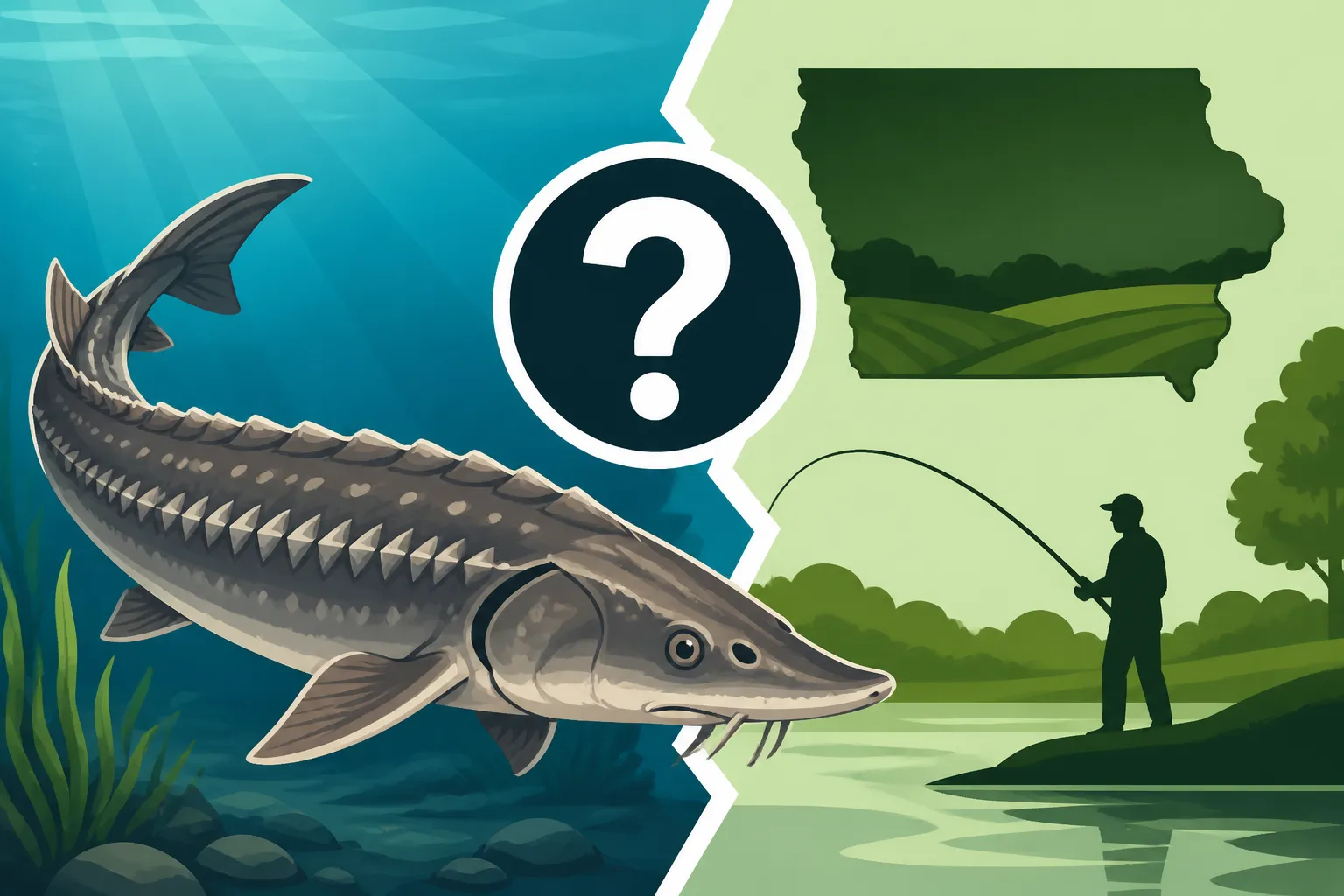
You've just reeled in a truly magnificent fish, something ancient and powerful, and a thought flashes through your mind: "Can I keep this?" If that fish turns out to be a Lake Sturgeon in Iowa, the answer, unfortunately, is a firm no. This guide is here to help you understand why these incredible creatures are protected, how to identify them, and what steps you must take if you happen to catch one, ensuring you stay on the right side of Iowa's fishing laws.
The Protected Status of Lake Sturgeon in Iowa
It's natural to be excited when you hook into something as unique as a sturgeon. They’re prehistoric, imposing, and truly a sight to behold. However, when it comes to Lake Sturgeon in Iowa, that excitement has to be tempered with a deep understanding of their conservation status. These aren't just any fish; they are a species fighting for survival in our waters, and the Iowa Department of Natural Resources (DNR) takes their protection very seriously.
Historically, Lake Sturgeon were quite common in Iowa's larger rivers, particularly the Mississippi River and its major tributaries. They were once a significant part of the ecosystem and even supported a commercial fishery. But over time, due to a combination of factors – including overfishing, habitat degradation from dam construction, and pollution – their populations plummeted dramatically. They virtually disappeared from much of their native range in Iowa by the mid-20th century. This drastic decline led to their listing as a state-threatened species, a critical designation that means they are at risk of becoming endangered within the state.
The Iowa DNR, alongside neighboring states and federal agencies, has been working tirelessly on recovery efforts. This isn't a quick fix; it's a long-term commitment involving habitat restoration, improved water quality, and active stocking programs in specific areas to re-establish sustainable populations. Because of these delicate recovery efforts, every single Lake Sturgeon in Iowa waters is considered a vital part of the future of the species. Keeping even one could set back years of conservation work, which is why strict catch-and-release rules are in place. These regulations are designed to give them the best possible chance to reproduce and rebuild their numbers naturally, eventually leading to a healthier, more robust population in Iowa's waterways.
Why Lake Sturgeon Need Protection
The sheer longevity and slow reproductive cycle of Lake Sturgeon make them particularly vulnerable and necessitate stringent protection measures. These fish can live for well over a century, with some individuals reaching ages exceeding 150 years! Imagine a fish swimming in our rivers that was alive during the Civil War. That's truly remarkable. However, their slow growth and late sexual maturity mean that populations take a very long time to recover from decline. A female Lake Sturgeon might not spawn for the first time until she's 20-25 years old, and then she'll only spawn every few years after that. This makes every adult fish incredibly valuable to the breeding pool.
Beyond their slow life history, Lake Sturgeon also play a crucial role in the ecosystem. As bottom-dwellers, they help churn sediments and consume invertebrates, contributing to the overall health of the aquatic environment. Losing them impacts the entire food web. The construction of dams, particularly on the Mississippi River, fragmented their habitat, preventing them from accessing historical spawning grounds and hindering genetic exchange between populations. Pollution further stressed their ability to survive and reproduce. The "threatened" status isn't just a label; it's a call to action to protect a living relic that is essential to our aquatic heritage. Ignoring these conservation needs would mean losing a unique piece of Iowa's natural history forever. The Iowa DNR works continuously to monitor these populations and manage their recovery, and angler cooperation is paramount to this success.
The Role of Conservation Programs
The recovery of Lake Sturgeon in Iowa is a testament to dedicated conservation programs. One of the most significant initiatives involves stocking young Lake Sturgeon, often raised in hatcheries, into specific river systems where their populations were decimated. For example, efforts have been concentrated in the lower Iowa River and the Cedar River systems, which feed into the Mississippi. These young fish are often marked with tiny tags, like PIT tags or fin clips, so biologists can track their growth, movement, and survival rates over time. This data is absolutely crucial for understanding the effectiveness of the stocking programs and making informed management decisions.
Beyond stocking, habitat restoration is a huge component. This includes projects aimed at restoring natural flow regimes, creating fish passages around dams where possible, and improving water quality by reducing agricultural runoff and industrial pollutants. Organizations like the Iowa DNR and U.S. Fish and Wildlife Service often collaborate on these large-scale efforts. The goal isn't just to have a few sturgeon survive, but to re-establish self-sustaining populations that can thrive without constant human intervention. When you see information about Iowa Fishing Regulations Explained, it's important to remember that these rules are often directly tied to these complex, long-term conservation strategies. Your compliance helps these efforts succeed, ensuring that future generations of Iowans will also have the chance to encounter these incredible fish.
Identifying a Lake Sturgeon
Knowing your fish is absolutely essential when you're out on the water, especially when dealing with protected species. Mistaking a Lake Sturgeon for another fish, or even for the legally harvestable Shovelnose Sturgeon, can lead to serious legal trouble and, more importantly, harm conservation efforts. While all sturgeon have that distinctive prehistoric look, there are key differences that can help you tell them apart. It's not just about size; it's about specific anatomical features that are pretty easy to spot once you know what to look for.
Lake Sturgeon are truly impressive, often much larger than their Shovelnose cousins. They typically have a more conical snout, almost shark-like in appearance, and their mouth is located on the underside of their head. Their bodies are covered in five rows of bony plates called scutes, which are particularly prominent along their back and sides. The dorsal fin (on the back) is located very far back on the body, close to the caudal fin (tail). A key identifier is their barbels (whisker-like sensory organs) which are smooth and not fringed. The most telling feature might be the shape of their snout and the relative positioning of their barbels to their mouth. Lake Sturgeon's barbels are closer to the tip of the snout than to the mouth.
It’s incredibly important to distinguish Lake Sturgeon from Shovelnose Sturgeon, which can be harvested under specific Shovelnose Sturgeon Season and Limits. Shovelnose Sturgeon are generally smaller, rarely exceeding 30 inches in Iowa, while Lake Sturgeon can grow to over 6 feet and weigh more than 200 pounds! Shovelnose Sturgeon have a flattened, shovel-like snout (hence the name) and their barbels are notably fringed and located closer to the mouth than the tip of the snout. Their caudal fin also has a distinct filament on the upper lobe, which Lake Sturgeon lack. Another species you might encounter, though it looks quite different, is the Paddlefish, which has a very long, flattened rostrum. For a comprehensive guide on all the fish you might encounter, check out our Iowa Fish Species Guide.
Key Features to Look For
When you pull a sturgeon from the water, take a moment to observe these characteristics:
- Snout Shape: Is it sharply pointed and conical (like a cone), or is it flattened and broad, resembling a shovel? Lake Sturgeon have the conical snout.
- Barbel Location & Fringing: Look at the four barbels located under the snout. Are they smooth or fringed? Are they closer to the tip of the snout or closer to the mouth? Lake Sturgeon have smooth barbels closer to the snout tip. Shovelnose Sturgeon have fringed barbels closer to the mouth.
- Body Size: While not a definitive ID alone, if you've caught a sturgeon over 30-40 inches, it's highly likely to be a Lake Sturgeon in Iowa. Shovelnose Sturgeon seldom reach that length.
- Caudal Fin (Tail): Does the upper lobe of the tail have a long, thread-like filament extending from it? Shovelnose Sturgeon have this filament, Lake Sturgeon do not.
- Scute Rows: Count the rows of bony plates. While both have five, the shape and prominence can differ slightly.
To make identification easier, here's a quick comparison table:
| Feature | Lake Sturgeon | Shovelnose Sturgeon |
|---|---|---|
| Snout Shape | Conical, pointed, shark-like | Flattened, broad, "shovel-like" |
| Barbels | Smooth, not fringed; closer to snout tip than mouth | Fringed; closer to mouth than snout tip |
| Max Size (Iowa) | Can exceed 6 feet (rarely seen this large) | Rarely exceeds 30 inches |
| Caudal Fin | No filament on upper lobe | Upper lobe has a distinct, thread-like filament |
| Habitat Preference | Larger rivers, deeper channels | Smaller, shallower rivers, strong currents |
| Legal Status | Protected: Must be immediately released | Harvestable with specific Iowa Fishing Daily Bag Limits Guide and Sturgeon Fishing Rules on Iowa Waters |
If you are ever in doubt, the safest bet is always to treat it as a protected species and release it immediately and unharmed. A quick photo for memory is fine, but priority number one is getting that fish back into the water safely.
Visual Aids and Resources
Even with detailed descriptions, seeing is believing. Before you head out, it's a great idea to familiarize yourself with visual guides. The Iowa DNR website often provides excellent resources, including photos and diagrams specifically designed to help anglers differentiate between sturgeon species. There are also many reputable fishing forums and educational videos on platforms like YouTube where experienced anglers demonstrate the differences.
Consider carrying a laminated identification card with you, or saving relevant images on your phone that you can quickly reference on the water. Some specialized fishing apps might even have built-in fish identification features. Knowing your fish species is not just about following the law; it's about being a responsible and ethical angler who contributes to the health of Iowa's aquatic ecosystems. Investing a few minutes in learning these key identification markers can save you a lot of grief and protect these magnificent creatures.
What to Do If You Catch a Lake Sturgeon
So, you're out fishing, maybe targeting catfish on the Mississippi River, and suddenly, you feel a heavy, powerful pull. You reel it in, and there it is: a beautiful, ancient-looking fish with bony plates. You quickly identify it as a Lake Sturgeon. What's your next move? The law in Iowa is clear: Lake Sturgeon are a protected species and must be immediately released, unharmed, back into the water. But "immediately released" means more than just tossing it back; it means handling the fish with the utmost care to ensure its survival.
The primary goal is to minimize stress and physical harm to the fish. Sturgeon are resilient, but rough handling, prolonged time out of water, or improper release techniques can still be fatal. Always be prepared for an unexpected catch. That means having the right tools on hand: a good set of long-nose pliers or a de-hooking tool to quickly remove hooks, and a large, knotless rubber landing net. A traditional stringer or fish basket is definitely out of the question for a protected species like this.
When you're reeling in a sturgeon, try to land it as quickly as possible to reduce exhaustion. If possible, avoid bringing the fish into the boat. Instead, unhook it while it's still in the water, or very close to the water's edge. If you absolutely must bring it aboard for a quick photo, keep it wet, handle it gently with wet hands, and support its body fully, especially its belly, to prevent damage to its internal organs. Never hold a large sturgeon vertically by its tail or gills; their skeletal structure isn't designed for that, and it can cause serious injury. Get that quick picture, and then get the fish back into the water as fast as you can.
Gentle Handling and Release Techniques
The way you handle a Lake Sturgeon after catching it can make all the difference in its survival. Here's a step-by-step approach for a successful release:
- Be Prepared: Before you even cast your line, ensure you have the necessary tools for a quick and safe release. Long-nose pliers, hook removers, and a large, knotless rubber landing net are essential. Many anglers find high-quality pliers like those you can find on Amazon to be invaluable for quick hook removal.
- Land Quickly, Carefully: Fight the fish efficiently to minimize its exhaustion. If you're fishing from a boat, try to guide the fish alongside the boat rather than hauling it over the gunwale. For shore anglers, find a clear, accessible spot to bring the fish to the shallow water.
- Minimize Time Out of Water: This is crucial. Sturgeon gills are delicate, and they cannot breathe air. The less time they spend gasping for oxygen, the better their chances of recovery. If you must take a picture, have your camera ready, snap one or two quick shots, and immediately return the fish.
- Wet Hands and Support: Always wet your hands before touching the fish to protect its slime coat, which is vital for disease prevention. When lifting, support the entire body, especially the belly. Never hold it by the gills, eyes, or a single point like the tail.
- Hook Removal: Use your pliers or de-hooking tool to gently and quickly remove the hook. If the hook is deeply embedded and cannot be easily removed without causing further trauma, cut the line as close to the hook as possible. Barbless hooks are highly recommended for any fishing that might accidentally catch protected species, as they are much easier to remove.
- Revive if Necessary: If the sturgeon appears sluggish or exhausted, gently hold it upright in the water, facing into a mild current. Move it back and forth slightly to help push water over its gills. Once it starts struggling to get away and can maintain itself upright, release it. Watch it swim away strongly.
Remember, the goal is for that Lake Sturgeon to continue its long life and contribute to future generations. Your responsible actions are a direct contribution to conservation. For information on general fishing practices, our guide on How Many Fishing Poles You Can Use in Iowa also covers responsible angling techniques.
Reporting Sightings or Violations
While catching and releasing a Lake Sturgeon is a positive interaction, there are times when reporting to the Iowa DNR is necessary. If you witness someone illegally possessing a Lake Sturgeon, or any other serious fishing violation, it's your duty as a responsible angler to report it. The DNR relies heavily on tips from the public to enforce regulations and protect natural resources.
To report a violation, you can contact the Iowa DNR's Turn In Poachers (TIP) program. You can typically find their hotline number and online reporting options on the official Iowa DNR website. When reporting, try to provide as much detail as possible: the date, time, specific location (GPS coordinates if you have them), description of the individuals involved (clothing, boat type/number, vehicle), and the nature of the violation. If you manage to get photos or videos, those can be incredibly helpful, but do so safely and without endangering yourself. You can learn more about how to formally report such incidents in our article on Reporting a Fishing Violation in Iowa. Your vigilance helps ensure the health and longevity of Iowa's precious fish populations.
General Sturgeon Fishing Rules in Iowa
While Lake Sturgeon are strictly catch-and-release, it's important to understand that not all sturgeon species in Iowa fall under the same protection. The Shovelnose Sturgeon is a different story altogether. These smaller, more abundant sturgeon are indeed legally harvestable in specific waters, during certain seasons, and under strict bag and possession limits. This distinction is where angler education truly matters, as misidentification can lead to violations.
The primary river systems where Shovelnose Sturgeon are commonly found and legally fished are the Mississippi River and the Missouri River, which form Iowa's eastern and western borders, respectively. These large, turbid rivers provide excellent habitat for Shovelnose Sturgeon, which prefer strong currents and sandy or gravelly bottoms. Anglers often target them using various methods, including bottom fishing with natural baits.
The specific regulations for Shovelnose Sturgeon can vary by river system and sometimes even by pool on the Mississippi. It's absolutely crucial to check the most current Iowa Fishing Regulations Explained booklet or the DNR website before you head out, as limits and seasons can change annually. Typically, there are daily bag limits (how many you can keep per day) and possession limits (how many you can have in your possession at any given time). There may also be size restrictions, though these are less common for Shovelnose Sturgeon than for other game fish like walleye or bass.
Shovelnose Sturgeon: The Legal Alternative
For anglers who want the unique experience of catching and keeping a sturgeon, the Shovelnose Sturgeon is your target. They are fascinating fish, smaller than Lake Sturgeon but equally powerful fighters on the line. They are often caught incidentally by anglers targeting catfish, as they share similar habitat and dietary preferences.
Fishing for Shovelnose Sturgeon often involves using stout tackle, similar to what you'd use for larger catfish. A medium-heavy to heavy action rod, a reel spooled with strong monofilament or braided line, and a standard bottom-fishing rig with an egg sinker or pyramid sinker are common setups. Baits like cut bait, nightcrawlers, or commercial stink baits can all be effective. You can find robust options for these types of rigs on Amazon, making it easy to prepare for your trip. When you're fishing these border rivers, always be mindful of reciprocal agreements with neighboring states; for example, specific rules apply to fishing the Mississippi River Border, and these can sometimes differ slightly between Iowa and Illinois or Wisconsin.
Where to Find Specific Sturgeon Regulations
Navigating fishing regulations can sometimes feel like trying to decipher an ancient scroll, but the Iowa DNR makes a concerted effort to keep anglers informed. The best places to find the most up-to-date and specific information on Shovelnose Sturgeon, or any other species, are:
- The Official Iowa DNR Fishing Regulations Booklet: This comprehensive guide is published annually and is available at bait shops, county recorder offices, and online. It's your ultimate resource for everything from Iowa Fishing License Guide to specific species limits.
- Iowa DNR Website: The DNR's website is a treasure trove of information, including digital copies of the regulations booklet, news updates on regulation changes, and specific advisories for various water bodies. You can search directly for "Sturgeon Fishing Rules on Iowa Waters" to get precise details.
- Local Bait Shops: These are often fantastic resources. The owners and employees at local bait shops are usually passionate anglers themselves and are well-versed in the current local regulations and conditions. They can offer practical advice and clarify any confusing rules.
Always double-check the regulations right before your trip, especially if you plan to fish a body of water you haven't visited in a while. Seasons, bag limits, and even length restrictions can change to adapt to population dynamics and conservation needs. Being informed ensures a legal and enjoyable fishing experience for everyone.
Disclaimer
Please remember that fishing regulations can change. While this guide provides comprehensive information, it is always your responsibility to consult the most current Iowa Department of Natural Resources (DNR) fishing regulations before engaging in any fishing activities. This information is for educational purposes only and should not be considered legal advice.