Bluegill and Sunfish Species Identification
Are you an Iowa angler who often finds yourself scratching your head, wondering if that panfish in your hand is a bluegill, a pumpkinseed, or maybe even some kind of sunfish hybrid? It's a super common predicament! Iowa's waters are teeming with various members of the sunfish family, and while they're all a blast to catch, knowing exactly what you've landed can make a big difference in how you follow regulations, contribute to conservation, and even plan your next fishing trip. This guide is here to untangle the nuances, offering clear, empathetic insights into identifying bluegill and other sunfish species thriving in our beautiful Hawkeye State.
The Sunfish Family Tree in Iowa: An Overview
The sunfish family, known scientifically as Centrarchidae, is a diverse and beloved group of freshwater fish across North America. In Iowa, we're lucky to have several vibrant species that fall under this umbrella, with bluegill often being the most recognized. But dig a little deeper, and you'll discover a fascinating array of relatives, each with its own unique charm and identification markers.
Why Identification Matters for Anglers
For many casual anglers, a panfish is a panfish – and that's perfectly okay! The joy of a tug on the line and a plate of fresh fillets is universal. However, understanding the specific species you're catching goes beyond just satisfying curiosity. It plays a crucial role in responsible angling and adhering to local regulations. Different sunfish species can sometimes have different daily bag limits or even size restrictions, though often panfish are grouped together. Misidentification could inadvertently lead to exceeding limits or keeping undersized fish, which no one wants to do.
Moreover, knowing your species helps you become a more effective angler. Each species, while sharing a family resemblance, often has subtle differences in preferred habitat, diet, and behavior. Recognizing a green sunfish versus a bluegill, for instance, might clue you into adjusting your bait or fishing spot. It also fosters a deeper appreciation for the aquatic ecosystems we cherish. When you can name the fish you're catching, you connect more intimately with the natural world around you, making every outing more enriching. It's about respecting the resource and playing our part in ensuring healthy fish populations for generations to come.
General Characteristics of Sunfish
Before we dive into the specifics of each species, let's talk about what generally makes a sunfish a sunfish. Most sunfish in Iowa share a few common traits that help place them in this family. They typically have a deep, compressed body shape, almost like a dinner plate turned on its side. Their dorsal fin, the one on their back, usually has a spiny front section and a soft-rayed rear section that are either joined or very close together, often appearing as one continuous fin.
Their mouths can range from small to moderately large, and they possess a distinctive "opercular flap" or "ear tab" – a flat extension of the gill cover that varies in size and coloration among species. This "ear tab" is one of your absolute best friends when it comes to telling sunfish apart! Most also have ctenoid scales, which give them a somewhat rough feel, and they tend to display some level of dark vertical barring or speckling, especially when camouflaged or stressed. Their coloration can vary wildly based on habitat, water clarity, and even spawning conditions, so don't rely solely on color alone for identification. Think of their basic body plan as the family blueprint, and then we'll look for the unique decorations each member sports.
Getting to Know the Iconic Bluegill
Ah, the bluegill! This is arguably the most recognized, most frequently caught, and most beloved panfish in Iowa. For many, it's the fish that started their lifelong passion for angling. There's just something special about catching a feisty bluegill, whether you're five or ninety-five. But what truly makes a bluegill a bluegill, and how can you be sure that's what you've reeled in?
Key Identification Features of Bluegill
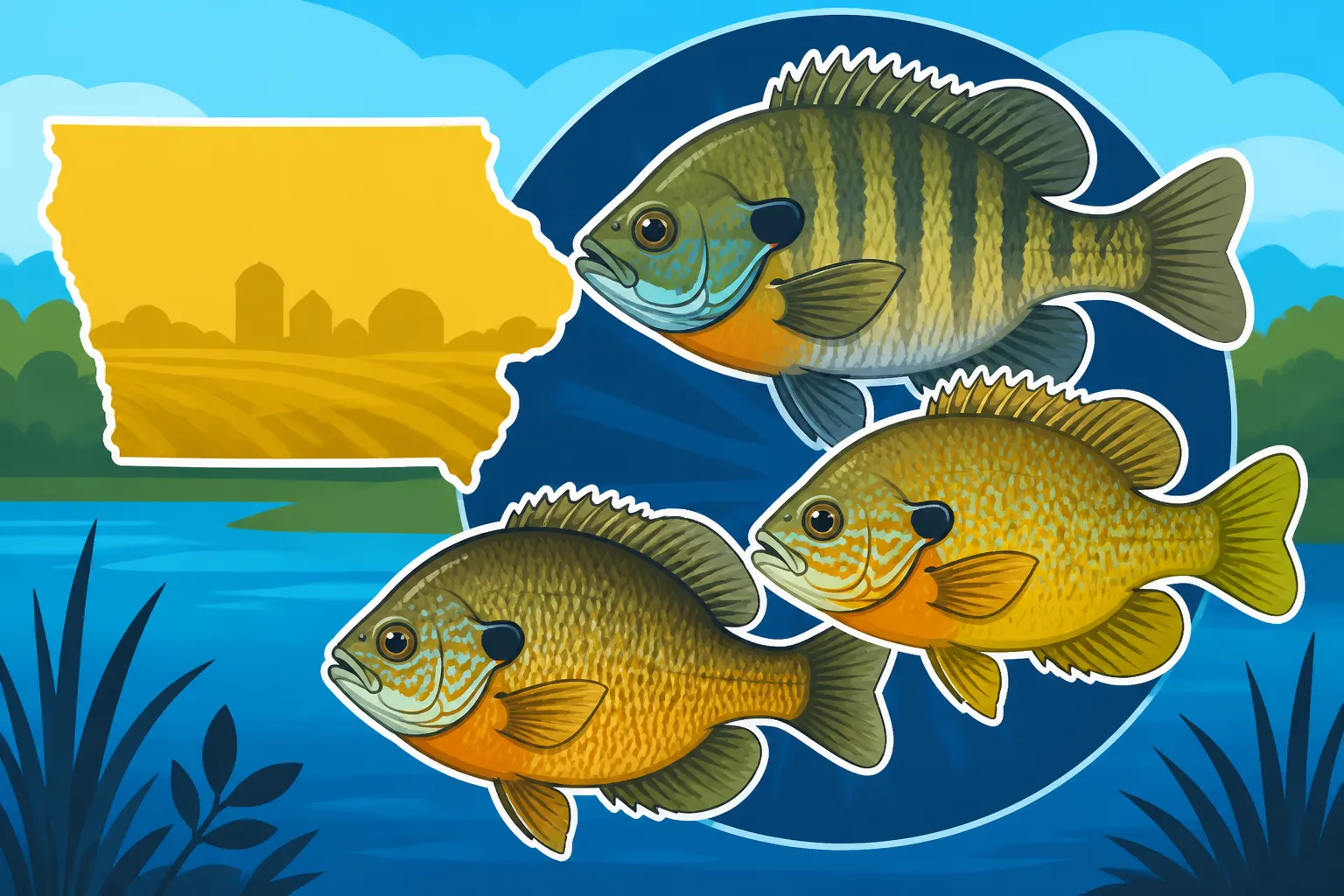
When you've got a bluegill in hand, there are a few tell-tale signs to look for. The most prominent and consistent feature is that small, dark, often black spot right on the soft-rayed portion of its dorsal fin. It's like a signature mark! Another dead giveaway is its small mouth. If you can't fit your pinky finger easily into its mouth, chances are it's a bluegill or a similar small-mouthed sunfish. This small mouth is perfectly adapted for sipping up tiny aquatic insects and larvae.
Bluegill also typically exhibit dark vertical bars or bands along their sides, especially when pulled from cover or in clearer water. These can be faint or quite pronounced. Their opercular flap, or "ear tab," will be entirely black or very dark, and critically, it lacks any colorful trim or spotting on its margin. It's usually just a plain dark flap, sometimes stiff but not overly long. The pectoral fins (the pair behind the gills) are pointed and relatively long. Their overall body color can range from olive green to dark blue on the back, fading to lighter green or yellowish on the sides, often with a hint of orange or rusty red on the belly, particularly in spawning males. Remember, color can vary, but the black spot on the dorsal fin and the plain dark ear tab are usually reliable indicators.
Where You'll Find Bluegill in Iowa
Bluegill are incredibly adaptable and widespread across Iowa, making them accessible to almost every angler. You'll encounter them in nearly every type of freshwater habitat imaginable. They absolutely thrive in ponds and small lakes, often forming large schools around submerged vegetation, fallen trees, or artificial brush piles. These structures provide both food and protection from predators. If you're fishing a local farm pond, you're almost guaranteed to encounter bluegill.
They're also very common in the larger reservoirs like Rathbun Lake or Saylorville Reservoir, where they'll congregate in shallow, weedy bays and around docks. Even in slow-moving rivers and backwater areas of larger river systems like the Mississippi or the Des Moines River, you'll find healthy populations. They generally prefer calmer, warmer waters with plenty of cover, making them a fantastic target for shore anglers and boaters alike. Knowing where they like to hang out is half the battle, and once you find a school, the action can be non-stop! It's why they're often lumped into general panfish limits, but it's still good to check if there's a specific Bluegill and Sunfish Combined Limit for the waters you're fishing.
Bluegill Behavior and Fishing Tips
Bluegill are true social butterflies of the aquatic world, preferring to school up, especially when they're not actively spawning. This schooling behavior is excellent news for anglers because once you find one bluegill, you've often found a whole lot more! They are primarily insectivores, feasting on a diet of aquatic insects, larvae, small crustaceans, and even tiny snails. This varied diet makes them quite eager to bite a wide range of offerings.
For fishing them, think small and subtle. Tiny jigs tipped with a piece of worm, a waxworm, or a cricket are absolute bluegill magnets. Small spinners or micro crankbaits can also be effective, especially for larger specimens. A simple bobber rig with a hook and a bit of natural bait is a classic and highly effective method that's perfect for beginners and seasoned anglers alike. Look for them in shallow water, often just a few feet deep, particularly around weed edges or submerged timber. During the spawn, typically in late spring and early summer when water temperatures are just right, they'll create visible "beds" in shallow areas, often resembling a honeycomb pattern on the bottom. Fishing these beds can lead to incredible action, but remember to practice responsible harvest to ensure future populations. If you want to refine your technique, consider picking up a book on panfish fishing from Amazon to learn even more specific tactics.
Diving into Other Common Iowa Sunfish
While bluegill might be the most famous, Iowa's waters are home to several other distinct and beautiful sunfish species. Each has its own flair and set of identification marks that, once you know them, become easy to spot. These fish add incredible diversity to our angling opportunities.
Pumpkinseed Sunfish: The Colorful Cousin
If you're looking for a fish that truly lives up to the name "sunfish," the pumpkinseed might be it! These fish are often described as living jewels due to their incredibly vibrant and intricate coloration. They're like the bluegill's flashy cousin.
The most striking feature of a pumpkinseed is its opercula flap, or "ear tab." Unlike the bluegill's plain black tab, the pumpkinseed's ear tab will typically have a bright red or orange spot or margin on its posterior edge. This is a very reliable indicator! Look closely, and you'll also notice distinct wavy, iridescent blue or turquoise lines running across their cheek and gill covers. Their body is usually covered in numerous small, golden or orange spots, giving them a speckled appearance, and they often have a brassy or olive-green back fading to golden sides and a yellowish belly. Their pectoral fins tend to be longer and more pointed than a bluegill's. You'll find pumpkinseeds in similar habitats to bluegill – quiet, shallow waters with abundant vegetation, but they often prefer clearer conditions. They're just as fun to catch on a small worm or jig.
Green Sunfish: The Aggressive Eater
The green sunfish is often the one that gets mistaken for a bluegill, especially by less experienced anglers, but they have some distinct differences. They might not be as universally loved for their table fare as bluegill, but they are incredibly hardy and aggressive, making them a blast to catch, especially for kids.
The key to identifying a green sunfish is its mouth: it's noticeably larger than a bluegill's. You can often fit your thumb in there! Their body shape is also a bit more elongated and less "dinner plate" round than a bluegill's, though still compressed. Their pectoral fins are short and rounded, not long and pointed. Look for a dark spot at the base of both the dorsal and anal fins, which is often more pronounced than on a bluegill. Their coloration is usually olive green to dark green on the back, fading to lighter green or yellowish on the sides, often with iridescent blue-green speckles on their body and head, especially in breeding males. The opercular flap is typically dark with a distinct yellowish or orange margin along the edge, not just a red spot like the pumpkinseed. Green sunfish are remarkably tolerant of poor water quality and often thrive in small, sometimes muddy, ponds, roadside ditches, and slow-moving streams where other sunfish might struggle. They're opportunistic feeders and will strike at almost anything.
Longear Sunfish: A Splash of Midwestern Beauty
The longear sunfish, as its name cleverly suggests, is perhaps best known for its remarkably long opercular flap. This is one of Iowa's true beauties, often showcasing an incredible array of colors that can rival any tropical fish.
The defining characteristic of the longear sunfish is its exceptionally long, flexible opercular flap that is often bordered in orange or red. This "ear" can sometimes extend quite far back, often past the eye, which is a great clue. Their face is adorned with stunning wavy blue or emerald green lines, and their body can be a kaleidoscope of olive green, orange, yellow, and red, with a bright orange or red belly, especially during spawning season. They have a moderately sized mouth, smaller than a green sunfish but perhaps a touch larger than a bluegill's. Longear sunfish typically prefer clear, shallow water with plenty of aquatic vegetation or rocky cover. You'll often find them in pristine streams and clear lake margins. Catching one is a special treat, not just for the fight but for the chance to admire its stunning natural artistry.
Redear Sunfish (Shellcrackers): The Bottom Feeder
The redear sunfish, often affectionately called a "shellcracker" due to its habit of eating snails, is another distinct member of the sunfish family you might encounter in Iowa, though perhaps less frequently than bluegill. They are highly sought after for their larger size and excellent table quality.
The most distinctive feature of the redear is the red or orange margin on the posterior edge of its opercular flap. This red edge is quite prominent and usually contrasts with the darker body of the flap. Unlike the pumpkinseed's red spot, the redear often has a more uniform red band along the edge. Their body is typically deeper and more robust than a bluegill's, often growing to a larger size. They have a relatively small, downward-pointing mouth adapted for crushing snails and other benthic invertebrates. Their coloration is usually olive green to silvery on the sides, often with faint dark spots or bars. You'll typically find redear sunfish in warmer, clearer waters of lakes and ponds, where they prefer to forage along the bottom in areas with abundant vegetation and, of course, snails. They can be a bit more challenging to catch than bluegill since they don't always rise to a bobber, preferring baits presented near the bottom.
Here's a quick comparison table to help visualize the differences:
| Feature | Bluegill | Pumpkinseed Sunfish | Green Sunfish | Longear Sunfish | Redear Sunfish |
|---|---|---|---|---|---|
| Dorsal Fin | Black spot on soft dorsal | No distinct spot | Dark spot at base of soft dorsal | No distinct spot | No distinct spot |
| Opercular Flap | Entirely black/dark, no colored trim | Black with bright red/orange spot | Dark with yellow/orange fringe | Very long, flexible, red/orange trim | Dark with prominent red/orange margin |
| Mouth Size | Small | Small | Large | Moderate | Small, downward-pointing |
| Pectoral Fin | Long, pointed | Long, pointed | Short, rounded | Moderate length | Moderate length |
| Facial Markings | Generally plain | Wavy blue lines | Blue-green speckles on head/cheeks | Wavy blue lines | Generally plain |
| Body Shape | Deep, compressed | Deep, compressed | More elongated, somewhat robust | Deep, compressed | Robust, deep |
| Typical Habitat | Ponds, lakes, slow rivers, vegetation | Clearer ponds, lakes, vegetation | All habitats, tolerant of poor water | Clear, shallow water, vegetation/rock | Clear, warm water, vegetated bottoms |
| Key Distinction | Black dorsal spot, plain dark ear tab | Red spot on ear tab, wavy face lines | Large mouth, yellow-fringed ear tab | Very long ear tab, vibrant face lines | Red-banded ear tab, often larger body |
The Tricky World of Hybrid Sunfish
Just when you think you've got all the sunfish species figured out, nature throws a curveball: hybrid sunfish! These fascinating crosses between different sunfish species can sometimes make identification a real head-scratcher. They're incredibly common in stocked ponds and can offer some unique angling experiences.
What Exactly is a Hybrid Sunfish?
A hybrid sunfish, simply put, is the offspring of two different sunfish species that have interbred. The most common hybrids in Iowa involve the green sunfish crossing with bluegill, but you can also find crosses between bluegill and redear sunfish, or even pumpkinseed. This typically happens in situations where one species might be more dominant or more readily available to spawn with another.
These hybrids often exhibit characteristics from both parent species, creating a blend that can be quite distinct from either parent. For example, a bluegill x green sunfish hybrid might have a slightly larger mouth than a pure bluegill but not as large as a pure green sunfish, and its opercular flap might show a mix of characteristics from both. It's like a genetic mash-up! Sometimes, these hybrids occur naturally, especially in environments where different species' spawning grounds overlap. However, they are also deliberately stocked in many private and public ponds because of some desirable traits they possess. If you're curious about the mechanics, a good article like What a Hybrid Sunfish Is can provide more detail on the biology behind these crosses.
Identifying Hybrid Sunfish
Identifying hybrid sunfish can be a true challenge, even for experienced anglers and biologists. They often present a confusing mix of features, making it difficult to pinpoint their exact parentage without genetic testing. You might see a fish with the body shape of a bluegill but the larger mouth of a green sunfish, or an opercular flap that has a hint of orange trim but also the dark base of a bluegill.
One common trait of many hybrid sunfish, particularly the bluegill x green sunfish cross, is their robust, almost "chunky" body compared to their purebred counterparts. They often grow faster and larger than pure bluegill. Another clue is if you're catching many fish that look similar but don't quite fit any single species description – this can be a sign you're in a pond with a strong hybrid population. Their coloration can also be highly variable, often appearing duller or more mottled than a purebred. Don't beat yourself up if you can't definitively identify a hybrid; sometimes, it's just not possible in the field. The best you can do is recognize it as a sunfish hybrid and note its unique characteristics.
Why Hybrids are Popular in Stocked Ponds
Hybrid sunfish are a popular choice for stocking in private and often public ponds for several very good reasons, making them a favorite for pond owners looking to maximize fishing opportunities. One of their biggest advantages is their accelerated growth rate. Because they are hybrids, they often exhibit "hybrid vigor," meaning they grow larger and faster than either parent species. This translates to bigger, meatier panfish for anglers.
Another key reason for their popularity is that many hybrid crosses, especially the bluegill x green sunfish, are sterile or have greatly reduced reproductive capabilities. This might sound counterintuitive, but it's a huge benefit in a pond setting. It means the population won't overpopulate and stunt, a common problem with pure bluegill in small ponds. With less energy spent on reproduction, the fish can put more energy into growth. This allows a pond manager to maintain a healthy population of larger, more aggressive feeding fish without the constant worry of overpopulation and stunted growth. They're also known for their aggressive feeding behavior, making them easier and more fun to catch, which is always a bonus. When you hear about great panfish fishing in a stocked pond, there's a good chance hybrids are playing a big role. This is also why many private landowners like to stock these in their Best Farm Ponds for Bass Fishing.
Essential Tools and Practices for Sunfish Identification
Being able to confidently identify the sunfish you catch takes a little practice, but having the right tools and adopting a few smart practices can make a world of difference. It's about being prepared and knowing where to turn for help.
Gear to Help You Identify Your Catch
While your eyes and knowledge are your primary tools, a few pieces of gear can greatly assist your sunfish identification efforts. First, a good clear ruler or a fish measuring board is invaluable. Not only does it help you adhere to any size limits, but having a consistent way to measure can sometimes aid in distinguishing species or knowing if you've caught a hybrid that's grown larger.
Next, consider a waterproof field guide specific to Iowa fish or even a general freshwater fish guide for the region. These guides will often have detailed illustrations or photographs that highlight the key identification features we've discussed. You can find excellent options on Amazon that are compact enough to bring on your fishing trips. Finally, don't underestimate the power of your smartphone camera. Take clear, well-lit photos of your catch, especially focusing on the opercular flap, mouth, and dorsal fin. Later, you can compare these photos to online resources or show them to more experienced anglers. The GoOutdoors Iowa app is fantastic for checking regulations, but for actual identification, a good photo and a field guide are your best bet.
Practicing Catch-and-Release for Unsure Catches
Even with all the knowledge and tools, there will still be times when you simply can't tell exactly what kind of sunfish you've caught. When in doubt, the best practice is always to release the fish gently and quickly. This approach minimizes any potential regulatory issues and, more importantly, ensures that the fish has the best chance of survival. Handling fish gently, with wet hands if possible, and supporting their body weight can significantly reduce stress.
If you're unsure of the species and thus unsure of the regulations, a quick release means you're not risking a violation or harming a protected or otherwise important part of the fishery. It's a fundamental principle of ethical angling: when in doubt, let it go. This practice contributes directly to the overall health and sustainability of Iowa's fish populations. It’s part of the broader concept of responsible angling, as covered in Iowa Fishing Regulations Explained.
Resources for Further Identification Help
No one expects you to become an overnight expert! The good news is that there are fantastic resources available to help you sharpen your identification skills. The Iowa Department of Natural Resources (DNR) website is an incredible starting point. They often have detailed species profiles, photographs, and even specific regulations for different water bodies. You can also sometimes find downloadable PDF guides or access to their fishing atlas.
Don't forget your local bait and tackle shops. The folks who work there are often lifelong anglers with a wealth of local knowledge. Bring in a clear photo (or even describe your catch), and they can often help you out. Joining local fishing clubs or online fishing forums focused on Iowa angling can also connect you with experienced individuals eager to share their knowledge. Many anglers are happy to help a fellow enthusiast learn the ropes. Education is a continuous journey in fishing, and there's always something new to learn from the community!
Understanding Regulations and Conservation for Panfish
Fishing regulations might sometimes feel like a hassle, but they're really the backbone of healthy fish populations. For panfish like bluegill and other sunfish, these rules ensure that everyone can enjoy the bounty of Iowa's waters for years to come.
Why Size and Bag Limits Exist
The primary reason for establishing size and bag limits on fish species, including our beloved sunfish, is to ensure sustainable populations. Without these limits, there's a risk of overfishing, where too many fish are removed from the water too quickly, faster than the population can naturally replenish itself. This can lead to a decline in fish numbers, smaller average sizes, and an overall unhealthy fishery.
Bag limits, which dictate the maximum number of fish you can keep in a single day, directly manage harvest levels. Size limits, on the other hand, serve a dual purpose: they protect juvenile fish, allowing them to grow and mature enough to reproduce at least once before being harvested, and they often protect the largest, most prolific breeders in a population. By allowing fish to reach reproductive age and contribute to future generations, these limits help maintain a balanced ecosystem. It's a collaborative effort between the DNR and anglers to keep our waters vibrant and full of fish.
General Panfish Regulations in Iowa
In Iowa, panfish species like bluegill, crappie, and most sunfish are often grouped under general panfish regulations. This typically means a combined daily bag limit for these species, rather than individual limits for each specific sunfish type. This simplification makes it a bit easier for anglers, especially given the challenges of identifying hybrids or similar-looking species. However, it's absolutely crucial to remember that these limits can vary significantly depending on the specific body of water you're fishing.
Some lakes or ponds, especially those managed for trophy panfish, might have special regulations, such as a reduced daily limit or specific size restrictions, to protect certain populations. For example, a particular lake might have a Crappie and Sunfish Limits in Iowa that is different from the statewide general limit. Always, always check the current Iowa Fishing Regulations booklet or the Iowa DNR website for the specific lake or river you plan to fish before you cast a line. Regulations are subject to change, so what was true last year might be different this year. Staying informed is your responsibility as an ethical angler. You can even find quick-reference fishing regulation apps on Amazon to have the latest rules right on your phone.
Contributing to Healthy Sunfish Populations
As anglers, we play a vital role in protecting and enhancing Iowa's sunfish populations. Beyond just following the rules, there are several ways we can actively contribute to a healthier aquatic environment. One major way is through responsible catch-and-release practices for fish you don't intend to keep. This means minimizing handling time, using appropriate gear (like barbless hooks for easier removal), and ensuring the fish is revived before release.
Another critical aspect is habitat protection. Avoid disturbing sensitive aquatic vegetation or spawning beds, and always make sure to pack out everything you pack in, preventing litter from entering the water. Participating in local clean-up efforts or supporting conservation organizations can also make a huge difference. Finally, if you ever witness suspicious activities like illegal netting, overfishing, or pollution, don't hesitate to report a fishing violation in Iowa to the proper authorities. By being good stewards of our natural resources, we help ensure that the joy of catching bluegill and other sunfish remains a cherished experience for generations of Iowa anglers.
Disclaimer
This article is for general informational purposes only and does not constitute professional advice. Laws, prices and regulations vary by location and change over time. Consult a qualified professional for guidance on your specific situation.