When Iowa Bass Season Opens
It's a common frustration for bass anglers in Iowa – you're itching to hit the water, but the rules around when you can actually target bass can feel like a tangled line. Knowing the precise opening and closing dates for bass season, especially with varying regulations across different water bodies, is crucial for a successful and legal outing. This comprehensive guide will untangle those regulations, ensuring you're fully prepared for your next bass fishing adventure in Iowa.
The General Lowdown on Iowa's Bass Season
When you're planning your bass fishing trips in Iowa, one of the first questions on your mind is often, "When can I actually fish for them?" It can be genuinely confusing, especially when you hear about different species and specific lake rules. For a significant majority of Iowa's beautiful waters, the good news is that both largemouth and smallmouth bass seasons are actually open for much of the year, offering ample opportunity for anglers.
Year-Round Opportunity for Largemouth and Smallmouth
Here's the exciting part for most of us: across most of Iowa’s public lakes, rivers, and community ponds, the season for both largemouth and smallmouth bass runs year-round. That's right, you can often target these feisty fish regardless of the calendar month! This consistency is fantastic for anglers who love to chase bass throughout the changing seasons, from the crisp mornings of spring to the golden hues of autumn, and even through some mild winter days if conditions allow.
However, "year-round" doesn't mean "anything goes." While you can fish for them, there are still important regulations to keep in mind, specifically regarding how many you can keep and their size. The statewide daily bag limit for bass is generally five fish, which is a combined total of both largemouth and smallmouth bass. The possession limit, which refers to how many fish you can have in your cooler or at home, is typically double the daily bag limit. Furthermore, most inland waters have a minimum length limit of 15 inches. This means any bass you catch that doesn't measure up must be immediately and carefully released. Always double-check the current Iowa Fishing Season Dates and Limits and Bass Season and Size Limits to ensure you're compliant, as these rules are designed to protect our precious fisheries. The concept of Is Bass Fishing Open Year-Round in Iowa? is indeed true for most locations, but those small details are where legal fishing lies.
Why Length and Bag Limits Are Your Best Friend
You might wonder why the Iowa Department of Natural Resources (DNR) bothers with these seemingly restrictive length and bag limits when the season is mostly open. The truth is, these regulations aren't there to make your life harder; they are absolutely essential for maintaining healthy, thriving bass populations for everyone, now and in the future. Think of it as investing in your future fishing trips!
For example, the 15-inch minimum length limit for largemouth bass on many waters is a prime example of a "slot limit" or "minimum size limit" designed to protect younger, fast-growing bass. By letting these fish grow to maturity, they have a chance to spawn multiple times, contributing significantly to the next generation of bass. Imagine catching a healthy, feisty 14-inch bass. It's a great catch, but by releasing it, you're giving it the opportunity to grow even bigger and stronger, and perhaps even produce more offspring that you or another angler might catch in the future. Ignoring these limits can have serious consequences, not just for the fish population but also for your wallet, as fines for violations can be steep. You can delve deeper into these crucial conservation efforts by understanding the Iowa Fishing Daily Bag Limits Guide and the specifics of the Minimum Length Limit for Bass in Iowa Public Lakes. It's all about sustainable angling, ensuring that the thrill of a bass on the line remains a joy for years to come.
Navigating Special Bass Season Rules: The Key Exceptions
While much of Iowa offers year-round bass fishing, there are a few notable exceptions that every angler needs to be aware of. These specific regulations are put in place for very good reasons, often to protect spawning fish or manage unique populations in particular water bodies. Failing to know these exceptions can lead to unintentional violations, which none of us want!
Smallmouth Bass and the Iowa Great Lakes Closure
This is perhaps the most significant exception and often the source of confusion for anglers asking "When Iowa Bass Season Opens." If you're planning a trip to the iconic Iowa Great Lakes – that's Spirit Lake, East Okoboji Lake, West Okoboji Lake, and their smaller connected siblings like Upper Gar, Lower Gar, and Minnewashta Lake – you need to pay close attention to the smallmouth bass season.
Unlike most of the state, these renowned waters have a specific closed season for smallmouth bass. Historically, this closure typically runs from April 1st through the Friday before the first Saturday in May. This means that if you're targeting smallmouth bass on these lakes during that window, you're out of luck – it's catch-and-release only, but even then, it's generally best to avoid targeting them during their most vulnerable spawning periods. The season reopens for smallmouth bass on that first Saturday in May, marking a highly anticipated "opening day" for many dedicated bronzeback anglers.
The reasoning behind this specific closure is critical: it protects smallmouth bass during their peak spawning period. Smallmouth are particularly sensitive during this time, and disturbing them on their nests can severely impact their reproductive success. When the season reopens, the smallmouth bass on the Great Lakes also have different limits than statewide: a daily bag limit of just three fish and a more generous 18-inch minimum length limit. It’s a testament to the DNR’s efforts to manage these unique trophy smallmouth fisheries. For largemouth bass on the Great Lakes, however, the season remains open year-round with the standard 15-inch minimum length and 5-fish combined daily bag limit. Always consult the latest Iowa Bass Season Closed Dates at the Great Lakes and explore specific guides like the Fishing the Iowa Great Lakes or the Spirit Lake Fishing Guide to ensure you're well-informed before you go.
Mississippi River Border Waters: Different Strokes for Different Folks
Another area where bass regulations can get a little nuanced is on the mighty Mississippi River, which forms Iowa's eastern border. The Mississippi is a massive, complex system, and its regulations reflect that complexity, often involving reciprocal agreements with neighboring states like Wisconsin and Illinois.
For both largemouth and smallmouth bass, the Mississippi River border waters are generally open year-round for Iowa-licensed anglers. However, the length limits can be a bit different from inland Iowa lakes. For much of the Mississippi, there isn't a statewide minimum length limit for bass. This doesn't mean you can keep every small bass you catch, but it does allow for more flexibility. There are exceptions, though! For instance, on Pool 12 below Lock and Dam 12 at Bellevue, a 14-inch minimum length limit applies to both species. This kind of localized rule highlights why it's so important to check the specific regulations for the pool you plan to fish.
Additionally, because it’s a border water, reciprocal fishing rules come into play. If you have an Iowa fishing license, you can generally fish the main channel and often certain backwaters of the Mississippi River, regardless of whether you’re technically on the Iowa or the bordering state’s side. However, the specific regulations you must follow usually depend on where you purchased your license. It’s always safest to carry a copy of both Iowa's and the reciprocal state's regulations if you plan to venture across the border, or simply adhere strictly to Iowa's rules if you're licensed here. Checking the Iowa Fishing Regulations on the Mississippi River Border and understanding Reciprocal Fishing Rules on the Mississippi River Border are essential steps to avoid any headaches on the water.
| Water Body Type | Largemouth Bass Season | Smallmouth Bass Season | Daily Bag Limit (Combined) | Minimum Length (Varies) | Notes |
|---|---|---|---|---|---|
| Most Inland Public Waters | Open Year-Round | Open Year-Round | 5 fish | 15 inches | Check local postings, as some lakes may differ |
| Iowa Great Lakes (Spirit, E. & W. Okoboji, etc.) | Open Year-Round | Closed April 1 – Friday before 1st Sat in May | 3 fish (Smallmouth only) | 18 inches (Smallmouth only) | Largemouth: 5 fish, 15 inches. Smallmouth reopens first Sat in May. |
| Mississippi River Border Waters (Iowa-licensed anglers) | Open Year-Round | Open Year-Round | 5 fish | No statewide minimum; 14 inches for Pool 12 below L&D 12 | Reciprocal agreements apply; check specific pool regulations |
Gear, Techniques, and What to Expect Early Season
When the bass season either fully reopens or the water temperatures start to climb after a long Iowa winter, the fish's behavior changes dramatically. Understanding these shifts and adapting your gear and techniques accordingly will drastically improve your chances of success, especially during those exciting early season bites.
Spring Bass Tactics as Seasons Reopen or Warm Up
Whether you're hitting the Great Lakes right after the smallmouth closure lifts or fishing a local pond where the season has been open year-round, spring bass fishing is all about adapting to transition periods. In early spring, water temperatures are still cool, and bass are often in a pre-spawn phase, looking to feed up before their energy-intensive spawning ritual. This is a fantastic time to target them, but they can be a bit lethargic.
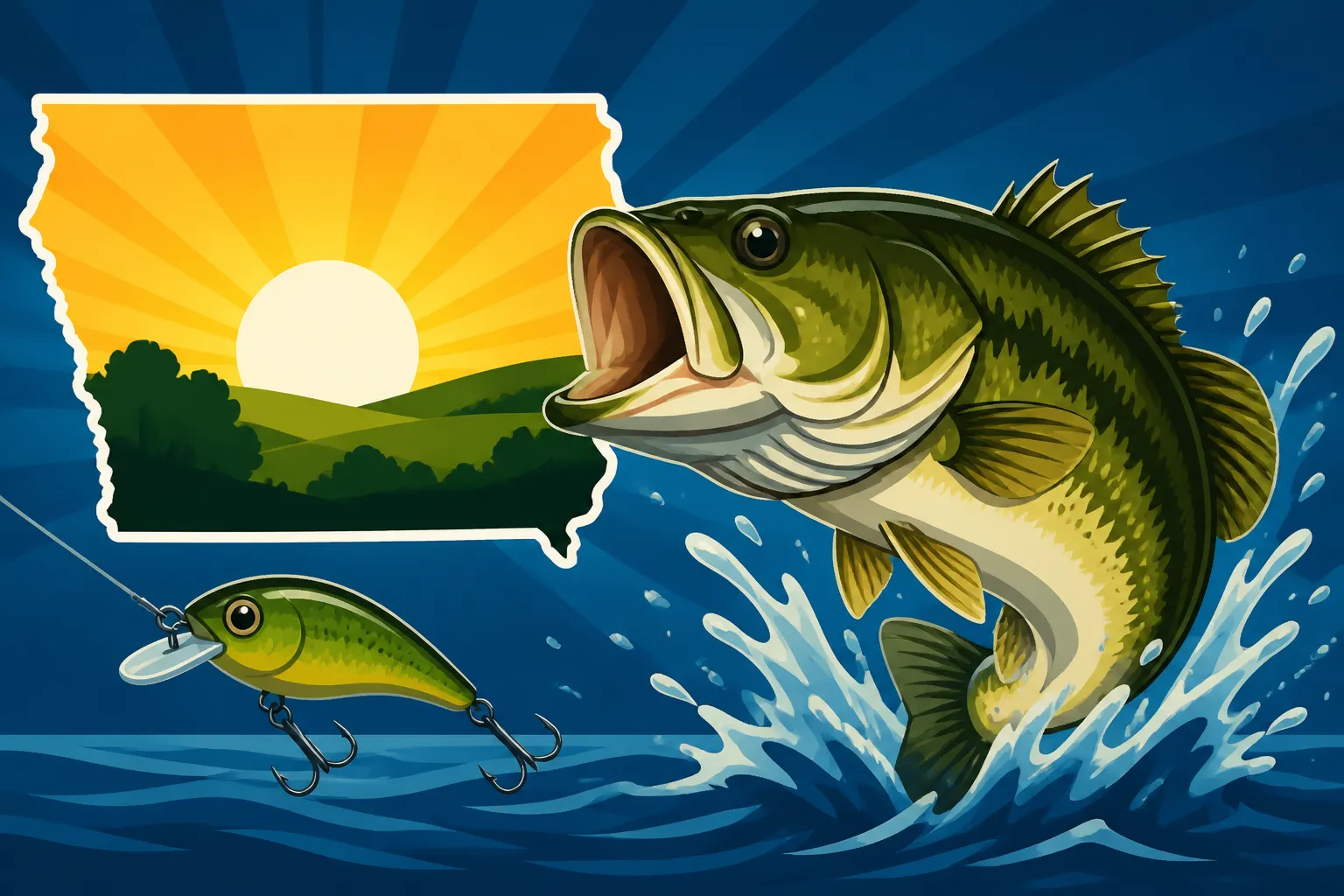
For largemouth bass, this often means slowing down your presentation. Jigs, creature baits, and slow-rolled spinnerbaits can be incredibly effective when worked near submerged cover, weed lines, or rocky points. Baits like a 3/8-ounce football jig in green pumpkin, tipped with a soft plastic trailer, crawled slowly along the bottom can elicit powerful strikes from pre-spawn lunkers. As the water warms, crankbaits and chatterbaits become more viable, allowing you to cover water more efficiently. Many anglers find great success with a variety of lures, and you can find a vast selection of these on online retailers like Amazon, ensuring you're stocked for any situation. For smallmouth on the Great Lakes once their season reopens, they might still be recovering from spawning, but will quickly move to rocky banks, points, and transition areas where they can ambush baitfish. Finesse techniques like Ned rigs, dropshots, or small tubes can be deadly, as can twitching jerkbaits along rocky shorelines. Learn more about How to Catch Bass in Iowa to really dial in your approach.
Locating Bass in the Spring Transition
Finding bass in the spring, especially around an "opening day" or simply when the water begins to warm up significantly, often comes down to understanding where they seek comfort and food. Bass are highly sensitive to water temperature, and they'll gravitate towards the warmest water available, especially after a cold winter.
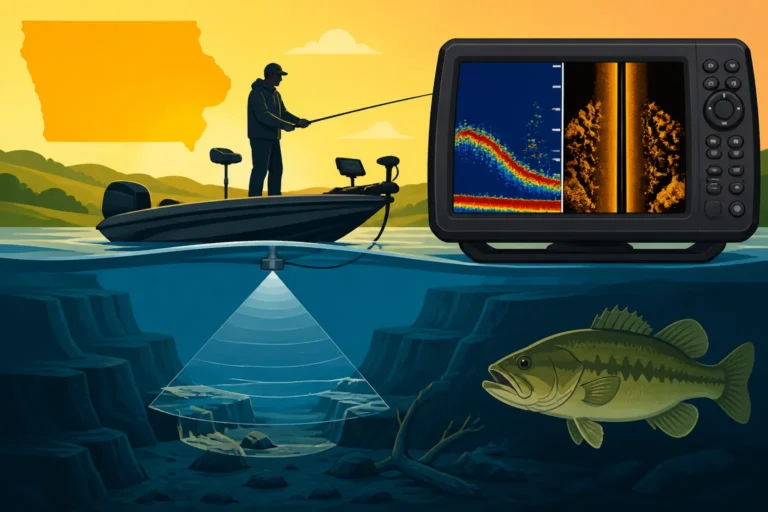
Look for shallow, dark-bottomed coves that absorb sunlight, as these areas warm up faster than deeper, more exposed main lake basins. Northern banks and shallow flats with access to deeper water are also prime locations. Submerged timber, rock piles, docks, and weed edges provide crucial cover and ambush points for bass waiting for prey. On rivers, look for current breaks, eddies, and slack water pockets. During the smallmouth reopening on the Great Lakes, focus on rocky points, rock piles, and distinct depth changes where smallmouth will congregate. Using your electronics, if you have them, to identify changes in bottom composition and subtle contours can be a game-changer. Even without a fancy fish finder, paying attention to visible structure and water temperature is key. Understanding Pre-Spawn Bass Patterns in Iowa can give you a significant advantage in figuring out where these fish are likely to be hiding and feeding. Learning How to Read Water for Structure Fishing can help you interpret the subtle signs that indicate prime bass habitat.
Essential Steps Before You Cast Your Line
Even the most seasoned anglers occasionally forget a small detail, and that tiny oversight can sometimes lead to big problems. Before you even think about putting a boat in the water or casting a line, there are two absolutely non-negotiable steps every bass angler must take to ensure a smooth, legal, and enjoyable fishing trip in Iowa.
Your Official Guide: The Iowa DNR Regulations
I can't stress this enough: always, always, always consult the official Iowa Department of Natural Resources (DNR) fishing regulations. While this guide aims to provide comprehensive information, regulations can and do change. What was true last year might have a slight modification this year. The DNR is the definitive source for all rules, limits, and seasons.
You have a couple of easy ways to do this. First, you can visit the Iowa DNR website, where they typically have the current year's fishing regulations available for download as a PDF. It’s incredibly convenient to have it saved on your phone or tablet. Second, many bait shops, outdoor retailers, and county recorder offices will have free printed copies of the annual fishing regulations booklet. Grab one, keep it in your tackle box or glove compartment, and give it a thorough read-through before each fishing season or when visiting a new body of water. This little booklet holds all the answers to questions like length limits, bag limits, and specific water body rules, including those complex ones for the Great Lakes and the Mississippi River. Taking the time to do this small check will save you from potential fines and ensures you're a responsible angler. For the most up-to-date information, always refer to How to Check Current Iowa Fishing Regulations Online and review the comprehensive Iowa Fishing Regulations Explained.
Valid Fishing License: Your Entry Ticket
This might seem like a no-brainer, but it's astonishing how many anglers, both new and experienced, sometimes forget or overlook the need for a current, valid fishing license. In Iowa, anyone 16 years of age or older needs a valid fishing license to legally fish in public waters. This applies whether you're a resident or an out-of-state visitor.
Purchasing a license is straightforward. You can buy one online through the Iowa DNR's Go Outdoors Iowa system, or in person at hundreds of license vendors across the state, including many bait shops, sporting goods stores, and county recorder offices. There are various license options available to suit your needs: annual resident licenses, non-resident annual licenses, even shorter-term options like a one-day or three-day nonresident license if you're just visiting for a quick trip. Make sure you carry your license with you while fishing – either a physical copy or a digital version on your phone – as a conservation officer can ask to see it at any time. Fishing without a license is a surefire way to ruin a great day on the water and incur a hefty fine. Ensure you're covered by reviewing the full Iowa Fishing License Guide and understanding options like the Iowa Resident Annual Fishing License or the Iowa Nonresident Annual Fishing License.
Disclaimer
The information provided in this guide is for general informational purposes only and is based on typical Iowa fishing regulations. Fishing regulations are subject to change and vary by specific water body. Always consult the official Iowa Department of Natural Resources (DNR) website or their current printed regulations booklet for the most accurate and up-to-date information before engaging in any fishing activities. Compliance with all state and local fishing laws is the responsibility of the angler.