How to Catch Crappie in Iowa
Few things are more frustrating than heading out to your favorite Iowa lake, full of hope, only to spend hours casting without so much as a nibble from those notoriously finicky crappie. We've all been there – staring at an empty bucket, wondering what secrets other anglers know. But don't you worry, because this comprehensive guide is here to unravel the mysteries of crappie fishing in Iowa, helping you unlock consistent success and fill your cooler with these delicious panfish.
Understanding Iowa Crappie: The Elusive Panfish
Before you can truly master catching crappie, you need to understand them. These aren't just any fish; they're unique in their behavior, their preferred hangouts, and what makes them tick. Knowing the nuances of crappie in Iowa waters is your first step to becoming a more successful angler.
Black Crappie vs. White Crappie in Iowa
Iowa is home to both black crappie and white crappie, and while they share many similarities, understanding their subtle differences can be a game-changer. Both species are popular targets for anglers due to their delicious white meat and their tendency to school, offering exciting action when you find them. However, they each have their own quirks that often dictate where you'll find them and what bait might tempt them.
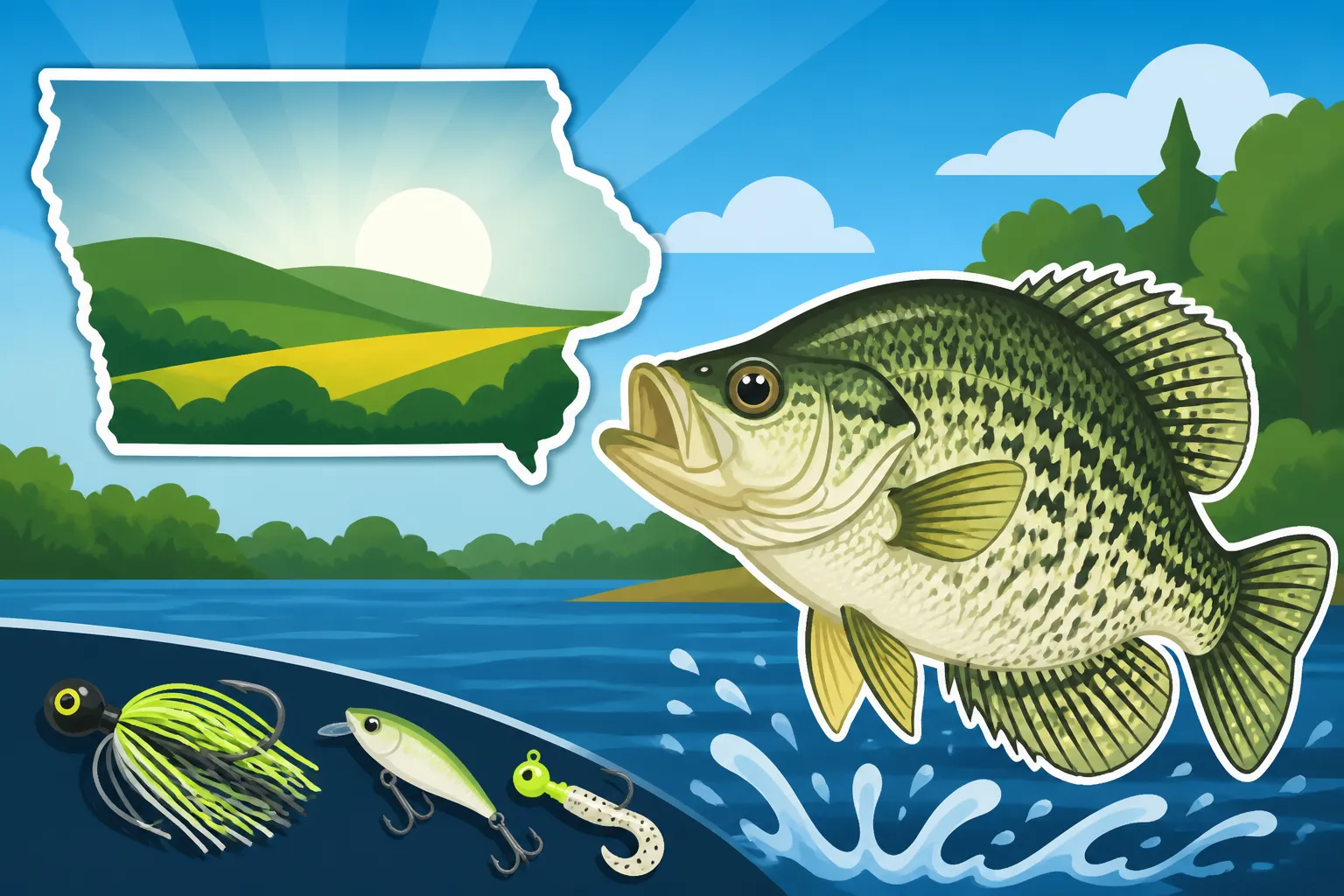
Black crappie, generally speaking, prefer clearer water and tend to be found more often around submerged timber, brush piles, and heavy vegetation. You'll notice their distinct, irregular dark speckling all over their silvery bodies, and they usually have seven or eight dorsal spines. These fish are a bit more finicky when it comes to water quality, so if you're on a clear lake with lots of structure, you might be targeting more black crappie.
White crappie, on the other hand, are often more tolerant of turbid or murky water, and they frequently inhabit larger, more open bodies of water like reservoirs and bigger rivers. Their bodies are typically paler, with more distinct vertical bars or stripes, and they usually only have five or six dorsal spines. They’re often found in areas with less dense cover, moving more freely. Knowing which species you're likely to encounter can help you fine-tune your approach. For a deeper dive into their characteristics, check out our guide on Crappie Species Found in Iowa.
Crappie Habitat in Iowa Waters
Crappie are true structure-loving fish. If you want to find them, you need to find cover. This isn't just about throwing a line anywhere; it's about systematically searching for the spots where these fish feel safe, can ambush prey, and escape predators. Their preferred habitat changes with the seasons, water temperature, and time of day, making them a fascinating challenge for any angler.
In many Iowa lakes and reservoirs, you'll find crappie congregating around brush piles, sunken trees, and even old tires or rock reefs that have been intentionally placed to create fish habitat. These structures provide shade, shelter, and a buffet of smaller baitfish and insects. Docks and bridge pilings are also prime locations, especially those with submerged brush or cribs underneath. The key is to think like a crappie: where would you hide if you were a schooling fish looking for food and safety?
Beyond physical structure, crappie will also relate to changes in depth and vegetation. Deep weed lines, especially where they meet open water or a sharp drop-off, can hold schools of crappie. During certain times of the year, they might be suspended over open water, especially in deeper reservoirs, following schools of baitfish. A good fish finder can be your best friend in locating these elusive schools, helping you pinpoint exactly where they're holding.
The Crappie Life Cycle and Feeding Habits
Understanding the crappie's life cycle and what they eat is fundamental to consistent success. Their behavior, particularly their feeding habits and where they choose to reside, is heavily influenced by their natural instincts for spawning and survival. Missing these cues means missing out on some of the best fishing action.
Crappie typically spawn in the spring when water temperatures reach the mid-60s Fahrenheit. During this time, they move into shallow waters, often in bays, coves, or protected areas with submerged vegetation, roots, or brush. The males will fan out nests, and both sexes become incredibly aggressive and territorial, making them easier to catch. This pre-spawn and spawn period is often considered the peak time for crappie fishing as they are concentrated and actively feeding to prepare for and recover from spawning.
Once spawning is complete, crappie generally transition back to deeper water, often suspending over structure or open water, always close to baitfish. Their diet primarily consists of small minnows, insects, and tiny crustaceans. They are ambush predators, often hiding in cover and darting out to snatch their prey. This means that presenting your bait in a natural, subtle way, often right near or within their chosen structure, is far more effective than just casting blindly. Knowing what crappie are likely feeding on at any given time can help you choose the right bait or lure to mimic their natural forage.
Essential Gear for Iowa Crappie Fishing
Having the right tools for the job can make all the difference, especially when you're pursuing a species as specific as crappie. You don't need to break the bank, but investing in appropriate rods, reels, lines, and lures designed for their subtle bites and delicate mouths will drastically improve your catch rates.
Rods, Reels, and Line for Crappie Success
Crappie are known for their light bites, sometimes feeling like nothing more than a faint tick or the line just going slack. This is why having the right rod, reel, and line setup is absolutely critical to detect those subtle takes and ensure you can land the fish without tearing their soft mouths.
For crappie, a light to ultralight action spinning rod is generally preferred. These rods typically range from 5 to 7 feet in length and have a very sensitive tip that allows you to feel even the faintest of bites. The softer action also helps prevent hooks from pulling out of a crappie's delicate mouth during the fight. A shorter rod, around 5 to 5.5 feet, is excellent for vertical jigging or fishing in tight quarters, while a longer rod, 6.5 to 7 feet, offers better casting distance and can be advantageous for trolling or reaching distant structure. You can find some excellent options on Amazon that balance sensitivity with durability.
Pair your sensitive rod with an ultralight spinning reel, typically in the 500 to 1000 size range. These small reels are lightweight and designed to handle light lines, making them perfectly balanced for crappie rods. For line, 2-pound to 6-pound test monofilament or fluorocarbon is ideal. Monofilament offers good knot strength and stretch, which can act as a shock absorber against head shakes, while fluorocarbon is nearly invisible underwater and offers excellent sensitivity. Many anglers prefer fluorocarbon leaders with a braided main line for ultimate sensitivity, especially when fishing deeper or in current.
Top Baits and Lures for Iowa Crappie
Crappie aren't overly picky, but they do have preferences, and certain baits and lures consistently outperform others. Your selection should often be dictated by the season, water clarity, and what the crappie are actively feeding on. Having a diverse tackle box will ensure you're ready for any situation.
Live minnows are, without a doubt, the classic and often most effective bait for crappie. There's something about the natural movement and scent of a live minnow that crappie simply can't resist. They can be fished under a bobber, tight-lined, or slowly trolled. When using minnows, make sure they are lively and hooked carefully through the back (just behind the dorsal fin) or lightly through the lips to allow maximum movement. Small shiners or fathead minnows are often the most productive.
Beyond live bait, artificial lures, particularly small jigs, are incredibly popular and effective. Soft plastic jigs, ranging from 1 to 2 inches, in colors like chartreuse, white, black, or pink, are a staple. Crappie tubes, grubs, and tiny paddle tails are excellent choices. Hair jigs, often made of marabou, also have a fantastic pulsing action in the water that crappie find irresistible. Tiny crankbaits, especially those that suspend, can also be very effective for trolling or casting in open water when crappie are more aggressive. Experiment with different colors and sizes until you find what the crappie are biting on that day.
Must-Have Accessories for a Crappie Angler
While rods, reels, and bait are the stars of the show, a few key accessories can significantly enhance your crappie fishing experience, making it more efficient, enjoyable, and safer. Don't overlook these often-small but crucial items.
A good slip bobber setup is almost indispensable for crappie fishing. Unlike fixed bobbers, slip bobbers allow you to fish at virtually any depth by simply adjusting the bobber stop, which slides down to your hook when casting and then floats up to the stop once in the water. This is particularly useful for targeting suspended crappie or fishing deep structure. You'll also need small fishing pliers or hemostats for hook removal, especially when dealing with those tiny jig hooks, and a line clipper to make clean cuts.
A lightweight landing net is also a smart investment. Crappie have soft mouths, and trying to hoist a larger fish directly into the boat can often result in a lost catch. A net ensures a smooth landing and reduces stress on the fish if you plan to release it. Finally, for those serious about finding crappie, a portable fish finder can be a game-changer. Devices like the Humminbird PiranhaMax or Garmin Striker series, often available on Amazon, can help you locate schools of fish and identify submerged structure that might be invisible to the naked eye. If you plan to keep your catch, a well-insulated cooler with ice or a portable livewell will keep your crappie fresh until you get home.
Mastering Crappie Fishing Techniques in Iowa
Crappie fishing isn't just about showing up with a rod; it's about employing the right techniques for the conditions. These fish can be caught in numerous ways, and a versatile angler who can adapt their approach will consistently outfish those who stick to just one method.
Jigging Techniques for Crappie
Jigging is perhaps the most popular and versatile technique for catching crappie, allowing anglers to precisely present baits at specific depths and trigger strikes. It can be done from a boat, kayak, or even from shore, making it accessible to almost anyone. Mastering a few different jigging styles will greatly expand your crappie-catching arsenal.
Vertical jigging is incredibly effective, especially when you've pinpointed a school of crappie on your fish finder, or you're fishing over dense cover like a brush pile. The idea is to drop a small jig (soft plastic, hair jig, or even a leadhead with a minnow) directly down to the fish's level. Once at the desired depth, use subtle rod tip movements – small lifts, twitches, and pauses – to impart action to the jig. The key is to keep it slow and controlled, often barely moving the bait, mimicking a struggling minnow or insect. This technique is particularly deadly in winter through the ice or when crappie are tightly schooled in deep water.
Casting and retrieving jigs is another highly effective method, especially when crappie are scattered or holding around visible structure like docks or fallen trees. Cast your small jig past the target area and retrieve it slowly, varying your retrieve with short pauses, drops, and twitches. Pay close attention to your line; often, a crappie bite will feel like a slight "thump" or simply the line going slack as the fish mouths the bait. For more detailed insights into specific presentations, check out our guide on Crappie Jig Fishing Techniques.
Trolling for Crappie in Iowa Lakes and Reservoirs
When crappie are scattered over larger areas or suspended in open water, trolling can be an incredibly efficient way to cover ground and locate active fish. This technique allows you to present multiple baits at different depths simultaneously, increasing your chances of finding the crappie's preferred zone.
Slow trolling, often referred to as "spider rigging," is a popular method in Iowa. This involves using multiple long rods (often 8-16 feet) extending out from the boat, each rigged with a jig or a minnow under a small weight. You move at a very slow pace, typically 0.5 to 1.5 miles per hour, allowing your baits to cover a wide swath of water. The long rods keep the lines spread out, preventing tangles and allowing you to present baits precisely along contours or over submerged structure. This method is particularly effective on large reservoirs like Rathbun Lake or Saylorville.
Another trolling approach involves using traditional crankbaits or even Road Runner style spinner jigs designed for crappie. These lures have built-in action and can be trolled at slightly higher speeds, making them great for covering vast expanses of water quickly. Experiment with different depths and colors until you find what triggers bites. For more in-depth strategies, our guide on Trolling for Crappie in Iowa offers excellent advice.
Slip Bobber Fishing: A Versatile Crappie Method
The slip bobber is a time-tested tool that offers unparalleled versatility for crappie fishing, allowing for precise depth control and excellent bite detection, especially when using live bait. If you've ever struggled to get your bait to a specific depth, this method will change your fishing forever.
The beauty of a slip bobber lies in its adjustability. You rig it by first sliding a small bobber stop onto your line, then a bead, followed by the slip bobber itself, and finally tying on your jig or hook. The bobber stop, typically a piece of string or a small rubber stopper, can be moved up or down your line to set the exact depth you want your bait to suspend at. When you cast, the bobber slides down the line to your lure, allowing for a compact and easy cast. Once it hits the water, the bobber floats up until it reaches the stop, presenting your bait at the precise depth you've chosen.
This technique is fantastic for targeting crappie suspended around brush piles, docks, or other vertical structure where precise depth presentation is key. It's also incredibly effective when crappie are finicky, as the subtle pull of a bobber is often all it takes to indicate a bite. You can rig a small jig tipped with a minnow, a simple minnow on a hook, or even a small crappie plastic under a slip bobber. The visual cue of the bobber disappearing or moving sideways is often easier to detect than a subtle bump on the line, especially for beginners or in windy conditions.
Seasonal Strategies for Iowa Crappie
Crappie don't stay in one spot all year; their movements and feeding patterns are heavily dictated by the changing seasons and water temperatures. Understanding these seasonal shifts is paramount to consistently locating and catching them in Iowa.
Spring Crappie: The Pre-Spawn and Spawn Frenzy
Spring is often hailed as the "holy grail" for crappie anglers in Iowa, and for good reason. As the ice melts and water temperatures begin to rise, crappie move from their deeper wintering holes into shallower water, making them much more accessible and aggressive. This period is often divided into pre-spawn and spawn, each offering unique opportunities.
In the early spring, typically when water temperatures are in the high 40s to low 50s, crappie will begin their pre-spawn migration towards shallow feeding grounds. They'll often stage in slightly deeper water adjacent to spawning flats, looking for submerged timber, rock piles, or channel swings. During this time, they're actively feeding to build energy for the upcoming spawn. Slow-rolling jigs or pitching minnows to these staging areas can be incredibly productive. For more insights on this fantastic time of year, check out our guide on Spring Fishing in Iowa.
As water temperatures climb into the mid-60s, the crappie spawn kicks into full gear. Males will move into very shallow water (1-5 feet) to fan out nests, often around brush, cattails, lily pads, or other dense cover. Both sexes become territorial and highly catchable. Presenting small jigs or minnows under a bobber directly into these shallow cover areas is your best bet. Look for protected bays and coves that warm up faster than the main lake. It's truly an exciting time to be on the water, with abundant bites and often large numbers of fish.
Summer Crappie: Deep Water and Structure
Once the spring spawn is over and water temperatures really heat up, crappie typically retreat from the shallow banks and move to deeper, cooler water. This can be a challenging time for anglers who don't adjust their tactics, as the fish become more dispersed and often suspend in open water or hug deeper structure.
During the summer months, you'll want to focus your efforts on the main lake basins, especially around significant depth changes, submerged humps, deep weed lines, and man-made structures like bridge pilings or deep brush piles. Crappie will often relate to the thermocline, a layer of water where the temperature changes rapidly, as it typically holds higher oxygen levels and abundant baitfish. Your fish finder will be an invaluable tool here, helping you locate these deeper schools and suspended fish.
Techniques like vertical jigging, slow trolling with multiple rods (spider rigging), or even night fishing under lights can be highly effective. At night, crappie are often drawn to lights, which attract plankton and baitfish, creating a feeding frenzy. Focus on presenting your jigs or minnows at the depth where you're marking fish on your electronics. Don't be afraid to experiment with different depths until you find their comfort zone.
Fall Crappie: The Feeding Spree
Just like in spring, fall can be an incredibly productive time for crappie fishing in Iowa. As water temperatures begin to cool, crappie go on a serious feeding spree, fattening up for the lean winter months ahead. This makes them aggressive and often easier to catch.
In early fall, crappie may still be found around deeper summer structures, but as the water continues to cool, they will begin to move towards shallower water again, though not as shallow as in spring. They'll often be found in transitional areas, moving between shallow bays and deeper main lake points or channels. Look for them around brush piles, stumps, and even some remaining green vegetation in 8-15 feet of water. For a full breakdown of this active period, our Fall Fishing in Iowa guide offers more excellent tips.
Later in the fall, as temperatures drop further, crappie will school up more tightly and move towards deeper holes and channels, often suspending over these areas or holding tight to bottom structure. They’re still feeding heavily, so presenting jigs or minnows at these deeper depths can lead to some fantastic catches. Trolling with jigs or minnows can be very effective for covering water and finding these schooled-up fish. The fall bite can be some of the most consistent fishing of the year.
Winter Crappie: Ice Fishing and Deep Pockets
When the lakes freeze over in Iowa, the crappie bite doesn't stop; it just moves under the ice. Ice fishing for crappie is a popular pastime, offering a unique challenge and the opportunity for some truly exceptional catches. However, success depends on understanding their winter behavior.
During winter, crappie slow down their metabolism and seek out stable, deeper water. They will often congregate in large, tight schools, suspending over the deepest parts of the lake, around submerged humps, old creek channels, or significant brush piles. Your ice fishing electronics, such as a flasher or a portable fish finder, become absolutely essential for locating these schools and determining their precise depth. For more on preparing for the cold, check out our guide on Ice Fishing in Iowa.
Small jigs, often tipped with a live minnow, a wax worm, or a small soft plastic, are the go-to baits. Perch-like jigs, tear drops, or small tungsten jigs in sizes 1/16 oz to 1/32 oz are perfect. Use a very sensitive ice fishing rod to detect their often incredibly subtle bites. Present your bait just above the suspended crappie. If you see them on your flasher, drop your bait a foot or two above them; they are much more likely to rise to strike than to go down. Patience and subtle jigging movements are key to enticing these cold-water fish.
Prime Iowa Crappie Fishing Locations
You can have the best gear and techniques, but if you're not fishing in the right spots, your chances of success dwindle. Iowa boasts a variety of excellent crappie waters, from expansive reservoirs to intimate farm ponds, each offering its own unique crappie potential.
Top Lakes and Reservoirs for Crappie
Iowa's larger impoundments are often crappie factories, holding strong populations of both black and white crappie. These bodies of water provide ample habitat and food sources for these popular panfish.
Rathbun Lake is consistently ranked as one of Iowa's premier crappie destinations. Located in south-central Iowa, this large reservoir is known for its incredible crappie fishing, particularly in the spring and fall. Anglers regularly report catching good numbers of both black and white crappie, with many fish exceeding the 10-inch mark. Look for crappie around the standing timber, submerged brush piles, and old roadbeds. The various arms and coves provide excellent shallow water habitat during the spawn. For specific recommendations, our guide on Rathbun Lake Crappie Hotspots offers invaluable information.
Saylorville Reservoir, near Des Moines, is another excellent choice. While known for its walleye and catfish, Saylorville also supports a healthy crappie population. Focus your efforts on the abundant standing timber and brush piles that line the old river channel, especially during summer and winter when crappie relate to deeper structure. The various points and humps can also hold schools of crappie.
Coralville Reservoir, near Iowa City, and Clear Lake, in north-central Iowa, are also fantastic crappie lakes. Coralville offers extensive submerged timber and rock rubble, while Clear Lake provides excellent natural vegetation and man-made fish structures. Anglers at Clear Lake often find crappie mixed in with other panfish species. Our specific guide on Clear Lake Panfish and Crappie Spots details where to find these elusive fish. The Iowa Great Lakes, including West Okoboji and Spirit Lake, also hold good crappie populations, especially around their numerous docks and deep weed lines.
River Backwaters and Smaller Ponds
While large lakes get most of the attention, don't overlook the incredible crappie fishing opportunities found in Iowa's river backwaters and smaller community or farm ponds. These often-overlooked spots can provide surprisingly good action, especially for those who prefer a quieter fishing experience.
The backwaters of the Mississippi River, particularly in Pools 9, 10, and 12, are teeming with crappie. These areas, characterized by slower currents, abundant submerged timber, old oxbows, and sloughs, provide ideal crappie habitat. During high water or stable conditions, crappie will move into these sheltered backwaters to spawn and feed. Focus on areas with woody debris, log jams, and any submerged vegetation. Vertical jigging or pitching jigs under a bobber are highly effective in these environments.
Smaller community ponds and well-managed farm ponds across Iowa can also be crappie havens. While they may not produce the sheer numbers of a large reservoir, they often hold surprisingly large crappie, especially if they have good forage and cover. Look for ponds with brush piles, old Christmas trees placed for habitat, or areas with lily pads. These smaller bodies of water are excellent for bank anglers or those fishing from kayaks or small boats. Just remember to always ask permission before fishing on private property.
Finding Crappie Structure: Brush Piles and Docks
Finding crappie often boils down to finding the right structure. Crappie are schooling fish that gravitate towards cover for protection from predators and as ambush points for feeding. Knowing how to locate these hotspots is a critical skill for any crappie angler.
Brush piles are absolute magnets for crappie. These can be natural accumulations of fallen trees and branches, or they can be man-made fish attractors placed by the Iowa Department of Natural Resources (DNR) or local angling groups. These underwater jungles provide shade, shelter, and a dense network of branches for crappie to hide within. To find them, use your boat's electronics (fish finder), looking for distinct "clumps" or "trees" on the screen, often near drop-offs or channel edges. If you're fishing from shore, look for areas where trees have fallen into the water or where you know habitat has been intentionally placed.
Docks, especially those with deeper water nearby or with submerged brush around their pilings, are another crappie hotspot. The pilings themselves provide vertical structure, and the shade cast by the dock offers comfortable cover during sunny days. Focus on the shadiest parts of the dock or the deepest corners. Bridge pilings and old culverts also act as fantastic crappie structure in both lakes and rivers. Even small changes in the bottom contour, like a subtle hump or a dip, can concentrate crappie, especially if baitfish are present. Don't be afraid to cast around these areas thoroughly.
Advanced Tips and Troubleshooting for Crappie Anglers
Even experienced crappie anglers face challenging days. Sometimes the fish just aren't biting, or they're behaving in ways that defy expectations. Knowing how to adapt and troubleshoot your approach can turn a frustrating outing into a successful one.
Reading the Water and Understanding Crappie Behavior
Crappie are masters of adaptation, and their behavior is constantly influenced by environmental factors. Learning to "read the water" – understanding how these factors impact crappie – will make you a much more intuitive and effective angler.
Water temperature is perhaps the most significant factor influencing crappie behavior. As discussed, it dictates their movement between shallow and deep water for spawning, feeding, and wintering. Always pay attention to surface water temperatures, and if you have a fish finder, observe temperature breaks at different depths. Water clarity also plays a role; in clearer water, crappie may be spookier and prefer lighter lines and more subtle presentations, while in murky water, brighter colors and baits with more vibration can be more effective.
Weather conditions, such as sunny vs. cloudy days, wind, and barometric pressure changes, all impact crappie. Cloudy days often bring crappie shallower, while bright sun might push them into deeper cover. Wind can create current, concentrating baitfish and crappie on wind-blown banks, but too much wind can make fishing difficult. Rapid drops in barometric pressure often make fish less active, while stable or slowly rising pressure can encourage feeding. Observe how crappie react on different days and start to build a mental library of what works when.
Adjusting to Tough Crappie Bites
We've all been there: you're on a hot crappie spot, you're marking fish, but they just won't commit. This is when adjustments become crucial. A tough bite isn't a reason to give up; it's an opportunity to experiment and learn.
First, consider downsizing your presentation. If you're using a 1/8 oz jig, try a 1/16 oz or even a 1/32 oz jig. Sometimes, the difference of a few millimeters in length or a slight reduction in weight is all it takes. Similarly, try a smaller minnow or a more subtle soft plastic profile. Crappie can be incredibly sensitive to bait size, especially when they're lethargic.
Next, experiment with color. While chartreuse and white are perennial favorites, crappie can be surprisingly color-sensitive. Try black, blue, pink, or even natural baitfish patterns. Sometimes, the subtle flash of glitter or a pearl finish can make a difference. Lastly, vary your retrieve. If you're jigging vertically, try slowing down your movements to an almost imperceptible quiver, or speed up with a few aggressive snaps. If you're casting, try long pauses or an erratic retrieve. Often, the slightest change in retrieve speed or action will trigger a strike.
Responsible Crappie Fishing Practices
As passionate anglers, it's our responsibility to ensure the long-term health of Iowa's crappie populations. Practicing responsible fishing habits not only preserves the resource but also enhances the overall fishing experience for everyone.
Always be mindful of daily bag and possession limits. These limits are in place for a reason – to prevent overharvesting and ensure sustainable fish populations. For example, Iowa has a statewide daily bag limit for crappie, and some specific lakes might have special regulations or protected slot limits. Our guide on Crappie Daily Limit in Iowa provides detailed information you'll need. Exceeding these limits is not only illegal but also harms the fishery. If you're keeping fish, only keep what you plan to eat and consider releasing larger crappie (especially the biggest females) to ensure they can spawn and contribute to future generations.
If you're practicing catch and release, handle crappie with care. Minimize their time out of the water, use wet hands when handling them, and use needle-nose pliers or a hook remover to quickly and gently extract hooks. Avoid squeezing the fish, especially around their gills or belly. Proper handling increases their chances of survival after release. Also, always remember to dispose of your trash properly and avoid leaving any fishing line or tackle behind, as it can harm wildlife.
Legalities and Regulations for Crappie Fishing in Iowa
Before you even cast a line for crappie in Iowa, it's absolutely crucial to understand the rules and regulations set forth by the Iowa Department of Natural Resources (DNR). These aren't just suggestions; they're laws designed to protect fish populations and ensure fair sport for all anglers.
Understanding Daily Bag and Possession Limits
One of the most important regulations to be aware of when crappie fishing is the daily bag limit and the possession limit. These limits are put in place to manage fish populations, prevent overharvesting, and maintain a healthy ecosystem for all aquatic life in Iowa's waters. Ignoring these limits can result in fines and legal trouble.
For crappie, Iowa typically has a statewide daily bag limit, which dictates the maximum number of crappie you can keep in a single day. The possession limit refers to the total number of crappie you can have on your person, in your cooler, or at your home after a fishing trip. These two numbers are often the same, but it's always wise to double-check the current Iowa fishing regulations booklet or the Iowa DNR website. These regulations can occasionally change, so staying informed is key. For a comprehensive overview of general limits, consult our Iowa Fishing Daily Bag Limits Guide.
It's also important to note that some specific bodies of water in Iowa may have special regulations that differ from the statewide limits. For instance, a particular lake might have a reduced daily bag limit, a minimum length limit, or even a slot limit for crappie to promote the growth of larger fish. Always check the regulations for the specific lake or river you plan to fish before heading out. Ignorance of the law is not an excuse, and violating these rules can lead to significant penalties.
Licenses and Permits You'll Need
Fishing in Iowa, for crappie or any other species, almost always requires a valid fishing license. This license revenue directly supports conservation efforts, habitat improvement projects, and fish stocking programs across the state, benefiting all anglers.
If you're an Iowa resident, you'll need to purchase an Iowa Resident Annual Fishing License or one of the specialized resident licenses. Non-residents planning a fishing trip to the Hawkeye State will need an Iowa Nonresident Annual Fishing License or a shorter-term option, such as the Iowa Three-Day Nonresident Fishing License if you're just visiting for a short while. There are also various combination licenses available that cover both fishing and hunting. Kids under a certain age are typically exempt from needing a license, but it's crucial to confirm the current age requirements with the DNR.
Beyond the basic fishing license, there might be additional fees or stamps required for specific types of fishing. While crappie fishing doesn't typically require an extra stamp like trout fishing does, it's good practice to familiarize yourself with all potential requirements. You can purchase your Iowa fishing license online through the GoOutdoors Iowa platform, at many bait and tackle shops, or at county recorders' offices. Our comprehensive Iowa Fishing License Guide is an excellent resource for understanding all the ins and outs of obtaining your license.
Specific Rules for Bait and Equipment
Beyond limits and licenses, Iowa also has regulations concerning the types of bait and equipment you can use, as well as the number of lines you're allowed to fish simultaneously. These rules are designed to ensure ethical fishing practices and protect fish stocks.
In Iowa, anglers are generally permitted to use up to two lines while fishing. This means you can have two rods in the water at the same time, each with a hook or lure attached. There are exceptions, of course, and certain methods like trotlines or throwlines have very specific rules and are often more associated with catfish fishing, not crappie. However, if you're using traditional rod and reel setups for crappie, two lines are typically the standard. This allows you to experiment with different baits or depths simultaneously, increasing your efficiency.
Regarding bait, live minnows are perfectly legal and highly effective for crappie in Iowa. However, there are rules about transporting live fish and bait to prevent the spread of aquatic invasive species. Always check the regulations regarding bait use and transport. For a full breakdown of all fishing laws in the state, our detailed Iowa Fishing Regulations Explained article is a must-read. Staying informed means you can enjoy your time on the water without worrying about inadvertently breaking any rules.
| Feature | Black Crappie | White Crappie |
|---|---|---|
| Appearance | Irregular dark speckling, usually darker overall | More distinct vertical bars/stripes, paler overall |
| Dorsal Spines | 7 or 8 | 5 or 6 |
| Water Preference | Clearer water, often around dense vegetation/timber | More tolerant of turbid/murky water, larger open areas |
| Habitat | Submerged brush, heavy weeds, docks, clear lakes | Reservoirs, rivers, areas with less dense cover |
| Primary Diet | Small minnows, insects, crustaceans | Small minnows, insects, crustaceans |
| Average Size | Often slightly smaller but can grow large | Can grow to impressive sizes, good fighting fish |
Disclaimer
Please remember that fishing regulations, including bag limits and licensing requirements, can change. Always consult the official Iowa Department of Natural Resources (DNR) website or the latest Iowa fishing regulations booklet before heading out to fish. This guide is for informational purposes only and should not be considered a substitute for official DNR publications.