Best Wing Dams for Walleye Near Dubuque
For anyone who’s spent time trying to crack the code of Mississippi River walleye, you know it can feel like finding a needle in a haystack. The sheer size and current of the river are enough to intimidate even seasoned anglers. But there's a secret weapon that consistently holds these prized fish, especially near Dubuque: wing dams. This guide will walk you through exactly how to find and fish these underwater structures for consistent walleye action.
Understanding the Magic of Mississippi River Wing Dams for Walleye
The Mississippi River is a dynamic, ever-changing environment, and finding fish often means understanding how they relate to structure. For walleye, few structures are as consistently productive as wing dams. They are true magnets for baitfish and predators alike.
What Exactly Are Wing Dams?
Wing dams, sometimes called wing dykes, are submerged or partially submerged structures built perpendicular to the riverbank. Their primary purpose isn't fishing, but rather river navigation. They're engineered to constrict the river's flow, forcing the water into the main navigation channel, which helps maintain a deeper, more navigable path for barges and towboats. Historically, these were often constructed from rock and timber, and over time, they’ve become integrated parts of the riverbed ecology.
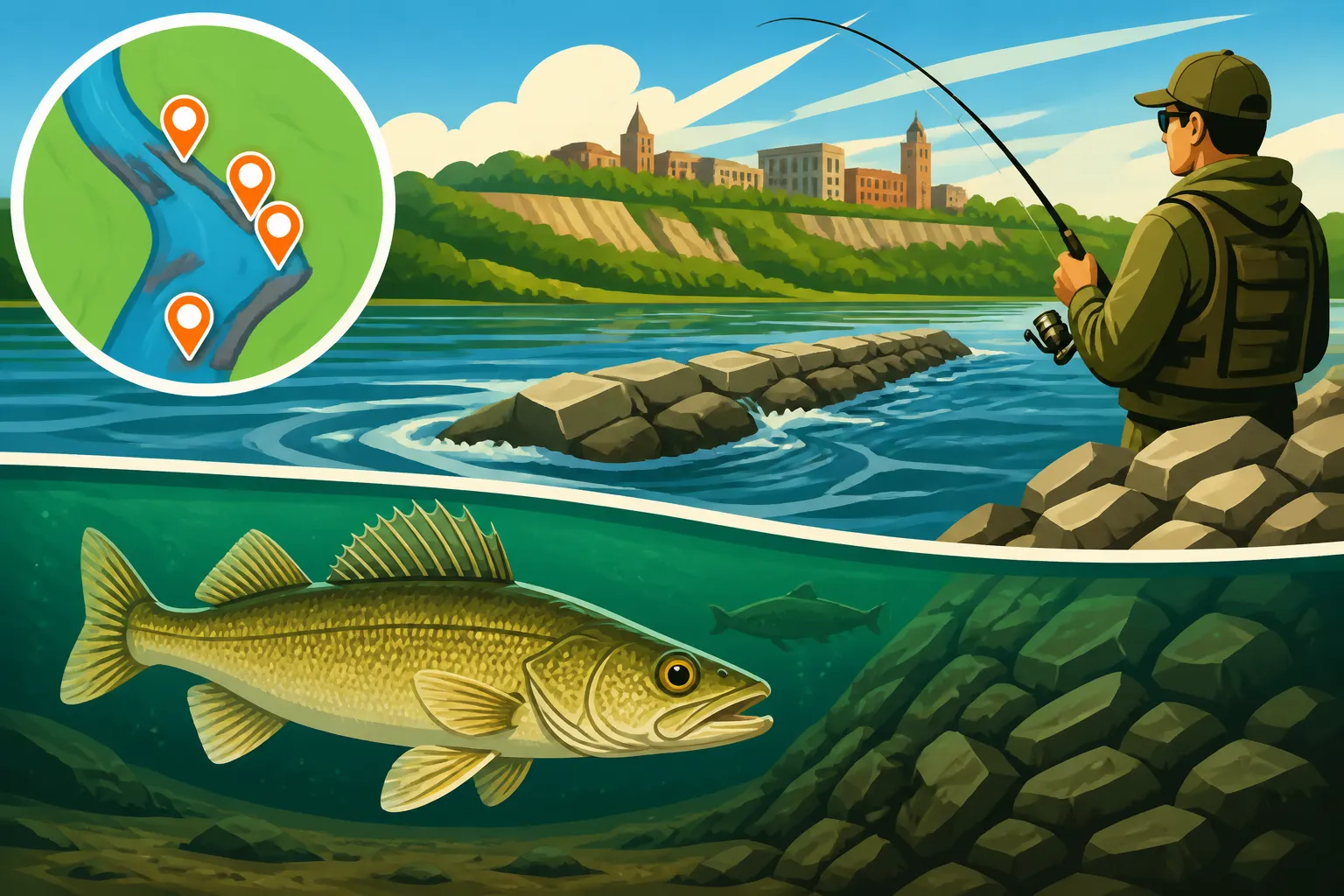
These structures typically feature a shallow top or "cap" that can be just a few feet below the surface, even extending above water during low-water periods. From this cap, they slope down into deeper water on both the upstream and downstream sides. The rock rubble and irregular contours provide a perfect ambush point for fish. It’s not just a single, uniform structure; each wing dam has its own unique character, influenced by years of current flow, sediment deposition, and erosion.
Why Walleye Love Wing Dams: Current Breaks and Food Funnels
Walleye are opportunistic predators that prefer to conserve energy while waiting for meals to come to them. Wing dams provide the perfect setup. The main river current, which can be quite strong, hits the wing dam and creates slack water, eddies, and current seams both upstream and downstream. These "current breaks" are gold for walleye. Instead of constantly fighting the main flow, they can hold comfortably in the calmer water, expending minimal energy.
Beyond simply offering refuge from the current, wing dams act as natural food funnels. The currents push baitfish—like shad, minnows, and shiners—along the main channel, and as these baitfish approach the wing dam, they often get disoriented or forced into the slower water where walleye are lying in wait. The rocky substrate also harbors aquatic insects and smaller organisms, creating an entire food chain that attracts everything from panfish to larger game fish. Think of a wing dam as a constantly stocked cafeteria right in the walleye's living room.
Reading the Water: Identifying Productive Spots on a Wing Dam
Successfully fishing wing dams isn't just about finding the structure; it's about understanding where on the wing dam the walleye are holding. The exact location can change with water levels, current speed, and even time of day. Key areas to focus on include:
- The Upstream Current Break: As the main current hits the upstream side of the wing dam, it creates a pocket of calmer water. Walleye often stack up here, facing into the current, waiting for food to drift by. This is a classic ambush point.
- The Downstream Eddy: On the backside of the wing dam, especially closer to the bank, a large eddy can form. This slow-moving or swirling water is another prime resting and feeding area, particularly good when the main current is roaring.
- The Washout or Scour Hole: Over time, the strong currents around the ends of wing dams can scour out deeper holes. These deeper pockets often hold larger walleye, especially during periods of high sun or cold fronts when fish seek deeper, more stable water.
- The Seams: The transition lines where fast current meets slower water are called "seams." Walleye will often sit right on these seams, using the current to bring food to them while expending minimal effort. You'll find these along the edges of the wing dam, particularly on the downstream side.
Paying attention to your electronics is crucial here. Your fish finder can reveal not only the depth and profile of the wing dam but also show baitfish schools and potential walleye holding tight to the bottom in these critical areas. Understanding how to read a fish finder for walleye can drastically improve your success. Look for irregular bottom contours, isolated rocks, or even small depressions that create additional current breaks.
Prime Walleye Wing Dam Locations Near Dubuque
Dubuque is uniquely situated in a fantastic stretch of the Mississippi River, offering abundant wing dam fishing opportunities. The navigation pools in this area are renowned for their walleye populations.
Focusing on Pool 12: The Heart of Dubuque's Walleye Fishery
When you talk about walleye fishing near Dubuque, Pool 12 of the Mississippi River immediately comes to mind. This pool, stretching from Lock and Dam 11 at Dubuque down to Lock and Dam 12 at Bellevue, is absolutely teeming with wing dams. The diverse habitat, including deep channels, backwaters, and, of course, countless rock structures, makes it a walleye paradise. Many anglers specifically target Mississippi River Pool 12 Fishing due to its consistent productivity.
Throughout Pool 12, you'll find a series of well-established wing dams that vary in length and depth. Some are long, extending almost to the main channel, while others are shorter, primarily affecting the shallower river flats. The ones that extend further out into the river, closer to the navigation channel, tend to attract more transient walleye moving up and down the river, while those closer to shore can hold resident fish that don't move as much. Local knowledge is key here, and if you're looking for an experienced guide to show you the ropes, platforms like FishingBooker can connect you with charter captains who specialize in this specific stretch of river.
Navigating the Currents: Key Wing Dams Below Lock and Dam 12
Just downstream from Dubuque, the area around Lock and Dam 12 at Bellevue offers some truly exceptional wing dam fishing. While the immediate area below the dam is often excellent for active walleye, especially during spring and fall runs, the wing dams further downstream are equally productive. Anglers often refer to the specific experience of Fishing Below Lock and Dam 12 at Bellevue as a unique challenge and reward.
The wing dams in this stretch are particularly effective because of the concentrated flow coming through the dam. This strong, consistent current makes the current breaks even more pronounced and creates ideal feeding lanes for walleye. You’ll find that the fish often hug the upstream side of these structures, particularly in the deeper scour holes that form at the ends. It's not uncommon to encounter schools of walleye stacked up in these spots, making it possible to catch multiple fish in quick succession once you locate them. However, with the stronger currents, boat control and anchoring become even more critical.
Finding Hidden Gems: Less-Pressured Wing Dam Areas
While the well-known wing dams get a lot of attention, there are plenty of less-pressured spots if you’re willing to do a bit of exploring. These "hidden gems" can often produce some of the biggest walleye because they see less tackle and pressure. Look for wing dams that are:
- Slightly off the main navigation route: These might be shallower, or located in areas that require more precise navigation, deterring casual boaters.
- Partially eroded or broken: Irregularities create even more complex current breaks and hiding spots. A wing dam that has a breach or a dip in its cap can be a fantastic ambush point.
- Near deeper backwater entrances: Walleye often move between the main river and calmer backwater areas, and a wing dam situated near such an entrance can be a natural stopping point.
Using mapping apps with detailed hydrographic charts can help you identify these less obvious structures. Pay attention to bends in the river or areas where the channel narrows slightly, as these geological features can enhance the fish-holding characteristics of nearby wing dams. Don't be afraid to try a new wing dam, even if it looks less "fishy" on the surface; sometimes the best spots are the ones that are overlooked by others.
Mastering Techniques for Wing Dam Walleye Success
Fishing wing dams demands a versatile approach. The current, depth, and the specific mood of the walleye will dictate which technique is most effective on any given day. Having a few tricks up your sleeve will significantly increase your catch rate.
Jigging and Plastics: Feeling the Bite in the Current
Jigging is perhaps the most fundamental and effective technique for fishing wing dams. It allows you to present your bait precisely to fish holding tight to the bottom in the current breaks. For Jigging Techniques for River Walleye, a common setup involves a relatively heavy jig head (typically 3/8 to 3/4 ounce, depending on current strength and depth) tipped with a soft plastic grub, a paddle tail, or even a live minnow.
The key is to maintain bottom contact without constantly snagging. Cast upstream and slightly cross-current, allowing the jig to sink and bounce along the rocks as it drifts downstream. You want to "feel" the bottom, distinguishing between rock and a light bite. Walleye often pick up a jig very subtly, sometimes just feeling like added weight or a slight tick. Setting the hook aggressively at any unusual sensation is crucial. Experiment with retrieve speeds and jigging motions – sometimes a slow, almost dead-stick retrieve is best, other times an aggressive snap-jigging motion will trigger strikes. Colors like chartreuse, white, and darker purples or browns are often productive, mimicking forage fish or crayfish.
Crankbait Cranking and Trolling: Covering Water and Triggering Strikes
While jigging is precise, crankbaits excel at covering more water and enticing active fish. These lures are particularly effective when walleye are spread out or suspended slightly above the structure. For specific scenarios, even techniques like Crankbait Fishing for Iowa Smallmouth Bass can be adapted for walleye. Casting and retrieving crankbaits parallel to the wing dam, or across its current seam, is a potent strategy. You want your crankbait to "tick" the rocks without getting constantly hung up. Choose models with a diving lip that matches the depth you're targeting.
Trolling is another excellent way to fish longer wing dams or multiple structures. You can troll upstream or downstream, carefully navigating the current breaks. Using planer boards can help spread out your lines and present baits to fish holding off to the sides of the wing dam. Pay close attention to your speed and how the current is affecting your lure depth and action. Deep-diving crankbaits or even bottom-bouncing rigs with spinners can be very effective when trolled slowly along the contours of the wing dam. For those looking to learn these techniques firsthand, booking a guided trip through a service like FishingBooker can provide invaluable on-the-water instruction.
Live Bait Rigs: A Classic for Consistent Walleye
When the bite gets tough, or for a more relaxed approach, live bait often reigns supreme. Walleye, being opportunistic, rarely turn down a well-presented live minnow, nightcrawler, or even a leech. For detailed insights, consult a Best Live Bait for Iowa Walleye guide. The most common live bait rigs for wing dams include:
- Bottom Bouncers: These are lead weights designed to drag along the bottom with minimal snagging. A snelled hook with a minnow or crawler is trailed behind, keeping the bait right in the strike zone. This rig is fantastic for drifting or slow trolling along the upstream side of a wing dam.
- Slip Bobber Rigs: While often associated with calmer waters, slip bobbers can be incredibly effective in slower eddies or pockets behind wing dams. They allow you to suspend live bait at a precise depth just above the rocks, perfect for targeting fish that might be slightly suspended.
- Three-Way Swivels: This classic river rig involves a three-way swivel, with one eye tied to your mainline, one to a dropper weight, and the third to a leader with your hook and live bait. The weight keeps your bait near the bottom, while the leader allows it to drift naturally in the current. This rig is particularly good for anchoring upcurrent of a wing dam and letting your bait present itself naturally to waiting walleye.
Always ensure your live bait is fresh and lively. The movement and scent are often what trigger bites from cautious walleye in the river's dynamic environment.
| Technique | Primary Application | Best Conditions | Lure/Bait Examples | Key Considerations |
|---|---|---|---|---|
| Jigging | Precise targeting of bottom-hugging fish | Moderate current, cooler water | Jig with soft plastic, minnow, or half-crawler | Maintain bottom contact, subtle bites, aggressive hook set |
| Crankbait Casting | Covering water, active fish, searching | Moderate to strong current, warmer water | Diving crankbaits (Shad Raps, Berkley Flicker Shad) | Match dive depth to structure, "tick" rocks, parallel retrieve |
| Crankbait Trolling | Longer wing dams, multiple structures, locating schools | Varied currents, larger areas to cover | Deep-diving crankbaits, bottom bouncers with spinners | Speed control, line management, use of planer boards |
| Live Bait Rigging | Finesse fishing, tough bite, consistent results | Slower current breaks, wary fish | Minnows, nightcrawlers, leeches on bottom bouncers/slip bobbers | Fresh bait, natural presentation, sensitive rod |
Essential Gear and Trip Planning for Dubuque Wing Dams
A successful walleye trip to the Mississippi River's wing dams requires more than just knowing where to go and what techniques to use. Having the right gear and a solid plan can make all the difference, especially on a powerful river system.
Rods, Reels, and Lines: Built for River Battles
The Mississippi River is no place for flimsy gear. The currents are strong, the walleye are powerful, and snags are frequent. Your rod and reel setup needs to be up to the task.
- Rods: Medium-heavy power rods, 6'6" to 7'6" in length, are excellent for jigging and casting crankbaits. The extra power helps set hooks in deep water and pull fish out of cover, while the length aids in casting distance and line control. For specific applications like heavier bottom-bouncing or trolling, a longer, more moderate action rod might be preferred. Look for a rod with a sensitive tip to detect those subtle walleye bites, but with enough backbone to handle a 20-inch walleye in strong current.
- Reels: A reliable spinning reel in the 2500-3000 size range, or a baitcasting reel with a smooth drag, is ideal. Ensure your reel has enough line capacity and a strong, smooth drag system, as river walleye can make powerful runs.
- Line: Braided line (10-20 lb test) is a popular choice for its sensitivity and strength, allowing you to feel every bump and bite on the bottom. Many anglers use a fluorocarbon leader (8-12 lb test) to provide a bit of stretch and invisibility near the lure. If you prefer monofilament, opt for a higher-strength, abrasion-resistant line (10-14 lb test). For deeper insights into line choices, a guide like "Braided Line vs Monofilament for Walleye" could be helpful. The rocky nature of wing dams makes line abrasion a constant threat, so regularly checking and retying your knots is paramount.
Boat Control and Anchoring: Staying on the Spot
Navigating and fishing the Mississippi River, especially around wing dams, demands excellent boat control and a robust anchoring system. The current is unforgiving.
- Anchor System: You'll need a heavy river anchor (pyramid or box-style) – at least 25-30 lbs for most boats – with plenty of anchor rope (easily 100 feet or more, possibly even 200 feet for deep water or strong current). A good anchor rope management system (anchor trolley or dedicated storage) is essential. Deploying and retrieving anchors safely and efficiently is a skill that takes practice. Consider carrying two anchors for maximum stability in very strong currents or wind.
- Trolling Motor: A strong electric trolling motor, preferably with GPS spot-lock technology (like those from Minn Kota or Garmin), is invaluable. It allows you to precisely position your boat upstream of a wing dam and hold it in place without constantly adjusting. This frees you up to focus on fishing rather than fighting the current. If you don't have a spot-lock feature, using your main engine to "kick" against the current while drifting can help slow your pace and maintain a better angle over the wing dam. For larger boats specifically suited to the river, check out a guide on Best Boats for the Mississippi River.
Navigating Regulations and Staying Safe
Fishing the Mississippi River requires adherence to specific regulations and a strong emphasis on safety. Always check the current Iowa Fishing Regulations Explained booklet or the Iowa DNR website before heading out.
- Fishing License: Make sure you have a valid Iowa fishing license. If you're an out-of-state angler, you'll need an Iowa Nonresident Annual Fishing License or a shorter-term option. Remember, fishing without a proper license can lead to significant fines. You can often buy these online or through licensed vendors.
- Walleye Regulations: Pay close attention to the Walleye Season and Size Limits for the specific pool you're fishing. Size and bag limits can change, so always verify the most up-to-date information.
- Boating Safety: The Mississippi River is a busy commercial waterway. Always carry all Required Safety Equipment for Iowa Boats, including life jackets for everyone on board, a fire extinguisher, sound-producing device, and navigation lights if fishing before sunrise or after sunset. Be acutely aware of barge traffic and give them a wide berth; they cannot stop or maneuver quickly. Monitor weather conditions closely, as storms can develop rapidly on large bodies of water, and never underestimate the power of the current.
Disclaimer
The information provided in this guide is for general informational purposes only and is not a substitute for official regulations. Always consult the latest Iowa Department of Natural Resources (DNR) fishing regulations and boating laws before heading out on the water. Fishing conditions and fish behavior can vary greatly, and success is never guaranteed. Always prioritize safety while on the water.