Best Sinker Weight for Iowa River Fishing
It's incredibly frustrating when you're out on one of Iowa's beautiful rivers, ready for a great day of fishing, only to find your bait constantly getting swept away by the current. We've all been there, wondering if we picked the wrong spot or if the fish just aren't biting, when often, the real culprit is something as simple as using the wrong sinker weight. This guide is here to help you navigate the tricky world of sinker weights so your bait stays exactly where the fish are.
The Dynamic Challenge of Iowa River Currents
Iowa's rivers, from the mighty Mississippi to smaller, meandering tributaries like the Des Moines or the Cedar, are constantly in motion. They're not like still lakes or ponds where a light touch is always enough. The current can vary wildly, even within the same stretch of river, making sinker choice a crucial decision for any angler hoping to keep their offering in the strike zone. Trying to use a tiny split shot in a raging current is like trying to hold down a balloon in a hurricane – it's just not going to work, and you'll spend more time re-casting than catching.
Understanding Current Strength and Water Depth
The primary factors dictating your sinker weight are current strength and water depth. A fast, deep channel demands a significantly heavier weight than a shallow, slow eddy. Think about fishing for Walleye Fishing Techniques for Iowa Rivers in a deep trough on the Mississippi River versus targeting panfish in a calm backwater pond feeding into the Iowa River. The approach will be completely different. The riverbed composition also plays a role; a silty bottom might allow a lighter sinker to embed slightly and hold, while a rocky bottom in strong current will require more weight to prevent rolling and snags. It’s a constant dance with the river, trying to feel what it's doing under the surface.
Reading the River: Subtle Clues for Anglers
Becoming a successful river angler means becoming a student of the water itself. You can learn a lot just by observing. Look for swirling eddies, calm pockets behind submerged structure, or areas where the surface water is moving significantly slower or faster. Debris floating by, like leaves or small sticks, can give you a visual cue to the speed of the current. Pay attention to how your boat drifts or how a light float behaves. If your line is bowing significantly or your bait isn't reaching the bottom, it's a clear signal you need more weight. A good technique is always to start lighter and go heavier if needed; you can always add more weight, but it's harder to remove it mid-cast. Learning How to Read Water for Structure Fishing is an invaluable skill here.
Matching Sinker Weight to River Conditions
The goal is to use the lightest possible sinker that still allows your bait to reach and hold the bottom in the desired location. Why the lightest? Because a lighter sinker provides a more natural presentation, feels less resistant to biting fish, and allows you to feel subtle bites better. It's a balance.
Light Sinkers for Gentle Currents and Still Waters
For those calmer stretches, like the slack water behind a wing dam on the Mississippi, a gentle eddy, or a slow-moving small creek, light sinkers are your friend. We're talking about weights generally ranging from 1/8 ounce to 1/2 ounce. These are perfect when you want your bait to drift naturally with the current, imitating a free-floating meal.
- 1/8 oz to 1/4 oz: Ideal for ultralight presentations, very slow current, or fishing shallow water (less than 5 feet) where you still need a little help getting down. Think small crappie jigs in calm backwaters or subtle presentations for Bluegill Fishing in Iowa.
- 3/8 oz to 1/2 oz: A versatile range for slightly stronger, but still manageable, currents and depths up to 10-15 feet. This is often a go-to for many river scenarios where you want a controlled drift without being completely anchored.
Medium Sinkers for Moderate River Flow
When the current picks up a bit, or you're targeting deeper holes and channels, it's time to step up to medium sinkers. This range typically falls between 1/2 ounce and 1 ounce. These weights provide enough anchoring power to keep your bait in place without feeling like you're casting a brick.
- 1/2 oz to 3/4 oz: Great for many common river conditions, especially when targeting fish that hang out in moderate current, like channel catfish in secondary channels or smallmouth bass around current breaks. This weight will help your bait get to the bottom and stay there, even if it's slowly tumbling.
- 1 oz: A good all-around weight for many moderate to strong river sections, particularly when you're casting into deeper runs or experiencing a steady current. It's often the starting point for dedicated Channel Catfish Fishing in Iowa in medium-sized rivers.
Heavy Sinkers for Strong Currents and Deep Channels
Now we're getting serious. When you're dealing with the main channel of the Mississippi River, fishing during high water, or targeting fish in extremely deep and fast-moving holes, you'll need the heavy artillery. These sinkers generally start at 1 ounce and go up to 3 ounces or even more.
- 1 oz to 2 oz: Essential for strong currents, depths exceeding 20 feet, or when you need your bait to hold absolutely still. If your bait is washing out too quickly with a 1 oz sinker, don't hesitate to go to 1.5 or 2 oz. This is common for robust Catfish Fishing in Iowa setups on larger rivers.
- 3 oz+: For the most extreme conditions – flood stages, very heavy current, or specific techniques like fishing massive pieces of cut bait in the main river channel. Some anglers even rig up with 4 or 5-ounce weights for specific purposes, though these are less common for general recreational fishing.
The Art of the 'Just Enough' Sinker
Remember, the goal isn't to use the heaviest sinker you can find. The art is in using just enough weight. You want your sinker to hit the bottom and, ideally, either hold perfectly or slowly "walk" along the bottom with the current, rather than rolling uncontrollably or getting swept away. If your sinker is too heavy, you won't feel subtle bites, and your bait presentation might look unnatural, plummeting to the bottom without any lifelike drift. Experimentation is key. Bring a variety of sinker weights with you, perhaps a convenient multi-pack from Bass Pro Shops or an assorted collection from Amazon, so you can adapt to changing conditions on the fly.
Types of Sinkers and Their River Applications
Beyond weight, the shape and style of a sinker also matter greatly in river fishing. Different designs perform better in different situations.
Common Sinker Styles for River Anglers
- Egg Sinkers: These oval-shaped sinkers have a hole through the center, allowing your line to pass through freely. They're excellent for slip-sinker rigs, where the fish can pick up the bait without feeling the full weight of the sinker immediately. This makes them fantastic for Catfish Fishing in Iowa where you want a natural bait presentation. They tend to roll in heavy current, so they're best for moderate flows or when you want a slight drift.
- Bullet Sinkers: Tapered like a bullet, these are primarily used for Texas rigging soft plastics for bass in cover, but they also have a place in rivers. Their streamlined shape allows them to move through weeds and cover with less snagging. For lighter applications, they can be effective in slow currents where a more subtle approach is needed, especially for Largemouth Bass Fishing in Iowa in calm pockets.
- Bell Sinkers: Shaped like a bell with a swivel on top for attachment. Bell sinkers are popular for bottom fishing in slower currents. Their shape helps them resist rolling somewhat better than egg sinkers, especially when directly tied to a leader.
- Split Shot Sinkers: Small, round, and crimped onto your line. While not typically thought of for heavy river currents, a series of larger split shots can be used in combination to achieve a desired weight in moderate currents for light tackle setups, especially for panfish.
Specialized Sinkers for Specific River Scenarios
- Pyramid Sinkers: With their pyramid shape and pointed ends, these sinkers are designed to dig into soft bottoms (sand, mud, silt) and hold exceptionally well, even in strong currents. They're a favorite for surf fishing and also highly effective in large rivers with soft bottoms where you really need to anchor your bait.
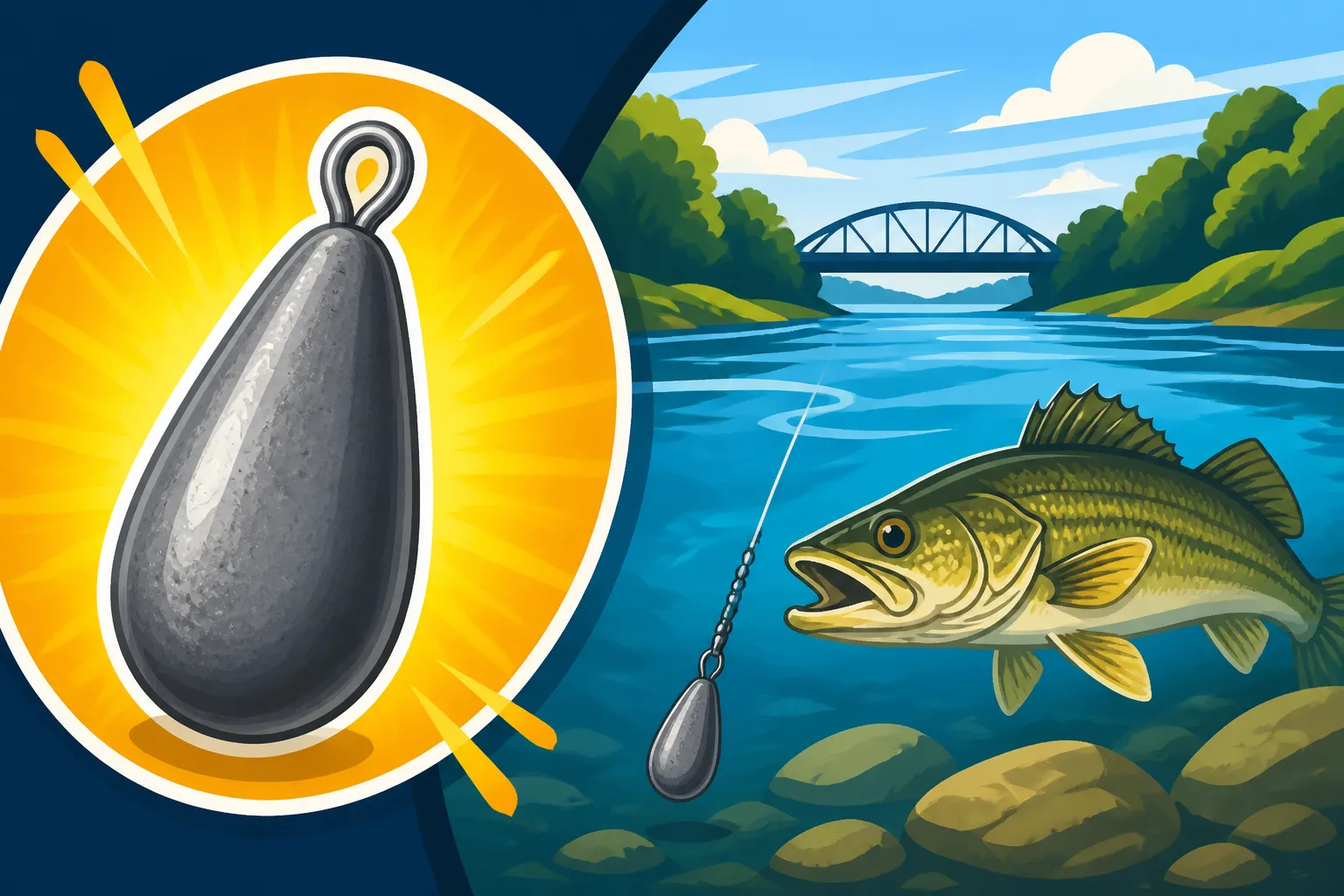
- Bank Sinkers: These pear-shaped or teardrop sinkers are common. They offer a good balance of holding power and resistance to snagging. They're versatile for many river fishing scenarios and come in a wide range of weights.
- No-Roll Sinkers: As the name suggests, these are designed with flat sides to prevent them from rolling in the current. They excel when you need your bait to stay in a very specific spot. Ideal for anchoring a rig in a swift current without much drift.
- Flat-Sided or Disc Sinkers: Similar to no-roll sinkers, these are designed with a low profile and flat sides to hug the bottom and resist current. They are excellent for presentations where minimal movement is desired.
Rigging Strategies for Optimal Sinker Performance
Choosing the right sinker is only half the battle; knowing how to rig it properly is equally important. The wrong rig can lead to constant snags, unnatural bait movement, or missed bites.
Essential Rigs for River Fishing
- Slip Sinker Rig (Carolina Rig variation): This is arguably one of the most popular and effective rigs for river fishing, especially for species like catfish or walleye. You slide an egg or no-roll sinker directly onto your main line, followed by a bead (to protect your knot), and then tie on a swivel. To the other end of the swivel, you tie a leader (6-24 inches, depending on desired bait movement) and then your hook. The beauty of this rig is that the line slides freely through the sinker, allowing fish to pick up the bait and move off without feeling the resistance of the heavy weight. This provides a more natural presentation and can significantly improve your hook-up ratio. It's perfect for How to Catch Catfish From the Bank.
- Three-Way Rig: This rig is excellent for presenting bait near the bottom in currents. It uses a three-way swivel: one eye is tied to your main line, another to a short dropper line (6-12 inches) with your sinker, and the third to a longer leader (12-36 inches) with your hook and bait. The sinker stays on the bottom, while your bait drifts enticingly slightly off the bottom, making it very visible to fish. This is particularly effective for Walleye Fishing in Iowa in river channels.
- Drop Shot Rig (with heavier weights): While often associated with finesse bass fishing, a heavier drop shot rig can be adapted for river fishing. Instead of tying a hook directly to your line, you tie a hook to the main line, and then a lead length of line below the hook with a sinker tied to the very end. This keeps your bait suspended off the bottom, above snags, and can be adjusted for varying depths by simply changing the length of the leader below the hook.
Overcoming Snags and Loss
Snags are an inevitable part of river fishing, especially when you're targeting bottom-dwelling species or fishing near structure. Here are a few tips to minimize lost tackle:
- Use lighter leader line for your sinker: On a three-way rig, use a lighter pound-test line for the sinker dropper. If the sinker gets snagged, this lighter line will break first, allowing you to retrieve your hook and fish.
- Rounder sinkers for rocky bottoms: In very rocky areas, egg or bell sinkers might be less prone to wedging into crevices than pyramid sinkers. Experiment to see what works best in your specific spot.
- Feel the bottom: A sensitive rod and a good feel for the bottom can help you avoid snags. If you feel your sinker dragging heavily or getting stuck, try to gently lift and reposition it.
- Fish slightly lighter: Sometimes, using a sinker that's just barely heavy enough to hold will allow it to "walk" over snags rather than getting firmly wedged. This is part of the "just enough" philosophy.
Factors Beyond Weight: Other Considerations for River Success
Sinker weight is undeniably important, but it doesn't exist in a vacuum. Other elements of your setup play a critical role in how effectively your sinker performs and how successful you are on the river.
Line Diameter and Material
Your fishing line choice significantly impacts how your sinker interacts with the current.
- Thicker line (higher diameter): Catches more current, creating more drag and requiring a heavier sinker to stay in place. This is often the case with traditional monofilament lines. While a heavier Best Pound Test Line for Catfish Fishing on Iowa Rivers is crucial for landing big fish, remember it will be affected by the current.
- Thinner line (lower diameter): Cuts through the water more efficiently, reducing drag and potentially allowing you to use a lighter sinker. Braided lines, with their thinner diameter and no stretch, are excellent for river fishing as they transmit subtle bites better and resist current more effectively. Braided Line vs Monofilament for Walleye often highlights these benefits. Using a thinner diameter also means less line out to achieve depth, which in turn reduces the amount of line exposed to the current.
Rod Action and Sensitivity
A sensitive rod is your direct connection to what your sinker and bait are doing on the riverbed.
- Medium-Heavy to Heavy Power Rods: Often necessary for river fishing, especially when casting heavier sinkers and fighting strong fish in current.
- Fast Action Rods: The tip flexes easily, allowing you to detect subtle bumps and bites from fish, even when using a heavier sinker. This sensitivity is crucial for feeling when your sinker is touching bottom, dragging over structure, or getting snagged. A good rod from Bass Pro Shops or an equivalent can make a huge difference in your ability to "feel" the river. Best Rod Length for Iowa River Walleye Fishing will also impact casting and sensitivity.
Bait Presentation
Ultimately, the sinker is there to get your bait into the right zone. How your bait looks and moves once it's there is what convinces a fish to bite.
- Natural Drift: Lighter sinkers allow for a more natural, subtle drift with the current, which can be irresistible to species like walleye or smallmouth bass feeding on passing prey.
- Anchored Presentation: Heavier sinkers keep your bait firmly in one spot, ideal for bottom-feeding species like catfish that might pick up a stationary offering. This is especially true when using potent options from a Catfish Bait Guide for Iowa Anglers.
- Adjusting Leader Length: Your leader length on a slip-sinker or three-way rig dictates how much freedom your bait has to move. A shorter leader keeps it closer to the bottom and sinker, while a longer leader allows more natural movement in the current.
By understanding how these elements work together, you can fine-tune your setup to conquer the currents of Iowa's rivers and increase your chances of a successful day on the water. Don't be afraid to experiment; every river, and every day on that river, offers a unique challenge!
Disclaimer
This article is for general informational purposes only and does not constitute professional advice. Laws, prices and regulations vary by location and change over time. Consult a qualified professional for guidance on your specific situation.