Best Swivels for Catfish Rigs
There's nothing quite as frustrating as reeling in what you thought was a monster Iowa catfish, only to find a twisted, mangled line and an empty hook. It's a common heartbreaker, often caused by a tiny, overlooked piece of gear: the swivel. This guide is all about diving deep into the world of swivels, helping you pick the absolute best ones for your catfish rigs, ensuring your line stays true and your trophy fish stay on the hook.
Why Swivels Are Non-Negotiable for Iowa Catfish Anglers
Many anglers, especially when starting out, might view a swivel as just another small, insignificant component in their tackle box. But let me tell you, when you're targeting those powerful, river-dwelling catfish across Iowa, a good swivel isn't just nice to have – it's absolutely essential. Ignoring its importance can lead to a lot of headaches, lost tackle, and, most painfully, lost fish. These seemingly small pieces of metal play a huge role in the success of your day out on the water.
Preventing Line Twist: The Silent Killer of Catfish Rigs
Line twist is arguably the number one enemy of any serious catfish angler. Imagine this: you've cast your bait into a promising eddy on the Des Moines River, letting the current carry it just right. But as your bait tumbles and spins, or as you retrieve it, your fishing line starts to coil and twist. Catfish, particularly the energetic channel cats, often put up a serious fight, rolling and thrashing, which exacerbates this twisting action. Even flatheads, with their powerful head shakes, contribute to the problem.
This twisting doesn't just make your line look messy; it weakens it dramatically. A twisted line experiences uneven stress, creating weak points that can snap under pressure. When that trophy fish finally hits, that weakened line is going to be the first thing to give, leaving you with nothing but a broken heart and a story of "the one that got away." Beyond losing fish, extreme line twist can cause frustrating tangles, make casting a nightmare, and generally ruin your fishing experience. Swivels, by allowing your bait and leader to rotate independently from your main line, are the unsung heroes that prevent this silent killer from sabotaging your day. They maintain the integrity and strength of your line, allowing you to focus on the fight, not the coil. For more insights on battling these powerful fish, check out our guide on Channel Catfish Fishing in Iowa.
Enhancing Bait Presentation: Making Your Rig More Appealing
A natural-looking bait presentation can be the difference between a hungry catfish striking and simply passing by. Think about it: an injured or disoriented baitfish might swim in erratic circles, but a chunk of cut bait or a lively shad isn't meant to spin uncontrollably in the water. Without a swivel, the slightest current or even the motion of your boat can cause your bait to rotate unnaturally, creating line twist up your main line and making your offering look suspicious to a wary catfish.
A good swivel allows your bait to move freely and naturally. If you're drifting cut bait through a current seam, the swivel lets that bait tumble and waft in a way that mimics a wounded or dying organism, which is incredibly attractive to a predatory catfish. For those using live baits, the swivel permits the bait to swim more naturally without twisting your line, extending its lively appeal. This enhanced, lifelike presentation is crucial, especially when targeting larger, more cautious fish like flatheads. A bait that spins erratically is easily recognized as unnatural, reducing your chances of a bite.
Creating Stronger Connection Points and Reducing Break-offs
Another vital function of a swivel is to act as a crucial buffer and connection point within your rig. You've got your strong main line, perhaps 30-50 pound test braided line, connected to a monofilament or fluorocarbon leader, and then your hook. Each connection point is a potential area of weakness if not done correctly. A high-quality swivel creates a robust, secure link between your main line and your leader, distributing stress more effectively than a direct knot-to-knot connection.
During a spirited fight with a large catfish, the forces exerted on your line are immense and often unpredictable. The fish pulls, thrashes, and lunges, creating sudden shocks and lateral pressure. A strong swivel is designed to absorb and distribute these forces across its rotating components, preventing the shock from concentrating at a single knot or section of your line. This significantly reduces the chances of a break-off at the most critical moment. Furthermore, the metal eyelets of a swivel are often stronger and more abrasion-resistant than a knot tied directly to another line, adding an extra layer of security against snags or rough catfish mouths. Understanding the nuances of your rig can truly boost your success, and our article on Catfish Bait Guide for Iowa Anglers can help you refine your setup.
Types of Swivels: Which Ones Reign Supreme for Iowa Catfish?
When you walk into a tackle shop or browse online at places like Bass Pro Shops or Amazon, you'll see a dizzying array of swivels. It's easy to get overwhelmed. But for catfish angling in Iowa, we can narrow it down to a few key types that perform best. Each has its place, depending on the situation, the size of the fish you're targeting, and of course, your budget. Choosing the right swivel is almost as important as choosing the right bait for specific species, so let's break them down.
Barrel Swivels: The Workhorses of Catfishing
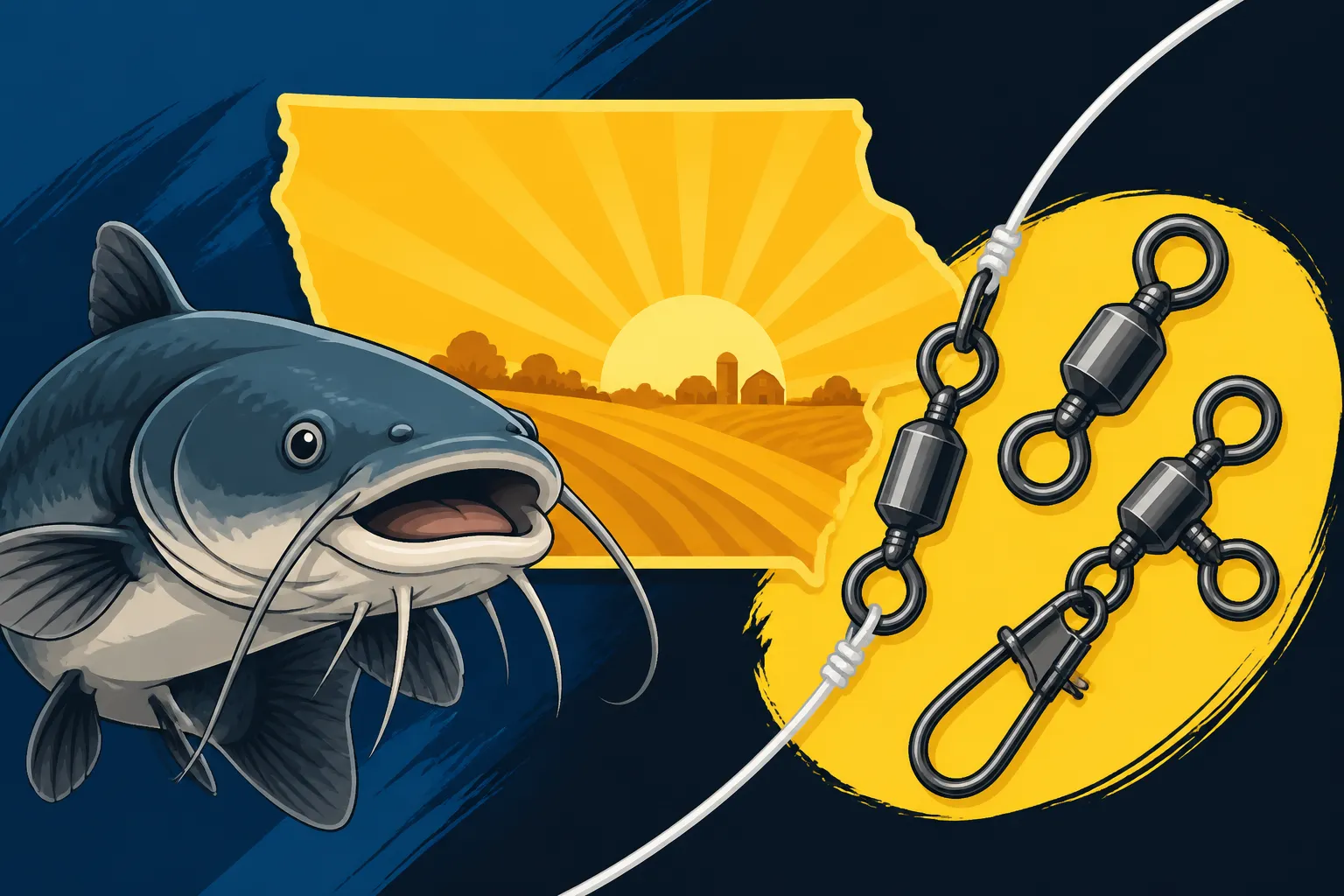
The humble barrel swivel is probably what most anglers picture when they think of a swivel. It's the classic, straightforward design: two eyelets connected by a cylindrical barrel that allows them to rotate. These are incredibly popular and for good reason. They are simple, readily available in just about any tackle shop, and they get the job done for a wide variety of situations. You can find them in bulk packs, making them very cost-effective, which is a huge plus when you're rigging up multiple rods or anticipate losing some tackle to snags in the river bottom.
For general catfishing, especially when targeting modest-sized channel cats in lakes or calmer river sections, barrel swivels are perfectly adequate. They provide decent anti-twist properties and a solid connection point. However, they do have their limitations. Under extreme line tension or with very actively spinning baits, their rotation might not be as smooth or complete as other types, meaning some line twist can still occur over time. For truly massive flatheads or when fishing in strong currents that impart a lot of spin to your bait, you might find yourself wanting a bit more performance. Still, for everyday catfishing, these are the bread and butter, and you'll find them on almost every angler's workbench.
Crane Swivels: A Step Up in Strength and Smoothness
Moving up from the basic barrel swivel, we encounter the crane swivel. This design features a slightly more elongated body and often a smoother, more robust internal mechanism compared to a standard barrel swivel. Think of it as the barrel swivel's tougher, more refined cousin. The difference in rotation isn't just aesthetic; it translates to better performance on the water, especially when dealing with the forces exerted by larger fish or faster currents.
Crane swivels offer superior anti-twist properties, allowing your line and bait to spin more freely without transferring that rotation up to your main line. Their construction is generally more heavy-duty, making them an excellent choice for anglers who are serious about targeting bigger channel cats and flatheads that can really test your gear. While they might be a little pricier than barrel swivels, the investment is usually worth it for the added peace of mind and reduced risk of line failure. If you're consistently battling powerful fish or fishing in challenging conditions, upgrading to crane swivels will lead to fewer tangles and more fish in the net. They strike a great balance between performance, durability, and cost. Many anglers who fish the deeper channels of the Mississippi River swear by them. For more about specific big cat tactics, check out Flathead Catfish Habitat and Behavior.
Ball Bearing Swivels: The Ultimate in Anti-Twist Power
Now, if you're chasing truly massive flatheads or muscling channel cats out of heavy cover, or simply demand the absolute best in line twist prevention, then ball bearing swivels are your top-tier choice. These are the Cadillacs of the swivel world. Instead of a simple barrel-on-pin design, ball bearing swivels incorporate tiny, precision-engineered ball bearings within their housing. This allows for incredibly smooth, friction-free rotation, virtually eliminating any chance of line twist, even under the most extreme conditions.
The benefits are clear: maximum line protection, flawless bait presentation, and unparalleled strength. They are designed to handle incredible stress and provide a smooth pivot point that will hold up to the most brutal fights. However, this superior engineering comes at a cost. Ball bearing swivels are significantly more expensive than barrel or crane swivels. For many anglers, they might be considered overkill for everyday catfishing. But for those dedicated to trophy hunting, using heavy tackle, or fishing baits that naturally spin a lot (like certain lures or cut baits in strong current), the investment in ball bearing swivels is absolutely justified. They are also highly favored for offshore fishing where line twist from trolling is a constant battle, a testament to their exceptional performance. If you're looking for the toughest possible connection for a trotline rig, for example, these are the ones to consider. You can often find specialty packs from reputable brands on Bass Pro Shops or Amazon.
Size, Strength, and Considerations for Your Catfish Swivel Selection
Once you've decided on the type of swivel, there are still a few other critical factors to consider. Getting the right size and strength is paramount for creating a balanced rig that performs optimally and holds up under the strain of an Iowa monster catfish. It’s not just about stopping twist; it’s about making your entire setup work together seamlessly.
Matching Swivel Size to Line Test and Target Fish
Choosing the right swivel size isn't just about how big the swivel looks; it's about its breaking strength and how it integrates with the rest of your tackle. Generally, you want a swivel whose breaking strength matches or slightly exceeds the breaking strength of your main line or leader. If you're using a 30-pound test main line, you wouldn't want a swivel rated for only 10 pounds, as it would be the obvious weak link in your setup. Similarly, an 80-pound test swivel might be overkill and unnecessarily bulky for a 20-pound test line.
Consider your target fish too. For smaller channel cats, a medium-sized barrel or crane swivel will do. But if you're hunting monstrous flatheads in the Mississippi River, you'll need the largest, strongest crane or ball bearing swivels you can find. Remember, while you don't want an undersized swivel, an oversized one can also be problematic. A swivel that's too large can intimidate shy fish, create unnecessary drag in the water, and detract from your bait's natural presentation. It's a balance of invisibility and sheer stopping power. Always check the manufacturer's breaking strength ratings and try to match it closely with your main line. Sometimes, bigger isn't always better, but weaker is always a recipe for disaster. Our guide on Best Rod Setup for Catfish on the Mississippi River offers more on balancing your gear.
| Swivel Type | Primary Benefit | Ideal for… | Pros | Cons |
|---|---|---|---|---|
| Barrel Swivel | Cost-effective line twist reduction | Smaller channel cats, calm waters, general use | Inexpensive, widely available, simple to use | Can still twist under extreme pressure, less smooth rotation |
| Crane Swivel | Enhanced strength & smoother spin | Large channel cats, flatheads, moderate currents | Better rotation than barrel, stronger construction, good balance of cost | Slightly more expensive than barrel swivels, can still be overcome by extreme twist |
| Ball Bearing Swivel | Maximum anti-twist & durability | Trophy flatheads, heavy currents, active baits, heavy tackle | Virtually eliminates twist, incredibly strong, ultra-smooth rotation | Most expensive option, can be overkill for smaller fish or calmer waters |
Incorporating Snaps and Interlocks for Quick Rig Changes
Many swivels come with an additional component: a snap or an interlock. These attachments are designed to make changing out leaders, weights, or entire rigs incredibly fast and easy. Instead of retying a knot every time you want to switch from a slip sinker rig to a three-way rig, you can simply unclip and re-clip. This convenience is a huge time-saver, especially when you're on the water and conditions are changing rapidly, or you're experimenting with different setups to find what the fish are biting. You might want to switch from a heavy sinker for deep holes to a lighter one for drifting over shallower flats.
However, snaps and interlocks introduce additional components to your setup, and with each additional component comes a potential point of failure. A cheap or poorly constructed snap can bend open under the stress of a powerful catfish, or it can corrode and weaken over time. If you choose to use snap swivels, invest in high-quality ones from reputable brands. Ensure the snap itself is strong and secure, preferably a heavy-duty interlock snap. For maximum strength and peace of mind, some experienced anglers prefer to use a standard barrel or crane swivel and then tie their leader directly to it, bypassing the snap entirely. But for versatility and speed, especially for trying out different weights for How to Find Deep Holes for Catfish, snap swivels are incredibly useful. Brands like Spro and Berkley offer reliable options that you can find readily on Amazon or Bass Pro Shops.
Practical Tips for Rigging Swivels for Optimal Performance
Getting the right swivel is only half the battle; knowing how to incorporate it into your rig correctly is just as important. The best swivel in the world won't save you if your knots are weak or your leader material is subpar. For attaching your main line and leader to the swivel, reliable knots like the Palomar knot or the Improved Clinch knot are excellent choices. Make sure to moisten your line before tightening the knot to prevent friction heat from weakening it.
Consider your leader material and length carefully. For catfish, a strong monofilament or fluorocarbon leader is typically used. Monofilament offers good abrasion resistance and some stretch, which can be beneficial against hard-fighting fish. Fluorocarbon is less visible underwater and extremely abrasion-resistant. The length of your leader will depend on your rig (e.g., a longer leader for a slip sinker rig, a shorter one for a three-way swivel setup). Sometimes, especially in strong currents or when fishing a complex rig like a trotline, you might even incorporate multiple swivels. For instance, a three-way swivel allows you to attach your main line, a sinker leader, and a hook leader all at different angles, further minimizing tangles and maximizing presentation. Always check your knots and lines regularly for fraying or damage, especially after fighting a fish or getting snagged. These small habits will greatly increase your success on the water. You can find more specific rules for Trotline Fishing Rules and Tips in Iowa if you're interested in that technique.
Disclaimer
This article is for general informational purposes only and does not constitute professional advice. Laws, prices and regulations vary by location and change over time. Consult a qualified professional for guidance on your specific situation.