Is a Life Jacket Required by Law on Iowa Boats?
One of the most common questions I get from fellow Iowa anglers, especially those new to boating or bringing their families out on the water, revolves around life jackets. It can be confusing, right? You see some folks wearing them, others just having them in the boat, and it leaves you wondering: Is a life jacket actually required by law on Iowa boats? It’s a crucial question, not just for staying on the right side of the law, but more importantly, for ensuring everyone's safety out on our beautiful lakes and rivers. This guide is here to clear up all that confusion and give you the straightforward answers you need.
The Core Rule: Life Jackets for Everyone Aboard
Let's cut right to the chase with the most fundamental requirement. When you head out onto Iowa's waters, whether it's a quiet morning on a small fishing pond or a bustling weekend on the Iowa Great Lakes, every single person on your vessel needs access to a U.S. Coast Guard-approved life jacket. This isn't just a suggestion; it's the law. This rule forms the bedrock of boating safety regulations, and for good reason – a life jacket is often the one thing that can make the difference in an unexpected emergency.
Understanding the "Required Onboard" Mandate
So, what exactly does "required onboard" mean? It means that for every person you have on your boat, from the captain to the smallest passenger, there must be a properly sized and U.S. Coast Guard-approved Personal Flotation Device (PFD) readily available. "Readily available" is key here; it doesn't mean stashed away in a locked compartment under a pile of gear. It means easy to grab and put on quickly if something unexpected happens, like a sudden storm or an accidental capsizing. Think of it like this: if you hit a rogue wake on Saylorville Reservoir or your motor sputters out on the Mississippi River, you need to be able to access those life jackets immediately.
The "U.S. Coast Guard-approved" part is also non-negotiable. Not all flotation devices are created equal, and those cute pool noodles or inflatable toys just won't cut it. Approved PFDs meet specific standards for buoyancy, construction, and design to ensure they will actually keep someone afloat. When you're shopping for life jackets, always look for that USCG approval stamp. There are different types of PFDs, each designed for various activities and water conditions, and understanding these can help you choose the right ones for your typical Iowa fishing trips. For a broader overview of what you should always have on your boat, check out our guide on Required Safety Equipment for Iowa Boats.
Specific Requirements for Children
Now, while the "readily available" rule applies to everyone, there's a much stricter requirement when it comes to our younger anglers. In Iowa, any child under the age of 13 must wear a U.S. Coast Guard-approved life jacket at all times while on any vessel, unless they are inside an enclosed cabin or below deck. This is a critical distinction and often where folks get confused. It’s not enough for it to be in the boat; it must be on them, buckled, and properly fitted.
This rule is designed to protect our most vulnerable passengers. Even if your child is a strong swimmer, an unexpected fall into cold water or a sudden jolt can disorient them, making it impossible to swim to safety. A properly fitted life jacket for a child is paramount; one that's too big can ride up around their ears and actually be more dangerous. When picking out a child's life jacket, ensure it fits snugly and can't be pulled up over their head. Many parents find a good selection, with clear sizing guides, on sites like Amazon or at stores like Bass Pro Shops. Remember, this age requirement applies to all vessels, from your fishing boat to a canoe or kayak. If you're wondering about other rules for younger individuals on the water, our article on Boater Education Requirements for Young Anglers has more information.
When Life Jackets Must Be Worn
Beyond the general "onboard" mandate and the specific rule for young children, there are certain situations and activities where everyone, regardless of age, is legally required to wear a life jacket in Iowa. These are typically higher-risk scenarios where the chances of ending up in the water are greater or the consequences more severe.
Special Circumstances and Activities
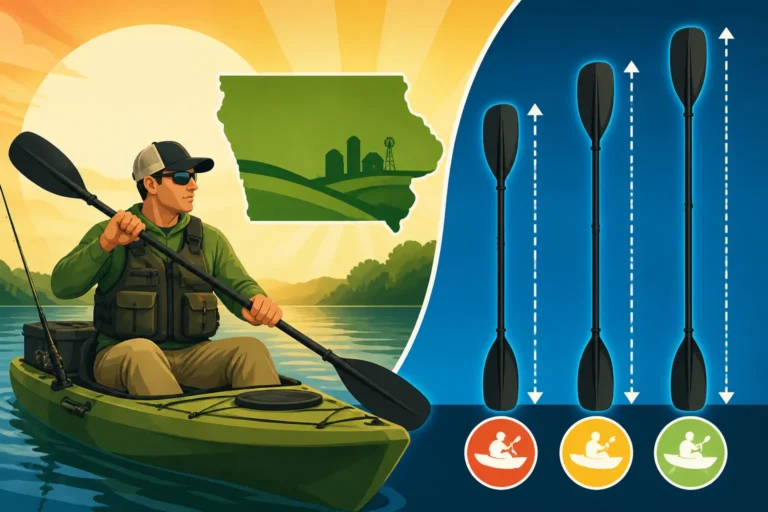
Picture this: you're out enjoying a serene day, paddling your kayak on a calm Iowa lake. Suddenly, a strong gust of wind or an unexpected wake catches you off guard, and you find yourself in the water. Even the most experienced paddler can have an accident. This is precisely why, in Iowa, anyone operating or riding on a canoe, kayak, or stand-up paddleboard must wear a U.S. Coast Guard-approved life jacket. It's not optional for these types of vessels because the likelihood of entering the water is inherently higher.
The same "wear it" rule also generally applies to those on personal watercraft, like jet skis. Furthermore, while not always a strict legal mandate for adults in all situations, it's highly recommended to wear a life jacket when fishing in cold water conditions, during strong currents on rivers like the Des Moines, or when navigating rough waters. Cold water shock can incapacitate even a strong swimmer in minutes, making a life jacket an absolute lifesaver. For tips on gearing up for specific watercraft, our Best Kayak for Iowa River Fishing guide dives into appropriate equipment, including PFDs.
Understanding "Readily Accessible" vs. "Worn"
This distinction is often the biggest source of confusion. For most adult boaters in vessels other than those mentioned above (like a motorboat or sailboat), the law requires a life jacket to be "readily accessible" for each person. This means it needs to be in the boat and easy to get to, but not necessarily on your body.
However, "readily accessible" is not synonymous with "tucked away and forgotten." Imagine trying to retrieve a life jacket from a storage locker while your boat is taking on water or while you're struggling in rough waves. It's nearly impossible. The spirit of the law, and certainly the spirit of safety, suggests that if you're in a situation where you might need it, you should probably wear it. For instance, if you're night fishing for catfish and visibility is low, wearing a life jacket, especially one with reflective material, is a smart move, even if it's not legally mandated for you to wear it. The fact is, a life jacket that isn't worn isn't helping you if you suddenly find yourself in the water. For an in-depth look at optimal life jacket choices for specific activities, consider our Best Life Jacket Type for Kayak Fishing article.
Types of Life Jackets and Choosing the Right One
Knowing the legal requirements is one thing, but understanding the different types of life jackets available can help you make an informed decision for maximum safety and comfort. They're not all bulky orange vests anymore, thank goodness! Modern PFDs come in a variety of styles and designs, each suited for different activities and personal preferences.
Different PFD Categories and Their Uses
The U.S. Coast Guard categorizes approved PFDs into five types, each with specific design features and intended uses:
- Type I: Offshore Life Jackets: These are designed for extended survival in rough, open water. They offer the most buoyancy, are usually bulky, and are designed to turn an unconscious person face-up in the water. You'll typically see these on commercial vessels or offshore fishing boats.
- Type II: Near-Shore Buoyancy Vests: Good for calm, inland waters or where rescue is likely to be quick. They're less bulky than Type I but still designed to turn some unconscious wearers face-up. Many standard boating vests fall into this category.
- Type III: Flotation Aids: These are typically worn for continuous wear and are popular for fishing, waterskiing, and other active sports. They are comfortable and come in various styles, including vest and jacket designs. They are not designed to turn an unconscious person face-up, so you need to be able to help yourself if you're incapacitated.
- Type IV: Throwable Devices: These are cushions or ring buoys designed to be thrown to someone in distress, not worn. They are in addition to wearable PFDs, never a replacement. Every boat 16 feet or longer (excluding canoes and kayaks) must have at least one Type IV device onboard.
- Type V: Special-Use Devices: These are designed for specific activities and must be used for their intended purpose to be considered USCG-approved. Examples include deck suits, work vests, or sailing harnesses. Some inflatable PFDs fall into this category, offering a sleek profile until inflation is needed.
Inflatable PFDs, often Type III or Type V, have become very popular among anglers because they are much less bulky and more comfortable for continuous wear. They come in manual and automatic inflation models. However, they require more maintenance than traditional foam vests and often have specific requirements for wear and re-arming. When considering any PFD, especially inflatables, always check the label for specific conditions of use and Coast Guard approval. For a broader selection of choices, explore guides like Best Life Jackets for Iowa Boaters.
Sizing, Fit, and Maintenance for Safety
Choosing the right type is just the first step; ensuring a proper fit is equally, if not more, important. A life jacket that is too loose will ride up and can be just as ineffective as not wearing one at all, potentially slipping off entirely. One that's too tight will be uncomfortable and might discourage continuous wear.
How to Check for Proper Fit:
- Buckle/Zip Up: Put the life jacket on and make sure all buckles, zippers, and straps are securely fastened.
- Lift Test: Have someone gently pull up on the shoulder straps. If the life jacket rides up past your ears or chin, it's too big. For children, it should not ride up past their chin at all.
- Snug, Not Constricting: It should feel snug but allow for full range of motion. You should be able to breathe comfortably and move your arms freely for casting or paddling.
Don't forget about maintenance! Life jackets, especially foam ones, can lose their buoyancy over time if not cared for. Always rinse them with fresh water after use, especially if they've been in saltwater (though most Iowa waters are fresh!). Hang them to dry completely out of direct sunlight to prevent mildew and degradation of the material. Regularly inspect them for tears, punctures, or signs of wear and tear on straps and buckles. If a life jacket is damaged, it might no longer be Coast Guard approved and should be replaced. You can find a vast array of PFDs, with detailed sizing charts and customer reviews, from retailers like Bass Pro Shops and on online marketplaces such as Amazon, making it easier to compare options and find the perfect fit for everyone in your fishing party. Just as you plan your layering for warmth when ice fishing in Iowa, as discussed in Best Cold Weather Clothing for Ice Fishing, thoughtful selection and care of your life jacket is paramount for safety.
Consequences of Non-Compliance and Staying Safe
Nobody wants to face fines or, worse, a tragic accident on the water. Understanding the consequences of not following Iowa's life jacket laws is important, but even more crucial is internalizing why these laws exist: to protect lives.
What Happens If You Don't Follow the Rules
Ignoring Iowa's life jacket laws can lead to various legal penalties. If a water patrol officer or conservation officer stops you and finds you or your passengers (especially children) not in compliance with the PFD requirements, you could receive a citation. These citations often come with fines. While specific amounts can vary, they are certainly an unwelcome expense that could have been easily avoided by simply following the rules. It's similar to the penalties for other regulations, like the Fine Amount for Fishing Without a License in Iowa, illustrating that recreational activities on the water come with responsibilities.
However, the legal repercussions are truly secondary to the most severe consequence: the potential for injury or loss of life. Drowning is often silent and can happen quickly, even in shallow water. A U.S. Coast Guard-approved life jacket provides crucial buoyancy that can keep your head above water, allowing you to breathe and increasing your chances of rescue, especially if you're injured, exhausted, or rendered unconscious. No fine can compare to the peace of mind knowing you and your loved ones are as safe as possible.
Beyond the Law: Prioritizing Your Safety
While legal requirements set a minimum standard, true safety on the water often means going above and beyond the letter of the law. Think about those chilly mornings or evenings when you're out Night Fishing Rules for Anglers for walleye or bass. Even if you're an adult and not legally required to wear your life jacket, the water temperature might be dangerously cold, and visibility could be low. In such scenarios, wearing a PFD isn't just a good idea; it's a vital one.
Consider the "What If" scenarios:
- Accidental Fall: You slip on a wet deck or a rocky bank and fall into the water.
- Boat Capsizing/Swamping: Your boat hits a submerged object, gets swamped by a large wave, or capsizes.
- Medical Emergency: You suffer a sudden medical event (heart attack, seizure, etc.) and become incapacitated.
- Cold Water Shock: The initial gasp and disorientation from falling into cold water can be lethal if you're not wearing a PFD to keep you afloat.
In all these situations, a life jacket that is on your body dramatically increases your survival chances. It buys you time, conserves your energy, and helps rescuers spot you. Encourage everyone on your boat, regardless of age, to wear their life jackets. Lead by example. It's a simple act that can have profound consequences, ensuring that your Iowa fishing adventures remain safe and enjoyable for everyone.
Here's a quick overview of life jacket types to help you choose:
| Life Jacket Type | Buoyancy | Best Use | Key Feature |
|---|---|---|---|
| Type I | High | Offshore, rough water, extended survival | Turns most unconscious wearers face-up; bulky |
| Type II | Medium | Near-shore, calm water, quick rescue likely | Turns some unconscious wearers face-up; less bulky than Type I |
| Type III | Medium | Continuous wear, active sports, fishing | Comfortable, allows movement; wearer must be conscious to stay face-up |
| Type IV | N/A | Throwable device (cushion, ring buoy) | Not worn, designed to be thrown to someone in distress |
| Type V | Variable | Special use (e.g., work vests, inflatables) | Designed for specific activities; must be worn for specific approval stated |
Disclaimer
This article is for general informational purposes only and does not constitute professional advice. Laws, prices and regulations vary by location and change over time. Consult a qualified professional for guidance on your specific situation.