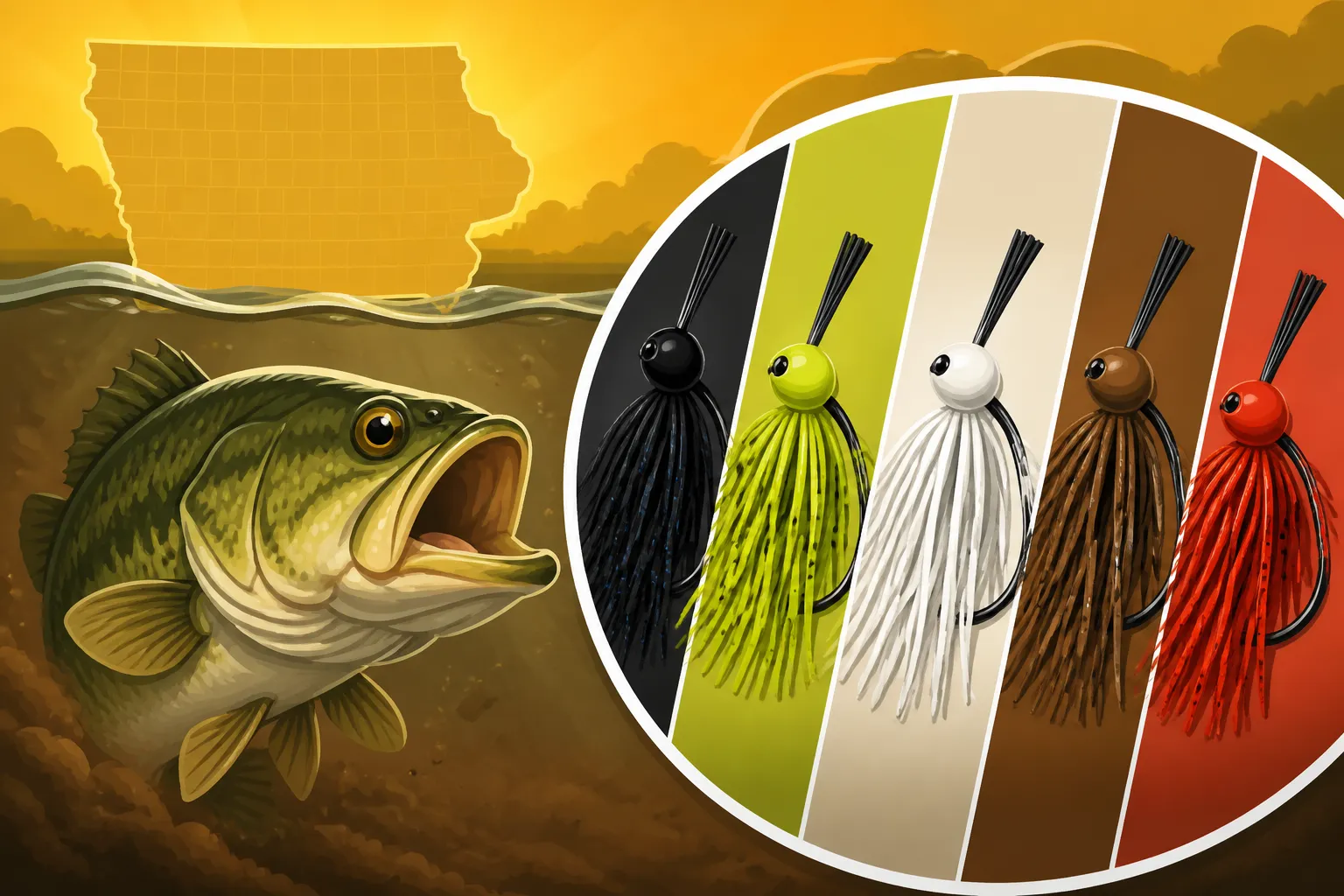
Best Jig Color for Muddy Water
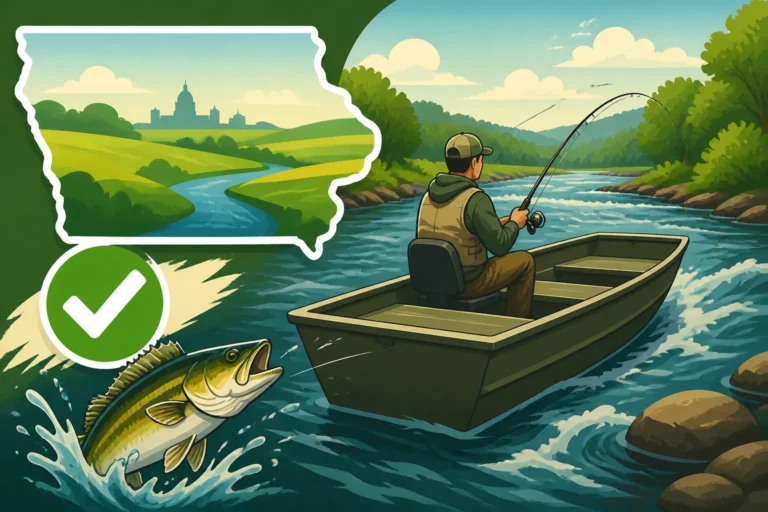
It's frustrating when you arrive at your favorite fishing spot in Iowa, only to find that recent rains or upstream activity have turned the water into a muddy, chocolate-milk mess. You've geared up, you're excited, and now you're faced with conditions that can make even the most experienced angler scratch their head. But don't despair! Fishing in muddy water doesn't have to mean a wasted trip. With the right approach, especially when it comes to jig color, you can still have a successful day on the water. This guide is all about helping you cut through the murk and pick the perfect jig colors to entice those fish, even when visibility is at an absolute minimum.
The Muddy Water Challenge in Iowa
Anyone who fishes Iowa's rivers and lakes regularly knows that clear water isn't always a guarantee. From the mighty Mississippi River to our smaller, local reservoirs and streams, water clarity can change drastically overnight. Understanding why this happens and how it affects the fish is your first step to adapting.
Why Iowa Waters Get Muddy
Iowa's landscape, with its rich agricultural land, is particularly prone to water turbidity. Heavy rains are a primary culprit, washing soil and sediment from fields and riverbanks directly into our waterways. This runoff creates that characteristic murky brown appearance we often see. Construction activities, dredging, and even heavy boat traffic can also stir up sediment, especially in shallower areas or busy sections of larger lakes like the Iowa Great Lakes.
Think about fishing the Des Moines River after a particularly strong spring storm; the water can go from a pleasant green tint to a thick, opaque brown faster than you can tie on a new lure. These conditions are a natural part of our ecosystem, but they certainly present a unique angling challenge. Being prepared for these situations, rather than simply packing up and going home, is key to consistent success.
How Muddy Water Impacts Fish Behavior
When the water gets muddy, it's like putting a blindfold on the fish. Their primary sense of sight, which they rely on heavily for hunting and navigating in clear water, becomes severely limited. This forces them to rely more heavily on their other senses: lateral line vibration, smell, and even sound. Fish become less aggressive sight feeders and more opportunistic, reacting to what they can feel or smell passing by.
This shift in behavior means that your jig needs to do more than just look good. It needs to create a disturbance, emit a strong scent, and be visible enough to be picked up by what little light penetrates the murky depths. Fish might hold tighter to cover, become less active, and generally be harder to locate, making lure selection even more critical. Understanding these behavioral changes is crucial for adapting your strategy and presentation.
Understanding Fish Vision in Turbid Water
To truly choose the best jig color, we need to put ourselves in the fish's fins, so to speak, and consider what they actually see when the water is clouded with sediment. It's not just about what we perceive as a good color.
How Light Penetrates Murky Depths
When water is muddy, suspended particles scatter and absorb light much more effectively than clear water. This means less light penetrates beyond the very surface. What little light does get through becomes diffused and loses its distinct color spectrum quickly. In essence, the deeper you go in muddy water, the darker and more monochromatic it becomes.
This is why very subtle or natural baitfish colors, which might excel in clear water, become completely invisible just a few feet down in turbid conditions. The goal isn't to perfectly imitate natural prey colors, but rather to present something that stands out in a low-light, low-visibility environment. We're looking for contrast and brightness, not necessarily realism.
The Importance of Contrast and Silhouette
Since true color distinction is lost in muddy water, fish rely heavily on detecting contrast and the silhouette of an object against the faint background light. Imagine a dark object against a slightly lighter backdrop – that's what a fish might pick up. This is where your jig color choice really shines (pun intended!).
Colors that absorb little light or reflect what little light is available will appear brighter and create a stronger silhouette. Conversely, colors that blend in with the dark, muddy background will be completely ignored. Our aim is to create an unmissable target, something that shouts "I'm here!" to a fish that's primarily feeling its way through the water. This principle guides our choices for both bright and dark colors in different muddy water scenarios.
The Science of Jig Color Selection for Muddy Water
It’s not just about throwing the brightest thing you have. There's a method to the madness when it comes to picking jig colors for low visibility, often balancing how light is reflected with how strong a silhouette is created.
Fluorescent and High-Contrast Colors
When light is scarce, fluorescent colors become your best friends. These pigments actually absorb ambient ultraviolet (UV) light and re-emit it as visible light, making them appear significantly brighter and more vivid to a fish, even in dim conditions. Think about the way a fluorescent safety vest glows even on a cloudy day – that's the principle at play. Chartreuse, often described as a vibrant yellow-green, is a prime example of a color that pops in murky water. Orange and certain bright greens also fall into this category.
These colors don't just reflect light; they project it, creating an almost glowing effect that can be detected from a greater distance by a fish's limited sight. The stronger the contrast these colors create against the dull background, the more likely a fish is to notice and investigate, even if it's just out of curiosity or territorial instinct. This is why you'll often see anglers reaching for these loud colors first when the water gets stained.
Dark and Opaque Colors for Strong Silhouettes
While bright, fluorescent colors are excellent, sometimes a very dark, opaque color can be equally effective, especially in extremely dark or deep muddy water. Why? Because these colors create a strong, solid silhouette against any available light, no matter how dim. Think of a black cutout against a barely visible gray background.
A black or junebug (a dark purple with green or blue flecks) jig, particularly one with some bulk, presents a clear, defined shape that fish can pick up on. This is especially true when fish are looking upwards towards the faint light filtering from the surface. The contrast isn't about brightness, but about the absence of light within the jig's profile. This makes it a distinct anomaly in the water column, something a fish's lateral line might also detect as a solid object passing by. It’s a different approach to visibility, but just as valid.
Top Jig Colors and How to Use Them in Iowa's Murky Waters
Let's dive into the specific colors that have proven time and again to be effective when fishing jigs in Iowa's muddy waters. Each has its own strengths, depending on the exact conditions you're facing.
Chartreuse: The Muddy Water Champion
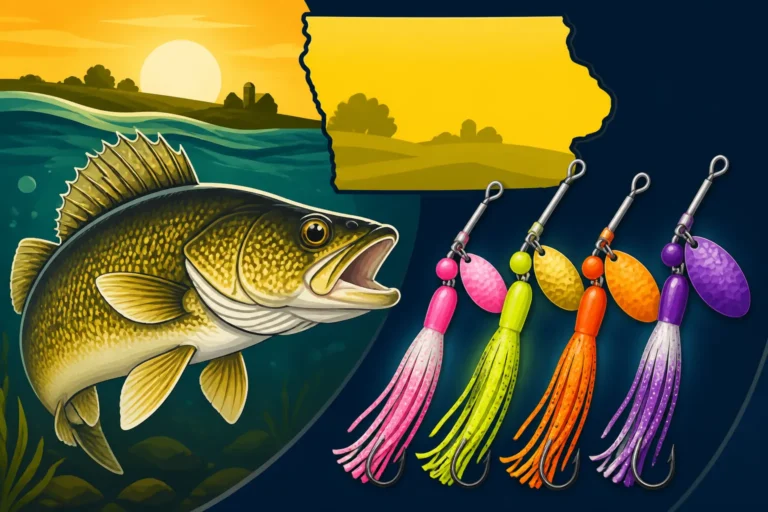
If there's one color that veteran Iowa anglers swear by for muddy water, it's chartreuse. This vibrant yellow-green hue is a powerhouse in low visibility. It stands out like a beacon, thanks to its fluorescent properties that help it glow in dim conditions. Whether you're targeting Channel Catfish Daily Limit in Iowa in a churning river or trying to coax a How to Catch Walleye in Iowa from a stained lake, chartreuse often gets the bite.
I've had countless days on the Cedar River or even the backwaters of the Mississippi where nothing else would work until I tied on a chartreuse jig. It's especially effective in shallower, dirtier water where some light still penetrates, allowing that fluorescent pop to really shine. You can find a huge variety of chartreuse jigs, from tiny panfish jigs to larger bass and walleye jigs, at stores like Bass Pro Shops or even in bulk multi-packs on Amazon, making it easy to stock up.
Orange and Firetiger: Bold and Aggressive
Following closely on chartreuse's heels are orange and firetiger patterns. Orange, particularly a bright, almost neon orange, offers excellent visibility in muddy water, much like chartreuse. It's a color that fish just seem to notice, often triggering an aggressive strike. Firetiger, which is a combination of chartreuse, orange, and sometimes black stripes, takes this visibility to another level, adding even more contrast and flash.
These colors are fantastic for bass and walleye in moderately stained to very muddy conditions. They represent a strong, unnatural presentation that often provokes a reaction strike from fish that might otherwise be lethargic. I often reach for these when the water is a bit deeper, or when I want a more aggressive lure profile. The combination of colors in firetiger jigs provides maximum visual disturbance, which can be just what's needed to get a fish's attention in a murky environment.
Black and Blue (Junebug): The Silhouette Specialists
Sometimes, the brightest colors aren't the answer, especially if the water is extremely dark, almost black, or if it's a very deep body of water. In these situations, dark colors like black and black-and-blue, or even the popular "junebug" (a dark purple with blue or green flake), can be incredibly effective. Instead of trying to be bright, these colors focus on creating a sharp, clear silhouette.
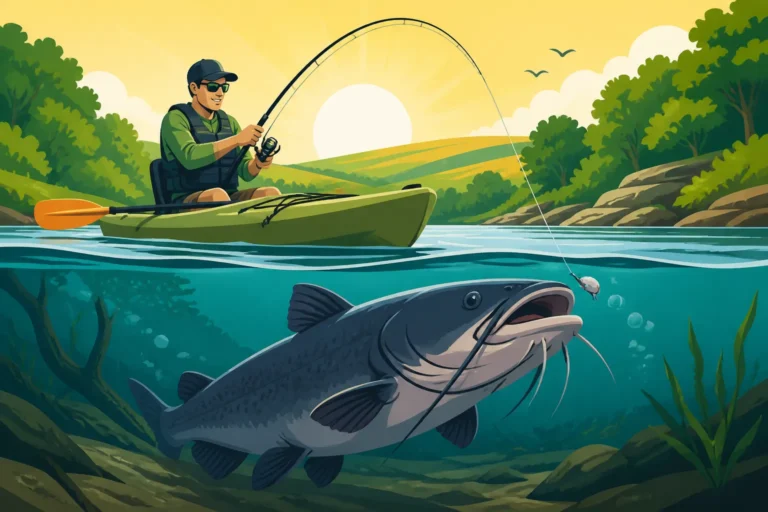
Imagine a fish looking up towards the faint light filtering through the surface. A solid black or dark blue jig presents a stark, dark profile that is easy to distinguish from the surrounding murky water. This strong contrast, even without bright reflectivity, can be picked up by a fish's eyes and lateral line. These colors are particularly potent for Bass Season and Size Limits and Channel Catfish Fishing in Iowa, especially when fished slowly near cover. Don't underestimate the power of a dark, silent silhouette in the murk.
White and Pink: Unexpected Brightness
While less common than chartreuse or orange for muddy water, bright white and vibrant pink jigs can sometimes surprise you. These colors are highly reflective, and even in poor light, they can pick up and bounce back what little light is available, appearing surprisingly bright. They offer a stark contrast against a dark, muddy background.
I've found white jigs to be particularly good for Crappie Daily Limit in Iowa and Bluegill and Sunfish Combined Limit in muddy ponds or shallower sections of lakes, especially if there's any overcast light filtering through. Pink, while perhaps sounding a bit unconventional, has a distinct luminescence that fish can detect. It's a great "experimentation" color when the usual suspects aren't producing. Keep a few of these in your tackle box for those days when you need something just a little different to trigger a bite.
Here's a quick reference table for choosing your jig colors:
| Water Clarity Level | Recommended Jig Colors | Primary Reason for Effectiveness | Best for Species (Examples) |
|---|---|---|---|
| Moderately Stained to Muddy | Chartreuse, Bright Orange, Firetiger | High visibility, fluorescent properties | Walleye, Bass, Crappie, Catfish |
| Very Dark/Extremely Muddy | Black, Black/Blue, Junebug | Strong silhouette, high contrast against dim light | Bass, Catfish |
| Deep Muddy Water | Black, Junebug | Excellent silhouette from below, perceived depth | Catfish, Deep Walleye |
| Overcast/Slightly Improving Murk | White, Bright Pink | High reflectivity, unexpected brightness | Crappie, Panfish, Bass |
Essential Jig Fishing Techniques for Muddy Conditions
Choosing the right color is only half the battle. How you present that jig in murky water is equally, if not more, important. Fish are relying on senses beyond sight, so you need to capitalize on those.
Slower Presentations and Increased Vibration
In muddy water, fish aren't going to chase down a fast-moving bait. Their reaction time is slower, and they're less likely to commit to something they can't clearly see or track. This means you need to slow down your retrieve significantly. Often, the slower, the better. Let your jig spend more time in the strike zone, giving fish ample opportunity to detect it.
Pair your chosen jig color with a jig that has some bulk or an appendage designed to create vibration. Think about soft plastic trailers with paddle tails, curly tails, or even a jig with a skirt that flares and pulsates. These movements send out vibrations through the water that a fish's lateral line can pick up, guiding them to your bait even if they can't see it. This is particularly crucial when fishing for How to Catch Catfish from the Bank or Walleye Fishing Techniques for Iowa Rivers where current naturally adds to the challenge.
Incorporating Scent and Sound
Since smell and sound become dominant senses in muddy water, adding these elements to your jig presentation can dramatically increase your hook-ups. Many anglers will add a dab of commercial fishing attractant (scent) to their soft plastic jig trailers. Scents like garlic, anise, or fish formulas can draw fish in from a distance, giving them that final piece of information they need to commit to a bite.
Sound can also play a role. While most jigs aren't inherently "noisy," you might consider jigs with small rattles inside, or even adding a small split shot slightly above your jig that will click against the jig head as it moves. This subtle acoustic signature can alert fish to your bait's presence, especially in still muddy water. Combining a highly visible jig color with a strong scent trail and subtle vibrations creates a multi-sensory attack that is hard for a muddy-water fish to ignore. You can often find a good selection of scented baits and jig trailers on Amazon or specialized fishing stores like Bass Pro Shops.
Heavier Jigs for Bottom Contact
When water is muddy, fish often hug the bottom or hold tight to submerged cover to ambush prey. This means getting your jig down to their level and keeping it there is critical. Lighter jigs might drift too much in current or not get deep enough efficiently. Opt for slightly heavier jigs than you might typically use in clear water for the same depth. This allows for better feel of the bottom, more direct contact with potential fish holding areas, and a more controlled, slower fall.
Feeling that jig tick along the bottom, bumping into rocks or logs, is often where the bite will come. A heavier jig also helps you maintain contact with your bait, which is crucial when bites can be incredibly subtle in muddy conditions. Don't be afraid to go up a size or two in jig weight; it could be the difference between feeling a bite and missing it entirely. Best Sinker Weight for Iowa River Fishing can also give you some ideas on how different weights behave in various current conditions.
Ultimately, mastering muddy water fishing in Iowa is about being adaptable. Don't let stained water deter you. With the right jig color and a thoughtful presentation, you can turn a challenging day into a productive one. Keep experimenting, pay attention to what the fish are telling you, and you'll soon be reeling in some impressive catches, even when the water looks like chocolate milk.
Disclaimer
This article is for general informational purposes only and does not constitute professional advice. Laws, prices and regulations vary by location and change over time. Consult a qualified professional for guidance on your specific situation.