Best Landing Net for Catfish
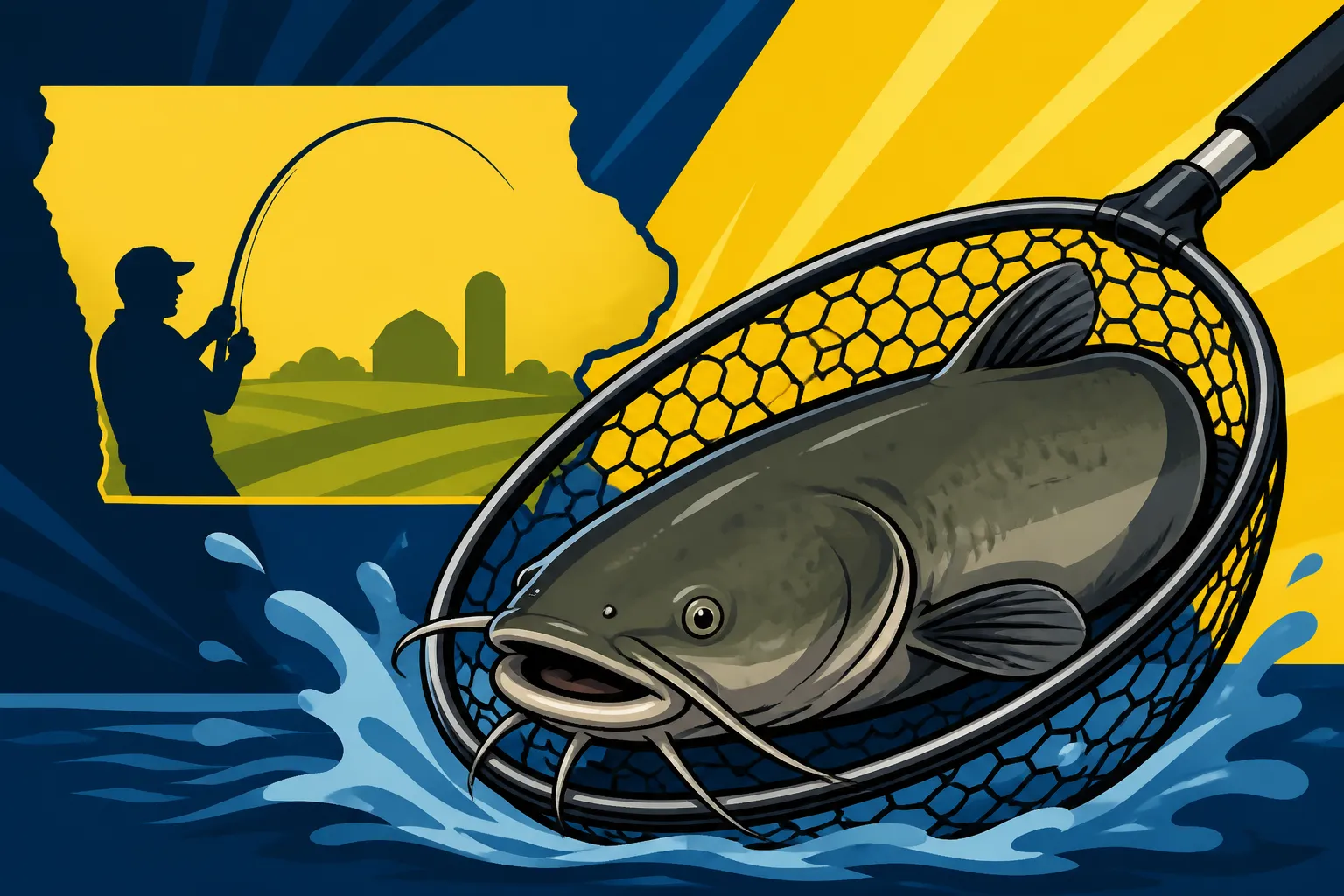
There's nothing quite like the thrill of feeling that solid tug on your line, knowing you've hooked into a hefty Iowa catfish. The fight is on, your heart races, and you manage to reel it close to the boat or bank. Then, the moment of truth arrives: landing the fish. If you've ever fumbled with a net that's too small, too flimsy, or that tangles every single hook, you know the pure frustration of watching a prized catch shake free at the last second. This guide is here to walk you through everything you need to know about choosing the best landing net specifically designed to confidently and safely land those big, powerful catfish that call Iowa's waters home, ensuring your next encounter ends with a successful photo op, not a 'one that got away' story.
Why a Dedicated Catfish Net is Essential
Catching catfish in Iowa, whether it's a feisty channel cat or a monstrous flathead, is a unique experience that often requires specialized gear. While a general-purpose landing net might work for smaller panfish or even bass, it often falls short when you're battling a genuinely big catfish. These fish are powerful, they have rough skin, and they are masters of thrashing, twisting, and rolling, all of which can spell disaster for an inadequate net and even for the fish itself.
The Frustration of Losing a Big Cat at the Boat or Bank
Imagine spending an hour carefully fishing for catfish on the Des Moines River, meticulously setting your Best Bait for Channel Catfish or patiently waiting through the night for a big flathead to bite. You finally get that aggressive strike, set the hook, and engage in an epic tug-of-war. After a spirited battle, you guide the fish to the side of your boat or within reach from the bank, only to find your net is too shallow, too narrow, or the handle is too short to safely scoop it up. The fish thrashes, tangles in the fine mesh, and then, with one final surge, rips free, leaving you with a sinking feeling and an empty net. We've all been there, and it's a truly deflating experience. This isn't just about disappointment; it's about the missed opportunity, the memory that almost was, and the hours of effort that suddenly feel wasted. A net that's built for the job eliminates this heartbreaking scenario, turning those critical final seconds into a moment of triumph.
Protecting Both the Fish and Your Gear
Beyond the frustration of lost fish, using the wrong net can actually harm the catfish you're trying to land. Fine-mesh nylon nets can strip away the fish's protective slime layer, which is vital for its health, especially if you plan on releasing it. Hooks also get incredibly tangled in fine mesh, making extraction difficult and stressful for both you and the fish, potentially prolonging its time out of water. For those who practice catch and release, a fish-friendly net is a crucial part of ethical angling.
Furthermore, a powerful catfish can easily tear through a lightweight, cheap net, especially if it's thrashing with multiple treble hooks from a crankbait or a heavy lead sinker from a bottom rig. Investing in a robust net protects your investment in fishing gear, preventing rips, tears, and broken handles. It also ensures your valuable hooks aren't left behind in a shredded net, ready to snag your hand the next time you reach in. Consider the effort you put into selecting your rod, reel, and Catfish Gear Guide for Iowa Rivers; your net should be chosen with the same care.
Key Features to Look for in a Catfish Landing Net
When you're out there chasing those whisker warriors across Iowa's lakes and rivers, having the right landing net can make all the difference between a successful outing and a story of "the one that got away." Catfish aren't like other fish; they're strong, often heavy, and they have a tendency to thrash with incredible power. This means your net needs to be more than just a big scoop; it needs specific features to handle these magnificent creatures safely and efficiently.
Net Hoop Shape and Size
The shape and size of your net's hoop are absolutely critical for catfish. A small, round, or shallow hoop is practically useless for a decent-sized channel cat, let alone a flathead that can easily exceed 20 pounds. You want a large, wide hoop that provides ample room for the entire fish. Many experienced catfish anglers prefer a hoop that is wider than it is long, or at least a generous oval or tear-drop shape. This allows you to scoop the fish head-first without having its tail or body flopping out.
For typical Iowa channel cats, a hoop around 24-30 inches wide is a good starting point. If you're targeting trophy flatheads in places like the Mississippi River, you'll want to go even bigger, perhaps 36 inches or more, to accommodate fish that can grow to truly impressive How Big Channel Catfish Get in Iowa proportions. The depth of the net is also key; look for a bag depth of at least 30-40 inches, so the fish is fully contained once netted and can't jump out. A deeper net also helps to minimize stress on the fish by keeping it from contacting the net frame as it struggles.
Handle Length and Material
The handle of your landing net needs to be as robust as the hoop itself, and its length will depend heavily on how and where you fish. If you're fishing from a boat with a low gunwale, a shorter handle (3-5 feet) might suffice. However, if you're fishing from a higher boat, a dock, or especially from the bank, you'll appreciate a longer, extendable handle. An extendable handle, which can telescope from perhaps 4 feet to 8 or even 12 feet, offers incredible versatility, allowing you to reach fish that might be just out of arm's length.
The material of the handle is equally important. Aluminum is a popular choice due to its strength and relatively light weight, offering a good balance of durability and ease of use. Fiberglass or heavy-duty composite materials are also excellent, providing stiffness under load. Avoid flimsy, thin handles that flex excessively when a heavy fish is in the net. A strong handle allows you to apply leverage and lift a struggling fish without fear of it snapping. When browsing options at places like Bass Pro Shops, pay close attention to the handle's extension mechanism if it's telescoping, ensuring it locks securely and won't collapse under the weight of a fish.
Mesh Material and Knotless Design
This is where the difference between a general-purpose net and a catfish-specific net truly shines. Fine nylon mesh, while cheap, is a hook magnet and abrasive on fish. For catfish, you absolutely want a knotless, rubberized, or coated mesh. Rubberized mesh is by far the best option. Its smooth, non-abrasive surface protects the fish's slime coat and scales, minimizing injury if you plan on releasing them. Crucially, rubberized mesh is also incredibly "hook-friendly," meaning your treble hooks (or even single hooks) are far less likely to get tangled, making for a quick and easy release.
Coated nylon mesh is a good alternative, offering some of the benefits of rubber without the full weight. The coating makes it smoother and less abrasive than raw nylon. The mesh size itself should be large enough to allow water to flow through easily, reducing drag when netting, but small enough to contain the fish without gill-plating. Typically, a 1-inch to 1.5-inch mesh size is ideal for catfish. The knotless design is paramount, preventing abrasions on the fish's delicate skin and making hook removal a breeze.
Storage and Portability
Let's be real, some of these catfish nets are big. So, how you store and transport it matters. If you primarily fish from a large boat, you might have dedicated rod holders or storage compartments for a longer, fixed-handle net. However, for smaller boats, kayaks, or bank fishing, portability becomes a major consideration.
This is where telescoping handles really shine. They can retract to a manageable size, making them easier to stow in a rod locker, alongside your kayak, or strapped to your backpack for bank access. Some nets even feature collapsible hoops that fold down, further reducing their footprint. While a larger net is often better for the fish, a net that's so unwieldy you leave it at home is useless. Think about your typical fishing setup: where will this net live when you're not using it? Is it easily accessible for that crucial moment when a fish is boat-side? Many anglers find that the convenience of a compact yet powerful net found on sites like Amazon makes a big difference in how often they actually bring it along.
Types of Landing Nets and Their Suitability for Catfish
Just like there's a range of Iowa Fishing Techniques Guide for different species, there's an array of landing nets available, each with its own design and intended use. For the serious catfish angler, understanding these types is key to selecting the one that best suits your fishing style and the size of the whiskered giants you're pursuing.
Fixed Handle Nets
Fixed handle nets are characterized by a solid, non-adjustable handle permanently attached to the net hoop. These nets are generally known for their strength and rigidity, as there are no moving parts or locking mechanisms to fail. The absence of telescoping sections means fewer potential weak points, making them incredibly durable, especially when lifting heavy fish. This type of net is often favored by anglers who fish consistently from the same platform, such as a large fishing boat with ample storage, where a long handle can be easily stowed without needing to retract.
For serious catfish targeting, especially when going after trophy Flathead Catfish Habitat and Behavior, a fixed handle net with a robust, large hoop is an excellent choice. You'll typically find them with strong aluminum or fiberglass handles and deep, rubberized mesh. The main drawback is their size; a fixed 6-foot or 8-foot handle can be cumbersome to transport in smaller vehicles or inconvenient for bank anglers needing to hike to a spot. However, if strength and reliability are your top priorities and storage isn't an issue, a quality fixed handle net will serve you well for years of battling big Iowa cats.
Telescoping/Extendable Handle Nets
Telescoping, or extendable, handle nets offer the ultimate in versatility and portability, making them a popular choice for a wide variety of Iowa anglers. These nets feature handles that can extend and retract, often with several locking sections, allowing you to adjust the length from a compact storage size to an impressively long reach in seconds. This adjustability is invaluable whether you're fishing from a high bank, a pier, a kayak, or even a small boat where space is at a premium.
For catfish anglers, the extendable handle means you can keep a compact net stowed, but quickly extend it to reach that big channel cat that's just out of arm's length from your fishing spot on Saylorville Reservoir. Look for models with strong, positive-locking mechanisms on the handle sections – twist-locks or push-button locks that feel solid and won't slip under pressure. The handle material is often aluminum, providing a good balance of strength and weight. While there are more moving parts than a fixed handle net, a well-made telescoping net will be plenty durable for most catfish encounters. Their ability to shorten for transport means they're also excellent for anglers who might need to carry their gear a bit, perhaps to a secluded spot along the Skunk River.
Hoop/Basket Style Nets
While not as common for large catfish as the more traditional landing nets, certain hoop or basket-style nets have their niche, particularly for bank anglers or those who prefer a more compact solution for smaller catfish or panfish caught while targeting cats. These nets often feature a wider, more circular or square hoop and a shallower bag, sometimes resembling a large basket. They are typically designed for rapid deployment and quick scooping.
For very large catfish, these might not be the primary choice due to their shallower depth, which could allow a powerful fish to flop out. However, some heavy-duty, oversized basket nets with reinforced frames and robust mesh can work for decent-sized channel cats up to 10-15 pounds, especially if you're quick and confident in your scoop. Their primary advantage lies in their typically shorter, more rigid handles, which can be easier to manage in tight quarters or when fishing from a low bank. They're less prone to entanglement than a fine-mesh trout net, but still generally not as fish-friendly or secure for true trophy catfish as a deep, rubberized net. For multi-species anglers who happen upon a medium-sized cat, it might get the job done, but it's not a specialized tool for monster catfish.
Here's a quick comparison of net types for catfish:
| Net Type | Pros | Cons | Ideal Catfish Use |
|---|---|---|---|
| Fixed Handle Net | Ultimate strength and rigidity, no moving parts to fail. | Bulky for transport and storage, less versatile for varying reach. | Large boats, docks, targeting trophy flatheads where maximum strength is crucial. |
| Telescoping/Extendable | Highly versatile reach, compact for storage and transport. | More moving parts (potential for failure if not well-made). | Bank fishing, kayaks, smaller boats, general-purpose catfish angling on diverse waters. |
| Hoop/Basket Style | Quick deployment, compact (some models), good for smaller fish. | Often shallower bag, less secure for large, thrashing catfish. | Smaller channel cats, multi-species fishing where catfish are a secondary target. |
Net Materials: Mesh, Frame, and Handle
The materials used in a landing net are paramount to its effectiveness, durability, and how well it handles a feisty catfish. Each component – the mesh, the frame, and the handle – plays a critical role, and understanding the differences can guide you toward a net that performs reliably season after season, especially when you're battling impressive fish like the Channel Catfish Daily Limit in Iowa.
Understanding Netting Types: Rubber, Nylon, Coated
The mesh is arguably the most important part of a catfish net. It's the part that actually cradles the fish, and its material directly impacts the fish's well-being and your ability to quickly and safely unhook your catch.
Rubberized Mesh (or "Rubber Netting") is the gold standard for catfish. It's incredibly fish-friendly because its smooth, pliable surface doesn't strip away the fish's protective slime coat, which is vital for preventing disease and aiding recovery if you plan to release the fish. The rubber also prevents hooks from snagging and tangling, which is a massive relief when dealing with the multiple hooks of a trotline setup or a big treble on a lure. Instead of digging into the mesh, hooks simply slide along the rubber, making unhooking a quick, stress-free process for both you and the fish. While rubber nets can be heavier and sometimes more expensive, their benefits for fish health and angler convenience are well worth the investment. Many dedicated catfish anglers wouldn't use anything else.
Coated Nylon Mesh offers a good compromise. It's essentially nylon netting that has been treated with a rubber or silicone coating. This coating reduces the abrasiveness of the nylon, making it much gentler on fish than plain nylon. It also significantly decreases hook tangles, though perhaps not quite as effectively as pure rubber. Coated nylon nets are generally lighter and less expensive than full rubber nets, making them a popular choice for anglers who want improved fish safety and less frustration without the full weight or cost of an all-rubber net.
Plain Nylon Mesh is usually the cheapest option. While it's lightweight and dries quickly, it's generally not recommended for catfish, especially if you're practicing catch and release. The knotted nylon can be very abrasive on the fish's slime layer and scales, causing injury. More importantly for the angler, hooks (especially treble hooks) tend to snag deeply and relentlessly in plain nylon mesh, turning a simple unhooking into a tangled, frustrating mess that takes valuable time and can further stress the fish. Save these nets for panfish or baitfish.
Frame Durability: Aluminum vs. Fiberglass
The net frame holds the mesh and connects to the handle, so its strength is crucial for containing a heavy, struggling catfish.
Aluminum Frames are the most common and often preferred for catfish nets. Aluminum offers an excellent strength-to-weight ratio. It's rigid enough to withstand the forces exerted by a large catfish and durable enough to handle the bumps and scrapes of regular fishing. Many high-quality aluminum frames are anodized for corrosion resistance, which is important given constant exposure to water. Look for thicker gauge aluminum for maximum strength. While they might flex slightly under extreme load, a well-constructed aluminum frame is more than adequate for landing even trophy-class flathead catfish specimens. When you shop at retailers like Bass Pro Shops or browse options on Amazon, you'll find a vast selection of aluminum-framed nets.
Fiberglass Frames are another strong and corrosion-resistant option. Fiberglass can be incredibly stiff and durable, often feeling more solid than aluminum under load. It's also inherently non-corrosive, which is a major advantage in freshwater environments. The main potential downsides are that fiberglass can sometimes be a bit heavier than aluminum, and if it does break, it can splinter sharply, though this is rare with quality construction. For sheer brute strength and resistance to bending, fiberglass is an excellent choice.
Handle Grips and Ergonomics
A strong, comfortable grip is often overlooked but becomes incredibly important when you're trying to control a large, thrashing catfish.
Grip Materials: Many quality nets feature handles with comfortable, non-slip grips made from EVA foam, textured rubber, or even ribbed aluminum. These materials provide a secure hold even when wet or slimy. You don't want your hands slipping at the critical moment, especially when you're leaning over the water.
Ergonomics: Consider how the handle feels in your hands. Does it provide a balanced feel with the net hoop? Is it easy to hold onto when wet? For telescoping handles, check that the locking mechanisms are easy to operate, even with cold or wet hands. Some handles feature built-in wrist lanyards, which can be a lifesaver, preventing your net from slipping into the water if you lose your grip during a struggle. A well-designed handle contributes to better control, reducing fatigue and increasing your chances of a successful scoop.
Choosing the Right Size and Reach for Your Catfish Adventures
Selecting a landing net isn't just about finding the biggest one you can get your hands on. It's about matching the net's dimensions and reach to the specific catfish species you're targeting, your fishing environment, and your personal angling style. An oversized net can be cumbersome, while an undersized one guarantees heartache.
Matching Net Size to Target Catfish Species
Iowa is home to several fantastic catfish species, and their sizes can vary dramatically. Knowing what you're primarily after will help dictate your net's dimensions.
Channel Catfish: These are the most widespread and commonly caught catfish in Iowa, found in nearly every river and lake, from the small creeks to major impoundments like Rathbun Lake. While many are in the 2-8 pound range, trophy channel cats can easily hit 15-20 pounds, with some exceeding Channel Catfish Fishing in Iowa. For general channel cat fishing, a net hoop of 24-30 inches wide with a depth of 30-40 inches is a great all-around choice. This provides enough room for larger channels without being overly unwieldy.
Flathead Catfish: The true monsters of Iowa's waters, flatheads are known for their massive size and incredible power. If you're specifically targeting these giants, especially in big rivers like the Mississippi or the Missouri, you'll need a much larger net. Flatheads commonly exceed 30 pounds, and truly exceptional ones can push well past 50 pounds. For these fish, look for a net with a hoop width of at least 30-36 inches, and a bag depth of 40-50 inches or more. You need ample space to fully engulf and secure these massive fish. Remember, a flathead can have a very broad head and body.
Blue Catfish: While less common than channel or flathead catfish in most of Iowa, blue catfish are found in certain border waters, particularly the Mississippi River. Like flatheads, they can grow to immense sizes, often surpassing 50 pounds. If you plan to specifically target blue cats, especially on the Mississippi River border, you'll need a net size comparable to that recommended for trophy flatheads: a very large, deep net to handle their bulk and strength.
Considering Your Fishing Environment
Where you fish profoundly impacts the ideal net configuration, especially the handle length.
Boat Fishing (Larger Vessels): If you're on a spacious bass boat or a dedicated catfish rig, you often have more room to maneuver a fixed-handle net. A 4-6 foot fixed handle might be perfect, offering strength and quick deployment without needing to extend. However, if your boat has high gunwales, or if you frequently fish alone and need to reach further, a telescoping handle that extends to 8 feet or more could be beneficial. Consider the layout of your boat and how easily you can access and deploy the net. You want it within arm's reach but out of the way during casting and reeling.
Bank Fishing: This is where a telescoping handle truly shines. Whether you're fishing from a gentle slope, a rocky bank, or a higher concrete wall, you often need significant reach to get to the water's edge. A net that extends from 4 feet to 8-12 feet allows you to adapt to different bank heights and casting distances. Portability is also key here; you might be hiking a bit, so a net that collapses compactly is a huge plus. Always make sure you have solid footing when extending the net and leaning over to land a fish.
Kayak Fishing: Kayak anglers face unique challenges regarding space and stability. A net for kayak fishing needs to be compact, easily stowable, and quick to deploy with one hand, all while maintaining balance. Shorter, fixed-handle nets (2-4 feet) are often preferred, or very compact telescoping nets. The hoop size should be generous enough for the target fish, but not so large that it becomes unmanageable in the confined space of a kayak. A strong, slip-resistant grip and a lanyard are critical to prevent losing your net overboard. For specific insights into this setup, consider checking out our guide on Kayak Fishing Gear Guide for Iowa Rivers.
Balancing Reach with Maneuverability
While reach is important, especially from the bank or a high boat, you also need to be able to maneuver the net effectively. A 12-foot handle might give you incredible reach, but if you're trying to manage it in a strong river current while a 20-pound flathead is thrashing, it can quickly become unwieldy. There's a sweet spot where your net is long enough to reach, but short enough to control with precision.
Practice makes perfect. If you opt for an extendable net, take some time to practice extending, retracting, and swinging it a bit. Get a feel for its balance and weight at different lengths. You want to be able to make a confident, single scoop motion without overreaching or losing control. Often, a net that's slightly shorter but easier to handle will land more fish than a behemoth net that's awkward to deploy. The goal is a quick, decisive scoop to minimize stress on the fish and maximize your success.
Maintenance and Care for Your Catfish Net
Investing in a good quality landing net for catfish is like investing in any other piece of fishing gear – it needs proper care to ensure it lasts and performs reliably. Catfishing can be messy, and your net will come into contact with fish slime, mud, bait residue, and potentially sharp hooks. Regular maintenance isn't just about cleanliness; it's about extending the life of your gear and ensuring it's ready for that next big catch.
Cleaning and Drying Your Net Properly
This is perhaps the most crucial step in net maintenance. After every fishing trip, especially one where you've landed fish, your net needs a good cleaning.
Rinse Thoroughly: Start by rinsing your net thoroughly with fresh water. A garden hose works perfectly for this. Pay close attention to the mesh, making sure to flush out any fish slime, blood, mud, weeds, or bait chunks. If you've been fishing in brackish or slightly salty water (like some border rivers), a thorough freshwater rinse is even more critical to prevent corrosion on metal components. Don't forget to rinse the handle and frame as well.
Remove Debris: Check the mesh carefully for any stuck hooks, line fragments, or stubborn debris. Rubberized mesh is less prone to snagging, but it's still good practice. For more stubborn grime or a lingering odor, you can gently wash the mesh with a mild soap (like dish soap) and water, then rinse again thoroughly to ensure all soap residue is gone.
Air Dry Completely: This step is vital to prevent mildew, mold, and unpleasant odors, which can develop quickly if you store a wet net. Hang your net in a well-ventilated area, out of direct harsh sunlight, allowing it to air dry completely. Make sure the mesh is spread out and not bunched up, as this can trap moisture. If you have a telescoping net, extend it fully while drying to ensure water doesn't get trapped inside the sections. Never store your net wet, not even for a few days, as this is a sure way to ruin it prematurely and make it smell terrible.
Inspecting for Wear and Tear
Regular inspection of your net can help you catch small issues before they become major problems.
Mesh Integrity: After cleaning, carefully examine the net mesh for any cuts, tears, or frayed areas. Even small nicks can propagate into larger holes, compromising the net's ability to hold fish. Pay particular attention to areas where the mesh connects to the hoop frame, as this is often a high-stress point. If you find minor damage to rubberized mesh, sometimes a specialized repair kit or a strong, flexible adhesive can patch small holes, but for significant damage, replacement may be the only option.
Frame and Handle: Check the net frame for any bends, cracks, or signs of stress, especially at the joints where the frame meets the handle. For telescoping handles, inspect the locking mechanisms to ensure they are still engaging securely. Are they stiff or difficult to operate? Sometimes a bit of silicone spray or light lubrication (avoiding anything that could contaminate the water or fish) can help smooth out sticky telescoping sections. Look for any loose screws or rivets on the frame or handle assembly. Tightening these components can prevent future wobbles or failures. The goal is to ensure the net remains rigid and reliable when that big Iowa walleye or Muskie Fishing Techniques for Iowa Waters is finally at the boat.
Storage Tips to Extend Lifespan
Proper storage when your net isn't in use will significantly extend its lifespan.
Cool, Dry Place: Once your net is completely dry and inspected, store it in a cool, dry place, away from direct sunlight and extreme temperatures. Heat and UV rays can degrade rubberized and nylon mesh over time, making it brittle and weak. A shed, garage, or even a dedicated storage area in your boat are ideal.
Protect the Mesh: Try to store the net in a way that protects the mesh from being pinched, crushed, or exposed to sharp objects. If your net collapses, do so carefully. Some anglers even use a simple fabric bag or sleeve to protect the mesh during transport and storage, especially if it's going to be jostled around with other gear in a vehicle or boat.
Easy Access: While storing it safely is important, don't put it in such an inaccessible place that you won't grab it when you need it. Ensure it's easily retrieved for your next fishing adventure, whether you're heading to the Iowa Great Lakes or a local community pond. A well-maintained net is not only safer for the fish but also a reliable tool that gives you confidence on the water, turning every hard-fought battle into a successful landing.
Disclaimer
This article is for general informational purposes only and does not constitute professional advice. Laws, prices and regulations vary by location and change over time. Consult a qualified professional for guidance on your specific situation.