Best Line Weight for Muskie Fishing
For many Iowa anglers, the pursuit of a muskie is the ultimate challenge—a test of patience, skill, and equipment against one of freshwater's most formidable predators. Nothing stings quite like having a trophy muskie at the boat, only for your line to snap at the last moment. This comprehensive guide will dive deep into the world of muskie fishing line, ensuring you choose the ideal weight and type to give you the best chance at landing these elusive giants across Iowa's diverse waters.
Understanding Muskie Fishing Line Challenges
Muskie fishing isn't like panfishing or even bass fishing; it demands specialized gear. These fish are known for their explosive strikes, powerful runs, and notoriously toothy mouths, all of which put immense stress on your fishing line. If your line isn't up to the task, you're not just risking losing a fish, you're risking a wasted day of effort.
The Power and Aggression of Muskie Strikes
Imagine a torpedo launching from the depths, engulfing your oversized lure with a force that can yank the rod right out of your hands if you're not ready. Muskie strikes are often violent and sudden, especially when they're ambushing prey or reacting to a figure-eight at the boat. This initial shock load can easily break weaker lines, even before the fight truly begins. A lightweight line, while it might cast further, simply won't absorb this kind of impact consistently. It’s a common frustration for anglers who try to use bass gear for muskie; the equipment just isn't designed for that level of stress.
Abrasive Teeth and Gill Plates
Muskies possess a mouth full of needle-sharp teeth that aren't just for show. These teeth are designed to grip and tear, and they can absolutely shred lighter fishing lines or fray heavier ones in mere seconds. Beyond their teeth, their rough gill plates can also act like sandpaper, wearing down line during a protracted battle. This isn't just about pure breaking strength; it's about resistance to abrasion. You could have a line that tests at 80 pounds, but if it frays easily, it's just as good as a 20-pound line once it touches a tooth. That's why your choice of mainline and leader is so critical when targeting these aggressive predators.
Key Factors in Choosing Muskie Line Weight
Selecting the "best" line weight for muskie isn't a one-size-fits-all answer; it depends on a combination of factors related to your tackle, the lures you're throwing, and the specific fishing conditions you're facing in Iowa. Ignoring these nuances can lead to frustrating break-offs or a suboptimal fishing experience.
Lure Weight and Casting Dynamics
Muskie lures are notoriously heavy. We're talking about massive bucktails, crankbaits, jerkbaits, and glide baits that can weigh several ounces, sometimes even half a pound or more. Casting these behemoths requires a stout line that can withstand the immense force generated during the cast. A line too light will not only snap during a powerful cast, but it will also hinder your casting distance and accuracy. You need a line that can load your heavy-action rod properly and transfer that energy efficiently to launch these large baits effectively. Think about throwing a huge bait at Clear Lake Walleye Fishing areas or Mississippi River Pool 9 Fishing spots; you need serious backbone.
Water Conditions and Structure
The environment where you're fishing plays a huge role in line choice. Are you battling muskies in the open waters of the Iowa Great Lakes, or are you navigating snag-filled river systems like sections of the Des Moines River? Clear, open water might allow for slightly lighter (though still heavy) lines, while fishing around dense weeds, submerged timber, or rocky shorelines demands maximum abrasion resistance. A heavier line with a larger diameter is inherently more resistant to cuts and abrasions from structure. When a muskie dives into a fallen tree or wraps your line around a rock pile, that extra pound test can be the difference between landing it and losing it.
Rod and Reel Compatibility
Your line weight must be appropriately matched to your rod's power rating and your reel's capacity. Most muskie rods are heavy or extra-heavy power, designed to handle lines ranging from 65 to 100 pounds test. Using a line that's too light on a heavy rod will prevent the rod from loading correctly, impacting casting performance. Conversely, trying to spool excessively heavy line onto a reel not designed for it can lead to tangles, backlashes, and reduced line capacity, meaning shorter casts and less line to fight a running fish. It's a system, and every component needs to work in harmony. You can explore more about rod and reel setups in our Iowa Fishing Gear Guide.
Types of Fishing Line for Muskie
When it comes to muskie fishing, not all lines are created equal. Each type has its distinct advantages and disadvantages, and understanding these differences is crucial for building a reliable muskie setup that can stand up to the challenge.
Braided Line: The Dominant Choice
For muskie fishing, braided line is overwhelmingly the preferred mainline, and for very good reasons. Its incredible strength-to-diameter ratio means you can have a very strong line that's still relatively thin, allowing for more line on your reel and better casting distance with heavy lures. Braided line has virtually no stretch, which translates to superior sensitivity, letting you feel every bump and subtle bite, and incredibly strong hooksets, crucial for piercing the tough, bony mouth of a muskie. It also offers excellent abrasion resistance, though direct contact with muskie teeth is still a danger, necessitating a robust leader.
The common range for muskie braided line is typically 65 to 100 pounds test. Many seasoned muskie anglers lean towards the heavier end, around 80-pound test, for general all-around fishing, especially when throwing heavy bucktails or jerkbaits. This gives you plenty of backbone for casting big baits, fighting powerful fish, and pulling free from minor snags. Lighter braid, say 50-pound, might be considered for smaller lures or in very open water, but it often sacrifices the confidence needed when that true giant hits. You can often find a great selection of braided lines at retailers like Bass Pro Shops or by browsing options on Amazon.
Fluorocarbon Line: Primarily for Leaders
While fluorocarbon can be used as a mainline for some species, it's generally not recommended for muskie due to its inherent stretch compared to braid and its higher memory. However, it excels as a leader material. Fluorocarbon is nearly invisible underwater, which can be an advantage in clear water conditions, and it boasts excellent abrasion resistance. When used as a leader, it provides an additional layer of protection against the muskie's teeth.
When considering fluorocarbon for leaders, anglers typically opt for 80 to 150-pound test. The higher end of this range is often preferred for large, toothy fish like muskie, giving maximum protection. A heavy fluorocarbon leader, usually around 24 to 36 inches long, is tied directly to the braided mainline using a strong knot like a FG knot or double uni-knot, then attached to the lure via a strong snap swivel. This combination provides the best of both worlds: the strength and sensitivity of braid, with the invisibility and abrasion resistance of fluorocarbon right at the business end.
Monofilament Line: Limited Use
Monofilament line, while affordable and easy to tie, is generally not the primary choice for muskie fishing. Its significant stretch reduces sensitivity and hooksetting power, which are critical for muskie. Furthermore, its abrasion resistance, while decent, typically doesn't hold up as well against muskie teeth or heavy structure compared to braid or thick fluorocarbon. Some anglers might use monofilament for specific applications, such as trolling with diving baits where its stretch can act as a shock absorber, but even then, heavier braid with a fluorocarbon or wire leader is usually superior. If you do consider monofilament, you'd need to go with exceptionally heavy test, perhaps 40-pound minimum, but even that often feels inadequate for the true challenges of muskie angling.
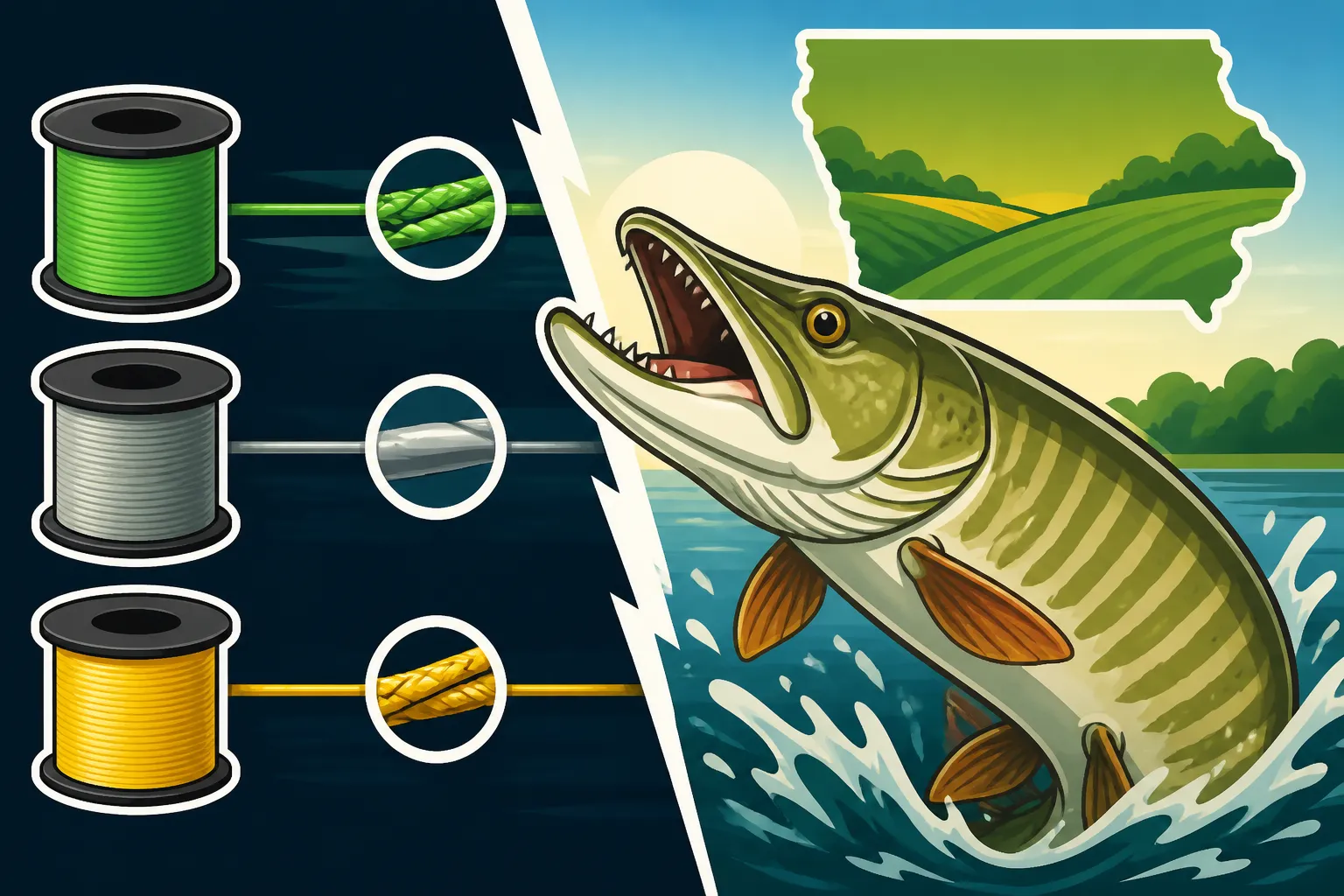
Here's a quick comparison of line types for muskie fishing:
| Line Type | Typical Muskie Application | Pros | Cons | Recommended Test Weight (Mainline/Leader) |
|---|---|---|---|---|
| Braided | Mainline | High strength, no stretch, sensitive | Visible, can dig into spool | 65-100 lb |
| Fluorocarbon | Leader (occasionally mainline for finesse) | Low visibility, good abrasion resistance | More stretch than braid, higher memory | 80-150 lb (leader) |
| Monofilament | Very limited, niche trolling | Affordable, good knot strength | High stretch, lower sensitivity | 40-60 lb (if used for trolling mainline) |
Leader Systems: The Unsung Hero of Muskie Rigs
While your mainline gets the glory for casting and fighting, the leader system is often what truly seals the deal with a muskie. These toothy critters demand a leader that can withstand their bite and the rigors of battle. Skimping on your leader is a sure-fire way to end your muskie outing with a tale of "the one that got away."
Wire Leaders: Maximum Tooth Protection
For absolute tooth protection, wire leaders are the gold standard. These are made from single-strand stainless steel, multi-strand braided wire, or titanium. Single-strand wire is extremely stiff and bite-proof but can kink easily. Multi-strand wire, often coated, is more flexible and resistant to kinking but can sometimes fray. Titanium leaders offer the best of both worlds—they are incredibly strong, bite-proof, and highly kink-resistant, making them a favorite among serious muskie anglers.
Wire leaders typically range from 6 to 12 inches in length and are connected to your mainline (usually braided) via a heavy-duty swivel. On the other end, a strong snap is used to attach your lure. The breaking strength of wire leaders for muskie commonly falls between 80 to 150 pounds, with titanium often being on the higher end due to its superior properties. While wire leaders can be more visible than fluorocarbon, the peace of mind they offer against bite-offs is invaluable, especially when you're throwing expensive muskie baits.
Heavy Fluorocarbon Leaders: Stealth and Abrasion Resistance
As mentioned earlier, heavy fluorocarbon leaders have become incredibly popular in muskie fishing. They offer a fantastic balance of low visibility and high abrasion resistance. While not entirely "bite-proof" like wire, a thick strand of 80 to 150-pound test fluorocarbon can stand up to a muskie's teeth surprisingly well, especially if the fish doesn't fully engulf the lure and leader.
Fluorocarbon leaders are often preferred in clear water conditions or when fish are pressured and might be leader-shy. They also allow for a more natural presentation of certain lures. When constructing a fluorocarbon leader, ensure you use high-quality material and reliable crimps or knots designed for heavy mono/fluoro, like the Albright knot or a good crimping tool. The length of your fluorocarbon leader can vary, but generally 24 to 36 inches is a good starting point, providing enough material to absorb shock and resist short tooth contacts without hindering casting too much. Learn more about optimal leader setups in our Muskie Fishing Techniques for Iowa Waters guide.
Matching Line to Your Muskie Gear Setup
It's not enough to just pick a heavy line; you need to ensure that line integrates seamlessly with the rest of your muskie tackle. Every component—the rod, reel, and line—must work in unison to effectively cast massive lures, fight powerful fish, and withstand the punishing conditions of muskie angling.
Rod Power and Action Considerations
Your muskie rod is designed with specific line weight and lure weight recommendations. Most muskie rods are classified as heavy (H) or extra-heavy (XH) power with a fast or extra-fast action. These powerful rods are built to handle the torque of casting heavy baits and the brute force of fighting a big muskie. Attempting to use a line that's too light (e.g., 30-pound braid) on an extra-heavy power rod would feel completely mismatched. The rod wouldn't load properly during the cast, making it difficult to achieve distance or accuracy, and you'd have too much rod for the line's breaking strength, increasing the risk of snapping your mainline if you set the drag too tight.
Conversely, trying to use a truly massive line, say 150-pound braid, on a rod rated for 65-80 pound test might feel clunky and reduce the rod's sensitivity. Always check your rod's specifications, usually printed just above the handle, to ensure your chosen line weight falls within the recommended range. A balanced setup enhances performance and reduces fatigue over a long day of casting. For more on what to look for, check out our Fishing Rod and Reel Guide for Iowa Anglers.
Reel Size and Drag System
Muskie reels, typically baitcasting models, are larger and more robust than those used for bass or walleye. They feature larger spools to hold a significant amount of heavy line and powerful drag systems capable of applying substantial pressure without faltering. When choosing your line, consider the reel's line capacity. A good muskie reel should be able to comfortably hold at least 100-150 yards of your chosen braid. Running out of line during a long muskie run, especially on the vast expanses of West Okoboji Lake Fishing Guide waters, would be a disaster!
Furthermore, the drag system on your muskie reel must be smooth and reliable. A heavy line allows you to apply more drag pressure, but it's important to set your drag correctly—tight enough to put pressure on the fish, but loose enough to let line out when a muskie makes a powerful surge. A line that's too light for your reel's drag capabilities would simply snap long before the reel's maximum drag pressure could be utilized.
Knots and Connections
Even the strongest line is only as good as the knots that hold it together. For muskie fishing, where every connection is under extreme stress, knot strength is paramount. When connecting your braided mainline to a fluorocarbon leader, strong, reliable knots like the FG knot or the modified Albright knot are essential. These knots maintain a high percentage of the line's breaking strength and offer a streamlined profile that passes easily through rod guides.
For connecting your leader to a snap swivel, ensure you use a strong loop knot like the Non-Slip Mono Loop or a high-strength improved clinch knot, especially with fluorocarbon. And always, always use heavy-duty, solid snap swivels. Cheap, flimsy snaps can open up under the immense pressure of a muskie strike or fight, instantly losing your fish and your expensive lure. Practicing your knots at home, perhaps while watching fishing videos or just before your next trip to target Muskie Fishing in Iowa, will build confidence and prevent heartbreaking failures on the water.
Tips for Maintaining Your Muskie Line
After investing in high-quality line, it’s crucial to maintain it properly. Neglecting your line can lead to premature wear, reduced performance, and ultimately, lost fish. A little preventative care goes a long way in ensuring your muskie setup is always ready for action.
Regular Inspection and Replacement
Your fishing line, especially braided line, endures a lot of stress from casting heavy lures, fighting powerful fish, and rubbing against boat components or structure. Make it a habit to regularly inspect the first few feet of your line for any signs of fraying, nicks, or discoloration. Pay close attention after catching a fish or if you've had a snag. If you notice any damage, don't hesitate to cut off a few feet and re-tie your leader.
It's also a good idea to periodically "freshen up" your spool by cutting off the first 10-20 yards of line, as this section takes the most abuse. While braided line is very durable, it's not invincible. Depending on how frequently you fish, consider re-spooling your main braided line every year or two. For fluorocarbon leaders, always inspect them before each outing and replace them frequently, especially after catching a fish or if they show any signs of nicks or kinks.
Proper Spooling and Storage
Properly spooling your line onto your reel is a fundamental step to avoid issues like line twist, tangles, and reduced casting performance. Ensure the line is spooled tightly and evenly onto the reel. Overfilling or underfilling the spool can both lead to problems. Overfilling can cause line to jump off the spool, creating wind knots and backlashes, while underfilling reduces casting distance. Many retailers, including Bass Pro Shops, offer line spooling services which can ensure a perfect fill.
When storing your rods and reels, keep them out of direct sunlight and away from extreme temperatures, which can degrade line over time. Avoid leaving your line exposed to sharp objects in your boat or tackle box. If storing for an extended period, you might consider backing off the drag slightly to relieve pressure on the drag washers and the line. Taking these simple steps will extend the life of your line and keep it in top fighting condition for when that monster muskie decides to strike.
Disclaimer
This article is for general informational purposes only and does not constitute professional advice. Laws, prices and regulations vary by location and change over time. Consult a qualified professional for guidance on your specific situation.