Where to Find Muskie in the Mississippi River Backwaters
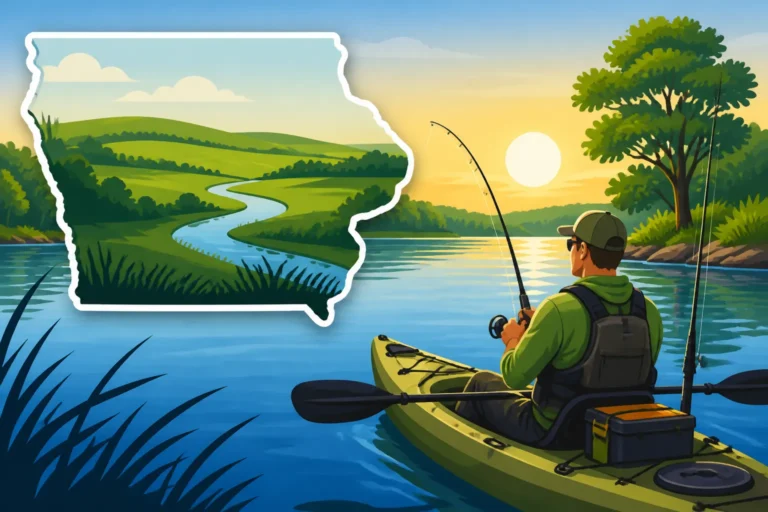
Plenty of Iowa anglers have had a muskie slash at a spinnerbait in a Mississippi River slough and then spent years trying to find another one. The backwaters are huge, muskie are scarce, and most advice online is written for natural lakes. This guide explains where muskie tend to hold in the river’s backwaters, when to fish them, and how to give yourself a realistic shot.
Understanding Muskie in the Mississippi River Backwaters
Before you burn a tank of gas running sloughs, it helps to understand what you are dealing with. Muskie in Iowa’s stretch of the Mississippi are not abundant. They are present in low numbers, mostly in the upper pools along the northeast corner of the state, and many of them likely drift down from tributaries and connected waters upstream. That means you are hunting individual fish, not working a dense population the way you might on a stocked Iowa lake.
Why Backwaters Attract Muskie
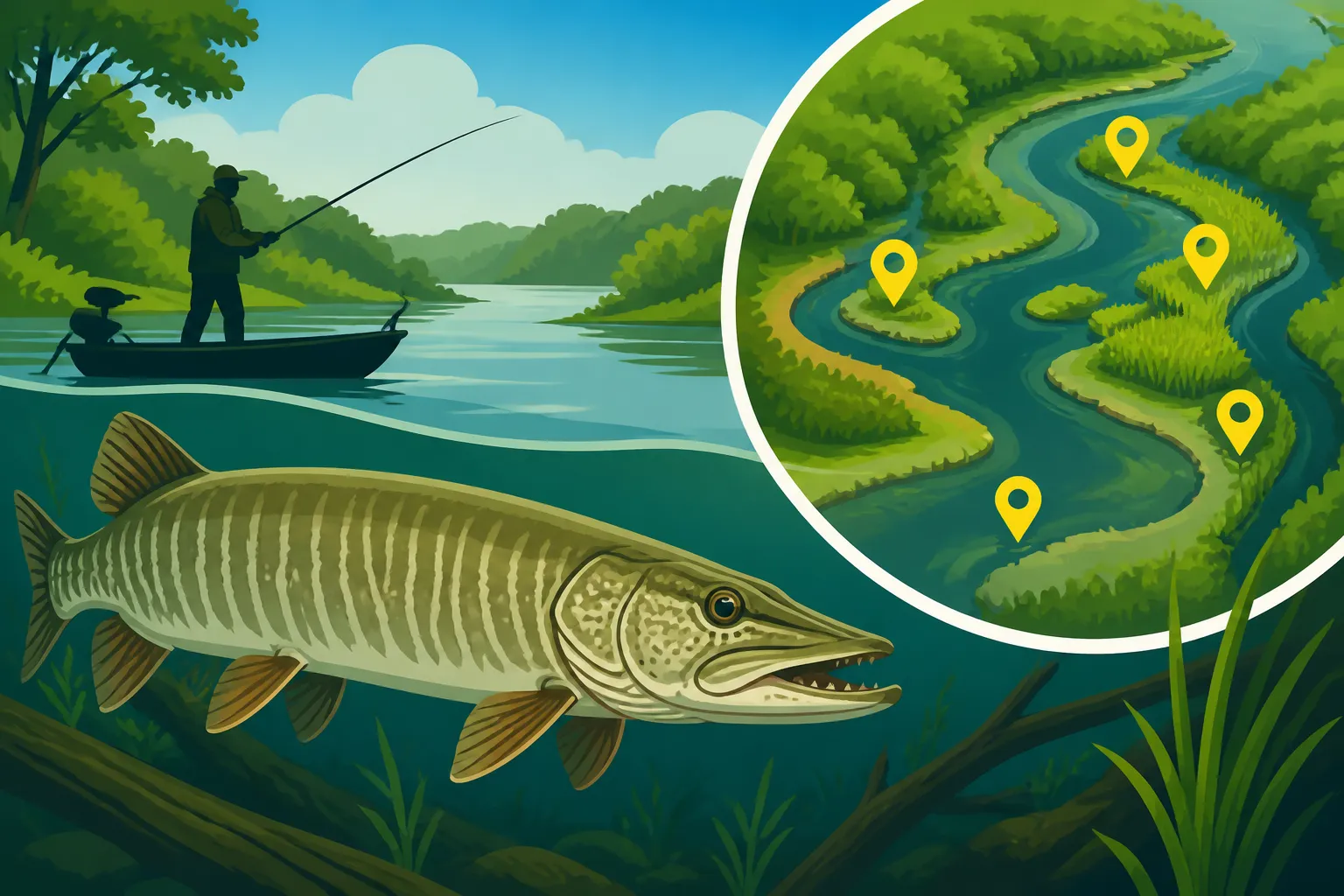
The main channel of the Mississippi is fast, deep, and busy with barge traffic. Muskie generally avoid fighting heavy current for long periods. Backwater lakes, side channels, and sloughs offer what they want: slower water, weed growth, fallen timber, and plenty of forage such as gizzard shad, suckers, and small panfish. A backwater that connects to flowing water through a cut or a culvert is especially attractive because it brings in fresh, oxygenated water and baitfish.
For a broader look at the cover and conditions muskie prefer across the state, read Muskie Habitat in Iowa Waters.
Which Pools to Focus On
The pools in the far northeast corner of Iowa, around Lansing, Harpers Ferry, Marquette, and Guttenberg, offer the most backwater acreage and the best odds. These stretches are lined with islands, sloughs, and backwater lakes within the Upper Mississippi River National Wildlife and Fish Refuge. Farther south, the river still holds the occasional muskie, but encounters become rarer.
If you are new to this part of the river, start with Mississippi River Pool 9 Fishing and Mississippi River Pool 10 Fishing for an overview of access points and general structure.
Where to Look Inside a Backwater
Once you are in a backwater, the challenge is narrowing down where a muskie might actually be. Most backwaters look similar at first glance, but a few features consistently hold fish.
Key Structure and Cover
Look for these features first:
| Feature | Why muskie use it | Best time to fish it |
|---|---|---|
| Weed edges and weed lines | Ambush cover next to open water | Late spring through early fall |
| Fallen timber and laydowns | Shade and cover in shallow water | Summer and early fall |
| Inflow cuts and culverts | Moving water, oxygen and baitfish | Any time water is flowing |
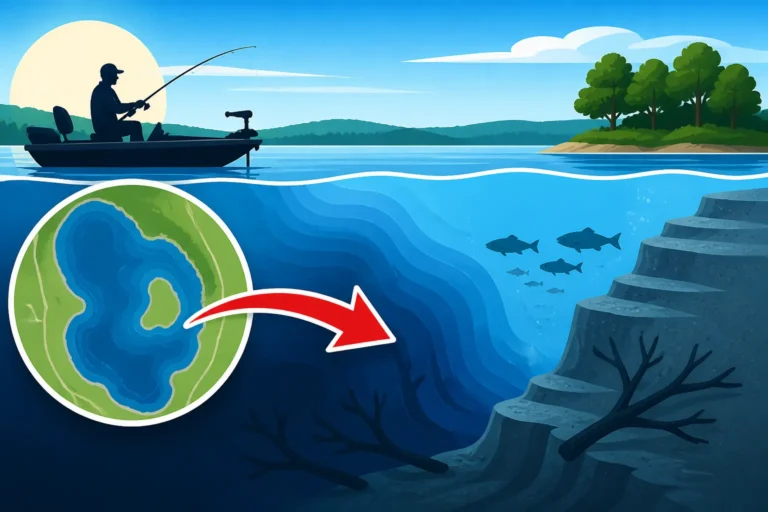
| Deeper holes in a backwater | Stable temperatures and resting areas | Midsummer heat and late fall |
| Points and mouths of sloughs | Baitfish travel routes | Spring and fall |
Weed edges are often the most productive starting point. In summer, many backwaters develop thick vegetation that muskie use as cover while they wait for prey to swim past. Work the outside edge first, then probe pockets and openings inside the weeds.
Reading Water Levels
The Mississippi changes constantly, and water level is one of the biggest factors in where muskie will be. During high water, fish can push far into flooded timber and shallow backwaters that are normally out of reach. During low water, they tend to concentrate in deeper holes and channels connecting backwaters to the main river.
Water clarity matters as well. After heavy rain upstream, backwaters connected to the main channel can turn muddy, while isolated sloughs may stay clearer. In stained water, louder lures with more vibration help muskie find your bait. In clearer water, natural colors and a slightly faster retrieve often work better. A backwater that stays clear when everything else is muddy can become the best spot on the pool for a few days.
Before every trip, check the river stage. Rising water often triggers aggressive feeding as fresh water brings bait into the backwaters. Falling water can push fish toward deeper areas and connecting cuts.
When and How to Fish for Backwater Muskie
Timing and technique matter just as much as location. Because muskie are scarce here, you need to make every hour count.
Best Seasons
Late spring and early summer are often good times, once water temperatures warm and weed growth begins. Fall can be excellent, too, as muskie feed heavily before winter and baitfish concentrate in deeper backwater holes. Midsummer can be tough during heat waves, but early mornings and evenings may still produce. For more on seasonal timing across the state, see Best Time of Year for Muskie Fishing in Iowa.
Lures and Techniques
Bucktails, large spinnerbaits, jerkbaits, glide baits, and topwater lures all catch muskie in backwaters. Bucktails are a great choice over weed edges, and topwaters can trigger explosive strikes on calm mornings and evenings. If you want to improve your technique, read How to Retrieve a Bucktail for Muskie.
A strong rod, heavy braided line, and a sturdy leader are essential. Muskie have sharp teeth and powerful runs, and the backwaters are full of timber and weeds that can cut lighter line. Always finish each retrieve with a figure-eight at the boat, since many muskie follow lures without striking right away. For more on that technique, see Figure-Eight Technique for Muskie at the Boat.
Step-by-Step Plan for a Backwater Trip
- Check the river stage and weather before leaving.
- Choose a pool with good backwater habitat, such as the upper pools in northeast Iowa.
- Launch at a public ramp near the backwaters you want to fish.
- Run slowly and carefully, watching for stumps, sandbars, and shallow areas.
- Start at inflow cuts and weed edges, covering water quickly with bucktails or spinnerbaits.
- Slow down with jerkbaits or glide baits in deeper holes or around timber.
- Finish every cast with a figure-eight.
- Keep notes on where you see follows or strikes, and return to those areas later.
Regulations and Handling
The Mississippi River forms Iowa’s border with Wisconsin and Illinois, and special border-water rules may apply. Size limits and daily bag limits for muskie may differ from inland Iowa waters. Before you fish, review Iowa Fishing Regulations on the Mississippi River Border and Muskie Daily Bag Limit on Border Waters.
Most muskie anglers practice catch and release. Use a large net, long pliers, and hook cutters, and keep the fish in the water as much as possible. ### Safety on the Backwaters
Backwaters can be beautiful and quiet, but they also have hazards. Stumps, submerged logs, and shifting sandbars can damage a lower unit or strand a boat. Run slowly in unfamiliar water, wear a life jacket, and carry a paddle or push pole. Barge traffic on the main channel also creates large wakes, so be careful crossing the channel to reach a backwater on the other side. Let someone know where you are going and when you expect to return, because cell service can be spotty in the river bottoms.
Getting Help From a Guide
Many anglers hire a guide for their first few trips, because learning the backwaters on your own can take seasons. FishingBooker can help you compare guides working the upper pools and read reviews from other anglers before you book. When you browse listings on FishingBooker, look for guides who specifically mention muskie or pike rather than walleye and panfish, and check what each trip includes, since services and pricing vary. A single day with someone who knows which sloughs hold fish can save you weeks of searching. If you cannot find a muskie specialist through FishingBooker or elsewhere, a general river guide can still teach you safe navigation and access. For more options, see Are There Guided Fishing Trips on the Mississippi River in Iowa?
Disclaimer
This article is for general informational purposes only and does not constitute professional advice. Laws, prices and regulations vary by location and change over time. Consult a qualified professional for guidance on your specific situation.