Do Inflatable Boats Need to Be Registered?
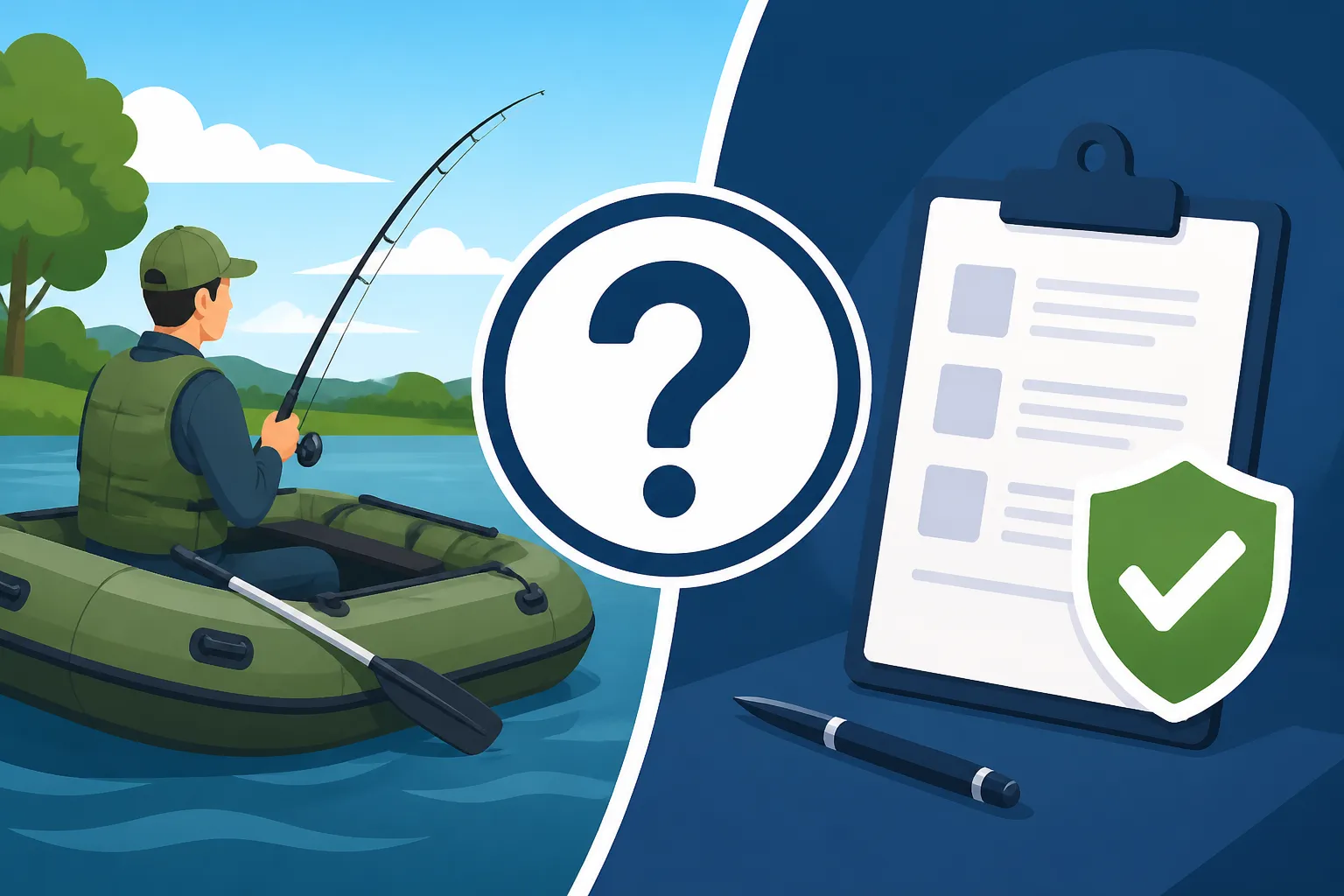
It can be incredibly confusing trying to figure out all the rules and regulations that come with enjoying Iowa's beautiful waterways. One question that pops up a lot, especially for folks who love the portability and ease of inflatable boats, is whether these seemingly simple vessels actually need to be registered. You've bought your inflatable, you're ready to hit the lake or river, and then the nagging thought hits you: "Do I need a registration number plastered on this thing?" This guide is here to clear up that very common frustration, walking you through exactly what Iowa law says about registering your inflatable boat.
Understanding Iowa's Boat Registration Laws
Navigating the intricacies of Iowa's boat registration requirements can feel like trying to untangle a fishing line after a particularly enthusiastic bite. It's not always as straightforward as "boat equals registration." The key, as you'll soon discover, often boils down to one primary factor that dictates whether your beloved inflatable needs to sport those official numbers and decals.
The Key Factor: Propulsion
In Iowa, the primary determinant for whether a boat needs to be registered isn't usually its material or even its size, but rather its method of propulsion. If your inflatable boat has any kind of motor attached to it, whether it's a gas outboard humming away or a quiet electric trolling motor, it falls under the Iowa Department of Natural Resources (DNR) registration requirements. This is a crucial point that often catches people by surprise. You might think, "It's just a little electric motor, barely pushes me along!" But for the purposes of the law, a motor is a motor, and it triggers the need for registration. This applies to vessels of all sizes, from tiny inflatable dinghies to larger inflatable sport boats. If you're pondering which kind of motor to get, you might start looking for options on sites like Amazon, but remember that even a small, battery-powered thrust means a trip to the county recorder.
Length and Material Don't Always Matter
Unlike some states or certain types of watercraft, the fact that your boat is inflatable doesn't automatically exempt it from registration. Nor does its length, in most cases, if it's motorized. While other states might have different rules, here in Iowa, the focus shifts directly to how you're moving across the water. For instance, a 10-foot rigid jon boat with a 5-horsepower motor needs to be registered, and so does a 10-foot inflatable fishing raft with a 5-horsepower motor, or even a smaller electric one. The material (be it PVC, hypalon, or fiberglass) is largely irrelevant for the initial registration trigger. What matters is the engine. It's not about the "squishiness" of your vessel; it's about the power pushing it forward. This distinction is vital for understanding your responsibilities as an Iowa angler. For a full rundown of what other types of vessels require, check out our comprehensive guide on Iowa Boat Registration Requirements.
Specific Scenarios for Inflatable Boats
Let's dive into some specific real-world examples to help clarify whether your particular inflatable boat needs to be registered. It's easy to get lost in the legal jargon, so thinking about common scenarios can make all the difference.
Inflatables with Motors Electric or Gas
This is the most straightforward category. If you've got a motor on your inflatable boat, whether it's an electric trolling motor for stealthy crappie fishing or a small gasoline outboard for zipping across a lake, your inflatable must be registered in Iowa. There's no minimum horsepower exemption here. Even a tiny 12-volt electric motor on a small inflatable pontoon boat or an inflatable kayak requires registration. Think about it: you're using powered propulsion on public waters, and the DNR needs to be able to identify your vessel for safety and enforcement purposes.
Imagine you've just purchased a new inflatable fishing boat, maybe a Sea Eagle or a Saturn, specifically designed for portability and easy setup. You've also invested in a small, lightweight electric motor to help you cover more water on Saylorville Reservoir. As soon as that motor touches the water, your inflatable is no longer considered a "non-motorized" vessel in the eyes of Iowa law. You'll need to head to your county recorder's office to get it registered before you launch. This also means you'll need to display the registration numbers and decals clearly on the bow, a topic we'll cover in more detail shortly. Don't risk a run-in with the DNR; getting caught without proper registration can lead to some hefty fines. If you're curious about the actual costs, we have a detailed breakdown in our Iowa Boat Registration Cost guide.
Paddle-Powered Inflatables Kayaks, Canoes, SUPs
Now, what about those inflatables that rely solely on your muscle power? This is where many of the common registration exemptions come into play. Generally speaking, if your inflatable boat is powered only by paddles, oars, or is a stand-up paddleboard (SUP), it typically does not require registration in Iowa. This applies to inflatable kayaks, canoes, rafts, and SUPs. The emphasis here is solely human-powered.
For example, if you've got an inflatable kayak from Intex or Advanced Elements that you use for serene floats down the Des Moines River, and you only propel it with a paddle, you're usually in the clear. The same goes for inflatable paddleboards that are gaining popularity on Clear Lake. You can launch these vessels without needing to worry about registration numbers, which is a huge convenience for many recreational users. This aligns with the broader rules for Do Kayaks Need to Be Registered in Iowa? and Do Canoes Under 13 Feet Need Boat Registration?, which typically exempt small, non-motorized vessels.
However, a crucial caveat: if you decide to add even a small electric motor to your inflatable kayak or SUP, then suddenly, it crosses that threshold and does require registration. It’s always the motor that triggers the requirement, so if you're thinking about upgrading, remember to factor in that registration step!
Small Inflatables Used as Tenders
Another common scenario for inflatable boats is their use as a "tender" or "dinghy" for a larger vessel. Many boaters who own larger registered boats will keep a small inflatable on board to ferry themselves to shore or to access shallow areas. The registration requirements for these tenders can sometimes be a bit of a grey area, but the general rule still holds: if that small inflatable tender has its own motor, it needs to be registered independently.
Consider a situation where you have a larger fishing boat, fully registered, which you use to explore the Mississippi River. You also keep a small, roll-up inflatable dinghy onboard with a tiny 2-horsepower outboard motor to reach those secluded backwaters or for quick trips to the dock. Even though it's used in conjunction with your main boat, that inflatable dinghy, because it has a motor, is considered a separate motorized vessel and must be registered. It needs its own set of registration numbers and decals displayed. If, however, you just use oars or paddles to move that tender around, then it would likely be exempt, falling into the non-motorized category. Always err on the side of caution; a little inflatable with its own motor is treated just like any other motorized boat in Iowa.
To summarize the common scenarios for inflatables:
| Inflatable Boat Type | Propulsion Method | Requires Iowa Registration? | Notes |
|---|---|---|---|
| Inflatable Fishing Raft | Electric or Gas Motor | YES | Any motor, regardless of size, triggers registration. |
| Inflatable Kayak/Canoe | Paddles/Oars ONLY | NO | Exempt if human-powered only. |
| Inflatable SUP (Stand-Up Paddleboard) | Paddles ONLY | NO | Exempt if human-powered only. |
| Small Inflatable Dinghy (Tender) | Electric or Gas Motor | YES | Even as a tender, if it has a motor, it needs separate registration. |
| Small Inflatable Dinghy (Tender) | Paddles/Oars ONLY | NO | Exempt if human-powered only. |
The Registration Process for Your Inflatable
So, you've determined your inflatable needs to be registered. Don't fret! The process isn't overly complicated, but it does require a few key pieces of information and a visit to the right place. Just like getting your fishing license for Iowa Resident Annual Fishing License, there's a specific path to follow.
What Documents You'll Need
When you go to register your inflatable, you'll need to present some paperwork to prove ownership and provide details about the vessel. Generally, these are the common documents you'll need:
- Bill of Sale or Manufacturer's Statement of Origin (MSO): This is crucial. If you bought your inflatable new from a dealer, you'll likely have an MSO, which is essentially the birth certificate of your boat. If you bought it used, a signed bill of sale from the previous owner is necessary. This document proves you legally own the boat. Make sure it includes the boat's hull identification number (HIN) if it has one.
- Hull Identification Number (HIN): Most modern inflatable boats, especially those designed to be motorized, will have a HIN. This 12-character alphanumeric code is like the VIN for your car. It's usually found on the transom or on a small plate attached to the hull. Ensure it's legible and present on your ownership documents. If your inflatable is older or very simple and lacks a HIN, discuss this with the county recorder; they can guide you on how to proceed, which might involve applying for a state-issued HIN.
- Proof of Iowa Residency: If you're registering as an Iowa resident, you'll need a valid Iowa driver's license or another form of ID that proves your residency.
- Application Form: You'll fill out a boat registration application form, which the county recorder's office will provide. This form gathers all the necessary details about you and your inflatable boat.
Having all these documents in order before you go will save you a lot of time and potential headaches. It’s always a good idea to call ahead to your local county recorder’s office to confirm their specific requirements.
Where to Go for Registration
In Iowa, boat registration is handled at your local county recorder's office. This is the same place where many other important county records are kept, from property deeds to vital statistics. You'll need to visit the county recorder's office in the county where you reside.
For instance, if you live in Polk County, you'll go to the Polk County Recorder's Office in Des Moines. If you're in Linn County, you'll visit the Linn County Recorder's Office in Cedar Rapids. They are equipped to process new registrations, renewals, and transfers of ownership. You can usually find their contact information and operating hours on your county's official website. These offices are designed to handle requests for various licenses and registrations, including those for boats and ATVs. This is the official channel, not online sports retailers or places like Amazon. For comprehensive details on locations, check out our guide on Where to Buy a Fishing License in Iowa, as many of these locations also handle boat registrations.
Displaying Your Registration Numbers and Decal
Once your inflatable boat is registered, you'll be issued a registration certificate, two registration numbers, and a validation decal. Proper display of these is not just a suggestion; it's a legal requirement.
The registration numbers (e.g., IA-1234-AB) must be:
- Painted on or permanently attached to the forward half of each side of the bow.
- In contrasting color to the hull.
- Block letters, at least three inches high, excluding the border or outline.
- Read from left to right.
- Clearly visible and legible.
This can sometimes be a bit of a challenge for inflatable boats, given their flexible nature. Many anglers opt for vinyl decals that adhere well to the PVC or Hypalon material. You can often find kits on Amazon for creating custom vinyl registration numbers specifically for boats, or local sign shops can create them for you. Ensure they are robust enough to withstand being inflated, deflated, and rolled up without cracking or peeling excessively.
The validation decal, which shows the year your registration is valid, must be affixed on the forward half of the boat, generally placed behind or in line with the registration number on the port (left) side. Always keep your registration certificate onboard your inflatable whenever you are using it, just like you would your Iowa Fishing License Guide. This is your proof that your vessel is legally recognized.
Consequences of Non-Compliance
Ignoring boat registration requirements, just like ignoring other Iowa Fishing Regulations Explained, can lead to unpleasant consequences. Nobody wants their day on the water to end with a stern lecture and a ticket, especially when you're just trying to enjoy a peaceful fishing trip or a leisurely paddle.
Fines and Penalties
Operating an unregistered motorized inflatable boat on Iowa waters when it is required to be registered is a violation of state law. If you're stopped by an Iowa DNR conservation officer and your boat isn't properly registered, you can expect to face fines. These fines are typically considered scheduled violations, similar to a traffic ticket, and they can add up quickly.
The exact amount can vary, but these penalties are designed to deter non-compliance. Beyond the initial fine, you'll still be required to register the boat, incurring the registration fees anyway, essentially paying double for your oversight. Plus, the hassle of dealing with the citation, potentially going to court, and interrupting your day on the water is a significant deterrent in itself. It’s far more cost-effective and less stressful to simply register your inflatable upfront if it meets the criteria. Our guide on What Happens If You Fish Without a License in Iowa can give you a good idea of how seriously the DNR takes these violations.
Safety and Legal Ramifications
Beyond the financial penalties, there are broader safety and legal ramifications to consider. Boat registration is a system that allows the DNR and other emergency services to identify vessels and their owners. In an emergency situation, such as an accident or if your boat breaks down and drifts away, registration numbers are vital for identification and potential rescue efforts. An unregistered boat can make it much harder for authorities to assist you or contact your next of kin if something goes wrong.
Furthermore, operating an unregistered motorized vessel could potentially complicate insurance claims if you have an accident. Your insurance provider might deny coverage if you were operating your boat illegally. It's also a matter of fairness to other boaters who diligently follow the rules. Compliance helps fund waterway maintenance, safety programs, and fish stocking efforts, benefiting everyone who enjoys Iowa's aquatic resources. So, while it might seem like a minor administrative step, it's an important part of responsible boating and contributes to the overall safety and enjoyment of our shared waters.
It’s always best to be informed and prepared before you head out. Understanding rules like Iowa Fishing Season Dates and Limits or Iowa Fishing Daily Bag Limits Guide is just as important as knowing your registration obligations.
Disclaimer
This article is for general informational purposes only and does not constitute professional advice. Laws, prices and regulations vary by location and change over time. Consult a qualified professional for guidance on your specific situation.