Documents Needed to Register a Boat
Trying to get your boat registered in Iowa can feel like navigating a confusing maze, especially when you're not entirely sure which specific pieces of paper you actually need to have in hand. It's a common source of frustration for many boat owners, leading to wasted trips and delays. This guide is designed to clear up all that confusion, walking you through every single document required for boat registration in Iowa, helping you avoid multiple visits to the county recorder's office and getting you out on the water much faster.
The Frustrating Reality of Iowa Boat Registration Paperwork
Let's be honest, dealing with paperwork is rarely anyone's favorite pastime. For boat owners in Iowa, the process of registration can seem daunting, filled with forms, titles, and questions about what goes where. But understanding why these documents are needed and what they actually prove can make the whole ordeal a lot less stressful. The Iowa Department of Natural Resources (DNR) requires boat registration to ensure safety on the water, maintain accurate ownership records, and fund important conservation efforts across the state. Without proper documentation, it's impossible for the state to verify ownership, track vessels, or ensure compliance with boating laws.
Why Paperwork is a Necessary Evil for Boaters
Think of boat registration as the official birth certificate and legal ID for your vessel. Just like your car needs a title and registration to legally drive on the road, your boat needs similar documentation to legally cruise Iowa's lakes and rivers. This paperwork serves several critical functions. First and foremost, it establishes undisputed legal ownership, which is incredibly important for preventing theft and for transactions like selling your boat. Secondly, it helps law enforcement identify vessels in case of an accident, an emergency, or a violation. Finally, the fees collected from registrations contribute directly to maintaining public boat ramps, improving waterways, and supporting the overall health of Iowa's aquatic ecosystems. It might seem like a hassle, but it's all for good reason.
The General Registration Process at a Glance
Before we dive into the nitty-gritty of specific documents, let's get a quick overview of the typical journey. Generally, registering a boat in Iowa involves a visit to your local County Recorder's Office. This is where you'll submit all your paperwork, pay the necessary fees, and ultimately receive your official registration and decals. It's not a one-stop shop without preparation, though. You can't just show up with your boat; you need to arrive with all the correct documents already filled out and organized. Many first-time boat owners underestimate this part and end up making multiple trips, which is exactly what we want to help you avoid with this comprehensive guide. Understanding the full list of Iowa Boat Registration Requirements is your first step to a smooth process.
The Core Checklist: Documents Every Iowa Boater Needs
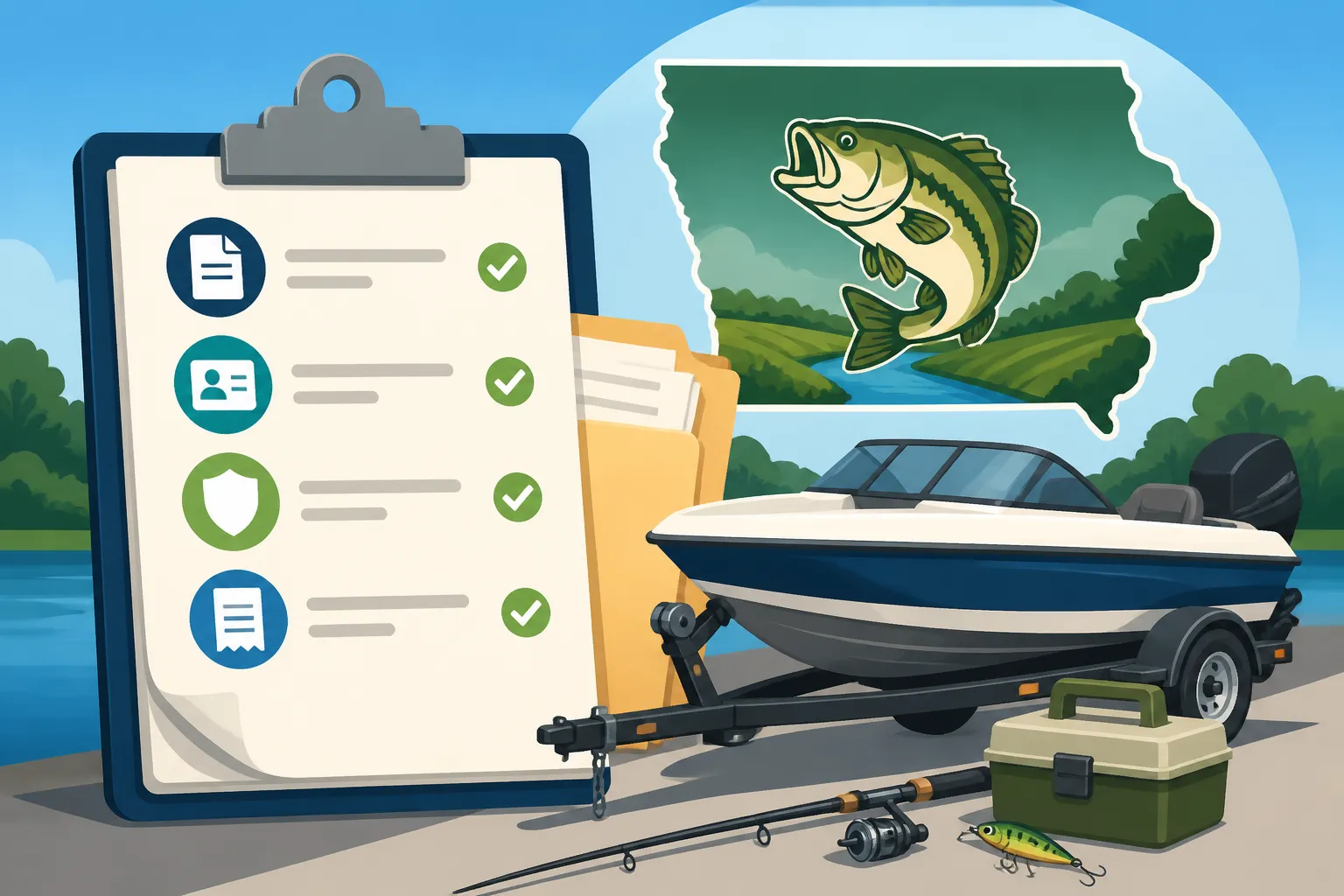
When you're ready to register your boat, having a clear checklist of what to bring is absolutely crucial. Missing just one item can send you right back home. This section breaks down the foundational documents that almost every boat owner will need to present, regardless of whether your boat is brand new or a seasoned veteran.
Proof of Ownership: Establishing Who Owns What
This is arguably the most critical document you'll need. The County Recorder needs irrefutable evidence that you are the rightful owner of the boat you're trying to register. Without it, they can't proceed.
- Manufacturer's Statement of Origin (MSO) or Manufacturer's Certificate of Origin (MCO): If you're buying a brand-new boat directly from a dealership, this is your primary proof of ownership. The MSO or MCO is essentially the "birth certificate" for the boat, issued by the manufacturer. It states that you are the original retail purchaser. Ensure that the dealer properly fills out all sections, including your name and address, and that it's signed and dated. Double-check for any typos before you leave the dealership, as errors can cause delays down the line.
- Certificate of Title: For any used boat that has been previously registered or titled in Iowa (or another state that titles boats), you'll need the current certificate of title, properly assigned to you. This means the previous owner must have signed off on the title in the designated "Seller" or "Assignment of Title" section, and you, as the new owner, must sign in the "Buyer" or "Application for New Title" section. Make sure all liens (if any) are released on the title before you try to transfer it. If the boat was titled in another state, you'll transfer that title to an Iowa title. If you're wondering how long a boat registration lasts, or How Long an Iowa Boat Registration Lasts, it's tied to this initial ownership proof.
- Bill of Sale: While not always sufficient on its own for every situation, a bill of sale is incredibly important, especially for used boats that may not have a title (e.g., certain older boats or those under a specific length or horsepower that weren't previously titled). The bill of sale should clearly identify the boat (including its Hull Identification Number or HIN), the purchase price, the date of sale, and the full names and signatures of both the buyer and the seller. It's smart to have this even if you have a title, as it can back up the transaction details. For boats under 17 feet in length or those without a motor, a bill of sale might be your primary proof, but it's always best to check with your County Recorder's office beforehand to understand specific requirements for older or smaller vessels, as certain Boat Registration Exemptions for Small Craft exist.
The All-Important Application Form
Once you have your proof of ownership, you'll need to fill out the official application for registration. This form collects all the pertinent details about you and your boat.
- DNR Watercraft Registration Application (Form 542-8067): This is the key document you'll fill out. You can usually find this form online on the Iowa DNR website, or you can pick one up at your County Recorder's office. It requires information such as your name, address, driver's license number, the boat's Hull Identification Number (HIN), make, model, year, length, and propulsion type (inboard, outboard, sail, etc.). It also asks for the type of use (pleasure, rental, commercial, etc.) and information about any motors. Take your time filling this out, ensuring all information matches your proof of ownership exactly. Any discrepancies can lead to delays. Even if you're registering something seemingly simple like a kayak, knowing the specific rules for Do Kayaks Need to Be Registered in Iowa? will likely require filling out this same form.
Personal Identification for the Owner
This one seems obvious, but it's easy to overlook when you're focused on boat-specific documents.
- Valid Photo ID: You, as the person registering the boat, will need to present a valid government-issued photo identification. This typically means your Iowa driver's license or a state-issued ID card. This is to verify your identity and ensure the information on the application matches the person submitting it. If you're registering the boat under multiple owners, all listed owners may need to be present or provide their identification and signatures.
Navigating Special Circumstances and Extra Requirements
Not every boat registration scenario is as straightforward as buying a new boat from a dealer. There are several situations that might require additional documents or slightly different processes. Understanding these ahead of time can save you a huge amount of grief.
Registering a Used Boat: The Importance of a Clear Chain of Title
Buying a used boat from a private seller or even an out-of-state dealer often introduces a few more wrinkles into the registration process. The biggest concern here is ensuring a clear and unbroken chain of ownership.
- Existing Title with Proper Assignment: As mentioned before, if the used boat was previously titled, you MUST have the original physical title. A copy simply won't do. The previous owner needs to have correctly filled out their seller information, signed it, and provided it to you. You then complete the buyer's section. If there have been multiple owners since the last title was issued, you may need bills of sale from each person in that chain to prove continuous ownership, or the title may need to be "reassigned" multiple times. If any box is skipped or incorrectly filled, the County Recorder may reject the transaction, forcing you to track down previous owners for corrections, which can be a real headache. This is especially important when you're looking into Iowa Fishing License Costs or any other outdoor recreational fees – proper boat registration is often a prerequisite for enjoying the water legally.
- Lien Release Documentation: If the previous owner had a loan on the boat, there would have been a lienholder (usually a bank) listed on the title. Before the title can be transferred to you, that lien must be released. This is typically done by the lienholder signing the "Lien Release" section on the title, or by providing a separate official lien release document on their letterhead. Without this, the boat is technically still encumbered, and you won't be able to register it under your name free and clear. Always ensure the lien is released before finalizing your purchase of a used boat.
- Verification of Hull Identification Number (HIN): For used boats, particularly those coming from out of state or those that haven't been registered in Iowa for a long time, the County Recorder might require a physical verification of the HIN. This is done to ensure the HIN on the boat matches the one on the title and to check for any signs of tampering. Sometimes, this can be done by a law enforcement officer or by a certified boat dealer. Always confirm this requirement with your County Recorder's office, especially if you're buying a boat from across state lines.
Homemade Boats and Inherited Vessels: Unique Pathways
Sometimes, a boat comes into your possession through less conventional means, such as building it yourself or inheriting it. These situations have their own set of documentation specifics.
- Homemade Boats: If you've poured your sweat and tears into building your own vessel, you won't have an MSO or a standard title. Instead, you'll need to provide proof of materials purchased (receipts for wood, fiberglass, engine, etc.) and potentially a notarized affidavit stating that you built the boat yourself. The Iowa DNR will assign a HIN to your homemade boat after a review process. It’s crucial to contact the DNR directly for guidance on homemade boat registration before you even start building, to ensure you meet all their criteria. They can provide specific forms and instructions for this unique scenario.
- Inherited Vessels: When a boat is part of an estate, the process involves probate documents. You'll typically need a copy of the deceased owner's death certificate, letters of administration or testamentary (showing you're the executor or administrator of the estate), and potentially a court order or affidavit of heirship that specifically grants you ownership of the boat. The process can vary depending on the complexity of the estate, so consulting with the County Recorder's office and possibly an attorney familiar with Iowa probate law is highly advisable.
Other Important Considerations
Beyond ownership and application forms, there are a few other elements that can play a role in your registration.
- Sales Tax: Be prepared to pay Iowa sales tax on the purchase price of your boat (if you haven't already paid it to the dealer). This is typically collected at the time of registration by the County Recorder's office.
- Boater Education: While not a document you submit for registration, it's important to remember that certain age groups are required to complete a boater education course before operating a motorized vessel. For example, individuals born after January 1, 1979, often need to pass a boating safety course. You won't need to show proof of this course to register the boat, but you'll need to carry it on the water if applicable. You can learn more about Boater Education Requirements for Young Anglers if this applies to you or your family.
- Out-of-State Boats: If you're moving to Iowa and bringing a boat from another state, you'll need to transfer its registration and title to Iowa. This usually involves presenting the out-of-state title and registration, along with the standard Iowa application and your personal ID. They may also require the HIN verification mentioned earlier.
Submitting Your Documents and Getting on the Water
You've gathered all your papers, meticulously filled out the forms, and confirmed every detail. Now comes the moment of truth: submission. Knowing where to go, what to expect, and how to stay organized afterward will complete your registration journey.
Where to Go and What to Bring (Besides the Docs!)
The primary place to submit your boat registration documents in Iowa is your local County Recorder's Office. Each county has one, and their operating hours can vary, so it's a good idea to check their website or call ahead to confirm.
- County Recorder's Office: This is the hub for all boat, snowmobile, and ATV registrations. When you go, bring all your original documents, including your MSO, title, bill of sale, and completed application form. Don't forget your personal photo ID and your method of payment.
- Payment for Fees: There are various fees associated with boat registration, including the registration fee itself, a title fee, and potentially a lien recording fee if you have a loan. The Iowa Boat Registration Cost varies based on the length of your vessel and the type of propulsion. Make sure you have enough funds and the accepted payment methods (cash, check, or credit/debit card, though some offices might have specific rules for cards).
What to Expect at the Office and Afterward
Once you're at the County Recorder's office, the process is usually quite straightforward, assuming you have all your documents in order.
- Review and Processing: A clerk will review all your documents to ensure they are complete and accurate. They will process your application, collect the fees, and issue you a new Iowa Certificate of Registration and your new registration decals. You'll affix these decals to your boat in a specific location (usually on the bow) as outlined in the Iowa DNR regulations.
- Temporary Registration: In some cases, if there's a slight delay (for example, if a new title needs to be mailed to you), the office might issue you a temporary registration that allows you to use your boat immediately while waiting for permanent documents.
- Keeping Your Documents Safe: After you've successfully registered your boat, it's absolutely crucial to keep your Certificate of Registration and any other important documents safe and accessible. You must have your current Certificate of Registration on board your vessel whenever it is in operation. Many boaters keep these in a waterproof bag or container. A sturdy, waterproof document bag, easily found on Amazon, is a smart investment to protect against splashes or unexpected downpours. It's also a good idea to make digital copies of all your documents and store them securely in the cloud or on a flash drive, just in case the originals are lost or damaged. For peace of mind, consider a dedicated boat safety kit, which you can often assemble with various items purchased on Amazon, that includes a dry bag for documents.
Staying Organized for Future Renewals
Remember, boat registration isn't a one-time event; it needs to be renewed periodically. Iowa boat registrations typically expire on April 30th of every odd-numbered year. You'll want to be prepared for renewal to avoid any lapse in your legal right to operate your vessel.
- Renewal Notices: The Iowa DNR usually sends out renewal notices to registered boat owners before the expiration date. Keep an eye out for these in your mail.
- Online or Mail Renewal: Many renewals can be completed online or by mail, making it much more convenient than the initial registration. However, if your address or ownership information has changed, you might need to visit the County Recorder's office again. Make sure you understand When Iowa Boat Registration Expires Each Year so you can mark your calendar!
- Organized Records: Maintaining an organized file of all your boat-related documents—including past registrations, titles, bills of sale, and even receipts for Required Safety Equipment for Iowa Boats—will make future renewals and any potential sales much smoother. A simple binder or file box works wonders. You could even find specialized marine-grade binders on Amazon to store all your boat's important paperwork securely.
It's a lot of information, I know, but taking the time to gather and understand these documents upfront will save you from frustrating delays and ensure you're legally ready to enjoy the beautiful waters of Iowa.
| Document Type | When It's Needed | Key Information It Proves | Where to Get It |
|---|---|---|---|
| Manufacturer's Statement of Origin (MSO) | New boats purchased from a dealer | Original ownership from the manufacturer | Boat Dealership |
| Certificate of Title | Used boats previously titled in Iowa or another state | Legal ownership and lien status (if any) | Previous Owner / Your State's DMV (for out-of-state) |
| Bill of Sale | Used boats (especially older, untiled, or to back up title) | Transaction details: buyer, seller, price, HIN, date | Private Seller / Yourself (template from DNR or online) |
| DNR Watercraft Registration Application (Form 542-8067) | All boat registrations, new or used | Your personal info, boat details (HIN, make, model, etc.) | Iowa DNR Website / County Recorder's Office |
| Valid Photo Identification | All boat registrations | Your identity as the owner | State DMV (Driver's License / State ID) |
| Lien Release Documentation | Used boats with existing liens | Proof that any previous loan on the boat is paid off | Lienholder (Bank, Credit Union) |
| Proof of Materials Purchased | Homemade boats | Evidence of components used in construction | Retailers (for materials) |
| Probate Documents (Death Certificate, Letters of Administration) | Inherited boats | Legal right to transfer ownership from an estate | Court / Executor of Estate |
Disclaimer
The information provided in this guide is intended for general informational purposes only and does not constitute legal advice. While we strive to provide accurate and up-to-date information, Iowa's boating regulations and requirements can change. Always consult the official Iowa Department of Natural Resources (DNR) website or contact your local County Recorder's office directly for the most current and specific information regarding boat registration and titling in Iowa. You can often find official forms and detailed rules by checking How to Check Current Iowa Fishing Regulations Online through the DNR's resources.