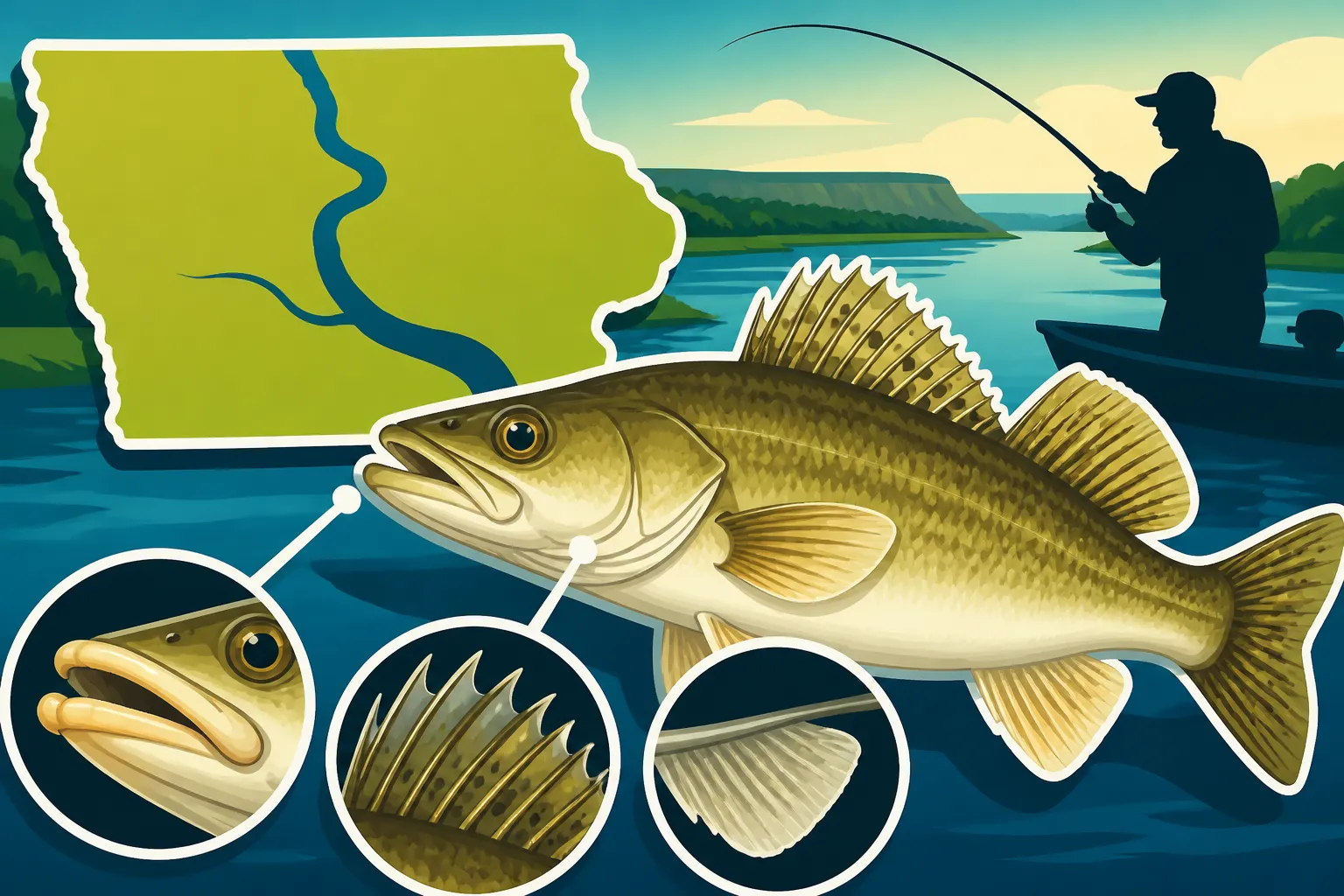
Sauger Identification on the Mississippi River
Let's be real, folks, fishing the mighty Mississippi River in Iowa is an adventure in itself. But imagine the frustration of reeling in what you think is a walleye, only to discover later it was a sauger – or vice-versa – and realizing you might have just violated a fishing regulation. It's a common dilemma that can lead to confusion and even potential fines. This comprehensive guide is here to clear up that confusion, offering you all the tools and knowledge you need to confidently identify sauger on the Mississippi River, understand their unique characteristics, and differentiate them from their similar-looking cousins, the walleye and saugeye.
The Great Imposter: Why Sauger Identification Matters
For many anglers, a fish is a fish, especially if it looks similar. But when it comes to sauger and walleye, especially on the Mississippi River, knowing the difference isn't just about showing off your fish ID skills. It's crucial for legal compliance and ultimately, for becoming a more effective and knowledgeable angler. The nuances in appearance, habitat, and even behavior between these two species are more significant than you might first think.
Avoiding Fines and Staying Legal
It's a tough pill to swallow when you realize a simple misidentification could put a damper on your fishing trip – or worse, lead to a citation. The Iowa Department of Natural Resources (DNR) often has different size limits, daily bag limits, and even possession limits for sauger compared to walleye, particularly on the border waters like the Mississippi River. Imagine proudly showing off your catch, only to have a conservation officer point out that your "walleye" is actually an undersized sauger, or that you've kept too many of one species. It happens, and it's almost always due to not being absolutely sure about what you've landed. A quick glance at the Iowa Fishing Regulations Explained will show you just how specific these rules can be. It’s not about tricking anglers, but about managing fish populations effectively, and respecting those rules is part of being a responsible angler. Knowing the subtle distinctions between sauger and walleye can save you a lot of headache and ensure your hard-earned catches are kept within legal bounds. It’s also important to remember that regulations can even vary between different pools of the river, adding another layer of complexity if you're moving upstream or downstream. Always check the current Iowa Fishing Daily Bag Limits Guide before heading out.
Understanding Habitat and Behavior
Beyond the legal aspect, accurately identifying sauger helps you become a better angler overall. Sauger and walleye, while similar in appearance, have distinct preferences when it comes to habitat and behavior. Sauger, for instance, tend to prefer more turbid, current-heavy water and often congregate in deeper holes, channels, and scour areas below wing dams and in river bends. They're built for life in the river, with a more streamlined body that helps them navigate strong currents. Walleye, on the other hand, might tolerate some current but often prefer clearer water, shallower depths at times, and structure like submerged humps, rock piles, or weed lines, even within the Mississippi's vast system. If you're consistently catching one type of fish, but you're targeting the other, it might be a sign that you're fishing the wrong kind of structure or depth. Knowing you've caught a sauger rather than a walleye can inform your next cast, helping you refine your approach and put more of your desired species in the boat. This insight is incredibly valuable, turning a simple catch into a learning experience that enhances your future success.
Key Visual Characteristics of the Sauger
Okay, let's get down to brass tacks. You've got a fish in hand that looks like a walleye, but something feels a little…off. How do you know for sure it's a sauger? There are a few key visual characteristics that, once you learn to spot them, make identification much easier. It's all about paying attention to the details that differentiate them from their walleye cousins. Understanding What a Sauger Looks Like definitively will boost your confidence.
The Tell-Tale Dorsal Fin
This is often the absolute best indicator, and it’s where most experienced anglers look first. The sauger's first dorsal fin (the spiny one, towards the front of its back) will have very distinct, dark spots arranged in clear rows or bands. Imagine a neatly dotted pattern across the entire fin. Now, compare that to a walleye, whose first dorsal fin is typically more uniform in color, with a dusky, blotchy appearance, and no clear spots or bands. Sometimes, a walleye might have a dark blotch at the very base of its dorsal fin, but it won't be those distinct, patterned spots. It's a subtle but consistent difference that truly sets them apart. Think of it like fingerprints – each species has its own unique dorsal fin signature. If you see those beautiful, clear dark spots on the spiny dorsal fin, you're almost certainly holding a sauger. This is the primary feature that will help you differentiate between the two, even from a quick glance once you get your eye in.
Body Shape and Coloration
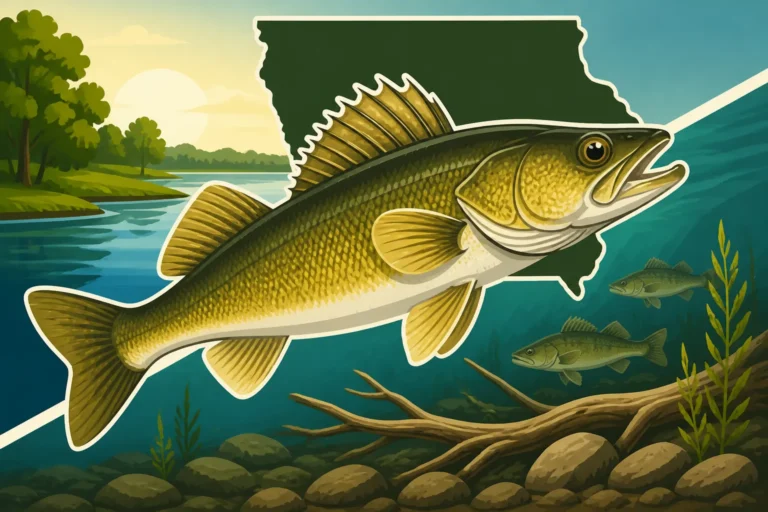
While both species share that sleek, torpedo-like body, there are some differences in overall appearance. Sauger tend to have a more slender, cigar-shaped body compared to the walleye, which can appear a bit more robust or chunky for its length. Their coloration is also distinct. Sauger typically exhibit a brassy or brownish-green back, transitioning to yellowish or golden flanks with distinct dark, saddle-like blotches or mottled patterns running down their sides. These blotches are a hallmark of the sauger and help them camouflage in the murkier, rockier river environments they favor. Walleye, on the other hand, usually have a more uniform olive-green or dark brown back, fading to golden or white sides, often with fewer pronounced blotches, or at least not the distinct saddle patterns you see on a sauger. The overall effect on a sauger is a "tiger-striped" or "camouflaged" look that truly makes them stand out when you know what to look for.
Size and Mouth Features
When it comes to size, sauger generally don't grow as large as walleye. While a trophy walleye can push into the double-digit pound range, a truly large sauger might be in the 3 to 5-pound range, with most of your catches being smaller. So, if you're holding a truly enormous fish, it's more likely to be a walleye. However, this isn't a reliable identification method on its own, as smaller walleye can easily be mistaken for sauger.
Another key feature to check is the tail fin. This is a big one! A walleye will almost always have a distinct white or milky-white tip on the lower lobe of its caudal (tail) fin. This white tip is often absent on a sauger. Occasionally, a sauger might have a very faint, dull white edge, but it will never be the bright, prominent white tip you see on a walleye. So, after checking the dorsal fin, flip that tail up and look for that crisp white tip – if it's there, it's a walleye!
Lastly, take a quick peek at the mouth. Both have formidable teeth, but the sauger's mouth tends to extend back further, often past the middle of the eye, whereas a walleye's mouth usually stops before or directly under the middle of the eye. This can be a more subtle difference, but it can help if you're still on the fence after checking the fins and coloration.
Spotting the Differences: Sauger vs. Walleye
Now that we’ve gone over the individual characteristics, let’s put it all together and focus on the direct comparison. The ability to quickly and accurately How to Tell a Walleye From a Sauger on the water is a skill that comes with practice, but understanding the key differentiators is the first step. It’s like learning to distinguish between two closely related bird species – once you know what to look for, it becomes second nature.
Dorsal Fin Pattern: The #1 Indicator
As mentioned, this is your primary tool for identification. When you've got a fish that could be either a sauger or a walleye, immediately look at that spiny dorsal fin.
- Sauger: Remember those distinct, dark spots that appear in neat rows? That's your sauger. It's a pattern, almost like a leopard print, that covers the entire fin. These spots are usually quite clear and well-defined.
- Walleye: Their spiny dorsal fin is generally clear or has a dusky, cloudy appearance. You might see some mottling, but it won't be those crisp, round spots. The most common marking on a walleye's dorsal fin is a single, dark blotch at its very base, especially between the last few spines. But again, no widespread, defined spots.
If you can only remember one thing, make it the dorsal fin spots for sauger. It’s the most consistent and easiest-to-spot difference, even in less-than-ideal conditions.
Tail Fin and Other Markings
Once you’ve checked the dorsal fin, your next stop should be the caudal (tail) fin.
- Walleye: The definitive marker here is a prominent, milky white tip on the lower lobe of the tail fin. It's usually quite stark against the darker fin, almost as if it's been dipped in white paint. This is an incredibly reliable feature for walleye.
- Sauger: Almost universally lacks this distinct white tip. Their tail fin will be more uniform in color, matching the body, or perhaps having some faint, dull blotches, but never that bright white lower tip.
Beyond the fins, consider the body's overall pattern:
- Sauger: Typically has very pronounced, dark saddle-like blotches or mottled patterns running down its sides, often extending onto the back. These look like irregular dark patches against a lighter, often brassy or yellowish background.
- Walleye: While they can have some blotchiness, it's generally less defined and less pronounced than on a sauger. Their overall body color tends to be more uniform, leaning towards olive or golden-green, with fewer distinct dark patterns.
Habitat and Preferred Waters
While not a visual identification method, understanding where these fish prefer to live on the Mississippi River can help you make an educated guess even before you get the fish in your boat.
- Sauger: These fish are truly river dwellers, often found in the main channel, below dams, in deep holes, and around wing dams where there's significant current and often more turbid water. They love to hug the bottom in these faster flows. If you're fishing a strong current seam on the Mississippi, especially in a deeper scour hole or behind a wing dam, your chances of hooking into a sauger are higher. Targeting spots like those found in Mississippi River Pool 9 Fishing or Mississippi River Pool 10 Fishing might yield more sauger.
- Walleye: While they also thrive in the Mississippi, walleye generally prefer slightly clearer water than sauger and can be found in a wider variety of habitats. They'll use main river channels too, but they're also common in slower current areas, eddies, backwaters with good structure, and sometimes even shallower flats during feeding times. They are often more associated with rock piles, submerged timber, or even some vegetation if present in river backwaters.
So, if you're pulling fish out of a swift, deep current in murky water, you should already be thinking "sauger." If you're in a somewhat calmer, perhaps slightly clearer eddy or slower backwater, you might be leaning more towards "walleye," though both can certainly coexist in many areas.
Common Misconceptions and Tricky Situations
Even with all the best identification tips, nature sometimes throws a curveball. There are specific situations and fish that can make identification genuinely challenging, even for seasoned anglers. It’s important to acknowledge these complexities rather than pretending every fish will be an open-and-shut case.
The Elusive Saugeye Hybrid
Perhaps the most common source of confusion arises from the saugeye. What in the world is a saugeye, you ask? Well, it's a hybrid, a cross between a female walleye and a male sauger. These fish are often stocked in various waters to combine the best traits of both parents: the hardiness of a sauger for river systems and the larger size potential of a walleye. The problem is, they often exhibit a confusing mix of characteristics from both species, making them incredibly difficult to identify definitively on the fly. You might see faint dorsal fin spots and a hint of a white tail tip, or just a murky combination of both. When faced with a saugeye, even experienced anglers can struggle. In Iowa, saugeye are treated as walleye for regulation purposes in some waters, but checking local rules is always paramount. Understanding What a Saugeye Is in detail can help, but on the water, they remain a true puzzle. It’s these hybrids that often lead to the "what kind of fish is that?" questions.
Lighting and Water Clarity Challenges
Let's face it, we're not always fishing under ideal conditions. Low light, whether it's dawn, dusk, or an overcast day, can severely hinder your ability to see the subtle markings that differentiate a sauger from a walleye. Those distinct dorsal fin spots or the white tail tip can be difficult to discern when the light isn't hitting the fish just right, or if your eyes are already tired from a long day on the water.
Similarly, the water clarity on the Mississippi River can fluctuate wildly. After heavy rains, the river might be a muddy mess, and fish pulled from these turbid waters can often appear darker or more uniformly colored, making those subtle mottling patterns or even the dorsal fin spots harder to pick out. The fish might also be covered in a fine layer of silt, obscuring markings. In these situations, try to get the fish into the best available light, gently wipe away any mud, and take your time. Don't rush the identification, especially if you're unsure. Sometimes, even a slight change in the angle of the sun or using a flashlight can make all the difference in revealing those crucial distinguishing features. It’s why having a good pair of polarized sunglasses (you can find plenty of options on Amazon) can be so vital, as they cut glare and allow you to see colors and patterns more clearly, even when looking directly at the fish in your hand.
Practical Tips for On-the-Water Identification
When you're out on the Mississippi, the last thing you want is a lengthy debate with yourself over a fish's identity. Having some practical strategies in your tackle box (metaphorically and literally!) can make the process faster, more accurate, and less stressful, ensuring you're compliant with Iowa Fishing Regulations Explained.
Photography and Reference Guides
One of the best modern tools for on-the-water identification is your smartphone. When you catch a fish you're unsure about, snap a few clear photos before releasing it. Get shots of the entire fish, focusing on the dorsal fin, tail fin, and overall body pattern. You can then review these photos more closely later, perhaps even with a fishing buddy or by cross-referencing with online resources or a detailed fish identification guide. There are many excellent freshwater fish ID guides available that cover all the species you'll encounter in Iowa, and they're easy to find on platforms like Amazon. Keeping one of these laminated guides in your boat or tackle bag can be a lifesaver. Some anglers even prefer to use waterproof field guides or dedicated fish identification apps that allow you to compare your catch to known species. Having a visual aid, especially one that you can hold right next to the fish, is invaluable.
Gentle Handling and Quick Release
This isn't just a tip for identification; it's a fundamental principle of responsible angling, especially when you're dealing with fish that might be close to a legal size limit or if you're uncertain about their species. If you’re not 100% sure what you've caught, or if it's a borderline keeper, it's always best to practice catch-and-release with minimal stress to the fish.
- Keep it Wet: Try to keep the fish in the water as much as possible while you're unhooking it or taking a quick photo. A good landing net designed for catch-and-release can help with this.
- Support the Body: If you do need to lift the fish out of the water, support its body horizontally with two hands to avoid damage to its internal organs. Avoid hanging larger fish vertically by the jaw.
- Quick Identification: Be efficient in your identification process. The longer a fish is out of water, the more stressed it becomes, reducing its chances of survival after release.
- Tools Not Hands: Use pliers or a hook remover to extract hooks, especially if they are deeply set. This protects both you and the fish.
If you are genuinely unsure if it's a sauger, a walleye, or a saugeye, and you're worried about bag limits or size restrictions, the safest and most ethical course of action is almost always to gently release it. This eliminates any risk of violating regulations and ensures the fish has the best chance to survive and grow.
Understanding Sauger Regulations on the Mississippi
Fishing the Mississippi River is a unique experience, not just because of its size and diverse fish populations, but also due to its status as a border water. This means the rules can sometimes be a little different, and it's absolutely vital to be informed, especially when it comes to species like sauger and walleye. Ignorance of the law is never a valid excuse, and you definitely don't want your fun day on the water to end with a ticket.
Specific Iowa-Mississippi River Regulations
The Mississippi River bordering Iowa often has specific regulations that can differ from inland Iowa waters. These regulations are usually set in cooperation with neighboring states (like Wisconsin or Illinois, depending on the pool) to ensure consistent management across the shared fishery. For sauger and walleye, this often means specific length limits and daily bag limits that might be combined for both species, or separate. For example, some sections might have a combined bag limit for walleye and sauger, but specific individual length limits for each. Or, there might be periods where one species is more protected than the other.
It's not uncommon for these regulations to be slightly more complex on border waters because they account for the movement of fish and anglers across state lines. Before you even head out, make sure you've consulted the most current Iowa fishing regulations booklet for the specific section of the Mississippi River you plan to fish. This booklet is usually available from the Iowa DNR website or at license vendors. Pay close attention to sections titled Iowa Fishing Regulations on the Mississippi River Border and any rules regarding Reciprocal Fishing Rules on the Mississippi River Border. These sections will clarify whether your Iowa license is valid in neighboring state waters, and what specific rules apply to the fish you're targeting. Don't assume the rules you know for your favorite inland lake apply to the river!
When in Doubt, Let it Go
This piece of advice bears repeating because it truly is your best defense against accidental violations. If you catch a fish and, after careful examination, you are still not 100% confident whether it's a sauger, a walleye, or perhaps even a tricky saugeye hybrid, the most responsible and legally sound action is to simply release it. Think of it as insurance against a fine. The potential cost of a fishing violation far outweighs the perceived benefit of keeping a fish you're not entirely sure about.
Conservation officers are trained professionals, and they understand the nuances of fish identification. However, it's your responsibility as the angler to know what you're keeping. If you can't confidently identify a fish to the species level and ensure it meets all legal requirements (size, bag limit, open season), then sending it back to grow another day is always the safest bet. It's a small act that contributes to the health of the fishery and protects you from an unwelcome surprise. Remember, ethical angling means putting conservation first, and sometimes that means making the conservative choice when identification is uncertain.
| Feature | Sauger | Walleye | Saugeye (Hybrid) |
|---|---|---|---|
| Dorsal Fin | Distinct dark spots in rows/bands across entire fin | Generally clear, dusky, or blotchy; single dark blotch at base possible | Mix of both; faint spots, irregular blotches |
| Tail Fin | No distinct white tip on lower lobe | Prominent, milky white tip on lower lobe | Faint or dull white edge, less distinct than walleye |
| Body Markings | Pronounced, dark saddle-like blotches/mottled patterns | More uniform, olive/golden-green; less distinct blotches | Variable, can lean towards either parent, often mottled |
| Body Shape | More slender, streamlined | Can appear more robust, chunkier | Intermediate between sauger and walleye |
| Preferred Habitat | Deeper, more turbid, stronger current, river channels | Wider range, can tolerate current but often prefer clearer areas, structure | Variable, often stocked in turbid reservoirs or rivers |
| Typical Size | Generally smaller (1-5 lbs) | Can grow much larger (5-10+ lbs) | Intermediate to larger than typical sauger |
Disclaimer
This article is for general informational purposes only and does not constitute professional advice. Laws, prices and regulations vary by location and change over time. Consult a qualified professional for guidance on your specific situation.