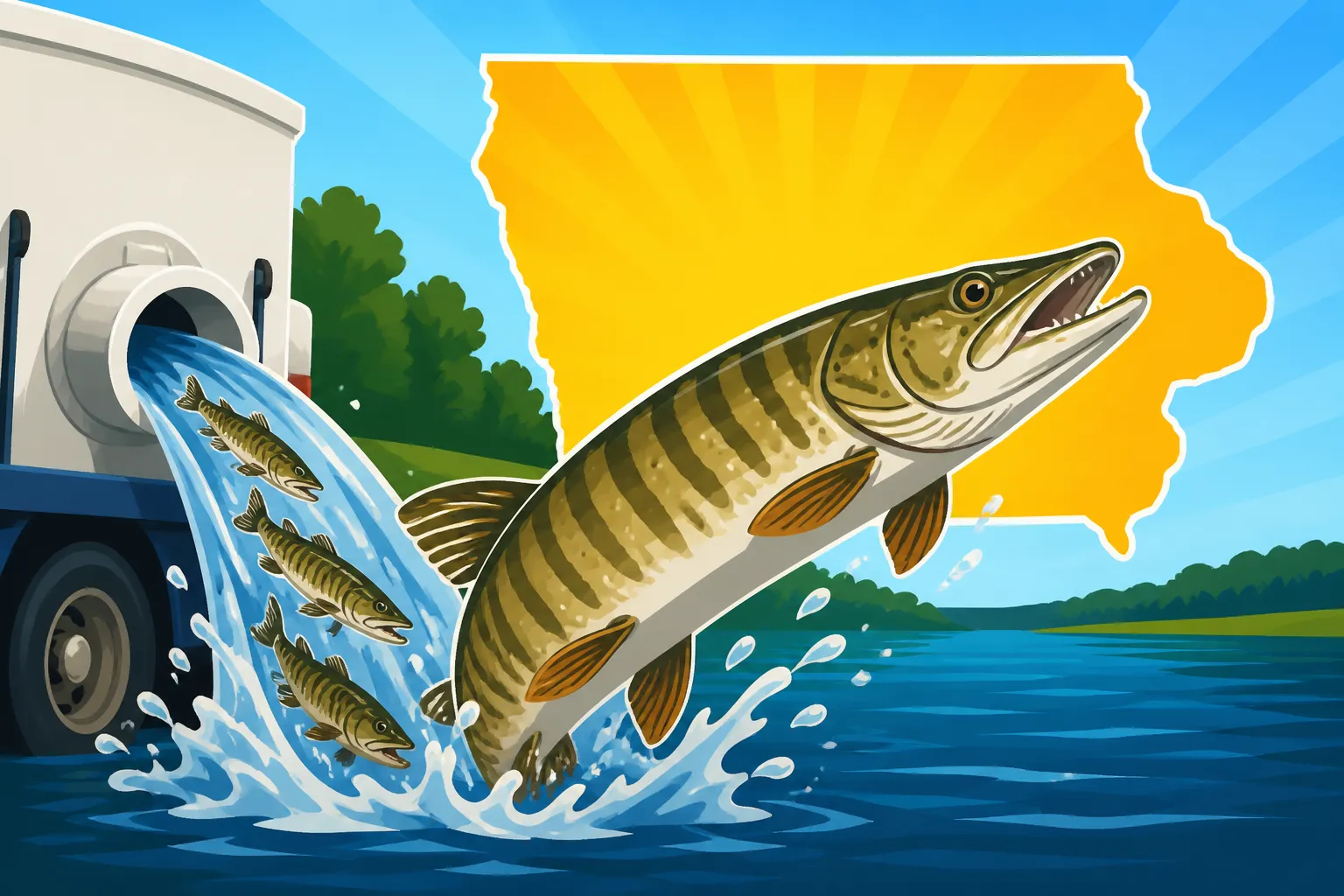
Tiger Muskie Stocking in Iowa
There’s a unique thrill that comes with chasing a true trophy fish, and in Iowa, for many anglers, that pursuit often leads to the elusive muskie. But sometimes, when we talk about these toothy predators, there's a specific variant that gets folks extra excited: the tiger muskie. You might have heard whispers of them being stocked, or perhaps you've even been lucky enough to tangle with one. This guide is here to unravel the mystery of tiger muskie stocking in Iowa, exploring why these fascinating hybrids are introduced into our waters and what it means for you, the angler, hoping to land one of these striped giants.
Understanding the Tiger Muskie in Iowa
When you hear "muskie," you probably picture a long, slender, toothy fish. But the tiger muskie is a bit special, a natural marvel that Iowa's fisheries managers have leveraged to create some truly exciting angling opportunities. It's not just another fish in the lake; it's a carefully considered addition.
What Exactly is a Tiger Muskie?
A tiger muskie isn't a species in itself, but rather a hybrid cross between a true muskellunge (the "muskie" we all know) and a northern pike. Think of it like the mule of the fish world – a strong, robust hybrid that inherits traits from both parents. These fish are typically sterile, meaning they can't reproduce on their own, which makes them a unique tool for fisheries management. They get their name from their distinctive appearance: dark, irregular, vertical bars or spots over a lighter background, creating a striped, "tiger-like" pattern along their flanks. This pattern is one of the easiest ways to tell them apart from purebred muskies, which often have more spotted or barred patterns that aren't quite as defined. Their sleek, powerful bodies are built for speed and ambush, making them formidable predators.
From an angler's perspective, the tiger muskie embodies the best of both worlds. They often grow faster than purebred muskies in certain environments and can be a bit more aggressive, making them a thrilling target. They retain that powerful, hard-fighting nature that muskie anglers crave, but sometimes with a slightly broader tolerance for different water conditions, thanks to their pike parentage. This makes them a fantastic sport fish, offering a serious challenge and a memorable catch to anyone who hooks one. They truly stand out in any lake or river they inhabit.
Why Iowa Stocks Tiger Muskies
The decision to stock tiger muskies isn't just about giving anglers something cool to catch (though that's certainly a perk!). It's a strategic move by fisheries management for several key reasons. One major factor is their sterility. Since they can't reproduce, their populations are entirely controlled by stocking, preventing them from overpopulating or impacting native fish species in unforeseen ways. This gives the Iowa DNR precise control over their numbers and distribution.
Another significant advantage is their growth rate and predatory nature. Tiger muskies are voracious eaters, and they grow quickly, reaching impressive sizes that provide that coveted "trophy fish" experience. This rapid growth also means they can act as effective predators, helping to control populations of undesirable or overabundant baitfish, thereby contributing to the overall health and balance of a lake's ecosystem. Plus, in waters where native muskie populations might struggle due to specific habitat requirements or other environmental factors, tiger muskies can thrive, offering a viable alternative for muskie enthusiasts. They provide a high-quality fishing opportunity without the long-term commitment and habitat restoration often required to establish a self-sustaining purebred muskie population. It's a way to enhance fishing diversity and thrill without overburdening the natural ecosystem.
Iowa's Tiger Muskie Stocking Program
Iowa's waters are diverse, from expansive reservoirs to natural lakes, and the stocking program for tiger muskies has been carefully tailored to utilize these unique environments effectively. It's not a random process; it's based on science and a clear understanding of what makes a good home for these apex predators.
The History and Evolution of Stocking Efforts
Iowa's journey with muskies, both purebred and tiger varieties, dates back several decades. Initially, the focus was often on establishing purebred muskie populations in certain lakes, but the tiger muskie eventually entered the scene as a complementary strategy. The Iowa Department of Natural Resources (DNR) recognized the benefits of these hybrids, particularly their hardiness and rapid growth, as a way to provide exciting angling opportunities where purebred muskies might be more challenging to establish or sustain. Over the years, the program has evolved, with stocking numbers and locations adjusted based on monitoring data, angler feedback, and the performance of previous stocking efforts.
Early stocking efforts involved acquiring tiger muskie fingerlings from other states or hatcheries, and eventually, the DNR refined its own methods for rearing and introducing these fish. The goal has always been to create a sustainable, high-quality fishery. This isn't a "one and done" deal; it's an ongoing commitment to evaluating success and adapting strategies to ensure that Iowa's anglers continue to have chances to catch these impressive fish. The careful management means that the specific waters stocked, and the frequency of stocking, are subject to change as conditions and objectives evolve, always with the health of the fishery and the quality of the angling experience in mind.
Where Tiger Muskies are Stocked in Iowa
You won't find tiger muskies in every single body of water across Iowa. The DNR is very particular about where they introduce these fish, choosing locations that offer the best chance for growth and survival, and where they can best benefit the existing fishery. Typically, large reservoirs and some natural lakes are prime candidates. These waters generally offer expansive habitat, a robust forage base (lots of smaller fish for them to eat!), and sufficient depth and structure to support large predatory fish.
Some of the well-known spots where tiger muskies have been stocked over the years include larger impoundments and lakes that provide ample room for these giants to roam and hunt. The specific choices are based on factors like water quality, habitat diversity, available food sources, and public access for anglers. The idea is to create quality fisheries that are accessible. These selected locations are carefully managed to ensure the tiger muskies have what they need to thrive and grow to trophy sizes. For more detailed information on specific locations and fishing opportunities, you might want to check out articles like Muskie Fishing in Iowa which delves deeper into the general muskie scene in the state. Always remember to consult the latest Iowa fishing regulations for the most current information on stocked waters.
The Life and Habits of Stocked Tiger Muskies
Once stocked into Iowa's lakes, tiger muskies quickly adapt to their new environments, becoming formidable predators. Understanding their habits can significantly improve your chances of encountering one.
Growth Rates and Size Potential
One of the most appealing aspects of tiger muskies for fisheries managers and anglers alike is their impressive growth rate. Because they are a hybrid, they often exhibit "hybrid vigor," meaning they can grow faster and sometimes larger than either of their parent species in certain conditions. In Iowa's fertile waters, with abundant forage such as gizzard shad, crappie, and bluegill, tiger muskies can pack on size quite rapidly. While exact figures fluctuate based on the specific water body and forage availability, it's not uncommon for them to reach lengths well into the 30-inch range within just a few years of stocking.
The ultimate size a tiger muskie can achieve in Iowa is truly remarkable. While the state record for a purebred muskie is certainly impressive, tiger muskies often compete closely in terms of sheer bulk. Anglers can realistically expect to encounter fish ranging from the high 30s to low 40-inch mark, with some exceptional individuals pushing into the mid-40s and even beyond. Imagine the fight a fish of that size puts up! Factors like water temperature, the density of their prey, and the overall health of the aquatic ecosystem all play a role in how big these fish eventually get. These are truly trophy-class fish, and that potential for size is a huge part of their allure for Iowa anglers. Want to see just how big these fish can get? Take a look at How Big Muskie Get in Iowa for some truly awe-inspiring numbers.
Preferred Habitat and Behavior
Tiger muskies, much like their purebred muskie and northern pike cousins, are ambush predators. This means they spend a good portion of their time waiting in strategic locations, ready to explode onto unsuspecting prey. Their preferred habitat often includes areas with plenty of cover and structure. Think dense weed lines, fallen timber, rock piles, sudden drop-offs, and points that jut out into the lake. These features provide excellent camouflage and prime vantage points for them to surprise their meals. They love to patrol the edges of these structures, darting out to strike when the opportunity arises.
Their behavior is also influenced by the seasons. In spring and fall, when water temperatures are cooler, they tend to be more active and can be found shallower, chasing baitfish. As summer progresses and water warms, they might move to deeper, cooler water, often relating to submerged structures or deeper weed edges. During these periods, they might become less active, conserving energy between feeding windows. Understanding these seasonal movements and their preference for cover is absolutely crucial for any angler hoping to target them. They aren't going to chase your lure across an open basin; they're waiting for the perfect moment to strike from their hidden lair. Keep this in mind when you're out scouting for these toothy critters!
Fishing for Iowa's Tiger Muskies
Chasing tiger muskies is not for the faint of heart, but it's an incredibly rewarding experience. It demands dedication, patience, and the right tools for the job. You'll need to be prepared for powerful strikes and epic battles, but the payoff of landing one of these striped giants is unparalleled.
Essential Gear for Tiger Muskie Anglers
When you're targeting a fish that can easily top 40 inches and possesses a mouthful of sharp teeth, your everyday panfish rod just isn't going to cut it. Muskie fishing, including for tiger muskies, requires specialized, heavy-duty gear designed to withstand the brutal power of these fish. You'll want a stout, fast-action muskie rod, typically 7 to 9 feet long, capable of handling large, heavy lures. Pair that with a robust baitcasting reel, often a low-profile model with a high gear ratio for quick line retrieval, or a round baitcaster for maximum line capacity and cranking power. Your line choice is equally critical; most muskie anglers opt for heavy braided line, commonly 80 to 100-pound test, which offers superior strength and no stretch. This is then almost always tied to a heavy-duty fluorocarbon or wire leader to prevent bite-offs from those razor-sharp teeth.
Beyond the rod, reel, and line, you'll need a selection of large, durable lures. Bucktails, large crankbaits, jerkbaits, and soft plastics designed specifically for muskie are staples. These lures are often 8-12 inches long, sometimes even larger. Don't forget crucial safety equipment: a large, rubberized landing net (to protect both you and the fish), long-nosed pliers, and stout hook removers are absolute necessities for safely unhooking these powerful predators. A pair of heavy-duty bolt cutters might even be a good idea for cutting hooks if they're deeply embedded. Many of these specialized items, from heavy braid to muskie-specific lures and safety tools, can be found readily on platforms like Amazon, which often carries a wide array of muskie gear. Equipping yourself properly is the first step to success and safety when chasing tiger muskies.
Effective Techniques and Strategies
Landing a tiger muskie often comes down to a combination of presentation, persistence, and knowing how these fish behave. One of the most common and effective techniques involves casting large lures to known muskie haunts: weed edges, rocky points, submerged timber, and deep breaks. The retrieve is usually steady but varied, incorporating pauses, jerks, and changes in speed to imitate an injured baitfish. Remember, muskies are ambush predators; you're trying to trigger a reaction strike. Covering water efficiently is key, as these fish can be spread out.
Perhaps the most famous muskie technique is the "figure eight" at the boat. Many times, a muskie will follow your lure right up to the boat without striking. Instead of lifting your lure out of the water, you quickly plunge your rod tip into the water and trace a large figure-eight pattern with your lure next to the boat. This sudden change in direction and speed can often provoke a strike from a hesitant follower. Muskie Fishing Techniques for Iowa Waters offers an even deeper dive into these strategies. The best times of year often align with cooler water temperatures in spring and fall, but summer can also be productive, particularly during dawn and dusk or on overcast days. Always practice catch and release with these magnificent fish to ensure healthy populations for future generations of anglers.
Challenges and Conservation of Tiger Muskies
While the idea of catching a tiger muskie is exhilarating, it's important to approach this fishery with a realistic perspective and a strong commitment to conservation. These fish are a valuable resource, and their future in Iowa depends on responsible angling practices.
Managing Expectations and Fishing Pressure
Let's be real: muskie fishing, whether for purebreds or tigers, is often called "the sport of 10,000 casts." These fish are called the "fish of a thousand casts" for a reason. They are notoriously challenging to catch, and success often requires immense patience, persistence, and a bit of luck. It's not uncommon to spend an entire day, or even several days, on the water without a single bite. This can be frustrating, especially if you're new to muskie fishing. Setting realistic expectations is crucial to enjoying the pursuit. Don't go out expecting to catch five; go out hoping for one glorious encounter.
The popularity of muskie fishing also means that certain stocked lakes can experience significant fishing pressure. More anglers pursuing these fish means more competition, and potentially, more pressure on the fish themselves. It's vital to remember that these are a limited resource, carefully managed through stocking programs. Overharvesting or improper handling of caught fish can quickly undo years of conservation efforts. We, as anglers, play a direct role in maintaining the quality of this fishery by prioritizing catch and release and minimizing stress on the fish. While it's tempting to want to show off a magnificent catch, ensuring that fish is released healthy is paramount for the sustainability of Iowa's tiger muskie populations.
The Role of Anglers in Conservation
Anglers are often the first line of defense in conservation, and this is especially true for a managed fishery like tiger muskies. Your actions on the water have a direct impact on the health and future of these fish. Practicing responsible catch and release is perhaps the most important contribution you can make. This means minimizing the fight time, handling the fish as little as possible, keeping it in the water, and using the right tools (those big nets and hook removers we talked about earlier!). Avoid netting fish by the gills or tail, and never hold them vertically by the jaw.
Beyond careful handling, anglers can support conservation efforts by adhering strictly to all fishing regulations. Understanding the Iowa Fishing Regulations Explained is not just about avoiding fines; it's about protecting the resource. This includes knowing bag limits, length limits, and season dates specific to muskies. Reporting any suspicious activity or fishing violations to the proper authorities is also a critical way to help. Ultimately, the health of the tiger muskie fishery in Iowa depends on a strong partnership between the DNR and a dedicated, ethical angling community. Every muskie angler becomes a steward of this amazing fish. You might even consider investing in specialized measuring boards and release tools, which are easily found on Amazon, to ensure the safest release possible.
Other Muskie Species in Iowa
While tiger muskies offer a fantastic angling experience, it's important to remember they aren't the only muskie-like fish swimming in Iowa's waters. The state is also home to purebred muskellunge, and of course, the ever-present northern pike. Knowing the difference is crucial for both identification and understanding regulations.
Native Muskie Populations
Iowa does have waters that support populations of purebred muskellunge, the "true" muskie. These fish, while sharing many characteristics with tiger muskies, are a distinct species and often have slightly different growth patterns and habitat preferences. They are primarily found in specific lakes where the Iowa DNR has focused efforts on establishing and maintaining a self-sustaining fishery, or at least a population that requires less frequent stocking. These purebred muskies are often celebrated for their genetic purity and the challenge they present to anglers. Their markings are typically more spotted or barred rather than the distinct vertical stripes of a tiger muskie.
The management of purebred muskie populations is often more complex, as it can involve habitat improvements, strict regulations, and careful monitoring to ensure their long-term viability. For anglers, encountering a purebred muskie is often considered the pinnacle of the sport, and understanding their unique characteristics and locations can add another layer of depth to your fishing adventures. Be sure to consult the regulations carefully for these waters, as limits and seasons might vary slightly. You can find more specific details on rules and seasons by looking up Muskie Season and Bag Limit for current information.
Identifying Your Catch
Being able to correctly identify your catch is absolutely critical, especially when dealing with similar-looking species like tiger muskies, purebred muskies, and northern pike. Misidentification can lead to inadvertently violating regulations or, worse, improper handling of a protected species. The most obvious difference for tiger muskies, as mentioned, is their distinctive vertical barring or "tiger stripes." These patterns are usually quite clear and run down the sides of the fish.
Purebred muskies, on the other hand, typically have darker spots or bars that are more irregular, sometimes resembling blotches, on a lighter background. The key is that the markings are darker than the background. Northern pike, the other piece of this puzzle, generally have light, bean-shaped spots on a dark background. Another tell-tale sign for northern pike is a fully scaled cheek and gill cover, whereas muskies (both pure and tiger) have scales only on the upper half of the cheek and gill cover. Take a moment to check your fish carefully if you're ever in doubt. Proper identification ensures you're following the rules and contributing to good conservation practices.
Here's a quick comparison table to help you identify these fish at a glance:
| Feature | Tiger Muskie | Purebred Muskellunge | Northern Pike |
|---|---|---|---|
| Markings | Dark, distinct vertical bars/stripes | Dark spots or irregular bars on lighter body | Light, bean-shaped spots on a darker body |
| Cheeks & Gills | Scaled only on upper half of cheek and gill | Scaled only on upper half of cheek and gill | Fully scaled cheek and gill cover |
| Tail Fin | Typically more pointed lobes | Typically more rounded lobes | Often more pointed lobes |
| Genetic Makeup | Hybrid (Northern Pike x Muskie) | Purebred | Purebred |
| Reproduction | Sterile (cannot reproduce) | Reproduces naturally (where habitat allows) | Reproduces naturally |
Remember, if you're ever truly unsure, treat the fish with the utmost care, assume it's the most sensitive species, and release it quickly and safely. When in doubt, let it go. And always ensure you have your Iowa Fishing License Guide and up-to-date regulations handy before you hit the water!
Disclaimer
This article is for general informational purposes only and does not constitute professional advice. Laws, prices and regulations vary by location and change over time. Consult a qualified professional for guidance on your specific situation.