How to Fish for Catfish in Early Spring
Early spring catfish fishing can be incredibly frustrating. One day, you're getting bites, the next, it feels like the fish have vanished into thin air. The transition from winter's chill to spring's awakening brings unique challenges and opportunities for anglers targeting catfish in Iowa. This guide is here to help you understand the subtle shifts in catfish behavior during early spring, pinpoint where to find them, and equip you with the best strategies and gear to land more whiskered warriors.
Understanding Early Spring Catfish Behavior in Iowa
The Post-Winter Slump and Awakening
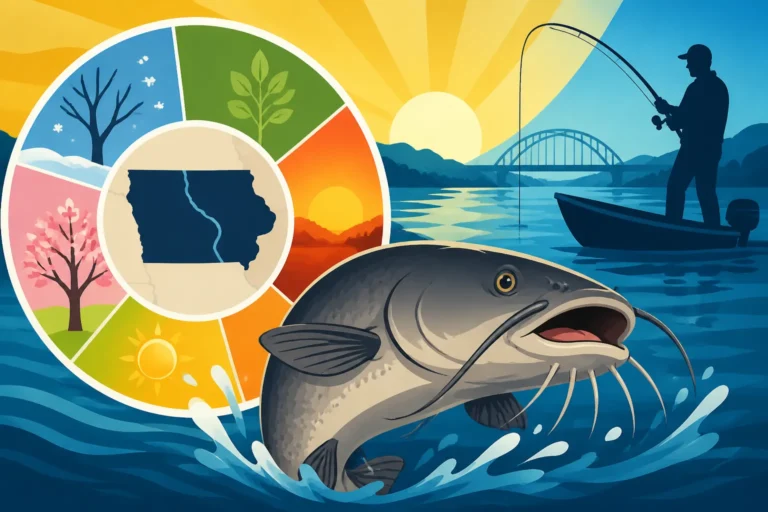
After a long, cold Iowa winter, catfish are in a period of transition. They've been relatively dormant, conserving energy in deeper, more stable water. As the ice melts and the first hints of warmer weather arrive, these fish slowly start to become more active. It's not an instant switch; rather, it's a gradual awakening fueled by rising water temperatures and the increasing availability of food. This period can be tricky because their metabolism is still quite slow, meaning they might not chase a bait as aggressively as they would in warmer months. They're often lethargic, preferring to conserve energy and wait for an easy meal to come to them.
Think of it like us waking up from a deep sleep – we don't immediately jump into a marathon. Catfish are the same. They're sluggish, and their feeding windows might be shorter or less predictable. This makes understanding their preferred holding spots even more crucial because they aren't going to expend much energy to find your bait. Your job as an angler is to put the bait right in front of them, making it an irresistible, effortless snack. This time of year often tests your patience, but the rewards can be well worth it when you finally connect with a chunky channel cat that's just starting to get its spring energy back.
Water Temperature's Role
Water temperature is perhaps the single most critical factor in early spring catfish activity. As the shallow waters begin to warm up, often reaching into the upper 40s and low 50s Fahrenheit, catfish start to move from their deep wintering holes. This isn't just about comfort; it's about the entire food chain waking up. Baitfish become more active, insects hatch, and nutrient-rich runoff from melting snow and spring rains enters the system. Catfish, being cold-blooded, rely heavily on these temperature cues to signal when it's time to feed.
Focus your efforts on areas where the water warms first. This often means shallower flats that receive direct sunlight, areas with dark bottom compositions that absorb heat, or the upper reaches of reservoirs and river backwaters where inflow can be slightly warmer. Even a few degrees can make a world of difference. You'll notice that sunny, calm days following a cold snap can dramatically improve the bite as these shallow areas briefly become more appealing to sluggish catfish. Monitoring water temperatures with a simple thermometer can give you a significant edge in finding active fish, helping you dial in exactly when and where to present your offerings.
Where Catfish Migrate as Water Warms
As those water temperatures tick up, catfish will begin to stage in transitional areas. They won't usually bolt straight to their summer haunts. Instead, they'll often hold in deeper channels adjacent to shallow feeding flats, or in the slower currents of river bends and oxbows. These spots offer a safe, comfortable depth while providing quick access to shallower, warmer water where forage might be congregating. Think of them as waiting rooms before the main event of the full spring spawn.
In rivers, look for deeper scour holes just downstream from current breaks, behind wing dams, or in the slack water pockets created by fallen trees and log jams. These areas offer shelter from strong currents and a place to rest while being close enough to ambush any unsuspecting prey that gets swept by. In lakes and reservoirs, the mouths of inflowing creeks or feeder streams can be goldmines, as warmer water and nutrients are carried in, attracting both baitfish and the catfish that follow them. Don't overlook the main lake points or humps that have deep water access but also shallow tops that warm quickly. How to Find Deep Holes for Catfish is a great resource if you're struggling to locate these exact spots.
Essential Gear for Early Spring Catfish in Iowa
Rods, Reels, and Line Choices
When it comes to early spring catfish, you don't necessarily need heavy-duty saltwater gear, but you definitely want something robust. Channel catfish in Iowa can put up a serious fight, especially as they start to energize in the spring. A medium-heavy to heavy action spinning or baitcasting rod, typically 6 to 7.5 feet long, is a solid choice. This length gives you good casting distance while still providing enough backbone to handle bigger fish and control them in current. For reels, a reliable baitcasting reel is often preferred by seasoned catfish anglers for its power and control, but a stout spinning reel in the 4000-6000 size range works perfectly too. It really comes down to personal preference and what you're comfortable casting all day.
Line selection is crucial. You'll want something with good abrasion resistance and strength. Monofilament line in the 15-25 pound test range is a classic choice for its stretch and shock absorption, which can be helpful when fighting a hard-pulling catfish. However, braided line in the 30-50 pound test offers superior sensitivity and strength for its diameter, allowing you to feel subtle bites even in current. If you go with braid, consider adding a fluorocarbon or monofilament leader of about 1-3 feet to absorb shock and offer some invisibility in clearer water. For more details on rod selection, check out Best Rod for Catfish Fishing, and for line, Best Pound Test Line for Catfish Fishing on Iowa Rivers is a must-read.
Terminal Tackle: Hooks, Sinkers, and Swivels
Your terminal tackle needs to be robust enough to hold up to strong fish and potentially snaggy bottoms. For hooks, circle hooks are highly recommended, especially if you plan on practicing catch and release, as they significantly reduce gut-hooking. Sizes ranging from 2/0 to 7/0 are suitable for channel catfish, depending on your bait size and target fish. For larger flatheads or blues, you might go even bigger. Kahle hooks are another popular option. Ensure they are strong, sharp hooks that won't bend out under pressure.
Sinkers are necessary to get your bait down to the fish and keep it in place, especially in current. Egg sinkers are versatile and work well for still-fishing, allowing the line to run freely through them so the fish doesn't feel resistance. Pyramid sinkers or no-roll sinkers are excellent for river fishing where you need your bait to stay put against the current. Carry a variety of weights from 1/2 oz to 3 oz, adjusting based on current and depth. Finally, use quality barrel swivels or three-way swivels to prevent line twist and connect your main line to your leader. A good Catfish Bait Guide for Iowa Anglers will often suggest specific terminal tackle setups.
Finding Your Gear: Shopping for Catfish Essentials
Gathering all the right gear doesn't have to be a scavenger hunt. Local bait and tackle shops are always a fantastic resource, offering expert advice specific to Iowa's waters and current conditions. They're often run by passionate anglers who know exactly what's biting and where. However, for sheer variety and convenience, online retailers like Amazon can be a treasure trove. You can compare different brands, read reviews, and often find specialized items you might not see locally, like specific weights or unique hook styles.
Before you buy, think about the specific types of Iowa waters you plan to fish – rivers or lakes, fast current or still water – as this will influence your choices. Don't be afraid to start with a more general setup and then gradually add specialized items as you gain experience. Investing in good quality gear from the start can save you money and frustration in the long run. When buying online, remember to check product specifications carefully to ensure you're getting the right size and strength for catfish. Many anglers have found success equipping themselves through Amazon's wide selection.
Prime Locations for Early Spring Catfish Success
River Systems: Identifying Key Current Breaks and Depths
Iowa's river systems, like the Des Moines River or the Mississippi River, can be incredible for early spring catfish, but you have to know where to look. As the water is still cold, catfish will seek out areas that offer a combination of warmer water, slower current, and proximity to deeper channels. Think about current breaks: fallen trees, large boulders, bridge pilings, or wing dams. These structures create eddies and slack water pockets where fish can rest without expending much energy, and where food gets concentrated.
Focus on the downstream side of these current breaks. The catfish will often position themselves just out of the main current, waiting for an easy meal to be washed past. Deeper holes or scour points in river bends are also prime real estate. The outside bends of rivers tend to be deeper due to erosion, and these areas can hold significant numbers of sluggish catfish during the early spring. Look for depressions or sudden drops in depth using a depth finder if you have one, or by carefully sounding with a heavy sinker. These spots are also perfect for Drift Fishing the Mississippi River. Don't forget to check Iowa Fishing Regulations on the Mississippi River Border if you're fishing those waters!
Lakes and Reservoirs: Targeting Inflow Areas and Shallow Flats
On Iowa's larger lakes and reservoirs, like Rathbun Lake or Saylorville Reservoir, the early spring catfish bite can be fantastic if you target the right zones. The most productive areas will often be those that receive warmer inflows. This means the mouths of creeks, rivers, or even large drainage ditches that feed into the lake. These inflows carry slightly warmer water and nutrients, which attract baitfish, and in turn, catfish. The fish will stage around these areas, waiting for an easy meal.
Beyond inflows, pay close attention to shallow flats adjacent to deeper water, especially those with dark, muddy bottoms. These areas warm up the fastest under direct sunlight. Catfish will move up onto these flats during the warmest parts of the day, soaking up the heat and looking for dormant baitfish or other invertebrates. Focus your efforts during midday and early afternoon when these shallow zones are at their warmest. Submerged roadbeds, old creek channels, and even weed lines that are just starting to grow can also hold fish, as they offer structure and ambush points. Catfish Limit on Rathbun Lake is a great article to consult before heading out there.
Navigating Iowa's Diverse Waters
Iowa offers a fantastic variety of fishing waters, each with its own nuances for early spring catfish. From the quiet farm ponds that warm up remarkably fast to the powerful currents of the Mississippi, knowing your specific location is key. Smaller, shallower bodies of water, including many community ponds, can provide some of the earliest catfish action simply because their water temperatures respond more quickly to changes in air temperature. These smaller systems can be a great place to start your early spring catfishing adventures.
For those venturing to larger systems, understanding the specific features of that body of water is paramount. Is it a sprawling flood control reservoir like Coralville Reservoir, or a more natural lake like Clear Lake? Each will present different challenges and opportunities. Always check the latest local fishing reports and the Iowa DNR's weekly updates, which can often give you hints on specific lakes or river stretches that are starting to heat up. Being flexible and willing to move if a spot isn't producing is a hallmark of successful early spring angling, as catfish can be incredibly finicky with their locations during this transition period.
Proven Techniques and Baits for Early Spring Catfish
Bottom Fishing and Still Fishing Strategies
For sluggish early spring catfish, bottom fishing is often the most effective technique. This involves casting your bait out and letting it rest directly on the bottom, allowing the scent to disperse and giving the fish an easy target. The classic Santee Cooper rig or a simple Carolina rig are excellent choices. A Santee Cooper rig uses a float above the hook to keep the bait slightly off the bottom, preventing it from getting lost in mud or snags and increasing its visibility. The Carolina rig keeps the bait directly on the bottom, which is often preferred when fish are extremely lethargic and won't move much to feed.
When still fishing, it's crucial to be patient. Early spring bites can be incredibly subtle, sometimes just a slight tap or a gentle bend in the rod tip. Don't be quick to set the hook at the first sign of action; let the fish take the bait fully. Using rod holders is highly recommended so you can keep multiple lines in the water (within Iowa Fishing Daily Bag Limits Guide and regulations, of course) and detect those light bites more easily. Positioning your boat or bank setup strategically to cover different depths or current seams can significantly increase your chances. For a comprehensive overview, consider reading Iowa Fishing Techniques Guide.
Drift Fishing for Active Catfish
While still fishing is great for passive, sluggish fish, sometimes a gentle drift can trigger a bite from slightly more active catfish, particularly in rivers or larger reservoirs with subtle current. Drift fishing involves allowing your boat (or even your bait from shore in a slow current) to move naturally with the current or wind, presenting your bait to a wider area. The key is to control your drift speed. You want your bait to tumble or roll slowly along the bottom, mimicking natural forage. This can be particularly effective if the catfish are spread out or are slowly cruising for food.
To achieve this, use just enough weight to keep contact with the bottom without snagging excessively. A three-way swivel rig with a lighter sinker attached to a dropper line is perfect for this, as the sinker can bounce along the bottom while your bait trails behind on a separate leader. Alternatively, a controlled drift using your trolling motor can be very effective in lakes and reservoirs. This allows you to slowly cover flats or follow contour lines, presenting your bait to more fish. It's a great way to locate pockets of active fish without having to constantly reel in and re-cast, and can sometimes be the only way to get a bite on tough days.
Top Bait Choices for Early Spring
Catfish are opportunistic feeders, but in early spring, strong-smelling baits tend to be the most effective. Their sense of smell is highly developed, and cold water slows down their metabolism, making them less likely to chase visual baits. Natural, pungent offerings are often irresistible.
Here are some top bait choices:
- Cut Bait: Fresh cut bait from oily fish like shad, skipjack herring, or even bluegill can be extremely effective. The scent trail it leaves in the water is a powerful attractant. Size your cut bait according to the size of hook you're using and the catfish you expect to encounter. For targeting bigger channel cats and flatheads, Best Cut Bait for Channel Catfish has excellent advice.
- Worms: While not always the top choice for trophy catfish, a big wad of nightcrawlers can be excellent for early season channel cats, especially in smaller ponds or after heavy rains when worms are naturally washed into the water.
- Prepared Baits/Stink Baits: Many commercial prepared baits (often called "stink baits" or "dip baits") are formulated with strong attractants. Brands like Sonny's or Sudden Impact can be very effective for channel catfish, especially when applied to sponge-like holders or special bait tubes. You can often find a good variety on Amazon.
- Chicken Livers: A classic for a reason! Chicken livers are incredibly messy but produce a fantastic scent trail. They are soft, so ensure you hook them securely to prevent them from flying off during casting or being easily stripped by smaller fish.
Remember, the goal is to make your bait as easy to find and consume as possible. Experiment with a few different options until you find what the catfish are keying in on that particular day. For insights into securing your catch, consider tips from How to Set the Hook on a Big Catfish and make sure you have a reliable Best Landing Net for Catfish. Don't forget to check Is There a Closed Season for Catfish? and Channel Catfish Daily Limit in Iowa before your trip!
Early Spring Catfish Bait & Technique Quick Reference
| Bait Type | Best for | Technique | Key Advantage in Early Spring | Considerations |
|---|---|---|---|---|
| Cut Bait | All Catfish Species | Bottom/Drift | Strong Scent Trail | Can be messy, may attract non-target species. |
| Nightcrawlers | Smaller Channel Cats, Ponds | Bottom/Still | Natural, readily available | Less effective for large fish in strong currents. |
| Prepared Baits | Channel Catfish | Bottom/Still | Long-lasting scent, easy to use | Can be less selective, some fish prefer natural bait. |
| Chicken Livers | Channel Catfish | Bottom/Still | Intense Aroma | Very soft, difficult to keep on hook; messy. |
| Minnows (dead) | Channel Catfish, Flathead (less common for Flathead) | Bottom/Still/Drift | Natural Food Source, Subtle Scent | Needs to be fresh, may be ignored if very sluggish. |
This table provides a quick overview, but remember that local conditions and fish preference can vary greatly. Always be ready to adapt and experiment with your offerings.
Disclaimer
This article is for general informational purposes only and does not constitute professional advice. Laws, prices and regulations vary by location and change over time. Consult a qualified professional for guidance on your specific situation.