How to Fish From a Kayak Safely
There’s nothing quite like the freedom and intimacy of fishing from a kayak in Iowa. You can sneak into those shallow coves, glide silently along the weed lines, and feel truly connected to the water in a way a bigger boat just can’t offer. But let's be real, a kayak puts you closer to the action and closer to the elements, making safety a paramount concern. This guide is all about equipping you with the knowledge and practical steps to ensure your kayak fishing adventures are not only productive but, more importantly, safe from start to finish.
Essential Safety Gear for Every Kayak Angler
When you're out on the water, whether it's a calm lake or a flowing river, your gear isn't just about catching fish; it's about getting home safely. Investing in the right safety equipment isn't just a suggestion; it's an absolute necessity. Think of it as your personal insurance policy against the unpredictable nature of the outdoors. Skimping here isn't worth the risk.
Personal Flotation Devices (PFDs) – Your Lifeline
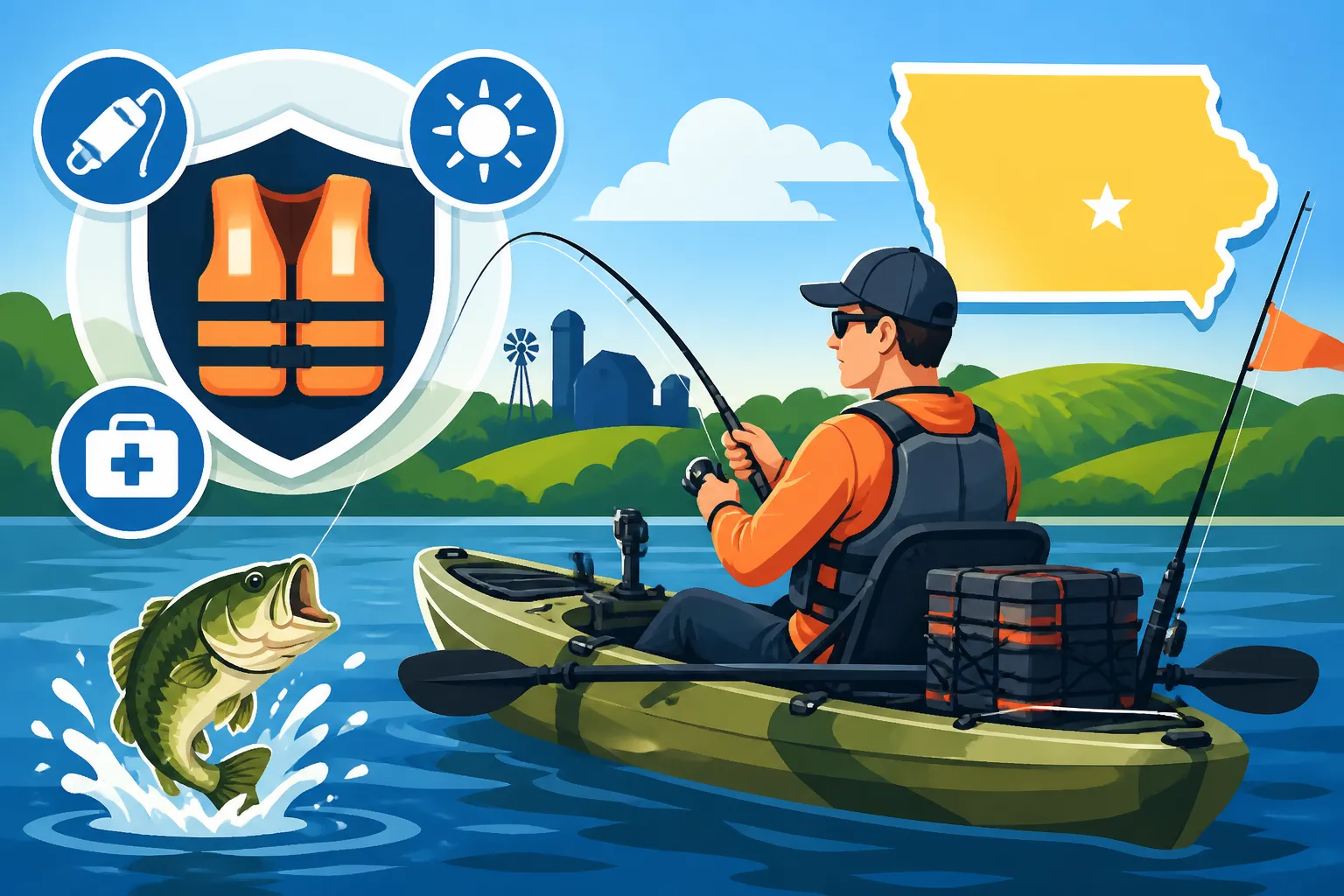
Alright, let's talk about PFDs, or life jackets as most of us call them. This is, without a doubt, the single most important piece of safety gear you'll ever own as a kayak angler. I know, I know, they can feel bulky, especially on a hot summer day. But trust me, that momentary discomfort is nothing compared to the panic of being in the water unexpectedly, perhaps stunned from a fall, or worse, incapacitated. Modern PFDs, particularly those designed for paddle sports, are much more comfortable and feature-rich than the old-school orange blocks. Many even have pockets for small tools, whistles, or a spare snack, making them genuinely practical to wear.
The key here is wearing it. Not stowing it under a bungee cord, not keeping it in the back hatch – wear it from the moment you launch until you’re safely back on shore. Accidents happen fast, often when you least expect them. A sudden wake, a slippery rock during launch, or an unexpected gust of wind can all send you overboard. Having your PFD on already means you don't have to scramble for it in a moment of crisis. Different types are available, from traditional vest-style to inflatable options, but always ensure it's Coast Guard approved and fits snugly. For a deep dive into choosing the right one, check out our guide on the Best Life Jacket Type for Kayak Fishing.
Communication and Signaling Devices
Being able to call for help or signal your location is crucial if things go sideways, especially if you're fishing alone or in remote areas. A waterproof cell phone, fully charged and perhaps in a buoyant case, is a good start, but remember cell service isn't guaranteed everywhere in Iowa. That's where dedicated signaling devices come in. A marine-band VHF radio, even a handheld one, can be a true lifesaver, allowing you to communicate with other boats or emergency services on designated channels.
Beyond electronic communication, never underestimate the power of old-school signaling. A whistle attached to your PFD is a must-have – it cuts through wind and water noise far better than your voice ever could. A signal mirror can flash a distress signal over long distances on a sunny day. And for low-light or nighttime fishing, a bright, waterproof flashlight or a strobing personal locator beacon (PLB) can make all the difference in being seen. Remember, in an emergency, every tool that helps you be found is worth its weight in gold. You can find many reliable options for these essentials on platforms like Amazon.
Lighting and Visibility
Kayak fishing often means early mornings or late evenings, when the bite is best, but visibility is at its lowest. This also happens to be when other, larger boats might be out on the water, and let's face it, a low-profile kayak is incredibly hard to spot, even in broad daylight. To protect yourself, always assume you haven't been seen by other boaters and take proactive steps to make yourself visible.
A 360-degree white light is legally required for night fishing and strongly recommended for twilight hours. This isn't just a small headlamp; it's a pole-mounted light that can be seen from all directions. Additionally, wearing bright, reflective clothing, especially high-visibility colors like neon green or orange, can greatly improve your chances of being spotted during the day. Some anglers even attach flags or banners to their kayaks to increase their vertical profile. Think about how a hunter wears blaze orange – the same principle applies here. The more easily other boaters can see you, the safer your experience will be, particularly if you're out on bigger waters like the Mississippi River or the Iowa Great Lakes.
Pre-Trip Planning and Kayak Preparation
Safety on the water begins long before your paddle hits the water. A little forethought and preparation can prevent a minor inconvenience from escalating into a serious problem. Never skip these crucial steps, no matter how familiar you are with your chosen fishing spot.
Checking Your Equipment and Kayak Condition
Just like you wouldn't drive a car with bald tires, you shouldn't launch a kayak without a thorough inspection. Before every trip, take a few minutes to give your kayak and gear a once-over. Check for any cracks or damage to the hull, ensure all drain plugs are securely in place, and confirm that all hatches are properly sealed. Loose gear can become a dangerous projectile or simply float away if you capsize. Are your paddle blades secure? Is your seat comfortable and properly adjusted?
Beyond the kayak itself, inspect your essential safety gear. Is your PFD in good condition, free of tears or mildew? Are the buckles and straps functional? Check your anchor rope for fraying, and make sure your paddle leash is still strong. If you're using a fish finder or other electronics, ensure batteries are charged and connections are waterproofed. It might seem tedious, but catching a potential problem on land saves a lot of headaches – and potentially much more – on the water. This meticulous check is especially important if your kayak has been stored away for the winter, as wear and tear can occur even when not in use.
Understanding Weather and Water Conditions
The weather can change on a dime in Iowa, and what starts as a calm morning can quickly turn into a windy, choppy afternoon. Always check the forecast before you head out, and continue to monitor it while you're on the water. Pay close attention to wind speed and direction, as even a moderate breeze can make paddling challenging, especially if you're trying to paddle back against it. Strong winds can also create dangerous waves on larger lakes. Our guide on How Weather Affects Bass Fishing goes into detail on how meteorological conditions influence not just fish behavior, but also your safety.
Water conditions are equally important. If you're fishing a river, know the current. Has there been recent heavy rainfall that could increase flow and debris? Are there dams or rapids downstream that you need to be aware of? On lakes, understanding water temperature is vital, especially in spring and fall. Cold water immersion can quickly lead to hypothermia, even on a relatively warm day. Always dress for the water temperature, not just the air temperature. If the water is cold, consider wearing a wetsuit or drysuit, even if you don't plan on getting wet.
Filing a Float Plan and Informing Others
This is one of the easiest and most overlooked safety measures, yet it could be the most important in an emergency. A float plan is simply telling someone trustworthy where you're going, when you expect to return, and what your plan is. This could be a friend, family member, or even a responsible neighbor. Give them specific details:
- Your launch point and intended route.
- Your expected return time.
- A description of your kayak (color, type).
- Who is with you (if anyone).
- Any relevant vehicle details (make, model, license plate) if you're parking somewhere.
If you don't check in by your specified time, they know to initiate a search or contact emergency services. It's a simple, free safety net that provides invaluable peace of mind for both you and your loved ones. Even if you're just planning a quick trip to a local pond, take a minute to send a text or make a call. It takes minimal effort but can make a monumental difference if you encounter trouble.
Here's a quick checklist for your pre-trip prep:
| Item | Check/Action | Notes |
|---|---|---|
| Kayak Hull | Inspect for cracks, leaks, drain plug secure | Seal any minor dings with marine-grade sealant |
| Paddle | Ensure blades are tight, shaft is sturdy | Consider a paddle leash to prevent loss |
| PFD (Life Jacket) | Check for tears, functional buckles, proper fit | Wear it! Don't just store it. |
| Communication | Phone charged/waterproofed, VHF radio functional | Whistle attached to PFD, signal mirror packed |
| Lighting | 360-degree white light, headlamp, spare batteries | Required for low light/night; ensure full charge |
| Weather/Water Check | Review forecast (wind, temp), river levels (if applicable) | Plan alternative dates or locations if conditions are poor |
| Float Plan | Inform a trusted person of your trip details | Include launch/return times, location, kayak description |
| Emergency Kit | First-aid, repair kit, extra water, snacks | Tailor to trip length and remoteness |
| Anchoring Gear | Rope free of fraying, anchor secured, quick-release accessible | Essential for holding position and safety in current. See our Best Kayak Anchor System guide. |
Safe Practices While On the Water
Once you've done your prep and you're out on the water, the focus shifts to maintaining awareness and practicing safe techniques. Your kayak is an extension of you, and knowing how to handle it responsibly is crucial for a successful and safe fishing trip.
Launching and Landing Your Kayak Safely
Launching and landing might seem like the simplest parts of a trip, but they're often where accidents occur. Slippery banks, uneven terrain, or unexpected waves can easily lead to a fall or a lost piece of gear. Always scout your launch and landing spots beforehand. Look for stable ground, clear access, and minimal obstacles. If possible, avoid concrete ramps designed for larger boats, as they can be steep and slick. Natural shorelines or designated kayak launches are generally safer.
When launching, keep your PFD on, even if you're still on solid ground. Place your kayak in the shallowest water possible, ensuring it's stable before you attempt to get in. Center your weight, use your paddle for balance, and get in slowly. The same principles apply to landing: approach the shore slowly, look for a clear spot, and only exit once your kayak is fully stable and beached. It’s always a good idea to secure any loose rods or gear before approaching shore, preventing them from falling out in the final moments.
Stability and Balance While Fishing
Kayaks, especially fishing kayaks, are designed for stability, but they still have limits. Standing up in a kayak, while offering a better vantage point for casting, significantly reduces stability and increases your risk of capsizing. If you do choose to stand, practice in calm, shallow water first. Use a stand-assist strap or bar, keep your feet flat, and maintain a wide, balanced stance. Even when seated, sudden movements can throw you off balance. When casting, avoid aggressive, off-balance swings, especially if you have heavy lures or a large fish on the line.
Understanding your kayak's center of gravity is key. Distribute your gear evenly, keeping heavier items low in the hull. If you're using a Best Kayak Anchor System for example, make sure its attachment point doesn't interfere with your balance or create a snag hazard. Remember, your kayak becomes less stable with every fish you catch and try to bring onboard, especially larger species like walleye or catfish. Practice landing fish smoothly and efficiently, keeping your body centered and low. Always be mindful of your surroundings, especially if you're sharing the water with other boaters or experiencing strong currents.
Navigating with Awareness and Avoiding Hazards
Staying safe on the water means constantly being aware of your surroundings. This includes other boats, natural hazards, and the unpredictable movements of fish. Larger boats might not see you, so it's your responsibility to avoid collisions. If you hear a boat approaching, paddle defensively towards the safest part of the waterway and make yourself as visible as possible. Never assume they've seen you.
Natural hazards are another consideration. Be aware of submerged logs, rocks, sandbars, and shallow areas, especially in rivers or lakes after a drought. Understanding Iowa Fishing Regulations Explained means not only knowing limits but also understanding how those regulations might point to sensitive or challenging areas. On rivers, watch for strong currents, eddies, and strainers (downed trees or brush that water flows through, creating a dangerous trap). If you're fishing near dams, understand the danger zones and always maintain a safe distance. Always be aware of your escape route and know the safest path back to shore or to a safe harbor.
Handling Emergencies and Self-Rescue
Despite all the planning and precautions, emergencies can still happen. Being prepared for the worst-case scenario can mean the difference between a scary story and a tragedy. Knowing what to do in a crisis will empower you to handle difficult situations effectively.
What to Do if You Capsize
Capsizing is arguably the most common and feared incident for kayak anglers. The good news is, with a PFD, it's rarely life-threatening in calm, warm water. The first rule is: don't panic. Your kayak will float, and much of your gear, if secured, will too. Your immediate priority is to get yourself and your kayak to safety. If you are near shore, try to swim with your kayak to shallow water where you can easily re-enter.
If you're in deeper water, you'll need to perform a self-rescue. The most common technique is the "wet re-entry." Flip your kayak upright, grab the paddle, and secure it. Then, position yourself at the stern (back) of the kayak, kick your feet, and hoist yourself onto the back deck. Scoot your way forward into the cockpit, or if it's a sit-on-top, simply swing your legs over. It takes practice, so consider practicing in a controlled environment, like a swimming pool or a calm, shallow lake, before you need to do it in a real emergency. The more familiar you are with the process, the less intimidating it will be if it actually happens.
First Aid and Emergency Supplies
Even minor injuries can become major problems if you're out on the water without the right supplies. A basic, waterproof first-aid kit is non-negotiable. It should include bandages, antiseptic wipes, pain relievers, allergy medication, and any personal prescriptions you might need. Keep it in a dry bag and easily accessible. Consider also including a small repair kit for your kayak, such as marine-grade duct tape or a patch kit, for minor leaks.
Beyond medical supplies, think about other essentials. Extra water is always a good idea, even on short trips, to stay hydrated. High-energy snacks can stave off bonks or provide crucial fuel if you're stranded longer than expected. A multi-tool with pliers, knife, and screwdrivers is incredibly useful for cutting tangled line, making quick repairs, or even removing a hook from yourself (hopefully not!). And for those fishing colder waters, our guide on Best Cold Weather Clothing for Ice Fishing offers valuable insights into staying warm, which translates to overall safety and comfort in variable conditions. You can stock up on these handy essentials for your kit on Amazon.
Reporting Incidents and Seeking Help
If you find yourself in a genuine emergency, knowing how to call for help quickly is vital. For immediate, life-threatening situations, always call 911 or activate your marine VHF radio on Channel 16. Provide clear, concise information: your exact location (use landmarks or GPS coordinates if you have them), the nature of the emergency, and the number of people involved. If you have a PLB, activate it as designed; it will send a distress signal with your coordinates to rescue authorities.
For less urgent, but still problematic situations, like a broken paddle or a minor leak that you can manage, contacting your designated float plan person is the first step. They can often provide guidance, or if necessary, notify authorities. Always err on the side of caution. It's far better to call for help and not need it than to wait too long. Remember, Iowa waters are beautiful, but they demand respect. Being prepared and knowing how to respond is the ultimate form of respect for yourself and for the great outdoors.
Disclaimer
This article is for general informational purposes only and does not constitute professional advice. Laws, prices and regulations vary by location and change over time. Consult a qualified professional for guidance on your specific situation.