Best Kayak Setup for River Fishing
Getting out on an Iowa river in a kayak to chase fish offers a truly unique and rewarding experience, but it also presents a different set of challenges than stillwater fishing. The ever-present current, snags, and varying depths demand a thoughtful approach to your kayak setup. This guide is here to walk you through how to configure your kayak specifically for the dynamic world of river fishing in Iowa, ensuring both your safety and fishing success.
Why Kayak Fishing Rivers in Iowa is Different
You might think a kayak is a kayak, but river fishing isn't quite the same as paddling around a calm lake or pond. The constant motion, the hidden obstacles, and the sheer power of flowing water mean you need to think a little differently about your vessel and your gear. Many anglers come from lake fishing backgrounds and quickly realize the standard lake setup just doesn't cut it when the current starts pulling them downstream.
Understanding River Dynamics
Iowa's rivers, whether it's the mighty Mississippi, the Cedar, or the smaller local streams, all have their own personality, but they share fundamental characteristics that impact your kayak fishing experience. The most obvious is the current. It's not just a constant push; rivers have intricate patterns of flow. You'll encounter riffles where the water tumbles over shallow rocky areas, swift runs, and slower pools. Perhaps most importantly, you'll find eddies – those calm spots behind an obstruction or in a bend where the water actually swirls upstream. These eddies are crucial for holding your position and often for finding fish that are escaping the main current. Understanding these dynamics is key to knowing where to position your kayak, how to use the current to your advantage, and where fish are likely to be holding. It also directly influences your paddling effort and how you manage your anchor.
Common River Obstacles
Rivers are wilder places than most lakes, and that means a whole host of natural (and sometimes not-so-natural) obstacles. Fallen trees, known as "strainers" or "sweepers" if they're partially submerged, are everywhere. These can be incredibly dangerous as the current can pin your kayak against them, potentially capsizing you. Rocks, sandbars, and shallow areas are also common, sometimes appearing out of nowhere, especially during periods of low water. You need a kayak that can handle bumps and scrapes, and you need to be constantly vigilant about what's ahead. This awareness impacts everything from your choice of paddle to how you store your gear, ensuring it's secured and won't go overboard if you hit an unexpected snag. Knowing how to navigate these challenges is paramount for safety and enjoying your time on the water, especially when you're trying to figure out if Is Kayak Fishing Good on Iowa Rivers?
Choosing the Right Kayak for Iowa River Fishing
Selecting the right kayak for river fishing in Iowa is probably the most important decision you'll make. It’s not about finding the fanciest or most expensive model; it’s about finding one that matches the specific demands of river environments and your personal fishing style. You'll quickly discover that a long, sleek touring kayak designed for speed on open water isn't ideal for maneuvering through tight river bends or shallow riffles.
Stability and Maneuverability
For river fishing, stability is often more important than pure speed, especially if you plan to stand and fish. A wider, shorter kayak, typically in the 10-12 foot range, offers a good balance. A wider beam provides better primary stability, meaning it feels solid when you're sitting or standing still. Secondary stability – how stable it feels when tilted on its edge – is also important for navigating choppy water or currents. Sit-on-top (SOT) kayaks are generally preferred for fishing due to their open deck, ease of re-entry if you go overboard, and superior self-draining capabilities, which is a huge plus when you're dealing with waves or rain. When considering Sit-In vs Sit-On-Top Kayak for Fishing, most river anglers lean heavily towards the SOT for its practicality and safety features on moving water.
Maneuverability is equally critical. You need to be able to turn quickly to avoid obstacles, navigate around snags, and hold your line in a current. Shorter kayaks with a bit more rocker (the curve from bow to stern) tend to turn more easily. While a longer kayak tracks straighter, it can be a real pain to spin around in a tight spot on a river. Think about the types of rivers you'll be fishing – small, winding streams versus wider, slower-moving stretches. This will help you determine the Best Kayak Length for Iowa River Fishing.
Storage and Rigging Options
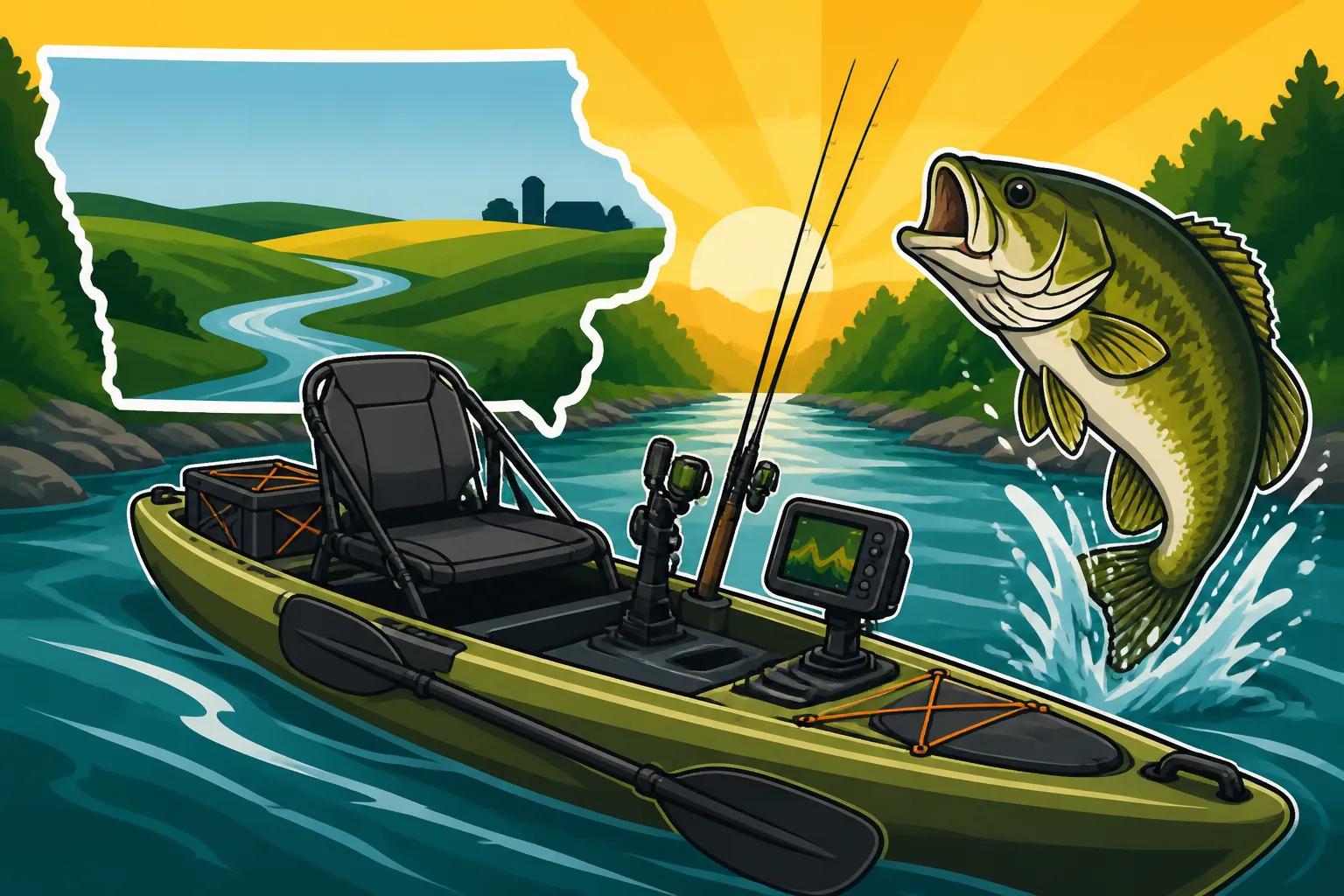
River fishing means you need to carry your gear, bait, and maybe a cooler, all while keeping everything secure from the current, potential capsizes, and the occasional branch swipe. Look for kayaks with ample storage, ideally with built-in hatches, bungee cords on the bow and stern, and a large tankwell behind the seat.
When it comes to rigging, think about accessibility. Rod holders are essential, but consider where you place them. Flush-mount holders are great for storage and keeping rods out of the way, but adjustable, deck-mounted holders are perfect for trolling or keeping a rod ready for a quick cast. Many modern fishing kayaks come with track systems (like those from brands such as Hobie or Perception, though I won't name specific models or prices here), which allow you to easily add or remove accessories like fish finders, camera mounts, or extra rod holders without drilling. Keep your gear organized and tied down. A small dry bag for electronics, wallet, and phone is non-negotiable. Some anglers even rig up a "leash" system for their paddle and other critical items so they don't lose them if they get separated from their kayak. You can find a huge variety of these accessories on sites like Amazon, making it easy to tailor your setup.
Essential Gear for Your River Fishing Kayak Setup
Beyond the kayak itself, the right accompanying gear can make or break your river fishing experience. This isn't just about comfort; it's about safety, efficiency, and ultimately, catching more fish. Many of these items are things you might already own, but their specific application and setup for river environments deserve special attention.
Anchoring Systems for River Currents
Anchoring on a river is an art form. You can't just drop an anchor and expect to stay put like on a lake. The current will constantly try to spin you around or pull your anchor loose. A dedicated anchoring system is non-negotiable for holding your position in key fishing spots or safely working a productive stretch.
- Anchor Type: A grappling anchor (or folding anchor) is a popular choice due to its compact size and ability to grab hold of various river bottoms like rock, mud, or weeds. Some anglers also use a drag chain or a small mushroom anchor for lighter currents or slower drifts. The size and weight of your anchor will depend on the strength of the current you expect to face; usually, a 3-5 pound anchor is a good starting point for smaller rivers, with heavier options for larger, faster flows.
- Anchor Trolley: This is perhaps the most critical component of a river anchoring setup. An anchor trolley is a line system that runs along the side of your kayak, allowing you to attach your anchor rope to a ring that can be moved from the bow to the stern (or anywhere in between) with a simple pull. This enables you to pivot your kayak and face upstream or downstream, controlling your angle to the current and to your fishing target. This is a game-changer for working a specific seam or structure. Without it, your kayak would simply spin and present a large side profile to the current, making it very unstable. For detailed instructions, check out How to Anchor a Kayak in Current.
- Anchor Line: Use a strong, durable rope, ideally with a bit of stretch, and make sure you have plenty of length – at least 3-4 times the depth of the water you expect to fish, plus enough to reach your trolley. Don't forget a quick-release cleat or cam device to rapidly deploy or retrieve your anchor if you need to move fast or avoid a hazard.
Rod Holders and Organization
River fishing often means bringing multiple rods to target different species or use various techniques. Securing these rods while paddling, casting, and landing fish is essential.
- Flush Mount vs. Deck Mount: Most fishing kayaks come with one or two flush-mount rod holders behind the seat. These are great for safely stowing rods while paddling or for trolling. For active fishing, adjustable deck-mounted rod holders (like those from Scotty or YakAttack) offer more flexibility. These can be clamped to a track system or bolted to the deck, allowing you to position your rod at different angles for trolling, dead-sticking, or simply keeping a rod within easy reach.
- Paddle Leash/Rod Leash: Always use a paddle leash! Losing your paddle in a strong current can quickly turn a fun day into a dangerous situation. Similarly, a simple rod leash, even just a bungee cord, can prevent your favorite rod from becoming river debris if you accidentally drop it or a fish pulls it out of a holder.
- Tackle Management: River banks are often cluttered, and space in a kayak is at a premium. Small, waterproof tackle boxes that fit snugly in your tankwell or a console are ideal. Keep only what you need for the day to avoid unnecessary clutter. Some anglers prefer a fishing crate in the tankwell, which can be customized with rod holders and tool storage. Again, these types of organizational solutions are widely available on sites like Amazon.
Safety and Navigation Gear
Safety on the river should always be your top priority. Currents, hidden obstacles, and rapid changes in weather can create dangerous situations quickly.
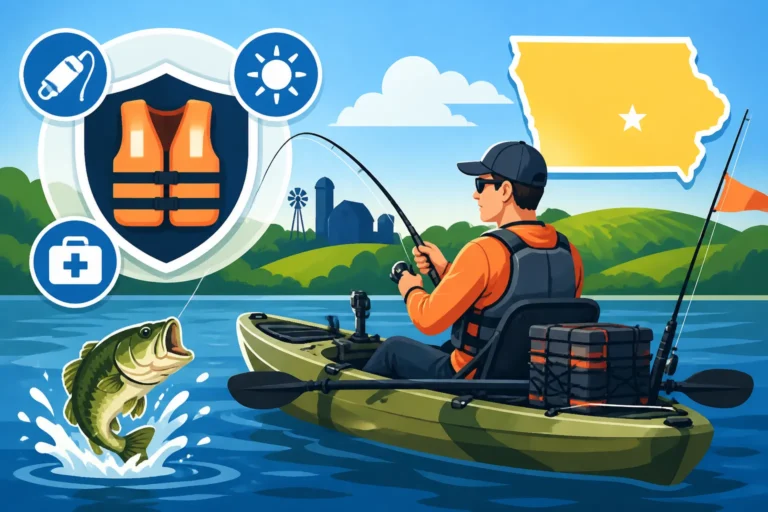
- Personal Flotation Device (PFD): This isn't optional; it's a legal requirement and a life-saver. Always wear a PFD, not just have it in your kayak. Look for one designed for paddling, offering good mobility for casting and paddling strokes. There are even PFDs with built-in pockets for small tackle or tools. Knowing the Best Life Jacket Type for Kayak Fishing can make a real difference in comfort and safety.
- Whistle or Horn: Another legal requirement in many places, a whistle can signal for help if you get into trouble.
- Lights: If there's any chance you'll be on the water near dawn, dusk, or in low light, you need a 360-degree white light. Many kayak anglers use a small battery-powered LED light on a pole that fits into a rod holder.
- Navigation: A waterproof map of the river (if available) or a reliable GPS app on your phone can be invaluable, especially on unfamiliar waters. Rivers can look very different from shore than they do from the middle, and it's easy to get disoriented. A compass is also a good backup. Remember to secure your phone in a waterproof case that floats.
- First Aid Kit: A small, basic first aid kit should always be with you for minor cuts, scrapes, or insect bites.
- Knife/Multi-tool: Essential for cutting tangled lines, freeing snags, or making quick repairs.
- Sun Protection: Sunglasses (polarized are a huge advantage for seeing into the water), sunscreen, and a wide-brimmed hat are crucial for long days on the water.
This critical safety gear goes hand-in-hand with understanding the Required Safety Equipment for Iowa Boats to ensure you're compliant and protected.
Enhancing Your River Kayak Fishing Experience
Once you've got the basics down, there are several ways to upgrade your river kayak fishing setup to make it even more efficient, comfortable, and productive. These enhancements can take your angling to the next level, especially when you're tackling specific species or difficult conditions.
Electronics and Fish Finders
Many anglers wonder, Do You Need a Fish Finder for River Fishing? The short answer is no, not strictly. River fish often relate to visible structure like logs, rocks, or current seams, which you can locate with your eyes and experience. However, a fish finder can provide valuable insights into depth, water temperature, and submerged structure you can't see, making it a powerful tool, particularly on larger rivers or in deeper pools.
- Compact Units: For kayaks, smaller, portable fish finders are often preferred. Look for models with clear, easy-to-read displays and intuitive controls. Many come with transom-mount transducers that can be adapted for kayak use with suction cups or specialized mounting arms.
- Mapping/GPS: Some fish finders include GPS capabilities and mapping features. On a river, this can be incredibly useful for marking productive spots, navigating back to launch, or avoiding known hazards. A detailed river map on your unit can help you identify channel swings, deep holes, and feeder creeks.
- Battery Life: Ensure your fish finder has sufficient battery life for your entire trip, or carry a spare power source. Many run on small sealed lead-acid batteries or even rechargeable lithium-ion packs. If you're looking for recommendations, researching the Best Fish Finder for Iowa River Fishing will provide many options to consider.
Propulsion and Hands-Free Options
While paddling is the traditional method, various propulsion enhancements can make river fishing more enjoyable, especially when fighting current or needing to quickly cover water.
- Pedal Drives: Kayaks equipped with pedal drive systems (like those offered by Hobie or Old Town) are incredibly popular for fishing. They allow for hands-free propulsion, meaning you can keep your rod in hand and cast while still moving, or hold your position against a light current without constant paddling. This is a huge advantage when sight fishing or when you need precise boat control. While they add to the kayak's cost and complexity, the benefits on a river are often worth it for serious anglers.
- Trolling Motors: For larger rivers or when covering long distances, a small electric trolling motor can be a fantastic addition. Many kayaks are now designed to accept bow or stern mounting plates for trolling motors. Paired with a deep-cycle marine battery, a trolling motor can help you get upstream against strong currents with less effort, conserve energy, and provide subtle boat positioning. However, remember that any motorized vessel, even a kayak with a trolling motor, might fall under Iowa Boat Registration Requirements. Always check the latest regulations to ensure you're compliant.
- Paddle Types: Even with other propulsion, a good paddle is essential. For river fishing, a shorter, wider paddle blade can provide more power for quick maneuvers and bursts of speed against the current. The Best Kayak Paddle Length will depend on your height and kayak width, but generally, a slightly shorter paddle can be more manageable in tighter spaces.
A well-appointed kayak setup for river fishing is more than just a boat; it's a mobile fishing platform tailored to the unique environment of Iowa's flowing waters. By considering stability, maneuverability, smart storage, and critical safety gear, you can transform your angling experience from a challenging paddle into a productive and enjoyable adventure. Whether you're targeting smallmouth bass on the Cedar River or chasing catfish on the Des Moines, having the right gear ensures you're ready for whatever the river throws your way. Now get out there and explore!
Disclaimer
This article is for general informational purposes only and does not constitute professional advice. Laws, prices and regulations vary by location and change over time. Consult a qualified professional for guidance on your specific situation.