How to Drift Fish a River for Walleye
For many Iowa anglers, the idea of consistently catching walleye in our flowing rivers can feel like a monumental challenge. The current, the ever-changing depths, and the seemingly endless stretches of water make it tough to know where to even begin, often leaving you feeling lost and frustrated with little to show for your efforts. This comprehensive guide is designed to demystify river drift fishing for walleye, providing you with the knowledge and tactics to successfully navigate Iowa's waterways and reel in those prized fish.
Understanding Drift Fishing for Walleye in Iowa Rivers
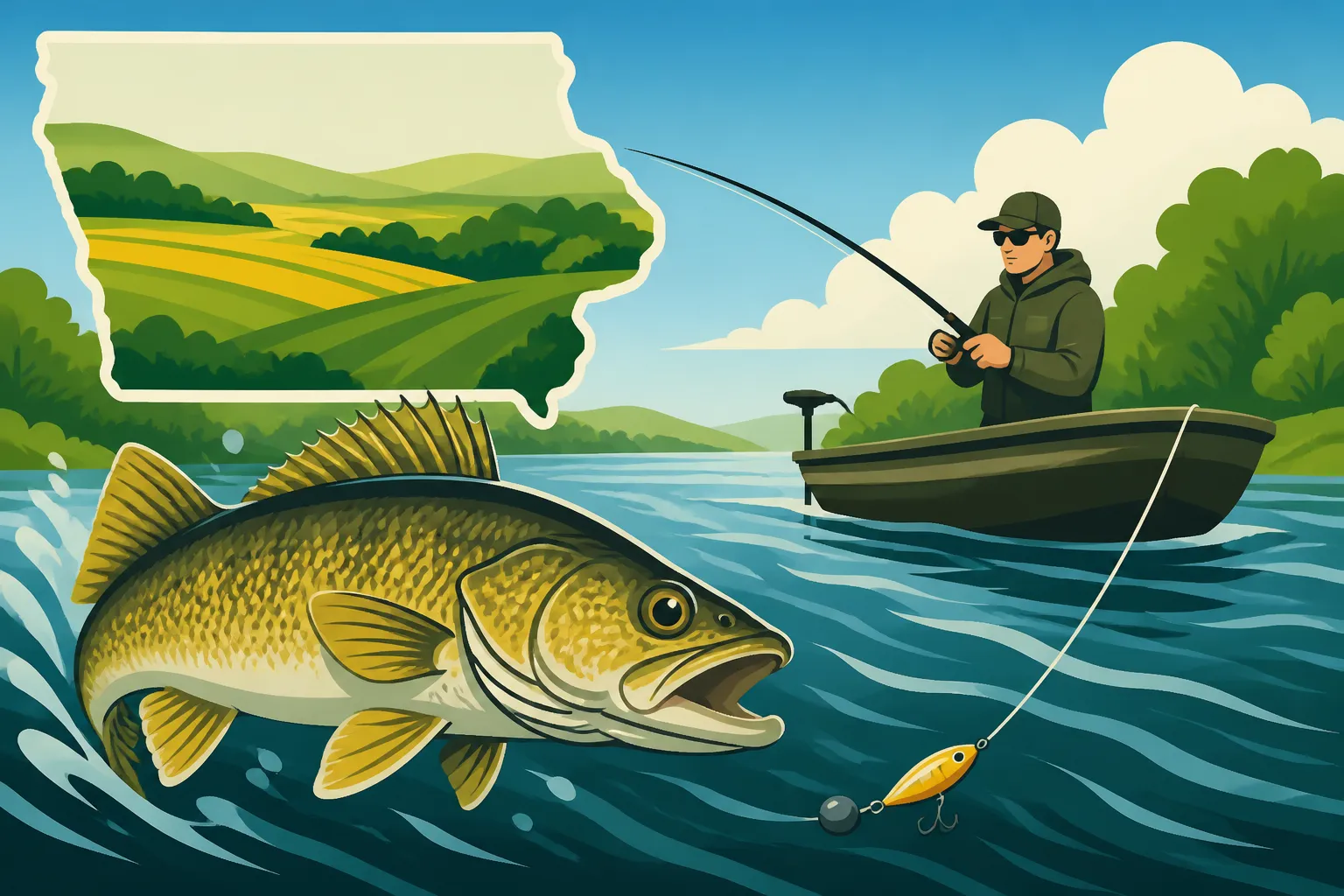
Drift fishing is a highly effective, yet often misunderstood, technique for targeting walleye in river environments. Instead of anchoring down and casting to a fixed spot, you allow your boat and/or your bait to move naturally with the current, covering a larger area and presenting your offering in a subtle, lifelike manner. This method mimics the natural movement of forage fish and other prey items, making it incredibly enticing to opportunistic walleye that are often lurking in current seams or behind structure, waiting for an easy meal to float by. It’s a dynamic approach that requires you to constantly read the river and adapt, but the rewards can be incredible.
Why Drift Fishing Works So Well for River Walleye
Walleye in rivers are inherently current-oriented. They position themselves in places where the current brings food to them, expending minimal energy while maximizing feeding opportunities. These spots are often subtle, like the edges of faster current, behind submerged boulders, or in the slack water just downstream from an obstruction. A stationary boat might miss these subtle holding areas, or present a bait that looks unnatural in the current. Drift fishing, however, allows your bait to travel through these prime zones just as a natural food source would, often triggering strikes from otherwise hesitant fish. It’s about meeting the fish on their terms, where they’re already comfortable and actively feeding.
Identifying Productive River Sections for Drifting
Not all sections of an Iowa river are created equal when it comes to drift fishing for walleye. You want to look for areas with varied bottom structure, current breaks, and potential ambush points. Think about stretches where the river bends, creating deeper outside bends and shallower inside bends. Look for noticeable current seams where faster water meets slower water. Bridges, wing dams, rock piles, and submerged timber are all excellent indicators of potential walleye holding areas. Even subtle changes in depth or bottom composition, sometimes only visible on your electronics, can be key. The goal is to find those transitions and irregularities that force the current to create a feeding lane or a resting spot for walleye. Our guide on Iowa Fishing Techniques Guide delves into more general strategies that apply here.
Essential Gear and Setup for River Drifting
Having the right gear is paramount for successful river drift fishing. The constant movement, potential for snags, and the need for sensitive bite detection all require specific rod, reel, line, and terminal tackle choices. Don't underestimate the impact of a properly balanced setup; it can mean the difference between feeling that subtle walleye thump and missing it entirely.
Rods and Reels for Optimal Sensitivity and Control
For drift fishing, you want a rod that offers a good balance of sensitivity and backbone. A medium-light to medium power spinning rod, typically in the 6'6" to 7'6" range, is often ideal. The longer rod length helps with line control, especially when managing your drift from a boat, and provides better leverage for casting and fighting fish in current. A fast or extra-fast action tip is crucial for detecting those light walleye bites. Paired with a quality spinning reel in the 2500-3000 size range, spooled with appropriate line, you'll have a setup that allows for precision and power. You can explore a wide variety of options for your ideal setup, including specialized walleye rods, by browsing reputable online retailers like Amazon. For more specifics on what to look for, check out our piece on Best Rod Length for Iowa River Walleye Fishing.
Line Choices: Braided vs. Monofilament vs. Fluorocarbon
Your line choice significantly impacts your sensitivity and presentation. Braided line, with its near-zero stretch, offers maximum sensitivity, allowing you to feel every subtle bump and tap on the bottom, as well as light bites. It's often preferred for its strength and thinner diameter, which cuts through current better. However, its lack of stretch means less forgiveness during hard strikes or when a fish makes a sudden run.
Monofilament line offers more stretch, which can act as a shock absorber, but at the cost of sensitivity and a thicker diameter that can be more affected by current. Fluorocarbon line offers a good compromise: low stretch, high abrasion resistance, and it's virtually invisible underwater. Many anglers opt for a main line of braided line (10-20 lb test) with a fluorocarbon leader (6-10 lb test) for the best of both worlds – sensitivity and stealth. Our guide on Best Line Weight for River Walleye offers a deeper dive into this topic.
Terminal Tackle for Drifting Rigs
The specific rig you choose will depend on the depth, current, and bottom structure of the river you're fishing.
- Jig and Minnow/Plastic: A simple jig head (1/8 oz to 1/2 oz, depending on current and depth) tipped with a live minnow, plastic grub, or paddle tail is a classic and highly effective option. The key is to use just enough weight to maintain bottom contact without constantly snagging.
- Bottom Bouncers: These are excellent for covering ground and keeping your bait off the bottom, minimizing snags. They typically consist of a wire arm with a lead weight on the bottom and a swivel for attaching a snell or leader. You can run a plain hook with a minnow, a worm harness, or a small crankbait behind a bottom bouncer.
- Three-Way Swivels: A three-way swivel rig allows you to attach a dropper weight and a leader with your bait or lure. This is fantastic for precisely controlling your depth and presenting a bait right in the strike zone.
- Live Bait Rigs: A basic live bait rig with a walking sinker, swivel, and fluorocarbon leader is also deadly. Often called a Lindy Rig (a common brand name for this style), it allows the bait to move very naturally with the current. Consider adding a small float or bead above the hook to help lift your bait slightly off the bottom. You can learn more about specific presentations in How to Rig a Live Minnow for Walleye.
Remember, having a good selection of jigs, sinkers, swivels, and hooks is crucial. You can find convenient tackle kits and individual components on Amazon to ensure you're always prepared for changing river conditions.
Mastering the Drift: Techniques and Strategies
Executing a successful drift requires attention to detail, constant adjustment, and a keen understanding of how the river behaves. It’s not just about letting the boat go with the flow; it’s about controlled movement and strategic bait presentation.
Positioning Your Boat for the Perfect Drift
The ideal drift starts upstream of your target area. Deploy your main motor or, even better, a bow-mounted trolling motor to control your speed and direction. You want your boat to drift slightly slower than the current, or at the same speed as the current if you're using a controlled drift with your trolling motor. This allows your bait to stay slightly ahead of or directly below you, maintaining better bottom contact and a natural presentation. Often, a "back-trolling" technique with your main motor (running it in reverse) can provide excellent boat control in stronger currents, allowing you to slow your drift and keep your bow pointed upstream. Controlling your drift also means being mindful of other boaters on the river.
Reading the River: Current Seams, Eddies, and Depths
Successful drift fishing is all about reading the water. Look for visual cues like foam lines, changes in water color, or ripples that indicate current breaks. Use your fish finder to identify sudden depth changes, submerged humps, rock piles, or timber. Walleye will often be positioned on the downstream side of these structures, out of the main current, waiting to dart out and grab passing food. Current seams, where faster water meets slower water, are prime ambush points.
As you drift, constantly monitor your electronics. If you mark fish or find an area that looks particularly promising, you can adjust your drift to cover it more thoroughly. Don't be afraid to experiment with different lines to find the depth where the walleye are holding. A detailed look at using electronics is available in Do You Need a Fish Finder for River Fishing? and How to Read a Fish Finder for Walleye.
Bait and Lure Presentation During the Drift
The key to successful drift fishing is maintaining constant contact with the bottom, or just barely above it. Your line should enter the water at a shallow angle, not straight down. This angle allows your bait to bounce and tick along the bottom, creating a disturbance that attracts walleye. As you drift, occasionally lift and drop your rod tip to give your bait a subtle jigging action. Pay close attention to your line – any hesitation, twitch, or sudden slack could indicate a bite.
When a walleye strikes, you’ll often feel a light tap or a sudden heaviness. Avoid setting the hook immediately; instead, drop your rod tip slightly to give the fish a moment to fully take the bait, then sweep your rod upward with a firm, steady motion. Different baits, from live minnows and nightcrawlers to soft plastics and crankbaits, all have their place. Many anglers swear by plastics like Berkley Gulp! for their scent dispersion, which can be particularly effective in stained river waters.
Reading the River: Where to Find Walleye on the Drift
Understanding the structure and dynamics of a river is like having a secret map to where walleye hide. They aren't just anywhere; they favor specific types of cover and current breaks that offer both shelter and feeding opportunities.
Targeting Current Seams and Eddies
Current seams are arguably the most important feature for river walleye. These are the lines where fast-moving water meets slower water, often created by points, bends, or submerged obstacles. Walleye will sit in the slower water, conserving energy, and dart into the faster current to ambush prey that gets swept along. When drift fishing, position your boat so your bait drifts along these seams, allowing it to naturally transition from faster to slower water. Eddies, which are pockets of reverse or swirling current, also provide excellent resting and feeding areas, especially on the downstream side of major obstructions. Drifting the perimeter of an eddy and allowing your bait to be swept into and out of its calmer waters can be highly productive.
Fishing Wing Dams and Riprap
Iowa's rivers, particularly the mighty Mississippi, are dotted with wing dams – rock structures built out into the river to direct current and maintain navigation channels. These are walleye magnets. Fish will often stack up on the current-break side (downstream side) of a wing dam, or in the scour holes that form at their ends. Drifting along the face of a wing dam, or perpendicular to it, letting your bait bounce along the rocks and into the deeper scour holes, is a classic river walleye strategy. Similarly, riprap banks (rocky banks) create numerous small current breaks and hideouts for baitfish, attracting walleye. Drifting parallel to these banks, focusing on irregularities in the rocks, can be very effective. It's often during the warmer months, as detailed in Best Month to Catch Walleye in Iowa, that these structures really heat up.
Exploring Deeper Holes and Channel Edges
Walleye are often associated with depth, especially during periods of bright sun or when water temperatures are fluctuating. Look for deeper holes in the river channel, especially those with some sort of current break or cover, such as submerged timber or rock piles. Your fish finder will be invaluable for locating these depressions. Channel edges, where the river bottom suddenly drops off into deeper water, are also prime travel routes and feeding areas for walleye. Drifting along these drop-offs, keeping your bait just at the lip of the break or allowing it to fall into the deeper water, can yield excellent results. These deeper spots can be particularly good during times like When Iowa Walleye Season Opens.
Table: Common Drift Fishing Rigs for Walleye
| Rig Type | Ideal Conditions | Pros | Cons | Best Bait/Lure |
|---|---|---|---|---|
| Jigging | Moderate current, varied bottom | Direct contact, sensitive, versatile | Prone to snags, requires constant attention | Live minnows, soft plastic grubs, paddle tails |
| Bottom Bouncer | Strong current, open bottom, covering ground | Reduces snags, keeps bait off bottom, covers area | Less sensitive, heavier setup | Worm harness, live minnows, small crankbaits |
| Three-Way Swivel | Specific depth targeting, heavy current | Precise depth control, natural presentation | Can be cumbersome, prone to tangles | Live minnows, crankbaits, plastic worms |
| Carolina Rig | Light current, subtle presentations | Very natural movement, good for shy fish | Less direct feel, slower presentation | Live minnows, nightcrawlers, plastic worms |
Conclusion: Embracing the Current for Walleye Success
Drift fishing for walleye in Iowa's rivers is a rewarding technique that, once mastered, can significantly boost your angling success. It’s about understanding the river's pulse, strategically positioning your boat, and presenting your bait in a way that truly mimics natural forage. From dissecting current seams and eddies to effectively working wing dams and deeper channels, each aspect plays a crucial role in luring those elusive walleye. With the right gear, a patient approach, and a willingness to learn from every drift, you’ll soon find yourself confidently navigating the currents and enjoying consistent catches of these fantastic fish.
Disclaimer
This article is for general informational purposes only and does not constitute professional advice. Laws, prices and regulations vary by location and change over time. Consult a qualified professional for guidance on your specific situation.