How to Fish a Jig and Pig for Bass
Finding that perfect presentation to tempt a lurking lunker bass can sometimes feel like solving a cryptic puzzle, especially when they're dug deep in thick cover. Many anglers struggle to effectively penetrate dense vegetation or heavy wood, often losing baits or simply not getting bites in those prime spots. This guide is all about demystifying one of the most effective, yet often intimidating, bass fishing techniques: how to fish a jig and pig, helping you confidently present this powerful combination to catch more big bass in Iowa's diverse waters.
Understanding the Jig and Pig Combo
There's something uniquely satisfying about the thud of a heavy jig hitting the water and feeling that subtle tick when a big bass engulfs it. The jig and pig isn't just a lure; it's a technique, a feeling, and often, the key to unlocking those stubborn bass.
What Exactly is a Jig and Pig?
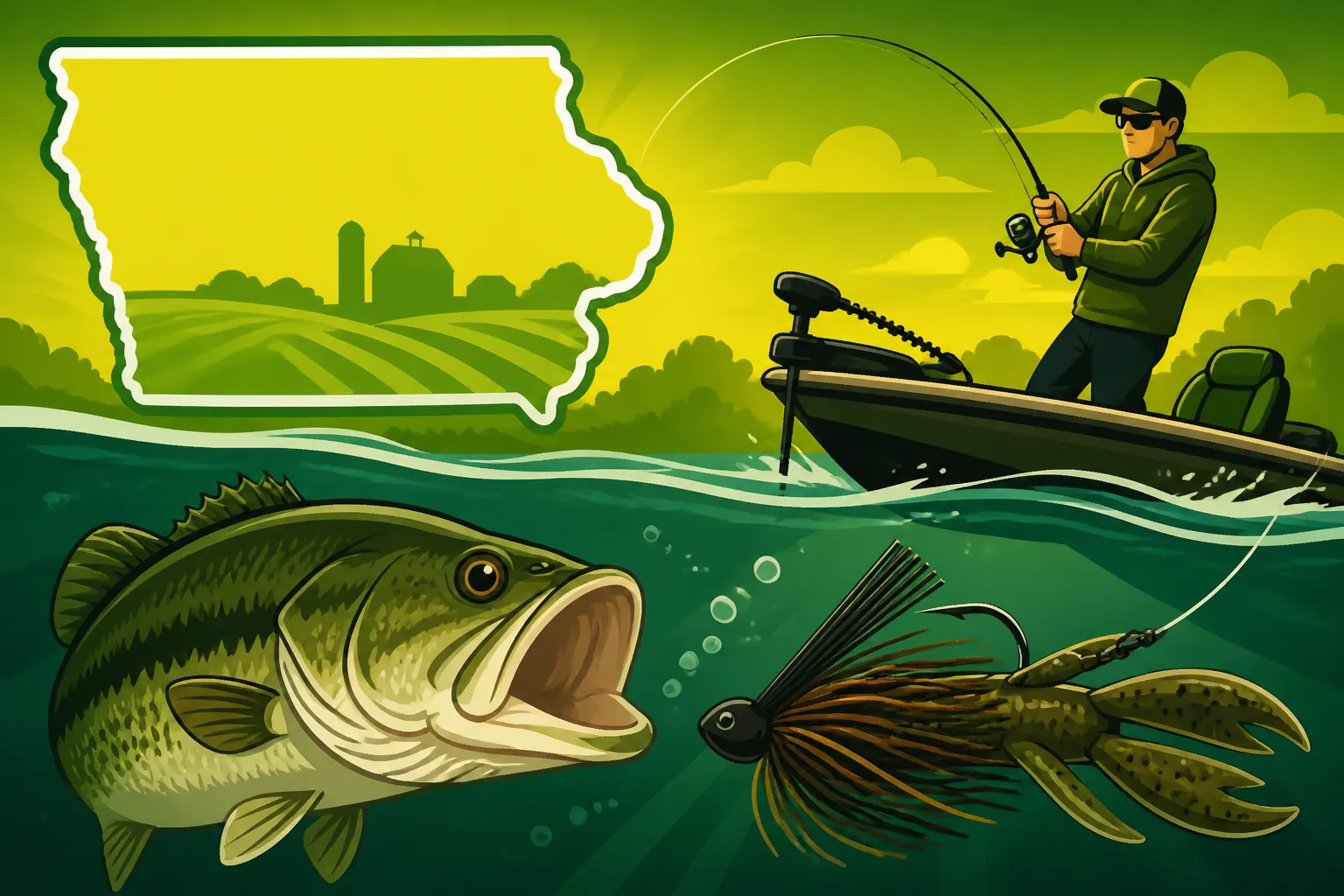
At its core, a "jig and pig" is a lead-head jig paired with a soft plastic or natural pork rind trailer. The "pig" traditionally referred to real pork rind, usually a chunk or strip, that provided a lifelike swimming action and scent. While natural pork is still used, modern soft plastic trailers have largely taken its place, offering incredible durability, color variety, and scent infusion. These trailers are designed to mimic crayfish, bluegill, or other forage, providing a bulkier, more appealing profile than the jig alone. Think of it as a complete meal ticket for a hungry bass.
The jig itself comes in many forms: arkie-style jigs for skipping under docks, football jigs for dragging rocky bottoms, swim jigs for moving through cover, and stand-up jigs that keep your trailer upright when paused. Each type has a specific purpose, but they all share the common goal of getting a heavy, enticing offering into places other lures can't reach. It's not just about the weight; it's about the weed guard and the compact profile that allows it to slither through snags.
Why it Excels for Iowa Bass
Iowa's fishing landscape is incredibly varied, from the dense weed beds and laydowns of its smaller lakes and farm ponds to the rocky stretches and current breaks of the Mississippi and Des Moines rivers. This is precisely where the jig and pig shines. Bass, especially larger ones, are ambush predators that love to hide in heavy cover. A jig and pig allows you to punch through thick mats of lily pads, crawl over submerged logs, or hop around rocky points where those bass are holding tight.
Consider a hot summer day on a lake like Lake Macbride or Big Creek Lake. The bass retreat to the coolest, shadiest, and often thickest cover. A crankbait or spinnerbait might foul immediately, but a well-designed jig and pig can slip right in. The heavy weight gets it down quickly, and the weed guard protects the hook from snagging on the way. Once it's in the strike zone, the bulky profile and subtle action of the trailer are incredibly appealing to bass looking for an easy meal without expending too much energy. It’s also fantastic in cooler water, like during the Pre-Spawn Bass Patterns in Iowa, when bass are sluggish and prefer a slow-moving, substantial offering.
Essential Gear for Your Jig and Pig Setup
To fish a jig and pig effectively, you need a setup that can handle the heavy lure, penetrate cover, and, most importantly, provide the leverage to extract a stubborn bass from its hiding spot. This isn't a finesse technique; it's about power and control.
Rod and Reel Selection
When it comes to the rod, think power and backbone. A heavy or medium-heavy power casting rod, typically 7 to 7 and a half feet long, is your best friend. This length gives you the leverage needed for long pitches, accurate flips, and most critically, enough backbone to set a big hook and muscle a bass out of dense cover. Look for a fast action tip, which allows for precise casting and sensitivity to detect subtle bites, while the robust blank provides the lifting power. Brands widely available on platforms like Amazon offer excellent options in this category, suitable for targeting both Largemouth Bass Fishing in Iowa and Smallmouth Bass Fishing in Iowa in heavier cover.
Pair your powerful rod with a reliable baitcasting reel. A gear ratio around 7.1:1 or 8.1:1 is ideal. This faster retrieve speed allows you to quickly pick up slack line after a cast or when a bass charges you, ensuring a solid hookset. The quick retrieve is also crucial for fishing in current, like on the Mississippi River, or when you need to reposition your lure quickly. Ensure the reel has a strong drag system, as you'll be putting it to the test when fighting those lunkers trying to bury themselves in cover. For a deeper dive into choosing the right tools, check out our Fishing Rod and Reel Guide for Iowa Anglers.
Line Choices and Why They Matter
Your fishing line is the crucial connection between you and the fish, and for jig and pig fishing, strength and sensitivity are paramount. You generally have two excellent choices: braided line or fluorocarbon. Braided line, in the 50-65 pound test range, is fantastic for its incredible strength, zero stretch, and abrasion resistance. When you're punching through thick vegetation or dragging your jig over sharp rocks, braid can take a beating and still hold up. The lack of stretch means every subtle bump or bite is telegraphed directly to your hand, and your hooksets are incredibly powerful.
Fluorocarbon, typically in 17-25 pound test, is another strong contender, especially in clearer water or when bass are pressured. It's nearly invisible underwater, offers good abrasion resistance, and has less stretch than monofilament (though more than braid), giving you a good balance of sensitivity and a bit of shock absorption. Many anglers prefer to spool their baitcaster with braided line and then tie a 15-20 foot fluorocarbon leader using a strong knot like an FG or Alberto knot. This gives you the best of both worlds: the strength and sensitivity of braid with the invisibility of fluorocarbon. For more on line selection, our guide on Braided Line vs Monofilament for Walleye offers insights that can be adapted to bass.
Trailer Considerations
The "pig" in "jig and pig" is where you can truly customize your presentation to match the forage and mood of the bass. Soft plastic trailers come in countless shapes, sizes, and colors. The key is to choose one that complements your jig and mimics what the bass are eating. For a bulkier, slower fall that imitates a bluegill or crawfish, opt for a creature bait or a bulky craw-style trailer. These trailers often have appendages that provide a subtle flapping or swimming action even with minimal movement from your jig.
When bass are feeding aggressively, a trailer with more active appendages, like a twin-tail grub or a chunk with kicking legs, can draw attention. For a more subtle, finesse presentation, a smaller chunk or a simple paddle-tail grub might be more effective. Color choice is also critical. Black and blue is a classic combination that works in almost any water clarity, especially in dingy or deep water. Green pumpkin and brown hues are excellent for clearer water, mimicking natural forage. When fishing in particularly muddy conditions, brighter colors or contrasting combinations, as discussed in Best Lure Color for Muddy Water, can sometimes make a difference. Always keep a variety on hand so you can adapt to the conditions and the bass's preferences.
Mastering Jig and Pig Techniques
Fishing a jig and pig isn't just about casting and reeling; it's an art form that involves precise placement, controlled retrieves, and keen attention to subtle cues.
Pitching and Flipping
These two techniques are the bread and butter of jig and pig fishing, designed to get your lure into tight, heavy cover with minimal splash and maximum stealth. Pitching involves a pendulum-like swing of the rod, sending the jig softly into the water a short distance away. It's often used for targets that are a little further out but still require a quiet entry. Think about getting your jig under overhanging trees or into the shady pockets around boat docks. It's all about smooth, controlled motion, allowing the jig to land softly and begin its descent without startling any nearby bass.
Flipping is even more precise and stealthy, typically used for very close targets like thick brush piles right next to the boat or dense mats of vegetation. You peel line off the reel by hand, swing the rod tip forward, and guide the jig into the cover with barely a ripple. This method keeps your boat further away from the bass, reducing your profile and increasing your chances. When you flip or pitch into cover, let the jig fall on a semi-slack line, but keep a finger on the line to detect bites on the fall, which are very common. After it settles, give it a few gentle shakes or lifts, then retrieve and repeat. This allows you to dissect the cover thoroughly.
Dragging and Hopping
While pitching and flipping excel in heavy cover, dragging and hopping are fantastic for covering more open areas or less dense structure, like rocky points, ledges, or sparse weed lines. Dragging involves slowly pulling the jig along the bottom, keeping constant contact. This method is incredibly effective when bass are lethargic or relating closely to the bottom, mimicking a crawfish scurrying along. The key is a slow, deliberate retrieve, feeling for every rock, stump, or change in bottom composition. If you feel resistance, pause, then gently pull again. Many strikes occur on the pause.
Hopping is a more aggressive presentation, where you lift the rod tip sharply to make the jig "hop" off the bottom, then let it fall back down on a semi-slack line. This can imitate a crawfish trying to escape or a baitfish darting. Vary the height and speed of your hops until you find what the bass respond to. In many Iowa reservoirs like Saylorville or Coralville, where bass might be scattered on submerged humps or rocky structures, dragging and hopping are excellent ways to locate fish. Always pay attention to what depth and retrieve speed are triggering bites.
Deciphering the Bite
One of the trickiest, yet most rewarding, aspects of jig and pig fishing is learning to interpret the bite. Unlike a fast-moving crankbait that gets smashed, a jig bite can be incredibly subtle. Sometimes, it's a distinct "thump" or "tick" that feels like your line just got snagged on a twig. Other times, it's a spongy feeling, a sudden slack in the line when you weren't expecting it, or simply a slight movement of your line to the side. These are all indicators that a bass has picked up your jig.
The moment you feel anything out of the ordinary, even if you're not sure, set the hook! Bass can inhale and exhale a jig remarkably fast, so a delayed reaction often means a missed fish. To set the hook, drop your rod tip slightly, reel down to take up any slack, then sweep the rod sideways with authority, pulling hard into the fish. You'll need that power from your heavy rod and strong line to drive the thick jig hook into the bass's bony mouth. Don't be shy; lean into it!
When and Where to Employ the Jig and Pig in Iowa
The beauty of the jig and pig is its versatility, making it a year-round producer for Iowa anglers, depending on how and where you present it.
Seasonal Strategies
The jig and pig really shines in cooler water, making it a fantastic choice for spring and fall, but it's also incredibly effective in summer when bass are hunkered down.
- Spring: During the pre-spawn phase, when bass are staging in transition areas near spawning flats, the jig and pig is deadly. They're looking for substantial meals to bulk up before the spawn. Focus on secondary points, creek channel bends, and the outer edges of emerging weed beds. A slow, deliberate retrieve is usually best, mimicking crawfish emerging from their winter hideouts. The jig's bulky profile and slow fall are irresistible to hungry, pre-spawn bass.
- Summer: As water temperatures rise, bass retreat to deep, cool, and shady cover. This means brush piles, fallen trees, deep weed lines, and docks. This is prime time for pitching and flipping your jig and pig into those precise spots. The heavy weight helps punch through thick canopy, and the slow fall allows the bass ample time to react. Early morning and late evening, discussed in Best Time of Day to Catch Bass in Summer, can extend the bite window.
- Fall: As water cools, bass become highly active, feeding heavily to prepare for winter. They often migrate to deeper points, channel swings, and areas with abundant baitfish. Dragging and hopping a jig and pig along these structures can be incredibly effective. Consider using a football-head jig to navigate rocky bottoms more easily. Bass might be more aggressive, so don't be afraid to experiment with slightly faster retrieves and more erratic movements.
Prime Iowa Habitats
Iowa offers a plethora of excellent locations to throw a jig and pig, from its iconic river systems to its many lakes and ponds.
- Weedlines and Lily Pads: Some of the Best Fishing Spots in Iowa are often choked with vegetation. Bass love the cover and ambush opportunities that weed lines and lily pads provide. Use a compact jig with a good weed guard to penetrate these areas. Pitch or flip your jig to the edges, into pockets, or right onto the mats, letting it fall through. Many strikes will occur as the jig breaks through the surface or as it settles on the bottom. Places like Clear Lake are renowned for their excellent weed growth.
- Docks and Laydowns: Any man-made structure like boat docks or natural fallen trees (laydowns) offer shade and cover, making them bass magnets. Skipping your jig and pig under docks is a highly effective way to reach bass that other anglers miss. The jig's compact shape and heavy weight allow it to slide under low-hanging obstacles. For laydowns, work your jig along the length of the tree, bumping it off branches, and letting it fall into pockets where bass are waiting.
- Brush Piles and Rock Piles: Submerged brush piles, either natural or intentionally sunk, are incredible fish attractors. Use your fish finder, like those discussed in Fish Finders and Electronics for Iowa Anglers, to locate these structures. Dragging or hopping a football jig over rock piles on main lake points or humps can also be very productive, especially on lakes like Rathbun or Red Rock Reservoir. The jig's profile mimics a crawfish perfectly in these environments.
- River Current Seams: On Iowa's rivers, particularly the Mississippi or the Des Moines, bass will position themselves out of the main current, waiting for bait to be swept by. Look for current seams, eddies behind wing dams, or submerged timber near shore. Pitch your jig upstream of these areas and let the current carry it naturally into the strike zone. The heavy jig allows it to maintain bottom contact even in moderate current.
| Jig Type | Ideal Trailer Type | Primary Technique | Best Habitat | Notes |
|---|---|---|---|---|
| Arkie Jig | Craw, Creature Bait | Pitching, Flipping, Skipping | Docks, Laydowns, Thick Cover | Compact head, good for penetrating dense cover quietly. |
| Football Jig | Craw, Paddle Tail | Dragging, Hopping | Rocks, Gravel, Open Bottom | Wide head for good bottom contact and deflections. |
| Swim Jig | Paddle Tail, Grub | Swimming, Pitching (light cover) | Sparse Weeds, Open Water, Edges | Designed to be retrieved, mimicking a swimming baitfish. |
| Finesse Jig | Small Craw, Chunk | Dragging, Skipping, Finesse | Clear Water, Pressured Fish | Smaller profile for subtle presentations. |
| Grass Jig | Craw, Creature Bait | Punching, Flipping | Heavy Mats, Thick Vegetation | Pointed head, heavy wire hook for extreme cover. |
Remember, mastering the jig and pig takes practice, but the rewards are well worth the effort. It's a technique that consistently produces larger, quality bass, and there's nothing quite like the feeling of wrestling a big one out of its lair on a jig and pig. Keep a variety of jig types and trailers in your tackle box, readily available through retailers like Amazon, and don't be afraid to experiment with retrieve speeds and colors. You might even consider having a dedicated jig rod, just like some anglers have a specific setup when thinking about the Best Rod Setup for Catfish on the Mississippi River for heavy fighting fish. Good luck out there, Iowa anglers!
Disclaimer
This article is for general informational purposes only and does not constitute professional advice. Laws, prices and regulations vary by location and change over time. Consult a qualified professional for guidance on your specific situation.