Best Bait for Ice Fishing Crappie
There’s nothing quite like the crisp air and serene silence of ice fishing, but let's be honest, trying to tempt a finicky crappie from beneath a sheet of ice can feel like a Herculean task. They're often lethargic, shy, and seem to ignore everything you drop down the hole. If you've ever felt that frustration, wondering if your bait choice is the problem, you're not alone. This guide is here to shed some light on the best baits for ice fishing crappie, helping you turn those slow days into productive ones on Iowa’s frozen waters.
Understanding Crappie Behavior Under the Ice
Before we even talk about specific baits, it's crucial to grasp what makes crappie tick when the water turns to ice. They're not the same aggressive eaters they are in spring or fall, and understanding their winter mindset is the first step to successful ice fishing.
How Cold Water Affects Crappie Metabolism
Imagine trying to run a marathon in freezing temperatures – you'd conserve energy, move slower, and probably wouldn't feel like eating a huge, heavy meal. That's essentially what happens to crappie when water temperatures drop. Their metabolism slows down dramatically. This means they require less food, burn less energy, and become far less inclined to chase after a fast-moving, oversized meal.
They're operating on a "minimal effort for maximum reward" principle. A crappie needs to make sure the energy expended to catch food is less than the energy gained from consuming it. This translates to them preferring smaller, slower-moving, and easily digestible baits. Overly aggressive jigging or large presentations will often spook them or simply be ignored. Your goal is to offer something that looks like an easy, high-value snack that they can simply inhale with minimal effort.
Locating Crappie in Winter Structures
Finding the fish is often half the battle, and in winter, crappie are usually masters of congregating. Instead of being spread out like they might be in summer, they tend to school up in predictable locations, often relating to specific types of underwater structure. Deep basins are common haunts, especially in larger Iowa lakes like Clear Lake or Rathbun Lake, where they might suspend over the deepest holes, sometimes quite a distance off the bottom.
You’ll also find them relating to main lake points, sharp drop-offs, and submerged cover like brush piles, old timber, or weed lines that still offer some protective cover. These spots provide both shelter from currents and predators, and often hold residual food sources. Using a good fish finder or flasher, like those available on Amazon, becomes incredibly valuable here. It allows you to quickly identify these schools and their depth, saving you precious time and effort. Don't be afraid to drill multiple holes and move until you mark fish. Sometimes, even being 10 feet off a school can make all the difference between a full bucket and an empty one.
Top Baits for Ice Fishing Crappie
Now that we know how crappie behave, let's dive into the specifics of what they're most likely to bite on. There are two main categories: live bait and artificials, both with their own strengths.
Live Bait: The Irresistible Classic
When crappie are being particularly finicky, it's hard to beat the natural appeal of live bait. The scent, movement, and taste can often trigger a bite when nothing else will.
-
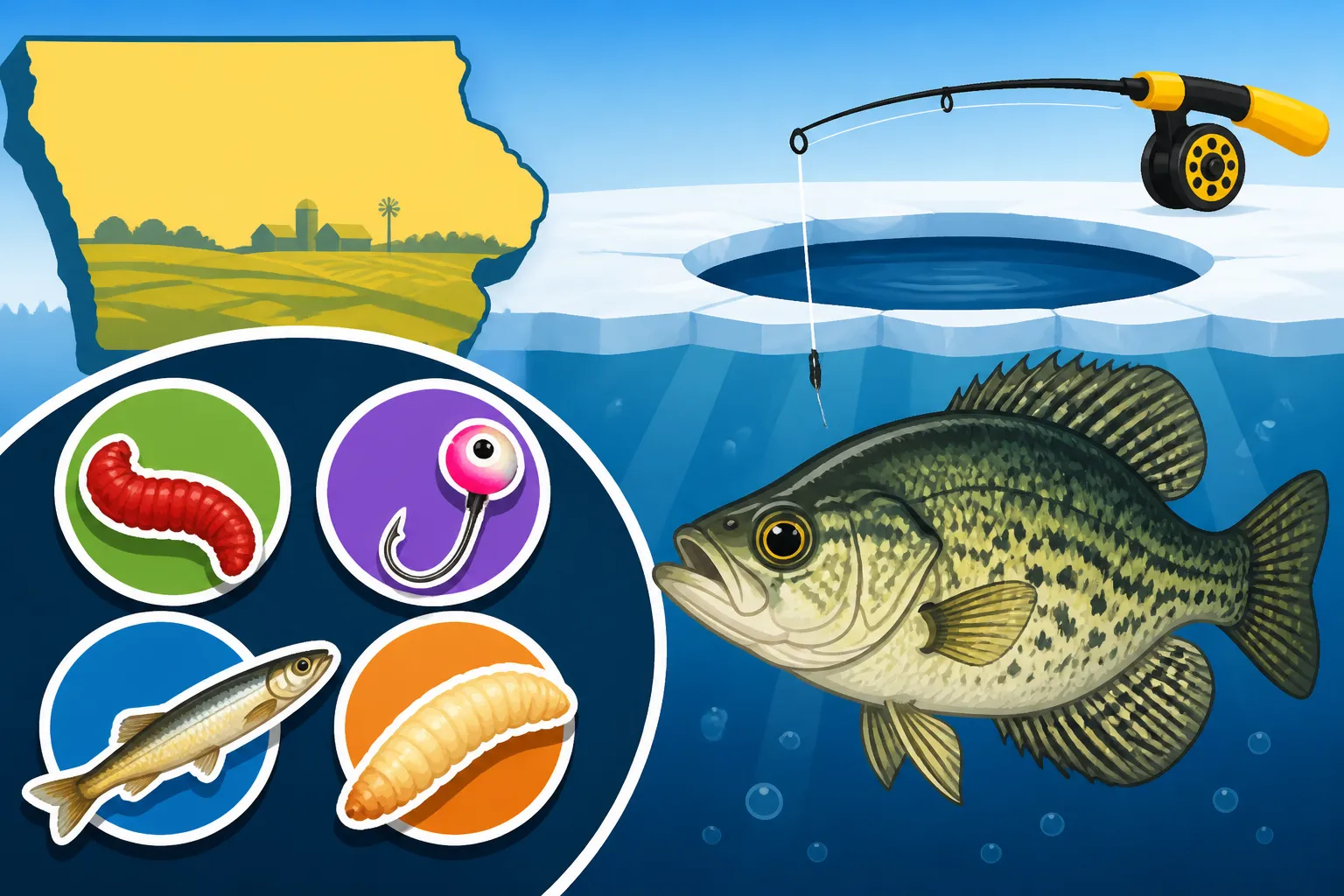
Minnows (Fathead Minnows are Gold)
Fathead minnows are, without a doubt, one of the most consistently effective baits for ice fishing crappie. Their small size perfectly mimics the natural forage crappie are accustomed to, and their subtle, struggling movements are a strong trigger for lethargic fish. When using minnows, proper hooking is key. You can lip-hook them through both lips for a natural horizontal presentation, or lightly dorsal-hook them just behind the fin. The latter allows them to swim more freely and look injured, which can be an excellent attractant. The trick is to keep them lively! A good bait bucket with an aerator is essential, especially on colder days. Just a slight twitch of your rod tip every now and then is usually enough to impart some motion without spooking the fish. If you're targeting crappie on Iowa's many excellent hardwater fisheries, keeping a few dozen fatheads handy is a smart move. -
Waxworms/Maggots (The Tiny Temptation)
For those days when crappie are exceptionally timid, or for targeting smaller panfish that often school with crappie, waxworms or maggots can be incredibly effective. These tiny larvae are packed with protein and offer a small, easy meal. They are fantastic when tipped onto a small jig or spoon, adding a bit of natural scent and wriggle. Their smaller profile means they present a less intimidating target for finicky fish. While minnows are often best when crappie are biting fairly well, waxworms or maggots can turn a truly slow day into a productive one. They’re also fairly easy to keep alive for extended periods and can be readily found at bait shops or through online retailers like Amazon.
Artificial Baits: Tiny and Tempting
Artificials offer versatility, often come in vibrant colors, and don’t require the same delicate care as live bait. When presented correctly, they can be just as deadly.
-
Jigs (Tungsten vs. Lead)
Jigs are the workhorse of ice fishing, and for crappie, smaller is usually better. You'll typically be looking at 1/32 to 1/16 ounce, or even smaller, like 1/64 ounce, especially for very light bites. The big debate in the ice fishing world often comes down to tungsten versus lead. Tungsten jigs are denser, meaning they are smaller in profile for the same weight compared to lead. This allows them to sink faster and gives you a better feel for light bites, which is paramount when crappie are barely mouthing the bait. Lead jigs are the traditional, more affordable option, and still perfectly effective. Colors are critical: glow-in-the-dark, chartreuse, pink, white, and black are perennial favorites. Experiment with different shapes too – tear drop, horizontal, and vertical jigs all have their moments. Don't forget to tip them with a small piece of plastic or a waxworm for added appeal. Many anglers find the "Iowa Fishing Techniques Guide" helpful for mastering these presentations. -
Small Spoons (Flash and Vibration)
Sometimes, a little flash and vibration are exactly what's needed to call in crappie from a distance. Small spoons, typically 1/16 to 1/8 ounce, create a fluttering action on the drop and a subtle wobble when jigged gently. They act as a beacon, drawing attention to your hole. Spoons often work best when you mark a school of crappie below but they aren't actively coming to your tiny jigs. The flash can ignite their curiosity. Again, glow patterns, silver, gold, and vibrant colors like firetiger are excellent choices. A subtle lift and fall, followed by a pause, is often the most effective retrieve. Consider adding a small minnow head or a waxworm to the treble hook for an extra enticement. -
Soft Plastics (Subtle Action, Scented Options)
Micro-sized soft plastics have revolutionized crappie ice fishing. Think tiny tubes, micro-grubs, small minnow imitations, or finesse plastics designed for panfish. These baits, when paired with a small jig head, offer incredibly lifelike action with minimal rod movement. The subtle tail flick or body quiver can be incredibly tempting to a sluggish crappie. Many soft plastics also come pre-scented or can be enhanced with an attractant, adding another layer of appeal. Brands like Berkley Gulp! offer excellent scented options that can make a difference. Matching your plastic color to the water clarity and light conditions is key: brighter colors for stained water or low light, and more natural tones for clear water.
Here’s a quick comparison to help you decide:
| Bait Type | Advantages | Disadvantages | Best Use Case |
|---|---|---|---|
| Live Minnows | Natural scent and movement; highly effective for finicky fish. | Require careful handling; can die easily; more expensive. | Finicky crappie, slow bite, when natural appeal is paramount. |
| Waxworms/Maggots | Small, natural scent; good for timid fish; easy to store. | Very small profile; might not attract larger fish from far. | Very slow bite, pairing with jigs, multi-species panfishing. |
| Tungsten Jigs | Sinks fast, small profile, excellent feel for bites. | More expensive than lead; can be harder to find. | Deep water, light bites, vertical presentation, ultimate sensitivity. |
| Lead Jigs | Affordable, widely available, effective. | Larger profile for same weight; less sensitive. | General crappie fishing, shallower water, active fish. |
| Small Spoons | Flash and vibration attract fish from distance. | Can be too aggressive for very finicky fish. | Actively searching fish, good visibility, curious crappie. |
| Soft Plastics | Versatile shapes/colors; lifelike action; scented options. | No natural scent initially; requires subtle technique. | Diverse conditions, when fish are moderately active, tipping jigs. |
Essential Techniques for Presenting Crappie Baits
Having the right bait is just one piece of the puzzle. How you present it under the ice can be the difference between a productive day and a frustrating one.
The Art of the Subtle Presentation
When ice fishing for crappie, less is often more. Forget aggressive jigging; crappie in cold water simply don't have the energy or inclination to chase down fast-moving baits. Instead, focus on subtle movements. A slow, gentle lift of a few inches, followed by an equally slow drop, is often all it takes. Let the bait fall on a semi-slack line to give it a natural flutter. Then, pause. And pause some more. Crappie will often strike on the pause, barely mouthing the bait, so a keen eye on your line or rod tip is essential.
Sometimes, the best technique is "dead sticking" – simply holding your rod absolutely still, letting a live minnow or a scented plastic sit motionless. The natural drift or minuscule movement from your minnow might be enough to entice a strike. Many anglers find success by using two rods (where legal, always check the current Iowa Fishing Regulations Explained): one actively jigged, and another dead-sticked in a nearby hole. You might be surprised which one gets the most action.
Understanding Depth and Sonar Readings
Modern electronics are an absolute game-changer for ice fishing, especially for suspended crappie. A good flasher or fish finder allows you to see your bait and the fish in real-time. This isn't just about finding fish; it's about understanding their behavior. Are they suspended 5 feet off the bottom, or tight to structure? Are they rising to your bait or ignoring it?
If you see a crappie on your screen that's below your bait, slowly drop your presentation to their level, or even slightly below it, then slowly bring it up. Crappie often prefer to hit a bait that's rising, mimicking a dying insect or minnow floating upwards. If they approach your bait and then shy away, try changing colors, reducing your jigging motion, or even swapping to a smaller bait. Learning to interpret these visual cues from your fish finder is a skill that comes with practice, but it's invaluable for consistently catching crappie through the ice. It’s a core component of effective "Ice Fishing in Iowa."
Gear Considerations for Maximizing Your Crappie Success
Beyond the bait itself, your overall gear setup plays a huge role in detecting those incredibly subtle crappie bites and successfully landing fish in the cold.
Rods, Reels, and Line: The Right Setup
For crappie ice fishing, finesse is the name of the game, and your rod, reel, and line need to reflect that. You'll want an ultralight or light action ice fishing rod, typically 24 to 30 inches long. These rods have incredibly sensitive tips that telegraph even the slightest nudge from a crappie, which often feels more like extra weight on the line than a distinct tug. A small, lightweight spinning reel (500 or 1000 size) will balance perfectly with these rods.
When it comes to line, go light. Two to four-pound test monofilament or fluorocarbon is ideal. Monofilament has a bit of stretch, which can be forgiving, while fluorocarbon is virtually invisible underwater and has less stretch for improved sensitivity. Many anglers find "Best Ice Fishing Rod Length" guides useful for making the right choice. Trying to use heavy line or a stiff rod will make detecting those light bites nearly impossible, leading to a lot of missed opportunities and added frustration. You can find a wide selection of these specialized items on Amazon, often bundled as a beginner-friendly combo.
Importance of Electronics and Hole Management
We briefly touched on electronics, but their importance for ice fishing crappie cannot be overstated. A quality flasher or fish finder, like those discussed in a general "Iowa Fishing Gear Guide," gives you an undeniable edge. It allows you to quickly locate schools of fish, determine their depth, and monitor their reaction to your bait. Without one, you're essentially fishing blind, hoping a crappie swims by your bait.
Another crucial aspect is active hole management. Don't be afraid to drill multiple holes and move until you find active fish. Crappie can move throughout the day, and what was a hotspot in the morning might be dead by afternoon. A good ice auger – whether it's a hand auger, a gas auger, or a quiet electric model – is essential for this mobility. Once you find a productive area, setting up a portable ice shelter can provide much-needed warmth and comfort, allowing you to focus on fishing. Many anglers consult Best Ice Shelter for Iowa Winters articles to choose the right model. Remember to always prioritize safety when drilling holes and moving across the ice, checking the Best Ice Thickness for Safe Ice Fishing regularly. And don't forget to keep an eye on the Crappie Daily Limit in Iowa to stay within legal regulations!
Disclaimer
Fishing conditions and regulations in Iowa can change. Always consult the latest Iowa Department of Natural Resources (DNR) fishing regulations booklet or their official website before heading out on the water. This guide is for informational purposes only and should not replace official regulations.