Spring Walleye Run Techniques in Iowa
Few things get an Iowa angler's heart pumping quite like the thought of the spring walleye run. After a long, cold winter, the promise of aggressive walleye moving into shallower, current-heavy areas to spawn is an absolute thrill. However, it can also be incredibly frustrating when you know they're there, but you just can't seem to tempt them into biting. This comprehensive guide will walk you through the precise techniques, prime locations, and essential gear you need to turn those spring walleye frustrations into triumphant catches across Iowa's diverse waters.
Understanding the Spring Walleye Run in Iowa
The spring walleye run is a magical, albeit brief, window of opportunity that draws anglers out in droves. It's a fundamental biological event that dictates where and how you'll find these elusive fish. Knowing the "why" behind their movements is just as crucial as knowing the "how" to catch them.
When the Walleye Run Kicks Off
The timing of Iowa's spring walleye run isn't set in stone; it's a dynamic dance with Mother Nature, primarily dictated by water temperature and flow. Generally, you can expect things to start getting interesting when water temperatures climb into the high 30s and low 40s Fahrenheit. This usually happens from late March through April, sometimes stretching into early May if the spring is particularly cold and drawn out.
Picture this: ice has just receded from the major lakes and rivers, and the sun is finally warming the banks. That subtle shift is what triggers the walleye. They've been holed up in deeper, stable waters all winter, conserving energy. Now, with the increasing daylight and gradually warming water, their biological clock screams "spawn!" They begin their migration from deep wintering grounds to shallower spawning areas. This pre-spawn period is often when the bite is most aggressive, as fish are packing on calories for the arduous spawning process. Then, during the actual spawn, the bite can sometimes slow down considerably, especially for the males who are more actively engaged in guarding nests. After the spawn, as water temperatures rise into the mid-40s and 50s, the post-spawn bite picks up again, with hungry fish recovering from their exertions. Keep an eye on local Iowa Department of Natural Resources (DNR) reports and fishing forums for real-time updates on water temperatures and fish activity in your target areas.
Why Walleye Move During Spring
The primary driver for the spring walleye run is reproduction. Walleye are broadcast spawners, meaning they release their eggs and milt over rocky or gravelly substrates, often in flowing water. This is why rivers, river mouths, and rocky shorelines in lakes are prime locations. The moving water provides oxygen for the eggs and helps keep them clean, while the rough bottom provides nooks and crannies for the eggs to settle and adhere.
Think about it from a walleye's perspective. After enduring winter, their bodies are primed for this annual ritual. Males typically arrive at the spawning grounds first, scouting out the best spots. They're often smaller, more numerous, and more aggressive in this initial phase. Females, larger and full of eggs, arrive a bit later, typically when water temperatures are just right. They'll drop their eggs, and once their mission is complete, they often retreat to deeper, less turbulent waters to recover, sometimes becoming less active for a short period. Understanding this gender-specific behavior can help you predict what kind of fish you're likely to encounter at different stages of the run. Focusing on the areas where both sexes converge, or where males are aggressively staging, will often yield the best results.
Prime Locations for Iowa's Spring Walleye
Iowa offers a fantastic variety of waters for walleye fishing, each presenting unique challenges and opportunities during the spring run. Knowing where to focus your efforts is paramount to success.
River Hotspots
Rivers are undeniably the stars of Iowa's spring walleye run. The current acts as a natural magnet, drawing fish upstream to suitable spawning grounds. The Mississippi River is a phenomenal example, with its numerous wing dams, dam outflows, and rocky stretches providing ideal conditions. Pools 9, 10, and 12, particularly around the locks and dams near places like Dubuque and Bellevue, are renowned for their spring walleye action. Fish congregate in these areas because the current flow is perfect for spawning, and the turbulent water oxygenates the eggs.
Beyond the Mississippi, don't overlook interior rivers like the Des Moines River, Cedar River, and Iowa River. While they might not have the same massive walleye populations as the Mississippi, they still offer excellent, often less crowded, opportunities. Look for deeper holes adjacent to current seams, riffles, and rocky bottom areas. Bridges, dams, and creek mouths where tributaries feed into the main river system are also high-percentage spots. These areas often create current breaks and funnel warm water or baitfish, making them attractive to staging walleye. When fishing rivers, always pay attention to areas where the main current meets slower water, creating eddies. Walleye will often hold in these slack water pockets, waiting to ambush baitfish being swept by the current. You can learn more about specific river dynamics in our guide on Walleye Fishing Techniques for Iowa Rivers.
Lake Entry Points and Shorelines
While rivers often get the most attention for the spring run, Iowa's larger lakes can also produce incredible walleye action, especially around their inflowing tributaries, rocky points, and rip-rapped shorelines. Lakes like Clear Lake, West Okoboji Lake, and Spirit Lake in the Iowa Great Lakes region are prime examples.
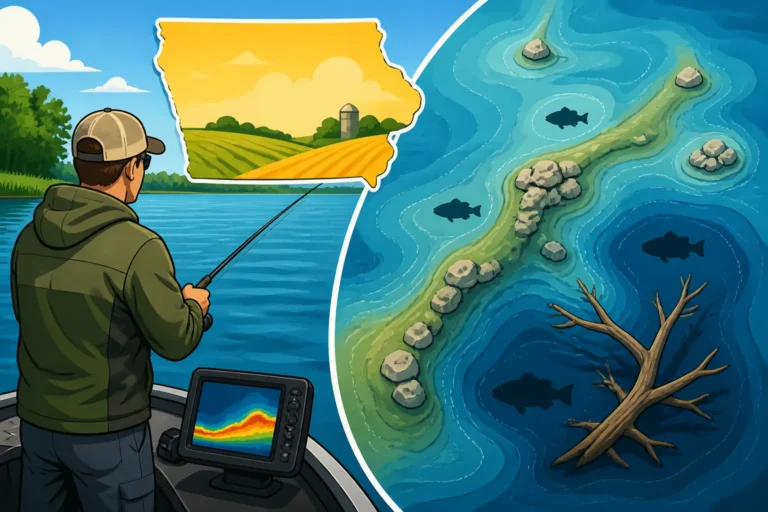
On these lakes, walleye will move towards the shallow, rocky or gravelly areas for spawning. Focus your efforts on the northern shores, as these areas often warm up first under the spring sun. Look for areas where feeder creeks enter the lake, as these bring in warmer water and potential food sources. Rip-rap shorelines, which are essentially banks reinforced with rock, are also fantastic. These rocks absorb heat from the sun and provide excellent spawning substrate and ambush points. Public boat ramps and fishing piers can also be productive, not just for access but because their associated rock work and deeper channels often attract fish. The key is to find those transitions from deeper water to shallow, current-swept (or wave-swept) areas with hard bottom. A good depth finder can be invaluable for identifying these subtle transitions.
Essential Gear and Tackle for the Spring Run
Having the right tools for the job can make all the difference, especially when targeting finicky spring walleye. You don't need to break the bank, but investing in reliable gear tailored for walleye fishing will definitely boost your success rate.
Rod and Reel Choices
For spring walleye, versatility is key. You'll want a rod that offers a good balance of sensitivity for detecting subtle bites and backbone for setting the hook and fighting a strong fish in current. A medium-light to medium power spinning rod, typically 6'6" to 7'6" in length, is often ideal. The longer rods provide better casting distance and line control, which is crucial when fishing from shore or covering larger areas. Look for a fast action tip, which means the rod bends mostly in the top third, allowing for quick hook sets.
Pair your rod with a quality spinning reel in the 2000-3000 series size. These reels offer a smooth drag system and enough line capacity for most walleye encounters. A smooth retrieve is important for working jigs and baits effectively. As for line, many anglers prefer a low-stretch braided line (like 10-15 lb test) for its sensitivity, especially in current. However, always tie on a fluorocarbon leader (6-10 lb test, 2-4 feet long) to make your presentation invisible to wary walleye and provide some abrasion resistance against rocks and zebra mussels. If you prefer monofilament, a high-quality 8-10 lb test monofilament can also work well, offering good knot strength and shock absorption. For more specific advice on selecting the right setup, check out our guide on Fishing Rod and Reel Guide for Iowa Anglers.
Essential Baits and Lures
This is where the real fun begins! Spring walleye can be incredibly picky, so having a variety of baits and lures in your tackle box is a smart move. Jigs are, without a doubt, the king of spring walleye presentations. Quarter to half-ounce jigs, dressed with soft plastics like Berkley Gulp! Minnows or paddle tails, are incredibly effective. Colors like chartreuse, white, pink, and glow-in-the-dark are perennial favorites, especially in stained or muddy water. Tipping your jig with a live minnow (like a shiner or fathead) can often be the secret sauce when the bite is tough. You can find a wide selection of these precision jigs and soft plastics on Amazon, making it easy to stock up.
Table: Popular Spring Walleye Lures and Their Best Use
| Lure Type | Best Use Case | Preferred Action/Color | Notes |
|---|---|---|---|
| Jigs | Rivers, current, deeper holes, rocky bottoms | 1/4 – 1/2 oz, chartreuse, white, pink, glow | Tip with live minnow for best results |
| Crankbaits | Trolling, casting shallow flats, stained water | Shad, perch, firetiger patterns | Diving lip depth is crucial for target zone |
| Blade Baits | Vertical jigging, current breaks, deep staging areas | Silver, gold, chrome, natural baitfish | High vibration, great for active fish |
| Stickbaits | Casting shallow areas, slow retrieve, twitching | Natural baitfish, silver, gold | Effective in low light or clear water |
| Live Bait Rigs | Slow current, dead sticking, picky fish | Minnows, nightcrawlers (often on Lindy Rigs) | Essential for tougher bites, fish slowly |
Beyond jigs, shallow-running crankbaits and stickbaits are excellent for casting to shorelines or trolling open water in lakes and river backwaters. Look for lures that mimic baitfish found in Iowa waters, such as shad or perch patterns. Blade baits (like a Heddon Sonar or Rapala Rippin' Rap) are also fantastic for vertical jigging in deeper holes or near dam structures, creating a lot of vibration that can call in walleye from a distance. Don't forget live bait! Minnows fished on a simple hook and split shot rig, or suspended under a bobber, are often irresistible to hungry walleye, especially during the pre-spawn and post-spawn periods.
Proven Techniques for Spring Walleye Success
Catching walleye during the spring run often requires a combination of finesse and understanding fish behavior. They might be aggressive, but they can also be incredibly sensitive to presentation.
Jigging the Depths and Current Seams
Jigging is arguably the most effective technique for spring walleye, especially in rivers. The key is to get your jig down to where the fish are holding and impart a subtle, lifelike action. When fishing current, position your boat or yourself (if shore fishing) upstream from your target area and cast your jig slightly upstream, letting it drift naturally downstream with the current. This is often called "vertical jigging" or "controlled drift."
The trick is to maintain contact with the bottom. Let your jig hit bottom, then lift it just a few inches off, allowing it to drift a few feet, then let it touch bottom again. Most bites will occur as the jig falls or just after it hits the bottom. This isn't about aggressive snapping; think more of a gentle "lift and drop." Experiment with different weights until you can feel the bottom consistently without getting constantly hung up. On the Mississippi River, fishing below wing dams and in deep holes near eddies are prime locations for this technique. Remember, walleye in current often face upstream, so presenting your bait from upstream and letting it drift naturally into their strike zone is critical.
Slow Trolling Tactics
While jigging often dominates the conversation, slow trolling can be incredibly effective, particularly in larger river sections or on the big lakes like Rathbun Lake or Coralville Reservoir. This technique allows you to cover a lot of water and present your lure at a consistent depth, which is vital when fish are spread out or holding at a specific depth.
Use a trolling motor to move slowly, typically between 0.8 and 1.5 miles per hour. Shallow-running crankbaits or stickbaits are excellent choices, especially those with a tight wobbling action. You can also troll spinner rigs tipped with a worm or minnow, often behind a bottom bouncer to keep them in the strike zone. Pay close attention to your electronics, looking for schools of baitfish or subtle depth changes and structure where walleye might be holding. If you mark fish at a certain depth, select lures that run at that same depth. Experiment with different speeds and turns; sometimes a slight change in direction or a brief pause can trigger a strike. Trolling along transition areas, like where a flat drops off into a deeper channel, can be incredibly productive. Our guide on Trolling for Crappie in Iowa shares some similar principles that can be adapted for walleye.
Casting Shorelines and Structure
Don't underestimate the power of casting! Many big walleye are caught by anglers fan-casting from shore or from a boat to rocky points, rip-rap, and shallow flats. This is particularly effective during low-light conditions (dawn, dusk, or even night fishing) when walleye move shallow to feed.
For casting, use stickbaits, shallow-running crankbaits, or even lipless crankbaits. Cast your lure out and retrieve it slowly, experimenting with pauses and twitches. Sometimes a simple, steady retrieve is all it takes; other times, a "stop-and-go" retrieve that mimics a wounded baitfish is more effective. When casting to structure like downed trees or rocky outcrops, focus your casts to hit every possible angle. These structures provide ambush points for walleye. In early spring, especially after a sunny day, south-facing rock walls will absorb heat and can hold surprisingly active fish. If you're targeting areas with weeds, use weedless jigs or soft plastics to avoid constant snags. Many successful anglers swear by casting to the dark side of bridges or along rip-rap at night, as walleye's superior low-light vision gives them an advantage.
Adapting to Conditions: Weather and Water
Spring weather in Iowa can be notoriously unpredictable, and water conditions can change rapidly. Being able to adapt your approach to these variables is crucial for consistent success.
Cold Water Challenges
Early spring walleye fishing often means dealing with cold water, sometimes just barely above freezing. This significantly impacts walleye behavior and metabolism. In colder water, fish are generally less active and their digestion is slower. This means they're less likely to chase a fast-moving bait.
Your presentation needs to be slow, subtle, and right in front of their faces. Think about it: a walleye doesn't want to expend a lot of energy if the reward isn't immediate. This is where jigs tipped with live bait (minnows or even a piece of nightcrawler) really shine. Keep your jigging motions minimal, letting the current do most of the work. For crankbaits, choose lures with a tight wobble rather than a wide, aggressive one, and retrieve them slowly. If you're trolling, dial back your speed considerably. Pay attention to water temperature; even a slight increase of a degree or two can make a big difference, so target areas that might warm up faster, like shallow, dark-bottomed bays or river stretches with incoming warmer water from smaller tributaries. Dressing warmly is also key for the angler; invest in good layers and waterproof outer gear to stay comfortable during those chilly spring days on the water.
Dealing with Turbidity and High Water
Spring rains and snowmelt can quickly turn Iowa's rivers and lakes into a muddy mess. High, turbid water can be intimidating, but it doesn't mean the fishing is over. In fact, it can sometimes concentrate walleye. Walleye have excellent low-light vision, so they can still hunt effectively in murky conditions.
When the water is stained or muddy, visibility is low for both you and the fish. This is when noise, vibration, and scent become your best friends. Switch to louder lures like lipless crankbaits or blade baits that put out a lot of vibration. Bright, contrasting colors like chartreuse, orange, and firetiger become more effective because they stand out in the murky water. Some anglers even add scent attractants to their jigs and soft plastics to give fish an additional reason to bite. When the water is high, fish often move out of the main current and into slack water areas, like eddies behind obstructions, flooded timber, or feeder creek mouths. These areas provide refuge from the strong current and often concentrate baitfish. Don't be afraid to experiment with slightly heavier jigs to ensure your bait stays in the strike zone despite increased current. It's also a good idea to check out the Iowa Fishing Season Dates and Limits to ensure you're fishing within legal parameters during these variable conditions.
Safety and Regulations During the Run
Safety should always be your top priority, especially when fishing in cold, fast-moving water. Additionally, knowing and adhering to Iowa's fishing regulations is non-negotiable.
Cold Water Precautions
Spring walleye fishing means cold water, and cold water is dangerous. Even on a relatively warm spring day, the water temperature might still be in the 30s or 40s Fahrenheit. Accidental immersion in water this cold can lead to hypothermia rapidly. Always wear a U.S. Coast Guard-approved life jacket, even if you're a strong swimmer. Modern inflatable life vests are comfortable and don't impede casting.
If you're fishing from a boat, make sure all your safety equipment is onboard and easily accessible, including a throwable flotation device, whistle or horn, and navigation lights if you're out in low light. Let someone know where you're going and when you expect to return. Consider fishing with a buddy, especially on larger rivers or lakes. Even if you're shore fishing, be aware of slick banks and swift currents, and avoid wading in areas with strong flow or unknown bottom conditions. A good pair of studded wading boots can provide much-needed traction on slippery banks. Remember, a fish isn't worth risking your life.
Understanding Iowa Fishing Regulations
Iowa has specific rules and regulations designed to manage its walleye population and ensure sustainable fishing for future generations. These regulations can vary by body of water, so it's absolutely crucial to check the current Iowa Fishing Regulations booklet or the DNR website before you head out. Key regulations to pay attention to include:
- License Requirements: Almost everyone needs an Iowa Fishing License Guide to fish in Iowa. There are different licenses for residents and non-residents, and various durations available. Kids under a certain age are usually exempt, but always verify.
- Season Dates: While walleye are often open year-round, there might be specific closed seasons or restrictions on certain lakes or river segments, particularly during or immediately after the spawn. Make sure you know the Iowa Walleye Season Opening Day and closing dates for your chosen location.
- Daily Bag Limits: This refers to the maximum number of walleye you can keep in a single day.
- Possession Limits: This is the total number of fish you can have in your possession, including those at home.
- Size Limits: Many waters have a minimum length limit for walleye, and sometimes slot limits (e.g., you can keep fish under X inches or over Y inches, but not in between). Measure your fish carefully.
Ignorance of the law is not an excuse, and penalties for violations can be steep, ranging from fines to loss of fishing privileges. Make it a habit to review the regulations annually, as they can change.
Disclaimer
Please note: Fishing conditions, regulations, and fish behavior can change rapidly. Always consult the latest Iowa Department of Natural Resources (DNR) regulations before fishing. This guide is for informational purposes only and does not constitute legal advice or guarantee fishing success.