Best All-Around Rod for Iowa Anglers
Oh, the quest for that mythical "one rod to rule them all," isn't it? As an Iowa angler, you know the struggle is real. One day you're delicate jigging for crappie on a calm lake, the next you're casting heavy baits into a swift river for a monster catfish, or perhaps chasing bass in a farm pond. It feels like you need a whole arsenal of rods just to keep up! But what if you're just starting out, or you only have space (and budget!) for a single, reliable workhorse? This guide is here to help you navigate the confusing world of fishing rods to pinpoint the best all-around option that will truly serve you well across Iowa's wonderfully diverse fisheries.
Understanding the "All-Around" Rod for Iowa Waters
Let's face it, Iowa isn't just one type of water. We've got the vast expanse of the Mississippi River, the deep, clear Iowa Great Lakes, countless smaller ponds and reservoirs, and those beloved trout streams tucked away in the northeast. Each of these environments, and the fish that inhabit them, can demand different things from your fishing gear. This is why the idea of an "all-around" rod feels like trying to find a unicorn – but it's not impossible! It's about finding the best compromise, a jack-of-all-trades that excels in many situations, even if it's not perfect for every single one.
The Iowa Angler's Dilemma: Diverse Fisheries
Think about a typical year of fishing in Iowa. In spring, you might be out on Rathbun Lake chasing crappie as they move into the shallows, requiring a lighter touch and a sensitive rod. A few weeks later, you could be on the Des Moines River, trying to haul in a big channel cat, which demands a rod with serious backbone. Then there's the summer bass fishing in a local farm pond, where accuracy and the ability to punch through weeds are key. And don't forget the dedicated trout streams, where finesse and light line are the name of the game.
Trying to buy a specialized rod for each of these scenarios can quickly become expensive and impractical. Many of us just don't have the space in our garage or vehicle for a dozen different setups. The frustration of feeling under-gunned for one species or over-gunned for another is a common experience, and that's precisely why a truly versatile rod is such a prized possession for many Iowa anglers. Our goal is to find that one rod that you can grab for almost any outing and feel confident.
Key Rod Characteristics for Versatility
When we talk about a rod's characteristics, we're mainly looking at two things: power and action. Understanding these is fundamental to choosing a rod that can handle multiple species and techniques effectively.
- Rod Power refers to the rod's lifting strength or how much pressure it takes to bend the rod. It's often labeled as ultra-light, light, medium-light, medium, medium-heavy, heavy, and ultra-heavy. A lighter power rod bends easily and is great for smaller fish and light lures, while a heavy power rod requires more force to bend and is suitable for large fish and heavy baits.
- Rod Action describes where the rod bends when pressure is applied.
- Fast Action: The rod bends mostly in the top third or less. This provides excellent sensitivity and quick hook sets, ideal for single-hook lures and detecting subtle bites.
- Moderate-Fast Action: The rod bends in the top half. This offers a good balance of sensitivity and forgiveness, allowing for better casting distance and working treble-hook lures.
- Moderate (or Slow) Action: The rod bends throughout its entire length. This provides maximum casting distance, excellent shock absorption for fighting strong fish, and is often preferred for treble hook baits where a slower hook set is beneficial.
For an "all-around" rod in Iowa, we're looking for that sweet spot that isn't too flimsy for a decent walleye, but also isn't so stiff you can't feel a bluegill nibble.
Breaking Down Rod Components for Versatility
Let's get into the nitty-gritty of what makes a rod adaptable. When you're standing in Bass Pro Shops or scrolling through options on Amazon, these are the specs you'll want to pay close attention to.
Rod Power: Matching it to Iowa's Fish
The power of your rod dictates what size fish you can comfortably fight and what weight of lure you can effectively cast.
- Light Power: Think panfish like bluegill and crappie, or stream trout. If you're primarily after these smaller species, a light power rod lets you feel every twitch and makes the fight incredibly fun. However, it would be severely underpowered for a decent catfish or a larger bass.
- Medium-Light Power: This is a step up, good for slightly larger crappie, small to medium-sized bass, or larger stocked trout. It offers a bit more backbone while still being sensitive.
- Medium Power: Ah, the workhorse! This is where our "all-around" rod truly starts to shine. A medium power rod can handle a surprising range of Iowa's most popular species. It's got enough muscle for most bass, walleye, and even smaller channel catfish, while still offering enough sensitivity for crappie or larger panfish if you're using slightly heavier tackle. It can cast a decent range of lure weights, from small jigs to medium-sized crankbaits.
- Medium-Heavy Power: Now we're talking about more serious fish. This power is excellent for larger bass, northern pike, big walleye, and substantial catfish. While powerful, it might feel a bit clunky and less sensitive for tiny panfish lures.
For the ideal all-around rod, you're going to want to focus on that Medium Power range. It's the ultimate compromise, providing enough backbone for those surprise bigger fish without completely sacrificing the fun of catching smaller ones.
Rod Action: Speed and Sensitivity
Action is crucial for how you fish. It affects your casting distance, how well you can detect bites, and how you set the hook.
- Fast Action: This rod bends primarily at the tip. It's incredibly sensitive, letting you feel even the most subtle bites, which is fantastic for jig fishing where detection is key. The stiff backbone behind the tip also allows for powerful, quick hook sets, which is vital when you're targeting fish like walleye or bass that might hold a lure for only a split second. The downside? It might not cast the lightest lures as far, and it can be less forgiving if a fish makes a sudden run, potentially pulling the hook on a softer-mouthed fish.
- Moderate-Fast Action: This is a fantastic middle-ground. The rod bends from the middle to the tip, offering a good blend of sensitivity and casting performance. It's forgiving enough to allow a fish to fully engulf a lure before setting the hook, and it provides a smoother cast for better distance, especially with reaction baits like crankbaits. This action also absorbs some of the shock of a hard-fighting fish, reducing the chances of a pulled hook.
- Moderate Action: Bends evenly throughout the rod. Great for casting light lures a long distance and for using treble hook baits, as the softer action allows fish to engulf the lure without immediately pulling it away. It's very forgiving but often lacks the sensitivity for feeling subtle bites.
For an all-around Iowa rod, a Fast Action or Moderate-Fast Action is generally preferred. The sensitivity of a fast action rod will serve you well across many species, from feeling a walleye "thump" a jig to detecting a panfish's light bite. Iowa Fishing Techniques Guide is packed with situations where knowing your rod's action really pays off.
Rod Length: Finding the Sweet Spot
Rod length impacts casting distance, accuracy, and how well you can manage a fish once it's on the line.
- Shorter Rods (Under 6 feet): Great for accuracy in tight spaces, like fishing small creeks or heavily treed areas. Less casting distance.
- Medium Length Rods (6 to 7 feet): This is the sweet spot for versatility. A 6'6" to 7' rod offers a good balance of casting distance for covering water and enough accuracy for placing lures near structure. They're also manageable for fighting fish from a boat or from the bank.
- Longer Rods (Over 7 feet): Excellent for maximum casting distance and for managing long casts, often favored for trolling or specific presentations on large lakes or rivers. Can be unwieldy in tight quarters.
For our all-around champion, a rod in the 6'6" to 7' range will give you the best versatility across Iowa's varied fishing environments. It's short enough to handle from a kayak or small boat, but long enough to get some distance when casting from shore.
Reel Type: Spinning vs. Baitcasting
While the rod is the focus, the reel you pair it with drastically affects its versatility.
- Spinning Reels: These are by far the most beginner-friendly and, crucially, the most versatile for an all-around setup. They handle a wide range of line weights and lure sizes with ease, making them ideal for everything from micro-jigs for crappie to larger soft plastics for bass. They're forgiving with casting and generally suffer less from frustrating backlashes. For information on what fish you can target, check out Iowa Fish Species Guide.
- Baitcasting Reels: Excellent for heavier lures, thicker lines, and precise casting with heavier baits, often preferred by experienced bass and muskie anglers. However, they can be finicky with lighter lures and are prone to backlashing if not managed properly. While powerful, they are not truly "all-around" in the sense of handling very light presentations.
For a single, do-it-all setup, a spinning reel is the clear winner. Its user-friendliness and adaptability across a wide range of techniques make it the perfect partner for your versatile rod.
The Ideal "All-Around" Rod for Iowa (The Core Answer)
Alright, after breaking down all the components, we can confidently declare the champion for the all-around Iowa angler. Drumroll please…
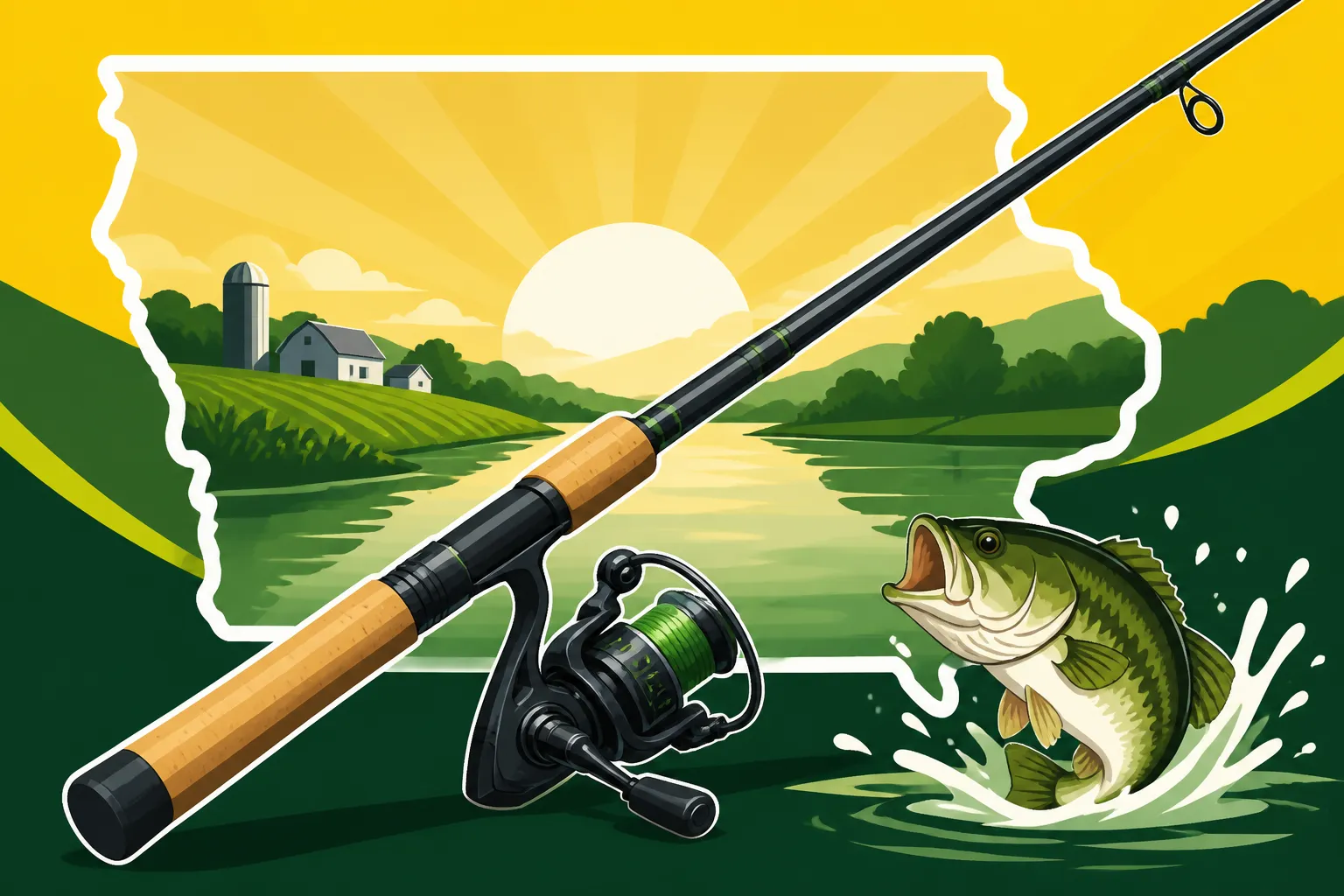
The 7' Medium Power, Fast Action Spinning Rod
This is it, folks. If you're looking for one rod to tackle the majority of your Iowa fishing adventures, a 7-foot, medium power, fast action spinning rod is your absolute best bet. Let me tell you why this combination is a true hero for the diverse challenges we face as Iowa anglers:
- Medium Power: This power rating gives you the strength to handle most of Iowa's common game fish. You can confidently fight a decent walleye or a feisty largemouth bass, and it'll even handle a respectable channel catfish without feeling completely outmatched. Yet, it's not so heavy that you lose all the fun or feel when a spirited crappie or a bigger bluegill bites. It casts a wide range of lure weights, making it suitable for everything from a 1/8 oz jig to a 1/2 oz crankbait. Want to know how to target some of these fish? Check out How to Catch Walleye in Iowa and How to Catch Bass in Iowa.
- Fast Action: The fast action tip provides superb sensitivity. You'll feel those subtle "taps" or the slight weight change that signals a bite, which is critical for many techniques like jigging or working soft plastics. When it's time to set the hook, that fast action gives you immediate power, driving the hook home effectively. It also gives you better control over your lure presentation.
- 7-Foot Length: This length offers an excellent compromise. It gives you good casting distance to cover more water, whether you're fishing from the bank of Saylorville Reservoir or covering a flat on West Okoboji Lake. It's still maneuverable enough that you won't feel like you're wielding a telephone pole if you're fishing from a boat or kayak, or trying to navigate slightly tighter spots.
- Spinning Reel Compatibility: Paired with a spinning reel, this rod becomes an incredibly versatile tool. You can use lighter lines for finesse presentations, heavier lines for stronger fish, and cast small jigs, spinners, or larger crankbaits with ease. This combination simply works for the widest array of scenarios.
This setup is truly capable of doing a little bit of everything. From casting small jigs for panfish on Lake Macbride to slinging medium crankbaits for walleye on the Mississippi, or working a Texas-rigged worm for bass in a farm pond, this rod can handle it. It might not be the absolute best for ultra-light trout fishing (you'd ideally want a light power rod for that) or chasing giant flathead catfish with heavy live bait (where a heavy power rod excels), but for 90% of your general Iowa fishing, this rod will be your steadfast companion.
Suggested Pairings for Maximum Versatility
To make your 7' Medium Power, Fast Action spinning rod truly sing, consider these pairings:
- Reel Size: A 2500 or 3000 size spinning reel is the perfect match. These sizes balance well on a 7-foot rod, offer smooth drag systems, and hold enough line for most Iowa species. For more details, explore Best Reel Size for Walleye Fishing.
- Fishing Line:
- Main Line: Start with 8-10 lb braided line. Braid offers incredible sensitivity, casts far, and is very strong for its diameter.
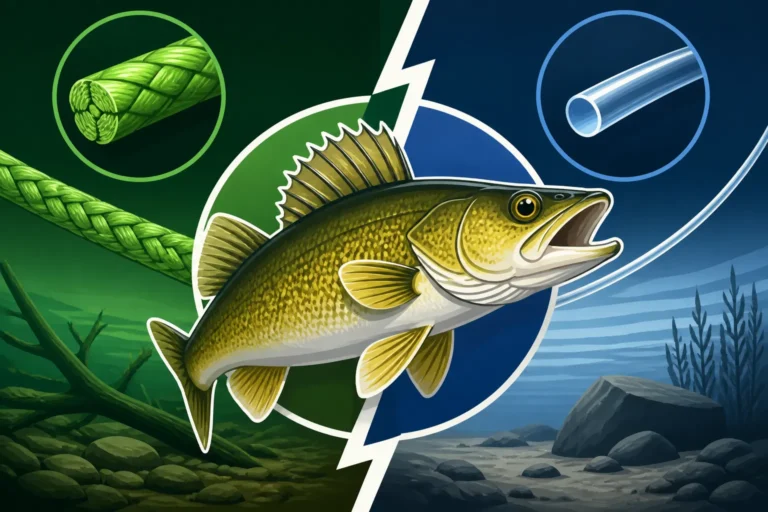
- Leader Material: Tie on a 6-10 lb fluorocarbon leader (3-5 feet long) for invisibility and abrasion resistance. Fluorocarbon sinks, which is great for presenting baits naturally, and provides a little stretch to absorb shock. This setup allows you to fish a wide range of lures and techniques effectively.
- Lures & Baits: With this setup, you can confidently throw everything from small 1/16 oz jigs for crappie (using lighter fluorocarbon leaders) to 1/2 oz spinnerbaits and crankbaits for bass and walleye. Soft plastic presentations like Texas rigs, Ned rigs, and wacky worms will also shine. For starting your tackle box, Best Lures for a Starter Tackle Box is a great read.
Where to Find Your Versatile Workhorse
The good news is that a 7' medium power, fast action spinning rod is one of the most common and popular rod configurations out there. You'll find excellent options across all price points.
- Local Shops & Big Box Retailers: Head into your local tackle shop, or a larger store like Bass Pro Shops. The advantage here is you can physically hold the rod, feel its balance, and talk to knowledgeable staff about specific brands or models. They can often guide you to something that fits your budget and feels right in your hands.
- Online Retailers: Websites like Amazon offer an incredible selection, often with customer reviews that can be super helpful. You'll find a massive range of brands and models, and often competitive pricing. Just be sure to double-check the specs (power, action, length) carefully before ordering.
Whether you're looking for a budget-friendly option to get started or a slightly higher-end rod that will last for years, you'll have plenty of choices for this versatile setup.
| Rod Characteristic | All-Around Iowa Recommendation | Why It Works |
|---|---|---|
| Power | Medium | Handles diverse species (bass, walleye, cat, bigger panfish). |
| Action | Fast or Moderate-Fast | Excellent sensitivity for bites, quick hook sets, good casting. |
| Length | 6'6" – 7' | Balances casting distance with maneuverability in varied spots. |
| Reel Type | Spinning | User-friendly, handles wide range of lines/lures, fewer tangles. |
| Line Weight | 8-10 lb Braid with Fluorocarbon Leader | Strong, sensitive main line with invisible, abrasion-resistant leader. |
Limitations and When to Consider Specialization
While our 7' medium power, fast action spinning rod is a fantastic generalist, it's important to be realistic. There are times when even the best all-around rod will be out of its depth, or simply won't offer the optimal experience.
When One Rod Isn't Enough
The "all-around" rod is a compromise, and some fishing scenarios really do demand specialized tools.
- Trophy Muskie Fishing: If you're serious about chasing those toothy giants, you'll need a much heavier power rod (heavy or extra-heavy), often 8-10 feet long, paired with a stout baitcasting reel and heavy braided line. Our versatile rod simply doesn't have the backbone or the casting weight capacity for the enormous lures used for muskie. Muskie Fishing Techniques for Iowa Waters is a good read for specific guidance on this.
- Heavy Catfishing: Targeting trophy flathead catfish on the Mississippi or Missouri rivers, especially with large live baits or heavy sinkers, requires an even heavier rod. Think heavy power, often 7'6" to 9' rods, designed for brute strength to haul those big cats out of current or cover. While our medium power rod can catch smaller channel cats, it will struggle with the true river monsters. Learn more about How to Catch Catfish in Iowa.
- Ultra-Light Trout Finesse: While our rod can certainly catch stocked trout, for the absolute lightest presentations with tiny flies or micro-jigs on small, clear streams, an ultra-light or light power rod with a slower action and very light line (2-4 lb) provides a much more delicate touch and a more exhilarating fight.
- Crappie Specific Trolling/Jigging: Dedicated crappie anglers might opt for specific crappie rods – often longer, more limber rods for spider rigging or shorter, very sensitive rods for specific jigging techniques. While our all-around rod will catch plenty of crappie, a specialized crappie rod might enhance the experience in specific scenarios. You can explore How to Catch Crappie in Iowa for more crappie insights.
These are just a few examples where a specialized rod might make a significant difference in success or enjoyment. Our recommended all-around rod is built for general use, not for pushing the extreme limits of any single species or technique.
Building Your Arsenal Over Time
The beauty of starting with a great all-around rod is that it gives you a solid foundation. As you gain experience and discover which types of fishing you enjoy most in Iowa, you can gradually start adding more specialized rods to your collection.
Think of it like this: your 7' medium power, fast action spinning rod is your trusty SUV – it can get you almost anywhere comfortably. But eventually, you might want a sports car for speed (e.g., a specific bass jigging rod) or a heavy-duty truck for hauling (e.g., a dedicated catfish rod).
Don't feel pressured to buy everything at once. Start with the versatile workhorse, learn its capabilities, and let your passion for different types of Iowa fishing guide your future gear purchases. You'll appreciate the specialized tools even more once you've truly mastered the fundamentals with your reliable all-around setup. Your fishing journey in Iowa is just beginning, and this rod is the perfect first step.
Disclaimer
This article is for general informational purposes only and does not constitute professional advice. Laws, prices and regulations vary by location and change over time. Consult a qualified professional for guidance on your specific situation.