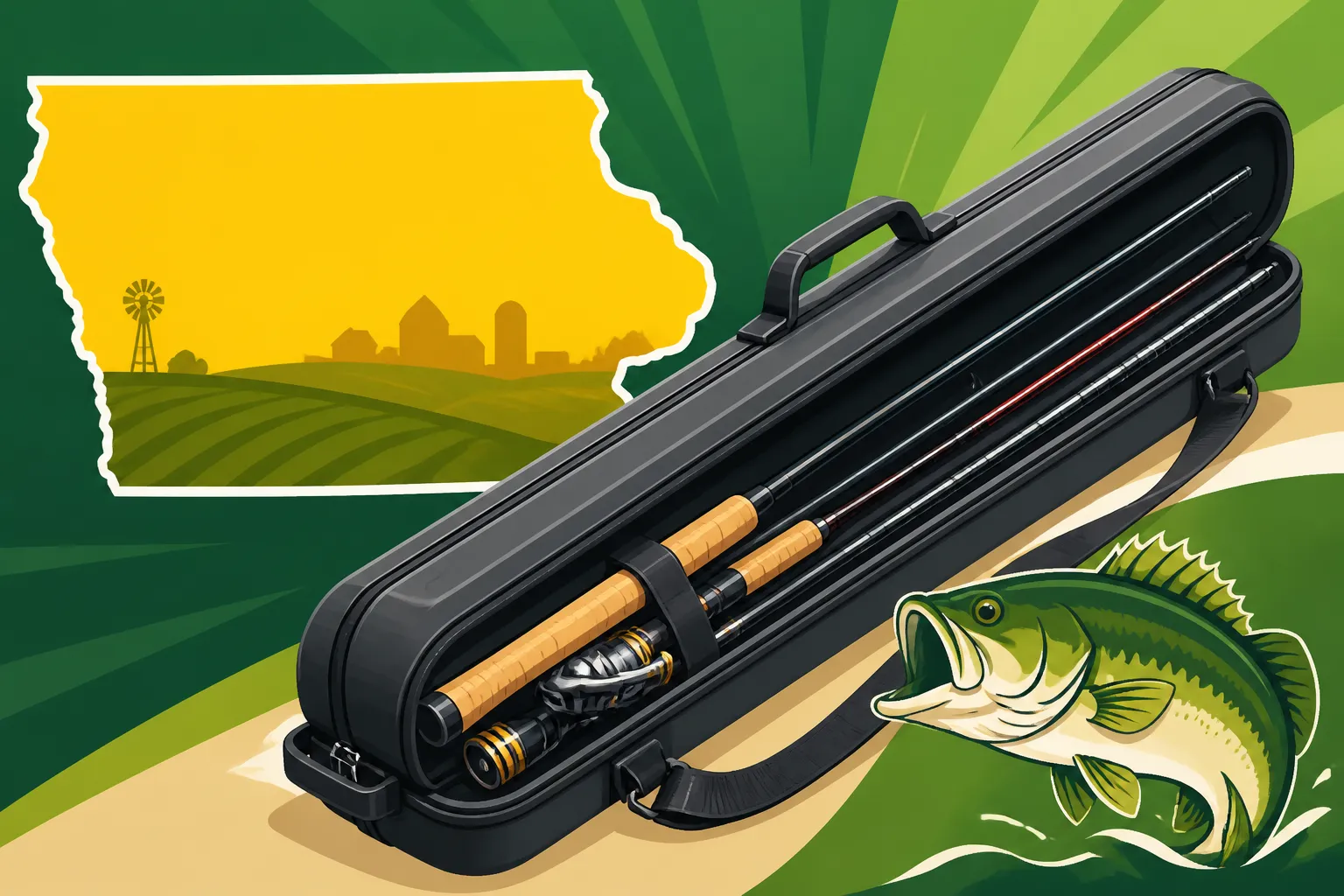
Best Rod Case for Travel
There’s nothing quite like planning a fishing trip, whether it’s a quick weekend jaunt to a local Iowa lake or an ambitious journey across state lines. You meticulously gather your gear, check the weather, and envision that perfect catch. But then comes the moment you realize your prized fishing rods are just… loose. Tossing them in the back of the truck or hoping they survive the baggage carousel can send shivers down any angler’s spine. This guide is here to help you understand why a quality rod case isn't just a luxury, but a necessity for protecting your investment and ensuring your fishing adventures remain stress-free.
Why a Dedicated Rod Case is a Travel Essential for Iowa Anglers
Let's face it, fishing rods are delicate instruments. They're designed for sensitivity, not for being tossed around like a bag of laundry. Whether you're hauling them to The Iowa Great Lakes or heading out for some Trout Fishing Streams in Northeast Iowa, the journey can be tougher on your gear than the actual fishing itself. Without proper protection, you're looking at potential damage that could ruin your trip before you even wet a line.
Protecting Your Investment
Think about the cost of your favorite rods. A good quality rod, especially if it's a specialized bass rod or a sensitive walleye setup, isn't cheap. It's an investment in your hobby, your relaxation, and your success on the water. A bent guide, a cracked blank, or a snapped tip can render a rod useless, and replacing it can be expensive and frustrating. A sturdy rod case acts as a personal bodyguard for your gear, shielding it from impacts, abrasions, and the general chaos of travel. It's peace of mind wrapped around your valuable equipment, ensuring it arrives in the same condition it left your home.
This protection extends beyond just physical damage. Ever had a line get tangled around another rod, or a hook embed itself where it shouldn't? A rod case often provides internal compartments or straps that keep individual rods separate and secure, preventing them from knocking into each other or getting lines crossed. This thoughtful organization is especially helpful if you're carrying multiple rods for different species or techniques, like if you're targeting both Walleye Fishing in Iowa and Channel Catfish Fishing in Iowa on the same trip.
Navigating Airports and Car Trips with Ease
Traveling with fishing rods can be a real headache without a proper case. Imagine trying to weave through a crowded airport terminal with several unwieldy rods, constantly bumping into people or doorways. Or trying to fit them into a fully loaded car without them getting wedged under luggage or stepped on by excited passengers. A well-designed rod case simplifies this immensely.
For car travel, a streamlined case makes it much easier to slide rods into a roof rack, tie them down securely in a truck bed, or even fit them neatly inside a larger vehicle without taking up excessive space or creating a safety hazard. When it comes to air travel, a durable rod case is practically non-negotiable. Airlines have specific requirements for sporting equipment, and a robust, lockable case helps ensure your rods are treated as checked baggage rather than an oversized, easily damaged item. This makes the check-in and retrieval process far smoother, reducing the stress that often comes with flying with specialized gear.
Types of Rod Cases: Finding Your Perfect Match
Just like there are different types of fishing rods for various situations, there are several kinds of rod cases, each with its own advantages. Your choice will largely depend on your travel habits, the level of protection you need, and the number of rods you plan to bring.
Hard Cases: Maximum Protection
Hard rod cases are the titans of protection. Constructed from rigid materials like molded plastic, fiberglass, or aluminum, these cases offer the highest level of defense against impacts, crushing, and punctures. They often feature dense foam padding inside that can be customized to snuggly fit each rod, preventing movement during transit. Many hard cases are also waterproof or highly water-resistant, adding another layer of security against the elements, which is a blessing if you get caught in a sudden downpour on your way to Fishing Clear Lake in Iowa.
These cases are the go-to option for air travel or any situation where your rods might be subjected to rough handling. They are typically heavier and bulkier than other options, which can be a consideration for packing space or airline baggage fees. However, the peace of mind they offer is often worth the extra weight and investment, especially for anglers with high-end rods or those embarking on extended trips. You'll find a wide range of these robust cases available from outdoor retailers like Bass Pro Shops.
Soft Cases: Lightweight and Flexible
Soft rod cases, often made from durable fabrics like Cordura nylon or canvas, provide a lighter and more flexible alternative. While they won't offer the same crush-proof protection as hard cases, they are excellent for shielding rods from scratches, dirt, and minor bumps. Many soft cases feature multiple compartments or sleeves, allowing you to carry several rods neatly. They often have external pockets for extra gear like reels, tackle, or Best Landing Net for Catfish.
These cases are ideal for local car trips, boat travel, or short excursions where you can keep a close eye on your gear. Their flexibility allows them to conform better to tight spaces in a vehicle or boat, and they are generally much easier to carry. They can also often be rolled up or folded when empty, making storage more convenient. While not suited for the rigors of checked airline baggage, a good soft case is a fantastic everyday solution for keeping your rods organized and protected during regular use.
Rod Tubes and Sleeves: Simple Solutions
Sometimes, less is more, especially for single rods or very specific needs. Rod tubes are essentially rigid cylinders, often made from PVC or hard plastic, designed to hold one or a few rods. They offer excellent protection against bending and impacts along the length of the rod, though their end caps might be less resistant to crushing than a full hard case. They're great for protecting a single, prized rod or for when you need to quickly grab and go.
Rod sleeves, on the other hand, are the most minimalist option. These are typically fabric or mesh covers that slide over an individual rod, protecting it from tangles, scratches, and guide damage when stored alongside other rods. They don't offer impact protection but are invaluable for keeping your rods organized in a boat's rod locker or preventing hooks from snagging on other gear. Many anglers use rod sleeves in conjunction with a larger soft or hard case for added individual rod protection. These simple, effective solutions are readily available on platforms like Amazon.
Key Features to Consider When Choosing a Travel Rod Case
When you're ready to invest in a travel rod case, it's not just about picking the first one you see. There are several crucial features that will impact its effectiveness and how well it suits your specific fishing and travel needs. Thinking through these details now can save you a lot of hassle down the road.
Material and Durability
The material of your rod case directly dictates its durability and the level of protection it offers. For maximum security, especially if you fly frequently, look for hard cases made from high-impact ABS plastic, reinforced polymer, or aluminum. These materials can withstand significant force and are often weather-sealed. If you primarily travel by car or boat, a high-denier nylon or canvas soft case with robust zippers and reinforced stitching will usually suffice. The key is to match the material's strength to the demands of your typical travel.
Consider the quality of components beyond just the main body. Are the zippers heavy-duty and corrosion-resistant? Are the buckles sturdy? Are there strong handles and shoulder straps if you'll be carrying it long distances? Small details like these can make a big difference in the longevity and user-friendliness of your case. A cheap zipper that snags or breaks can render an otherwise good case useless.
Length and Capacity
This might seem obvious, but it's a critical point to get right. You need a case that's long enough to accommodate your longest rod sections, whether they are one-piece rods or the longest half of a two-piece rod. Always measure your rods from tip to butt, or measure the longest section if they break down, before purchasing a case. Remember that some cases are designed for one-piece rods, while others are optimized for two-piece or even multi-piece travel rods that break down into very short sections.
Capacity refers to how many rods the case can comfortably hold. Some cases are single-rod tubes, while others are designed to hold an arsenal of 6-8 rods or more. If you're a multi-species angler heading to Fishing the Mississippi River in Iowa where you might need different setups for bass, walleye, and catfish, a higher-capacity case with internal dividers or individual sleeves will be invaluable. Don't forget to account for your reels too; some cases accommodate rods with reels attached, while others require you to remove them.
Security and Portability
Security is a major concern, particularly when traveling through airports or leaving your gear unattended. Many hard cases feature integrated locking mechanisms or points where you can attach your own padlocks. This deters theft and provides peace of mind that your valuable gear isn't easily accessible. Even some soft cases offer padlock-compatible zippers.
Portability features are equally important. Look for comfortable, padded shoulder straps if you'll be carrying the case long distances from the parking lot to the boat ramp, or through an airport. Heavy-duty carrying handles are essential for lifting and loading. Wheels, typically found on larger, heavier hard cases, can be a game-changer for navigating airports or long walks, transforming a burdensome load into an easily maneuverable piece of luggage. Imagine hauling a large rod case and other gear to a remote spot like those found when exploring Best Fishing Spots in Iowa – good portability features make all the difference.
Weather Resistance and Internal Organization
Iowa weather can be unpredictable, going from sunny and calm to a sudden downpour in the blink of an eye. A rod case with good weather resistance can save your gear from moisture damage, especially if you're transporting it in an open truck bed or on a roof rack. Look for cases that claim to be waterproof or highly water-resistant, with sealed zippers or O-ring seals on hard cases. This is crucial for protecting not just the rods, but also any reels or tackle stored inside.
Internal organization is key to preventing rods from rattling around and getting damaged. Many quality cases feature soft foam inserts, padded dividers, or individual rod sleeves that keep each rod separate and secure. Adjustable straps can further cinch down your rods to prevent movement. Some cases even have dedicated compartments for reels, tackle, or other accessories, which helps consolidate your gear and prevents it from shifting around during bumpy rides on gravel roads heading to a private pond.
| Feature Type | Hard Case (e.g., molded plastic) | Soft Case (e.g., heavy fabric) | Rod Tube (e.g., PVC) | Rod Sleeve (e.g., mesh) |
|---|---|---|---|---|
| Protection Level | Excellent (impact, crush, water) | Moderate (scratches, minor bumps) | Good (bending, some impact) | Minimal (tangles, scratches) |
| Weight | Heavy | Light | Moderate | Very Light |
| Flexibility | Rigid | Flexible | Rigid | Very Flexible |
| Air Travel Suitability | Excellent (checked baggage) | Not recommended (checked) | Fair (checked, single rod) | Not suitable |
| Car/Boat Travel | Excellent | Excellent | Excellent | Excellent (storage) |
| Capacity | Varies (1 to 8+ rods) | Varies (1 to 6+ rods) | 1 to 3 rods | 1 rod |
| Cost | Highest | Moderate | Low to Moderate | Lowest |
Tips for Traveling with Your Fishing Rod Case in Iowa and Beyond
Having the right rod case is only half the battle; knowing how to pack it and handle it during travel is just as important. A little preparation can go a long way in ensuring your gear arrives safely and you're ready to fish as soon as you reach your destination.
Packing Your Rods Safely
Before you even zip up your case, take a moment to properly prepare your rods. If you're using multi-piece rods, always break them down. Remove your reels if the case doesn't have dedicated, secure spots for them or if they're particularly large. This prevents undue stress on the reel seats and guides. For one-piece rods, make sure they are fully extended.
Next, consider using rod sleeves for individual rods, even inside a larger case. This adds an extra layer of protection against scratches and keeps lines from tangling. Place rods carefully within the case, ensuring they are snug and not shifting. Many hard cases have customizable foam inserts; take the time to cut these to fit your specific rods perfectly. Secure any straps or dividers provided by the case. If there's any empty space, use soft cloths or towels to fill the gaps, providing extra cushioning and preventing movement. Double-check all closures and locks before heading out.
Air Travel Considerations
Flying with fishing rods requires a bit more planning. First, confirm the airline's specific policies for sporting equipment. They often classify rod cases as oversized or special baggage, which might incur additional fees. Make sure your case meets their length and weight restrictions to avoid unexpected charges. Always lock your hard case, as this is often a requirement and a wise precaution against theft. Many cases come with TSA-approved locks or can accommodate them.
Clearly label your rod case with your name, phone number, and destination address, both inside and out. Consider adding a bright tag or ribbon to make it easily identifiable on the baggage carousel. Take photos of your rods inside the case before checking it, just in case you need proof of their condition. When you arrive, inspect the case for any damage immediately upon retrieval. Remember, patience is key when dealing with airline procedures and baggage handling.
Vehicle Transport Best Practices
When traveling by car, truck, or boat around Iowa, your rod case is still crucial. If using a truck, secure the case firmly in the bed using bungee cords or tie-downs, preventing it from sliding around or bouncing out. If possible, cover it with a tarp to protect against road grime, dust, and unexpected rain. For roof racks, ensure the case is properly mounted and strapped down according to the rack's instructions.
Inside a car, try to place the rod case where it won't be easily crushed or stepped on. If laying it across seats, make sure it's stable. If you have a long, one-piece rod case that runs the length of the vehicle, ensure it doesn't obstruct your view or create a hazard. When trailering a boat, store your rod case securely inside the boat or in the tow vehicle, rather than leaving it exposed to wind and road debris. Whether you're heading to Fishing Rathbun Lake in Iowa or a quiet local creek, taking these simple steps ensures your gear arrives ready for action, allowing you to focus on the joy of fishing rather than the worry of damaged equipment.
Disclaimer
This article is for general informational purposes only and does not constitute professional advice. Laws, prices and regulations vary by location and change over time. Consult a qualified professional for guidance on your specific situation.