Best Sunglasses Lens Color for Sight Fishing
Isn't it frustrating when you're out on a beautiful Iowa lake or stream, convinced there are fish around, but you just can't see them? That glare off the water can be a real killer, hiding lurking bass, cruising walleye, or even the subtle movements of panfish. This guide is all about cutting through that frustrating glare and helping you pick the perfect sunglasses lens color to spot more fish, making your time on the water more productive and, frankly, a lot more fun.
Understanding How Lens Color Affects Vision in Water
Before we dive into specific colors, it's really helpful to understand why lens color matters so much when you're trying to see into the water. It's not just about looking cool (though that's a bonus, right?). It's about how different colors interact with light and how that translates to what your eyes perceive beneath the surface.
The Science Behind Polarization and Color Filtration
First things first, any good fishing sunglasses absolutely must be polarized. If they're not, honestly, you're not even playing the game. Polarization is what cuts down the horizontal glare that bounces off the water's surface, which is the main culprit in obscuring your view. Without it, you're just looking at reflections.
But polarization is just half the battle. Once the glare is managed, lens color steps in to filter specific wavelengths of light, enhancing contrast and depth perception. Think of it like this: different colors absorb or allow different parts of the light spectrum to pass through to your eyes. Our brains then interpret this filtered light, making certain features stand out more, like the dark shadow of a bass against a lighter bottom, or the subtle movement of a crappie around a submerged brush pile. The right tint can literally make invisible fish visible. This is where the magic happens for sight fishing. You might be surprised how much clearer the underwater world becomes once you find the right pair. If you've ever wondered, Do Polarized Sunglasses Really Help You See Fish?, the answer is a resounding yes!
Different Light Conditions and Their Impact
Iowa's weather can be pretty unpredictable, and the light conditions on the water can change dramatically from one hour to the next, let alone one season to another. What works perfectly on a bright, sunny afternoon might be totally useless on a cloudy morning.
- Bright Sun: On those glorious, cloudless Iowa days, with the sun beating down, you're dealing with a lot of intense light and often significant glare. Here, you need a lens color that can reduce overall brightness without distorting natural colors too much.
- Overcast/Low Light: When the sky is gray, or you're fishing at dawn or dusk, there's naturally less light available. In these situations, you want a lens color that can brighten your field of vision and enhance contrast, helping you pierce through the dimness.
- Partly Cloudy/Changing Conditions: This is often the trickiest. One minute it's bright, the next a cloud rolls over. Some lens colors are better "all-rounders" for these fluctuating conditions, offering a good balance of brightness reduction and contrast enhancement. Understanding Iowa Fishing Seasons Explained can help anticipate typical light conditions for your trip.
The turbidity of the water also plays a huge role. Murky river water after a rain shower will require a different approach than the crystal-clear depths of a spring-fed lake.
Top Lens Colors for Iowa's Diverse Waters
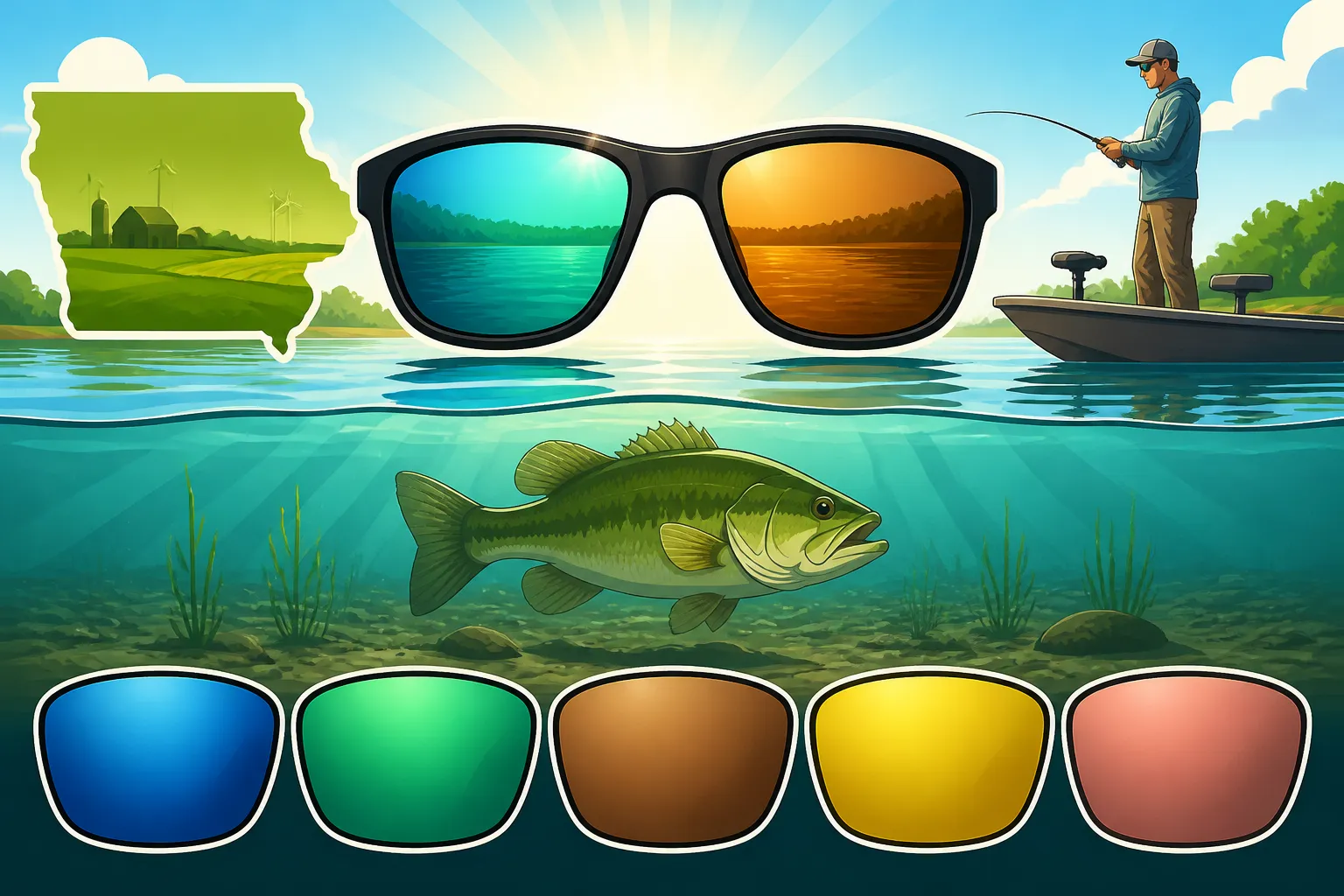
So, let's get down to the brass tacks: which colors are best for seeing fish in Iowa? It's not a one-size-fits-all answer, but there are some clear winners for specific scenarios. Most popular fishing sunglass brands, like those you'd find at Bass Pro Shops or even a quick search on Amazon, will offer lenses in these tried-and-true hues.
Amber/Copper/Brown Lenses: The All-Around Workhorses
If you could only pick one lens color for fishing in Iowa, an amber, copper, or brown tint would be your best bet. These are the undisputed champions for a reason.
- Why they work: These warm tones are fantastic at enhancing contrast, especially in varying light conditions. They filter out a good amount of blue light, which can scatter and create haze, particularly in murky or stained water. This filtration makes greens and reds pop, helping you distinguish fish or submerged structure from the surrounding water column. They're also great for improving depth perception. Imagine trying to spot a channel catfish on a muddy river bottom – a brown lens can often give you just enough definition to see that subtle shape.
- Ideal Iowa Scenarios: These lenses excel on many of Iowa's rivers, like the Des Moines or Iowa River, where water clarity can range from somewhat clear to slightly stained. They're also excellent for many of our public lakes and ponds that aren't perfectly clear. If you're chasing How to Catch Catfish in Iowa or trying to spot largemouth bass lurking in lily pads, these colors will serve you incredibly well. They handle a decent range of light, from partly cloudy days to bright sunshine, making them a versatile choice for a long day on the water where conditions might shift.
Gray/Green Lenses: For Bright, Sunny Days
When the sun is absolutely blazing and the water is relatively clear, gray or green lenses are your go-to. These colors are all about reducing overall brightness and providing true color perception.
- Why they work: Gray lenses are neutral; they reduce light intensity across the entire spectrum, meaning colors appear as they naturally would. This is crucial when you don't want any color distortion. Green lenses often build on this by offering a slight boost in contrast, making them a hybrid choice. Both are superb at managing intense glare on exceptionally bright days.
- Ideal Iowa Scenarios: Think of those beautiful, clear summer days on West Okoboji Lake or Spirit Lake. If you're fishing the Iowa Great Lakes, especially when trying to spot walleye or smallmouth bass on rocky points in clearer water, gray or green lenses will cut the harshest glare, allowing your eyes to relax while still penetrating the surface. They're also excellent for open water, where reflections can be particularly intense. If you're on a sunny day trying to sight fish for How to Catch Walleye in Iowa in clear water, these are definitely worth considering. However, they might not be the best choice for low-light conditions or very murky water, as they don't enhance contrast as much as the warmer tones.
Yellow/Rose Lenses: Conquering Low Light and Overcast Skies
When the fishing conditions are dim—think heavy overcast skies, early morning fog, or late evening bites—yellow or rose-tinted lenses can be a game-changer.
- Why they work: These lighter tints actually increase visible light transmission and significantly boost contrast, making everything appear brighter and more defined. They're fantastic at cutting through haze and making shadows stand out. Rose, in particular, can be very comfortable on the eyes over long periods in dim conditions.
- Ideal Iowa Scenarios: Imagine a cloudy, misty morning on a small private pond trying to find bluegill beds, or an evening Trout Fishing Streams in Northeast Iowa where the sun is already sinking below the bluffs. These lenses help you pick out subtle movements or structures that would otherwise be lost in the dim light. They're not for bright sun (they'll make everything too bright), but for those challenging low-light situations, they truly shine. If you're out chasing How to Catch Bass in Iowa at dawn or dusk, or panfish on a heavily overcast day, a pair of yellow or rose lenses can give you a significant advantage. They can also be surprisingly effective in slightly off-color water when the light is poor, helping enhance what little contrast is available.
Matching Lens Color to Iowa's Specific Environments
Iowa's fishing environments are incredibly diverse, from vast reservoirs to winding rivers and tiny trout streams. The best lens color will often depend on where exactly you're casting your line.
Rivers and Streams: Dealing with Current and Sediment
Iowa's rivers, like the Mississippi, Des Moines, Cedar, or smaller tributaries, present unique challenges for sight fishing. Water clarity can fluctuate wildly depending on recent rainfall, current, and the river bottom's composition.
- Challenges: River water often carries more sediment, leading to varying degrees of murkiness. The current also creates ripple and chop, which can further obscure vision. Stained water, common in many Iowa rivers, requires lenses that can penetrate that brownish hue.
- Best Lens Colors: For most river fishing in Iowa, amber, copper, or brown lenses are usually the top performers. Their ability to enhance contrast and filter blue light really helps pierce through stained or slightly turbid water. They make submerged logs, rock piles, and the dark shapes of fish more distinguishable against the river bottom. For very clear river sections or extremely bright days, a green lens can still be effective, offering good light reduction without distorting the subtle colors of river rocks or vegetation. If you're looking to enhance your Walleye Fishing Techniques for Iowa Rivers, especially when trying to spot them along current breaks, these lenses are invaluable.
- Considerations: When fishing larger rivers like the Mississippi, where you might encounter a mix of clear backwaters and stained main channels, having a versatile lens is key. Some anglers even carry multiple pairs of sunglasses, one with a brown/copper tint and another with a green tint, to swap as conditions demand.
Lakes and Ponds: Adaptability for Varied Depths and Clarity
Iowa is dotted with countless lakes, from the natural glacial lakes in the north to the man-made reservoirs and smaller farm ponds. Each has its own unique characteristics, affecting how you see into the water.
- Challenges: Lakes can range from incredibly clear (like parts of the Iowa Great Lakes) to quite turbid (especially after heavy winds or rain). Depths vary, and the presence of aquatic vegetation, rock, or mud bottoms all influence visibility.
- Best Lens Colors: For clearer lakes and ponds, particularly on bright days, gray or green lenses offer excellent light reduction and true color representation. They're perfect for spotting fish cruising submerged structure or over sand flats. For most other lake conditions, including those with a bit of a stain or moderate clarity, amber or copper lenses remain the go-to. They provide that critical contrast needed to spot fish around docks, brush piles, or weed lines. If you're focused on Fishing the Iowa Great Lakes, you might find yourself swapping between green (for clarity) and amber (for slightly stained areas or overcast moments).
- Considerations: For small, shallow farm ponds, which can often be slightly muddy or have a lot of vegetation, amber/copper lenses will usually give you the best chance to spot bass or bluegill. For anglers exploring the vastness of Saylorville Reservoir or Rathbun Lake, having versatile brown lenses will serve you well through a variety of depths and water clarity changes.
Trout Streams in Northeast Iowa: Clarity is Key
Northeast Iowa is famous for its beautiful, cold-water trout streams, many of which are spring-fed and boast excellent water clarity. This environment calls for a slightly different approach to lens color.
- Challenges: While often clear, trout streams can have shadows from trees, varying sunlight penetration through canopies, and reflective surfaces from rocks and ripples. Spotting subtle movements of trout against rocky or gravel bottoms requires high contrast and excellent depth perception.
- Best Lens Colors: On these usually clear streams, amber or copper lenses are often preferred. They excel at enhancing contrast, making it easier to pick out the camouflaged patterns of a rainbow or brown trout against the streambed. They also perform well in the mixed light conditions you often encounter under a tree canopy or in narrow valleys. A yellow or rose tint can be fantastic on overcast days or in heavily shaded sections, brightening the view and making those subtle trout movements pop. If you're out Trout Fishing Techniques for Iowa Streams, a good pair of amber or rose-tinted polarized glasses is as essential as your waders and fly rod.
- Considerations: Given the often varying light in trout stream environments, having a lens that can perform well in both direct sunlight and shaded areas, or having a second pair for truly low-light conditions, can be a significant advantage. This can truly enhance your experience while exploring the numerous Trout Streams in Northeast Iowa.
Beyond Color: Other Factors to Consider for Sight Fishing Sunglasses
While lens color is paramount for sight fishing, it's not the only thing that matters. A great pair of fishing sunglasses brings together several key features to offer optimal performance and comfort on the water.
Lens Material and Durability
The material your lenses are made from directly impacts their clarity, weight, and resistance to damage.
- Polycarbonate: This is a very popular choice for fishing sunglasses because it's lightweight and incredibly impact-resistant. If you're prone to dropping your glasses or you're active on the water, polycarbonate offers excellent protection. The optical clarity is good for most anglers, and they tend to be more affordable, making them a great option if you're just starting out or looking for a backup pair.
- Glass: For the absolute best optical clarity and scratch resistance, glass lenses are hard to beat. They offer minimal distortion and exceptional visual acuity, which can make a noticeable difference when trying to spot distant or camouflaged fish. However, they are heavier and more susceptible to shattering upon impact, so they require a bit more care. Many high-end fishing specific brands offer glass lenses, which you can often find at reputable outdoor retailers.
- Trivex (or similar polymers): This material often sits between polycarbonate and glass, offering excellent optical clarity that rivals glass in some cases, combined with better impact resistance than glass and lighter weight. It's a fantastic middle-ground for serious anglers who want premium performance without the fragility of glass.
No matter the material, ensure they offer 100% UV protection. Sun exposure on the water is intense, and protecting your eyes from harmful rays is crucial for long-term eye health.
Frame Fit and Coverage
The best lenses in the world won't help if your frames are constantly letting light leak in around the edges or are uncomfortable to wear all day.
- Coverage: Look for frames that offer good wrap-around coverage. This design minimizes stray light from entering from the sides, top, or bottom, reducing distracting glare and enhancing the overall effectiveness of the polarization and lens tint. A snug fit near your temples and around your face is ideal, preventing light from sneaking in. This is especially important when you're moving your head a lot, trying to follow a fish.
- Comfort: You'll be wearing these glasses for hours, so comfort is non-negotiable. Look for lightweight frames with rubberized nose pads and temple tips to prevent slipping, especially when wet or sweaty. Try on different styles to see what feels best on your face, keeping in mind that your head shape is unique. Many brands offer different frame sizes and styles, so take your time to find a pair that feels custom-made for you.
- Ventilation: Some frames feature small vents to prevent fogging, which can be a real nuisance on humid days or when moving between different temperature zones. This is a subtle but valuable feature for consistent clear vision.
Coating and Treatments for Optimal Performance
Beyond the basic lens and frame, various coatings can significantly enhance your sight fishing experience.
- Anti-Reflective (AR) Coating: Applied to the back surface of the lens, AR coating eliminates reflections that bounce off the inside of your sunglasses into your eyes. These internal reflections can be just as distracting as external glare, so an AR coating provides an even clearer, distraction-free view.
- Hydrophobic/Oleophobic Coating: These fancy terms simply mean coatings that repel water and oil (like fingerprints or sunscreen). Water beads up and rolls off easily, and smudges are much easier to clean. This is a huge benefit on the water, where splashes and greasy fingers are inevitable. Maintaining clear lenses is paramount for effective sight fishing.
- Scratch-Resistant Coating: While glass is naturally scratch-resistant, all other lens materials benefit greatly from a durable scratch-resistant coating. It helps prolong the life of your expensive lenses, keeping them clear and free from distracting imperfections that could impair your vision. No one wants to squint through a scratched lens when a trophy walleye is in sight.
| Lens Color | Best Light Conditions | Water Clarity | Primary Benefit | Common Iowa Applications |
|---|---|---|---|---|
| Amber/Copper/Brown | Variable (partly cloudy to bright) | Stained to Moderate | High Contrast, Depth | Rivers (Des Moines, Iowa), most public lakes/ponds, bass fishing |
| Gray/Green | Bright, Sunny | Clear to Moderate | Glare Reduction, True Color | Iowa Great Lakes, Mississippi River (clear pools), open water |
| Yellow/Rose | Low Light, Overcast, Dawn/Dusk | Variable (hazy/dim) | Brightens View, Enhances Contrast | Trout streams (shaded areas), foggy mornings, early/late bites |
Choosing the best sunglasses lens color for sight fishing in Iowa really comes down to understanding the conditions you'll be facing and what you're trying to achieve visually. There's no single "perfect" pair, but by considering these factors, you can equip yourself with the tools to spot more fish and make the most of your time on Iowa's fantastic waters. Don't be afraid to try different colors and see what works best for your eyes and your favorite fishing spots.
Disclaimer
This article is for general informational purposes only and does not constitute professional advice. Laws, prices and regulations vary by location and change over time. Consult a qualified professional for guidance on your specific situation.