Best Landing Net Size for Catfish
There's nothing quite like the thrill of feeling a big Iowa catfish hit your line. The fight is legendary, the pull is immense, and bringing that powerful fish to hand is the ultimate reward. But there’s also nothing quite as frustrating as battling a monster channel cat or a heavyweight flathead all the way to the side of your boat or the riverbank, only to lose it at the last second because your net was too small, too flimsy, or just plain wrong for the job. This guide is here to help you navigate the often-overlooked world of landing nets, ensuring you pick the perfect size and style to safely and successfully land those whiskered warriors in Iowa waters, saving you from that all-too-common heartbreak of a lost lunker.
Why a Proper Catfish Net Matters More Than You Think
When you're out on the water, whether it's the mighty Mississippi or a quiet farm pond, your landing net is often the unsung hero of your fishing trip. For catfish anglers, in particular, a good net isn't just a convenience; it's a crucial piece of gear that can make or break your success and even impact the well-being of the fish you catch.
Safety for Angler and Fish
Landing a large catfish with your bare hands, especially a flathead or a big channel cat, can be risky. Catfish have sharp pectoral and dorsal fins that can deliver painful jabs, and a thrashing fish can easily throw a hook into your hand if you're not careful. A proper landing net provides a safe way to control the fish once it's close, minimizing the chance of injury to you.
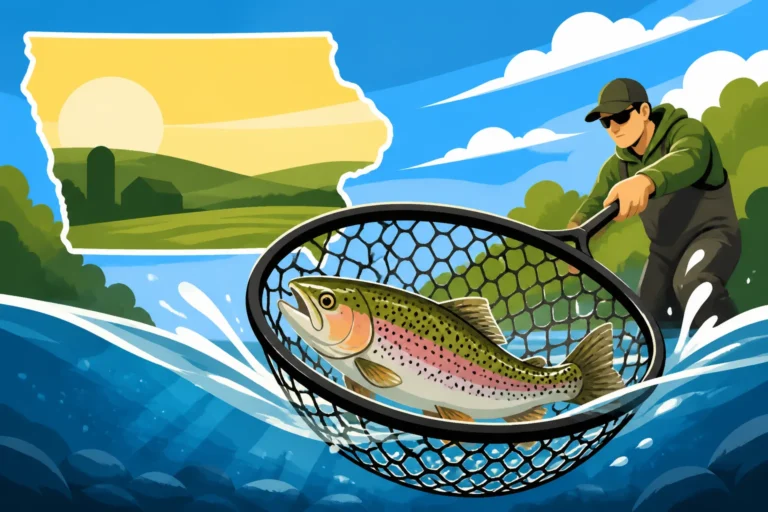
Beyond angler safety, the right net is also vital for the fish. Using a net that’s too small, or one with coarse, knotted mesh, can seriously damage a fish's slime coat, fins, and even its eyes. This is especially important if you practice catch and release, as a compromised fish is less likely to survive once returned to the water. A good, large, rubberized net cradles the fish, reducing stress and injury, allowing it to be safely unhooked and released.
Think about that adrenaline-fueled moment when you've got a massive channel cat on the line, its head finally breaking the surface. Reaching for a tiny panfish net or trying to muscle it in by hand when it still has plenty of fight left is asking for trouble. A net designed for catfish helps you maintain control, keeping both you and your trophy safe.
Preventing Lost Fish at the Boat or Bank
We’ve all seen it (or experienced it ourselves): a fish of a lifetime brought right to the boat, only to make one last desperate surge and snap the line or spit the hook as it brushes against the hull or a rock. This "boat-side" or "bank-side" loss is incredibly frustrating, and often, a poorly sized or flimsy net is the culprit. A net that's too small might not fully encompass the fish, allowing it to flop out, or its hoop might be too narrow to get over a broad catfish head quickly.
Imagine you're fishing Catfish Limit on Saylorville Reservoir and hook into a true Hawkeye hog. You've fought it expertly, kept the tension, and now it's right there. You dip your net, but the hoop isn't wide enough to get around the fish's shoulders, or the netting is too shallow, and the tail flops right out the back. In that split second, the fish finds its second wind, gives a powerful head shake, and it's gone. All that effort, wasted.
A generously sized net, on the other hand, allows for a smooth, swift scoop. The wider hoop makes it easier to guide the fish into the net headfirst, and the deeper bag cradles the entire body, preventing any last-minute escapes. It acts as a safety blanket for your catch, ensuring all your hard work on the retrieve pays off with a successfully landed fish.
Durability and Longevity
Catfish aren't delicate. They're powerful, often heavy, and they put up a serious fight even when netted. This means your net needs to be built to withstand considerable stress. A cheap, lightweight net designed for crappie or bluegill simply won't cut it when you're dealing with a 20-pound flathead. The hoop can bend, the handle can snap, or the netting itself can tear under the strain.
Investing in a high-quality, durable net designed with catfish in mind means it will stand up to repeated abuse from strong, heavy fish. Look for nets with robust aluminum or heavy-duty composite frames and handles, and strong, reinforced netting materials. While a premium net might cost a bit more upfront, it will last significantly longer and perform reliably when you need it most, preventing you from having to replace a broken net after every few big catches.
Think of it as an insurance policy. When you finally hook into that trophy How Big Channel Catfish Get in Iowa, you want to be confident that your gear won't fail you at the critical moment. A durable net ensures you're ready for whatever Iowa's catfish waters throw your way.
Understanding Catfish Net Components and Sizes
Choosing the right net isn't just about picking the biggest one you can find. It's about understanding the different components and how they contribute to its effectiveness, especially when targeting different sizes and species of catfish in Iowa.
Hoop Size
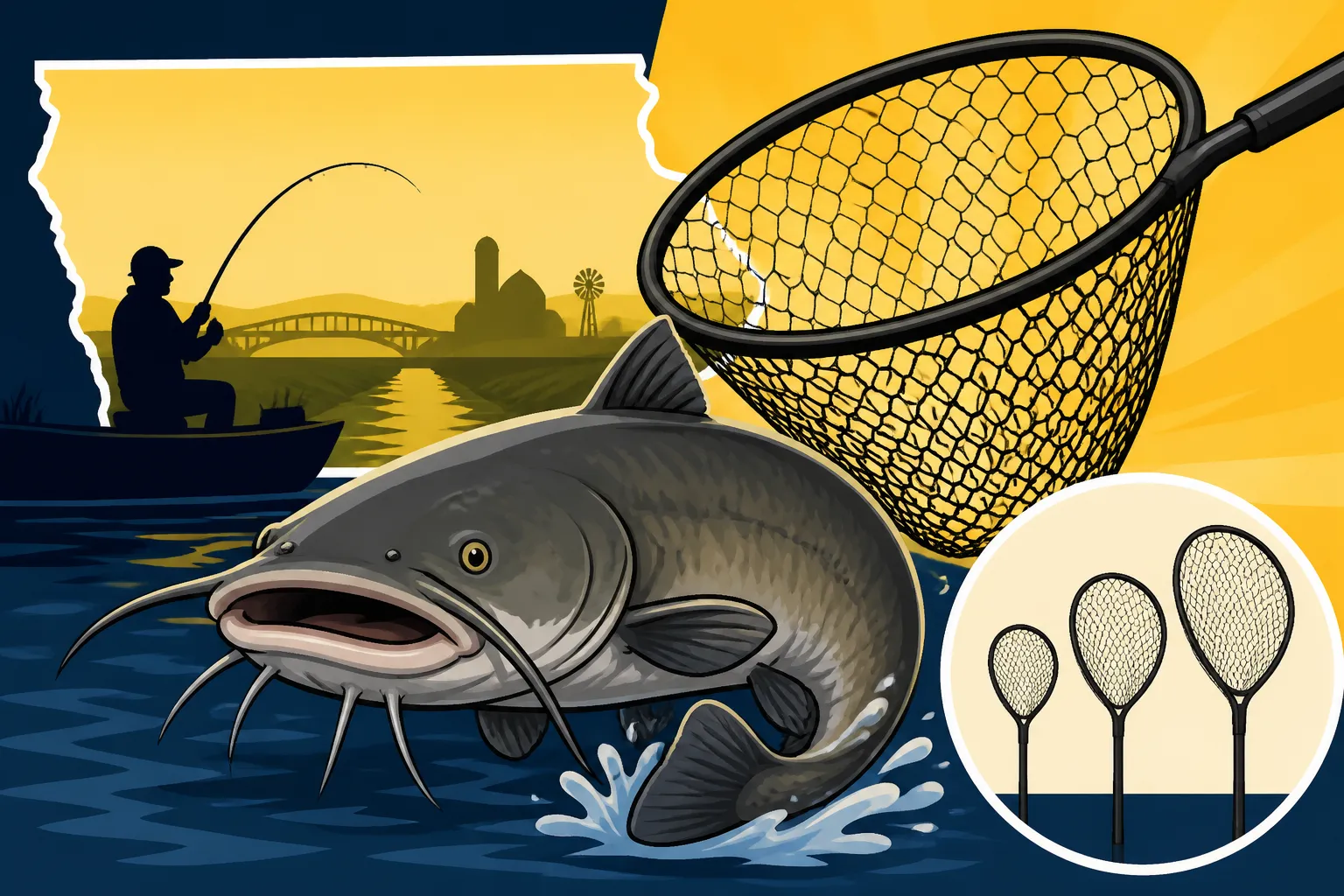
The hoop is the metal or composite frame that forms the opening of the net. Its size is typically measured by its width and sometimes length, and it's perhaps the most critical dimension for catfish fishing. For smaller channel catfish, say those in the 2-5 pound range (which are common in many Iowa lakes and rivers), a hoop with a width of 18-24 inches might suffice. This size is manageable and still offers enough room.
However, once you start targeting larger channel cats, or move into the realm of flatheads, you'll need to scale up significantly. A flathead catfish can have a very broad, flattened head and shoulders. For fish in the 10-20 pound range, a hoop width of 26-32 inches is much more appropriate. If you're seriously hunting for trophy-sized fish—those 30, 40, or even 50+ pound monsters that roam the Mississippi or bigger reservoirs—you should be looking at hoops 36 inches wide or even larger. These larger hoops minimize the chance of the fish getting stuck or flopping out, allowing for a clean, decisive scoop.
Remember, a bigger hoop gives you a larger target to aim for, which is a huge advantage when you have a powerful, unpredictable fish on the line. It's better to have a net that's slightly too large than one that's definitely too small.
Netting Depth and Material
The depth of the netting, or the "bag" of the net, is just as important as the hoop size. A deep bag ensures that once the fish is in, it stays in. For average catfish, a net depth of at least 24-30 inches is a good starting point. For those truly gargantuan flatheads, a bag depth of 36 inches or more will prevent their long bodies from extending out, giving them no leverage to escape.
The material of the netting itself is another crucial consideration. Traditional nylon nets, especially those with knots, can be very harsh on fish. They strip away the protective slime coat, leading to potential infections, and can damage fins. For catfish, which are often robust but still susceptible to injury, look for knotless, rubberized, or rubber-coated mesh. This type of mesh is much gentler on the fish, protecting their slime coat and fins.
Furthermore, rubberized nets are also less prone to tangling hooks, which is a huge bonus when you're trying to unhook a thrashing catfish. They're also easier to clean, as fish slime and bait residues don't stick to them as readily. Some nets, like those you might find at Bass Pro Shops or on Amazon, specifically highlight their fish-friendly, tangle-free mesh, making them a wise choice for the conscientious angler.
Handle Length and Construction
The handle of your landing net needs to be strong and the appropriate length for your fishing style. Handles can be fixed or telescoping. Fixed handles offer maximum strength and rigidity, often preferred by anglers fishing from larger boats where storage isn't an issue. Common lengths for fixed handles might range from 3-6 feet.
Telescoping handles, on the other hand, offer versatility and easier storage. They can extend to reach fish further from the boat or bank and then retract for compact transport. Look for telescoping handles that lock securely at various lengths and are made from heavy-gauge aluminum or fiberglass to prevent bending or breaking under the weight of a large catfish. A common telescoping net might extend from 4 feet to 8 feet or more.
Consider where you'll be fishing most often. If you're consistently shore fishing on larger rivers like the Mississippi, a longer telescoping handle will be invaluable for reaching fish from steep banks or over obstacles. If you're primarily fishing from a small jon boat or a kayak, a shorter, more rigid handle might be more practical for maneuverability.
Here’s a quick overview of net sizes relative to common Iowa catfish:
| Catfish Species/Size | Recommended Hoop Width | Recommended Net Depth | Notes |
|---|---|---|---|
| Smaller Channel Catfish (2-5 lbs) | 18-24 inches | 24-30 inches | Good for panfish & smaller game fish too. |
| Medium Channel Catfish (5-15 lbs) | 24-30 inches | 30-36 inches | Versatile for many common catches. |
| Larger Channel Catfish / Smaller Flatheads (15-30 lbs) | 30-36 inches | 36-40 inches | Essential for serious catfishing. |
| Trophy Flatheads / Monster Channels (30+ lbs) | 36 inches or larger | 40 inches or deeper | Dedicated net for true giants, often heavy-duty. |
Choosing the Right Net for Your Iowa Catfish Adventures
Selecting the "best" net isn't a one-size-fits-all situation. It depends heavily on the specific types of catfish you're hoping to catch, the locations you'll be fishing, and your personal fishing style. Let’s break it down to help you make an informed decision.
Targeting Smaller Channel Catfish
If your main goal is to catch smaller to medium-sized channel catfish, those feisty fighters typically ranging from 2 to 10 pounds, you won't need the absolute largest net on the market. These are the most common catfish encountered across Iowa's lakes, ponds, and smaller rivers. For this size, a net with a hoop around 24-30 inches wide and a bag depth of about 30-36 inches will serve you well.
This size net is large enough to handle most channel cats you'll encounter, offering plenty of room to scoop the fish without much struggle. It’s also generally more portable and easier to maneuver than a monster net, which is a big plus if you're frequently moving between fishing spots or fishing from the bank where space might be limited. Many versatile, multi-species nets available at places like Bass Pro Shops fall into this range and will work perfectly for your everyday channel cat fishing needs. Remember, a rubberized, knotless mesh is still recommended to protect these fish if you plan on releasing them. For more on tactics, check out How to Catch Catfish in Iowa.
Battling Big Flatheads and Trophy Channels
Now, if you're like many dedicated Iowa anglers who dream of tangling with truly enormous flatheads or channel cats that push the 20, 30, or even 50-pound mark, then you need to seriously upgrade your net game. These are formidable fish, often found in the larger river systems like the Mississippi or deeper sections of reservoirs. They have immense power and girth, and a smaller net simply won't cut it.
For these giants, you absolutely need a net with a hoop size of at least 32-36 inches, and ideally, even larger—some serious flathead anglers opt for nets with 40-inch hoops. The bag depth should be a minimum of 36-40 inches, guaranteeing the entire fish can be cradled safely. These nets will typically feature extra-heavy-duty aluminum or composite handles and frames, designed to withstand the sheer weight and thrashing of a massive fish. They might be heavier and bulkier, but when that flathead catfish is on the end of your line, you’ll be grateful for the added capacity and strength. Many anglers consider these specialized nets an indispensable part of their Catfish Gear Guide for Iowa Rivers.
Netting for Shore, Boat, and Kayak Fishing
Your fishing platform also plays a significant role in the ideal net choice.
-
Shore Fishing: If you're primarily fishing from the bank or a pier, a net with a longer, telescoping handle is almost a necessity. This allows you to reach out over riprap, vegetation, or a steep bank to land a fish that might still be a few feet from the water's edge. A handle that extends 6-8 feet or more can be a game-changer. The hoop size should still be generous to accommodate larger catfish you might hook into from shore. Consider a folding hoop design for easier transport if you have a bit of a hike to your favorite spots. Check out Shore Fishing Techniques for Beginners for more tips.
-
Boat Fishing: From a boat, you generally have more flexibility. For larger boats, a fixed-handle net can be very sturdy and quick to deploy, as storage isn't as much of an issue. However, for smaller boats like jon boats or bass boats, a telescoping handle offers versatility. You can extend it to reach fish caught further from the boat, or keep it retracted for close-quarters netting. The hoop size should align with the size of catfish you expect to catch. Many boat anglers prefer a net with a flat bottom on the net bag, which helps cradle the fish and keep it calm once in the net.
-
Kayak Fishing: Kayak fishing presents its own unique challenges. Space is at a premium, and you're low to the water. A net for kayak fishing needs to be compact, easily accessible, and, most importantly, have a short, manageable handle. While a huge hoop might seem ideal for a big fish, a 36-inch hoop on a kayak can be incredibly awkward. Many kayak anglers opt for a net with a hoop in the 24-30 inch range with a shorter, perhaps 2-3 foot fixed handle, or a very compact telescoping handle. The emphasis here is on quick deployment and maneuverability. Look for nets with a floatation feature so they don't sink if dropped. For more ideas on outfitting your paddlecraft, reference a Kayak Fishing Gear Guide for Iowa Rivers.
Essential Features Beyond Size for Catfish Nets
While size is crucial, there are several other features that elevate a good catfish net from merely adequate to truly exceptional. These aspects contribute to fish safety, angler convenience, and the overall longevity of your gear.
Net Material and Fish Safety
As we've touched on, the material of the net bag is paramount for fish welfare. For catfish, especially if you plan on releasing them (and even if you don't, it's just good practice to handle fish gently), a rubberized or rubber-coated mesh is the gold standard. These materials are far superior to traditional knotted nylon netting for several reasons.
Firstly, they are much gentler on the fish's delicate slime coat, which is their primary defense against disease and parasites. A knotted net can abrade this coating, leaving the fish vulnerable. Rubberized mesh creates a smoother, more protective surface. Secondly, rubber nets are far less prone to tangling hooks. There’s nothing worse than having a big catfish in the net, only to realize its treble hook (or your single hook) is hopelessly ensnared in the mesh, prolonging the unhooking process and stressing the fish even further. With rubberized mesh, hooks tend to slide right out, making for quick, clean releases. Lastly, these nets are easier to clean and don't absorb odors like fabric nets, which is a definite plus after a day of handling bait and fish. Many popular net manufacturers, with products widely available on Amazon, prioritize these fish-friendly materials in their designs.
Handle Strength and Grip
The handle of your catfish net needs to be more than just long or collapsible; it needs to be incredibly robust. Imagine netting a 40-pound flathead. That's a lot of weight, especially when the fish is thrashing around. A flimsy handle will bend, crack, or even snap, leaving you with a lost fish and a broken net. Look for handles made from thick-gauge aluminum, reinforced fiberglass, or heavy-duty composite materials. The connection point between the handle and the hoop should also be solid, often reinforced with metal brackets or a secure bolted mechanism.
Beyond strength, the grip is important for control and comfort, particularly if your hands are wet or slimy. Ergonomic grips, often made from EVA foam or textured rubber, provide a secure hold even when conditions are slick. Some handles feature non-slip patterns or grooves that enhance grip security. A good grip allows you to confidently control the net, even with a heavy, struggling fish inside, preventing accidental drops or fumbles.
Portability and Storage
Catfish nets, especially the larger ones, can be quite bulky. Considerations for portability and storage are important, particularly if you have limited space in your vehicle, boat, or tackle storage area.
-
Folding Hoops: Many nets designed for larger fish feature folding hoops. This mechanism allows the hoop to collapse, significantly reducing the overall footprint of the net when not in use. This is a fantastic feature for anglers who need to conserve space or carry their gear for a distance. When ready to use, the hoop quickly snaps back into its fishing position, usually with a secure locking mechanism.
-
Telescoping Handles: As mentioned earlier, telescoping handles also contribute greatly to portability, allowing a long-reach net to shrink down to a manageable size for transport. Ensure the telescoping mechanism is smooth to operate but locks firmly in place when extended.
-
Compact Designs: For kayak or small boat anglers, some nets are specifically designed with a more compact, streamlined profile from the outset, sacrificing a bit of ultimate length or hoop size for easier handling and storage in confined spaces. Before purchasing, visualize where you'll keep the net when not in use and ensure its dimensions are compatible with your storage capabilities.
Maintenance and Care
A landing net, like any other piece of fishing gear, will last longer and perform better with proper care and maintenance. Catfish fishing can be messy—slime, bait residue, mud, and water can all take their toll.
After each use, especially if it's been in dirty water or handled bait, rinse your net thoroughly with fresh water. This removes fish slime, dirt, and any potential contaminants. Pay special attention to the mesh, making sure no debris is lodged in it. For rubberized nets, this is usually a quick and easy process.
Allow your net to air dry completely before storing it. Storing a wet net, especially one with fabric components, can lead to mildew, unpleasant odors, and degradation of the materials. Hang it in a well-ventilated area, out of direct sunlight if possible, until it's bone dry. Periodically check the handle locking mechanisms, screws, and any pivot points for signs of wear or corrosion, especially if fishing in brackish or slightly saline waters (like some parts of the Mississippi River border). A little preventative maintenance can significantly extend the life of your valuable landing net, ensuring it's ready for your next big Iowa catfish.
A strong, durable net is an investment in your fishing success. Whether you're chasing that elusive Trophy Muskie Size in Iowa or just enjoying a relaxing day landing some fat channel cats, having the right gear, including a properly sized and constructed landing net, ensures you can confidently bring your catch to hand.
Disclaimer
This article is for general informational purposes only and does not constitute professional advice. Laws, prices and regulations vary by location and change over time. Consult a qualified professional for guidance on your specific situation.